

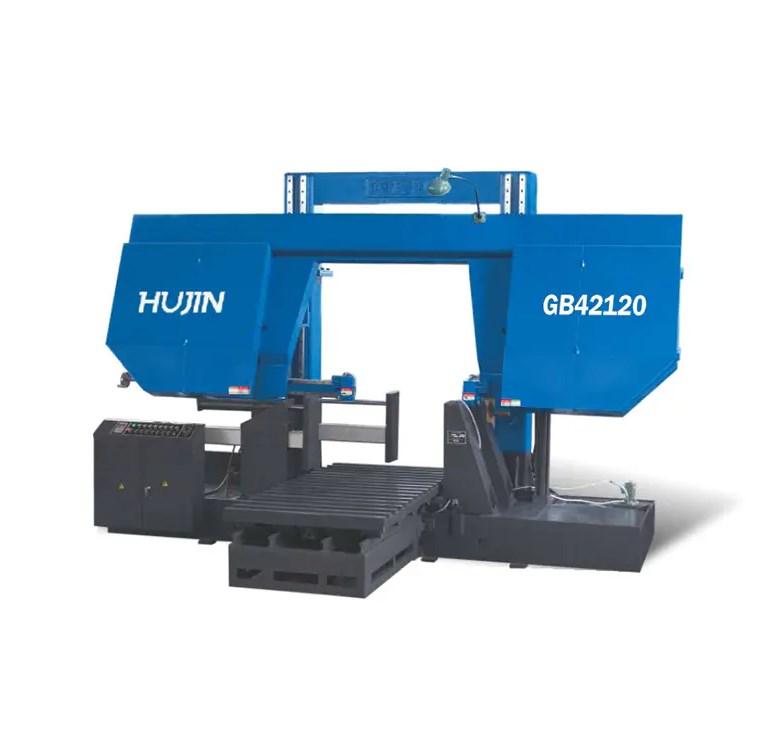
The Double Column Band Saw, a critical piece of machinery in metalworking, is designed to withstand long hours of operation. However, like any high-performance tool, it requires proper cooling to maintain its efficiency and longevity. The importance of cooling a Double Column Band Saw after extended use cannot be overstated, as it directly impacts the machine's cutting accuracy, blade life, and overall performance.
When a Double Column Band Saw is in operation, it generates heat due to the friction between the blade and the material being cut. This heat, if not managed, can lead to thermal expansion, which in turn can cause inaccuracies in the cut and even damage the blade or the machine itself. Therefore, implementing an effective cooling system is essential for the Double Column Band Saw to function at its best.
One of the primary methods of cooling a Double Column Band Saw is through the use of a coolant. Coolants are liquids that are designed to absorb and dissipate heat away from the cutting area. They are typically pumped through a system that sprays the coolant directly onto the blade and the workpiece during the cutting process. This not only cools the blade but also helps to flush away any debris, which can prevent clogging and further heat generation. The choice of coolant is crucial, as some are better suited for specific materials and cutting conditions. For example, water-based coolants are commonly used for their effectiveness and cost efficiency, while synthetic coolants may be preferred for their longer life and resistance to bacterial growth.
In addition to the use of coolants, the Double Column Band Saw's design itself can contribute to its cooling efficiency. Many models feature a cast iron frame, which is an excellent material for heat dissipation due to its thermal conductivity. The frame can absorb and distribute the heat generated during the cutting process, reducing the overall temperature of the machine. Some advanced models may also incorporate heat exchangers or fans to further enhance the cooling process.
Regular maintenance is another key aspect of keeping a Double Column Band Saw cool. This includes cleaning the machine to remove any debris that could insulate the machine and trap heat, as well as checking and replacing the coolant regularly to ensure it remains effective. The coolant system should also be inspected for any leaks or blockages that could impede the flow of coolant to the cutting area.
Another cooling strategy involves the use of forced air or water cooling systems. These systems can be integrated into the Double Column Band Saw's design to provide targeted cooling to the blade and other critical components. By directing a stream of air or water at the hottest parts of the machine, these systems can help to quickly dissipate heat and prevent overheating.
It's also important to consider the ambient conditions in which the Double Column Band Saw is operating. If the machine is in a hot and poorly ventilated area, additional measures may be necessary to cool the surrounding environment. This could include installing industrial fans or air conditioning units to lower the overall temperature and improve air circulation.
In conclusion, the cooling of a Double Column Band Saw after extended operation is a multifaceted process that involves the use of coolants, the machine's design, regular maintenance, and consideration of the surrounding environment. By implementing these strategies, manufacturers can ensure that their Double Column Band Saws remain cool, precise, and efficient, thereby maximizing their productivity and extending the life of the machine. Proper cooling not only protects the investment in the Double Column Band Saw but also contributes to the quality of the work produced, making it a critical aspect of any metalworking operation.

 English
 Arabic
 French
 Spanish
 Portuguese
 Deutsch
 Turkish
 Dutch
 Russian
 Romaian
 Portuguese (Brazil)
 Greek