

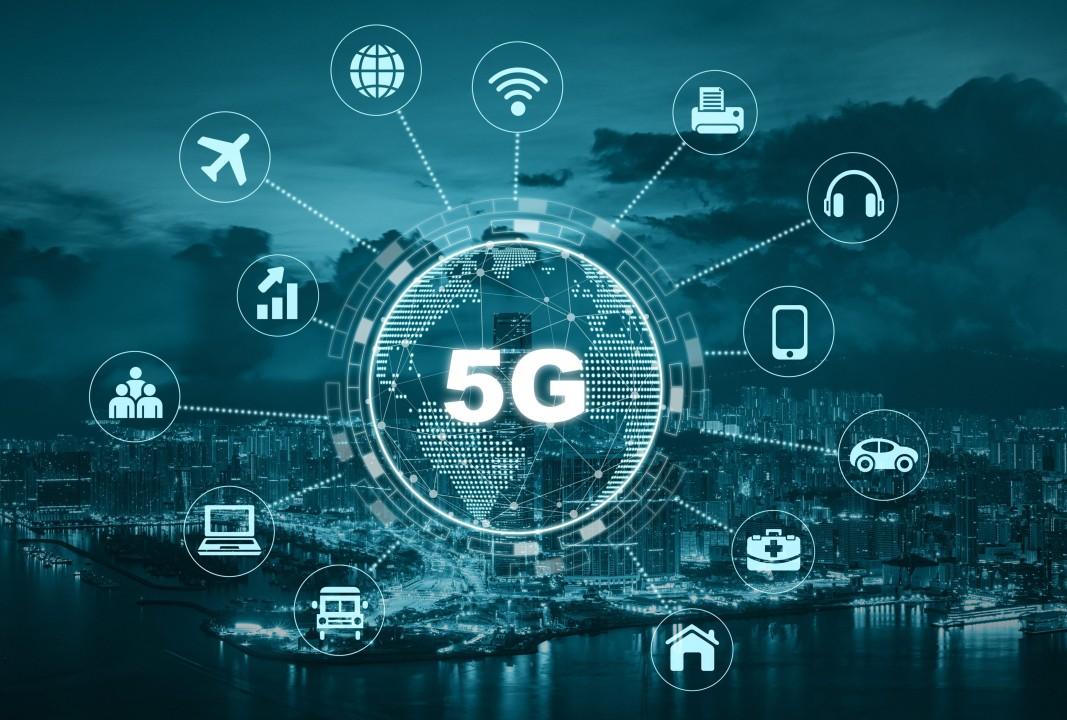
Picture this: you’re Maya, sipping your morning coffee as you scroll through headlines about self-driving cars, smart cities, and remote surgeries. One term keeps popping up—5G. It’s touted as the backbone of tomorrow’s technology, promising lightning-fast speeds and near-instantaneous responses. But what exactly is 5G architecture, and why does it matter so much? In this guide, we’ll walk you through the basics of 5G’s design, its key components, and why understanding it can open doors to cutting-edge careers. And, along the way, you’ll hear tips from experts at eceuniversity, who’ve helped hundreds of students master this revolutionary technology.
The Evolution from 1G to 5G
The Generations in a Nutshell
-
1G (1980s): Analog voice calls with speeds up to 2.4 Kbps.
-
2G (1990s): Digital voice and simple texts, topping out at 64 Kbps.
-
3G (2000s): Mobile internet arrives; speeds reach several Mbps, enabling email and basic web browsing.
-
4G (2010s): Broadband-like speeds (tens of Mbps), HD video streaming, and mobile apps flourish.
-
5G (2020s): Gigabit speeds, ultra-low latency (<10 ms), and massive device connectivity (up to 1 million devices per km²).
Each generation solved the limitations of its predecessor. With 5G, engineers had to rethink everything—from how antennas are designed to where computing happens.
Why 5G Is a Paradigm Shift
Unlike previous upgrades, 5G isn’t just “faster 4G.” It introduces a new architecture that splits the network into specialized layers and functions, creating unmatched flexibility:
-
Higher throughput: Peak download speeds of up to 20 Gbps.
-
Lower latency: End-to-end delays under 5 milliseconds for real-time control.
-
Massive IoT support: Seamless connection for smart sensors, wearables, and industrial devices.
This trifecta—speed, responsiveness, and scale—paves the way for applications like autonomous vehicles, augmented reality, and remote medicine.
Core Components of 5G Architecture
5G architecture is often described in three key domains: the Radio Access Network (RAN), the Core Network, and edge/cloud computing. Let’s break down each part.
Radio Access Network (RAN)
The RAN is the frontline, where devices connect to the network via base stations.
-
gNodeB (gNB):
-
The 5G base station, analogous to the eNodeB in 4G.
-
Supports multiple frequency ranges: Sub-6 GHz for coverage, mmWave (24–52 GHz) for capacity and speed.
-
Employs massive MIMO (Multiple Input Multiple Output) arrays with dozens—even hundreds—of antennas to beamform signals directly to devices.
Small Cells vs. Macro Cells:
-
Macro cells cover large areas but may struggle in dense urban environments.
-
Small cells are low-power, short-range nodes placed on lampposts or building walls to boost capacity in hotspots.
Carrier Aggregation and Spectrum Flexibility:
-
5G can combine multiple spectrum bands to optimize for coverage or speed.
-
Dynamic spectrum sharing lets 4G and 5G coexist on the same frequencies, smoothing the upgrade path.
5G Core Network
The 5G core network (5GC) moves beyond the monolithic design of 4G, embracing virtualization and cloud-native principles:
-
Service-Based Architecture (SBA):
-
Functions like authentication (AUSF), session management (SMF), and user data handling (UPF) are decoupled into microservices.
-
Each service communicates via standardized APIs, making the network modular and scalable.
Control Plane vs. User Plane Separation (CUPS):
-
Control Plane manages signaling and session control.
-
User Plane handles actual data traffic.
-
Separating them allows operators to place user-plane functions closer to the user (edge), reducing latency.
Network Slicing:
-
The ability to carve multiple logical networks (slices) on the same physical infrastructure.
-
Each slice can be optimized for distinct use cases—ultra-reliable low-latency communications (URLLC), enhanced mobile broadband (eMBB), or massive machine-type communications (mMTC).
Edge and Cloud Integration
5G isn’t just about connectivity—it’s about compute:
-
Mobile Edge Computing (MEC):
-
Shifts processing power from central data centers to the network edge—often co-located with base stations.
-
Enables applications like cloud gaming or vehicle-to-vehicle coordination to operate with minimal delay.
Centralized Cloud Services:
-
Heavy analytics, AI model training, and large-scale data storage remain in centralized clouds.
-
The combination of edge and cloud creates a continuum where tasks are allocated based on latency, bandwidth, and compute requirements.
The Role of mmWave and Massive MIMO
mmWave Spectrum
Millimeter-wave bands (above 24 GHz) offer huge chunks of bandwidth but come with challenges:
-
High attenuation: Signals can be blocked by walls, rain, and even foliage.
-
Short range: Typically 200–500 meters in urban settings.
To overcome this, engineers deploy dense small-cell networks and leverage beamforming.
Massive MIMO Beamforming
Massive MIMO uses dozens to hundreds of antenna elements to focus radio waves into narrow beams. This dynamic steering boosts signal quality and throughput:
-
Spatial multiplexing: Serving multiple users on the same frequency simultaneously.
-
Interference mitigation: Nulling out unwanted signals from other directions.
Experts from ECE University demonstrate these concepts in virtual lab setups, allowing you to visualize how beam patterns adapt in real time.
Understanding Network Slicing
Why Slicing Matters
Imagine a highway where one lane is reserved for emergency vehicles, another for freight, and a third for passenger cars. Network slicing brings this level of customization to 5G:
-
eMBB slice: Prioritizes high data rates for video streaming.
-
URLLC slice: Guarantees sub-5 ms latency for remote surgery or autonomous driving.
-
mMTC slice: Supports millions of low-power IoT sensors transmitting small packets sporadically.
Slice Management and Orchestration
Key components orchestrate slices:
-
Network Slice Selection Function (NSSF): Matches a device’s request to the appropriate slice.
-
Network Slice Subnet Management Function (NSSMF): Oversees the lifecycle of each slice.
-
Orchestrator: Allocates resources across slices based on demand, ensuring performance SLAs.
Security in 5G Architecture
With greater connectivity comes greater risk. 5G introduces enhanced security measures:
Authentication and Key Management
-
Enhanced Subscriber Identity Protection: Hides permanent subscriber identifiers (IMSI) over the air.
-
5G-AKA Protocol: A robust authentication scheme that prevents cloning and eavesdropping.
Secure Network Slicing
Each slice can have tailored security policies, isolating critical applications—like industrial control systems—from general internet traffic.
Edge Security Challenges
Deploying compute at the edge expands the attack surface. Best practices include container isolation, secure boot for edge nodes, and AI-powered threat detection.
Deployment Scenarios and Use Cases
Urban Mega-Cities
Dense small-cell deployments in cities like Seoul and New York enable augmented reality (AR) navigation, real-time language translation, and seamless public safety communications.
Industrial Automation
Factories leverage private 5G networks with URLLC slices to control robotic arms, monitor equipment health, and optimize supply chains—all with millisecond precision.
Smart Agriculture
Rural farms use mMTC slices to connect thousands of soil sensors and drones, optimizing irrigation and crop health monitoring.
Healthcare Transformation
Telemedicine benefits from low latency and high reliability, enabling remote ultrasound, robotic surgery assistance, and real-time patient monitoring.
Learning 5G Architecture at ECE University
Hands-On Virtual Labs
At ECE University, you’ll access cloud-based 5G simulators where you can configure RAN parameters, visualize beam-forming patterns, and test slice performance under varying loads.
Expert-Led Workshops
Live sessions dive deep into core network functions, edge deployments, and security architectures. Real-world case studies from leading telecom operators bring theory to life.
Project Portfolio Development
By the end of the course, you’ll complete a capstone—such as designing an end-to-end private 5G network for a smart campus—which you can showcase to employers.
The Future of 5G and Beyond
Towards 6G and Convergence
Research on 6G is already underway, focusing on terahertz communications, integrated sensing and communication (ISAC), and AI-native networks. The modular, cloud-native design of 5G paves the way for seamless upgrades.
Skills for Tomorrow’s Engineers
Mastering 5G architecture equips you with knowledge in software-defined networking, network function virtualization, and real-time systems—skills that will remain relevant as networks evolve.
Conclusion
5G architecture represents a bold reimagining of mobile networks, blending advanced radio techniques, cloud-native core functions, and edge computing to support unprecedented applications. Whether you’re an aspiring engineer or a seasoned professional, understanding these components is essential in today’s tech landscape. With expert guidance, hands-on labs, and project-driven learning at eceuniversity, you’ll gain the skills and confidence to design, deploy, and secure the networks of tomorrow. Embark on your 5G journey today, and power the innovations that will define our connected future.

 English
 Arabic
 French
 Spanish
 Portuguese
 Deutsch
 Turkish
 Dutch
 Russian
 Romaian
 Portuguese (Brazil)
 Greek