

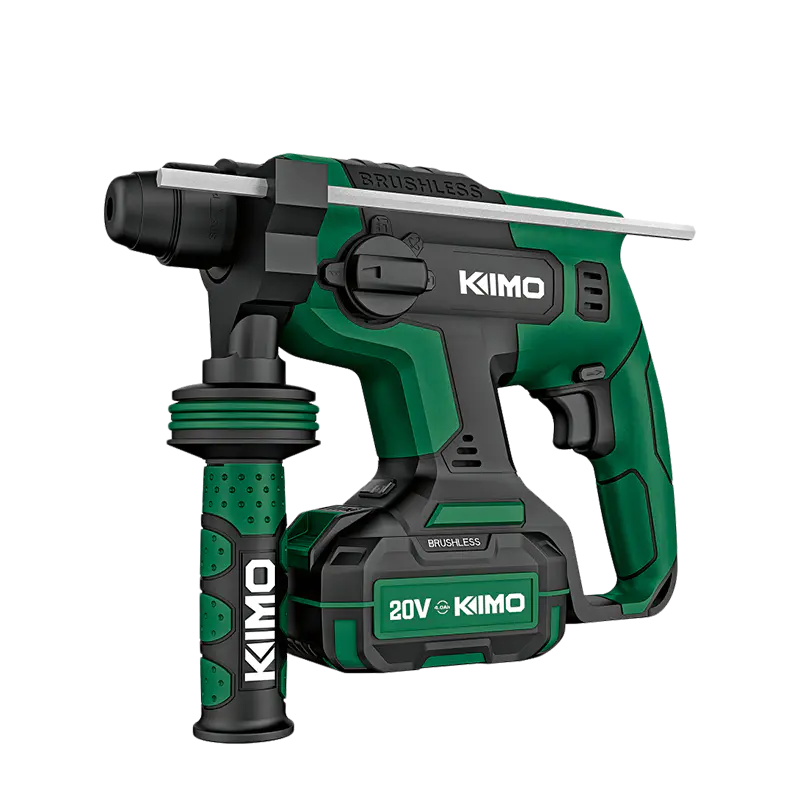
A lithium-ion hammer is a type of power tool that combines hammering action with lithium-ion battery technology. This tool is often used in construction, renovation, and DIY tasks that involve drilling or breaking through tough materials such as concrete, brick, or masonry. Its cordless nature, powered by rechargeable lithium-ion batteries, makes it more convenient to use in a wide range of environments.
The core function of a lithium-ion hammer is to deliver repeated hammering force along with rotational movement, allowing it to penetrate dense surfaces more easily than a regular drill. This dual action makes it a useful tool for tasks such as installing anchors, mounting fixtures, or chiseling surfaces. The battery-powered design eliminates the need for a constant power source, offering greater mobility on job sites.
One of the key features of a lithium-ion hammer is its battery performance. Lithium-ion batteries are known for their high energy density, which allows for longer run times and faster charging compared to older battery types such as nickel-cadmium. These batteries also tend to hold a charge well over time and can be recharged many times before needing replacement.
Portability is another major advantage of using a lithium-ion hammer. Since the tool does not rely on a power cord, users can work in areas without easy access to electricity. This includes construction sites, outdoor environments, or spaces where extension cords may pose a safety risk. It also allows for easier movement while working overhead or on ladders.
The design of a lithium-ion hammer often includes ergonomic handles, multiple speed settings, and LED lights for visibility in dark spaces. These added features improve user comfort and control, especially during extended use. Some models also include brushless motors, which can enhance durability and reduce energy loss during operation.
When selecting a lithium-ion hammer, users should consider factors such as voltage, impact rate, and the tool's weight. A higher voltage typically indicates more power, while a lighter weight may reduce fatigue during use. Battery capacity, usually measured in amp-hours (Ah), also influences how long the tool can run between charges.
Maintenance for a lithium-ion hammer involves keeping the battery properly charged and stored in a dry place. It's also important to clean dust and debris from the tool after use to prevent damage to internal components. Replacing worn parts like drill bits or chisel attachments ensures continued performance and safety.
In both professional and residential settings, the lithium-ion hammer proves useful for a range of tasks. Homeowners may use it for renovations, while contractors rely on it for regular construction work. The tool's combination of power, convenience, and mobility makes it suitable for repeated use across different surfaces.
As with any power tool, safety is important when using a lithium-ion hammer. Wearing protective gear such as goggles and gloves can prevent injury from debris or vibration. It's also recommended to follow the manufacturer's guidelines for battery care and safe operation.
The lithium-ion hammer offers an efficient and portable solution for heavy-duty drilling and demolition tasks. Its battery-powered design provides freedom of movement, while its performance makes it suitable for demanding work environments. Whether used professionally or for home improvement, this tool brings flexibility and reliability to a variety of applications.
https://www.kimopower.com/product/lithiumion-hammer/18v-brushless-5/

 English
 Arabic
 French
 Spanish
 Portuguese
 Deutsch
 Turkish
 Dutch
 Russian
 Romaian
 Portuguese (Brazil)
 Greek