

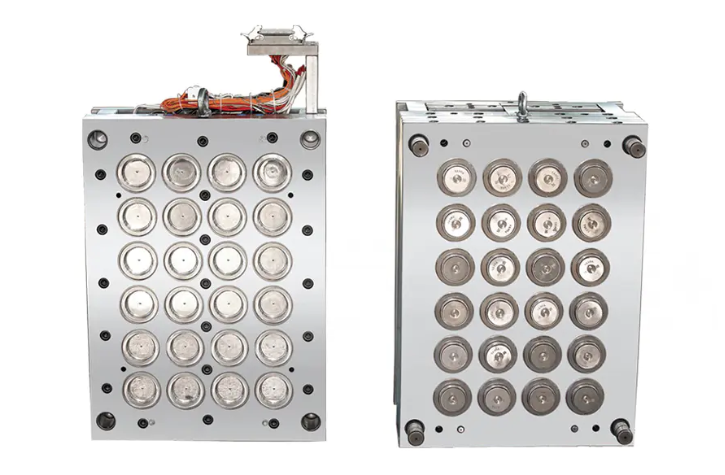
Sustainability is no longer a buzzword; it is a purchasing criterion that brand owners extend to every component, including the humble closure. A Plastic Cap Mold engineered for recycled polypropylene (rPP) or bio-based polyethylene (bio-PE) must accommodate lower melt flow indices and occasional contaminants without sacrificing productivity. When a converter decides to switch from virgin resin to 30 % post-consumer rPP, the Plastic Cap Mold cavity dimensions may need minor adjustments to offset shrinkage differences. Designers often enlarge the neck thread core by 0.03 mm to maintain the same fit on glass or PET bottles. Hot-runner valve gates in a Plastic Cap Mold must also be tuned to minimize residence time, preventing thermal degradation that can discolor recycled resin. Beyond material substitution, lightweighting remains the fastest route to carbon reduction. By finite-element analysis, engineers can thin the top panel of a 38 mm closure from 1.0 mm to 0.8 mm, saving 0.4 g of resin per part. On a 96-cavity Plastic Cap Mold running 24 hours a day, that translates to 1.3 tons of resin saved monthly. Another frontier is tethered caps mandated by EU regulations. The Plastic Cap Mold now includes a living-hinge insert that keeps the cap attached to the bottleneck after opening. Mold makers integrate side-pull slides or collapsible cores to form the tether without increasing cycle time. Finally, end-of-life considerations influence mold construction: nickel-plated cavities resist corrosion from aggressive bio-resins, extending the Plastic Cap Mold service life and delaying scrapping of the tool. In trials, a closure molded in 100 % rPP on a dedicated Plastic Cap Mold passed 50 drop-impact cycles and achieved tamper-evident bridge rupture forces within specification, demonstrating that sustainable materials and robust mold engineering can coexist.

 English
 Arabic
 French
 Spanish
 Portuguese
 Deutsch
 Turkish
 Dutch
 Russian
 Romaian
 Portuguese (Brazil)
 Greek