

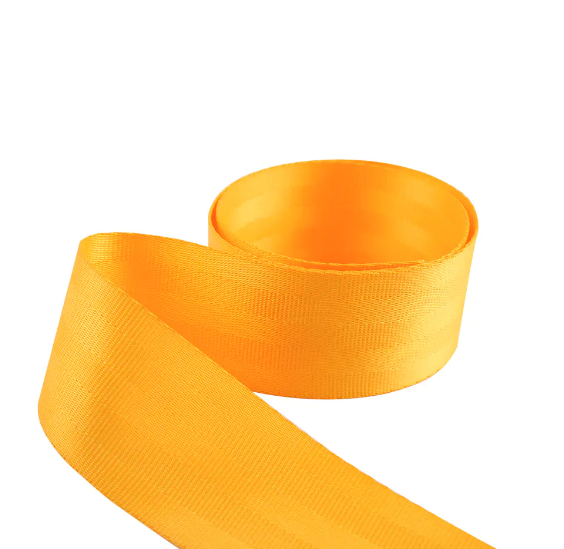
Car seat belts are essential safety components in every vehicle, and the webbing used in these belts plays a crucial role in ensuring passenger protection. Car seat belt webbing refers to the strong, woven material that forms the strap of a seat belt. Its strength, durability, and flexibility directly affect the performance of the seat belt system.
Car seat belt webbing is typically made from high-strength polyester or nylon fibers. These fibers are woven tightly to create a fabric that can withstand significant tension and impact forces during a collision. The webbing must balance tensile strength with flexibility, allowing it to extend slightly under load to absorb energy while remaining strong enough to restrain passengers effectively. Manufacturers rigorously test the fibers to maintain consistency and performance under varying conditions.
Durability is a key consideration for car seat belt webbing. Over time, exposure to sunlight, temperature changes, and repeated use can degrade the material. High-quality webbing resists abrasion, UV radiation, and chemical exposure, ensuring that it maintains strength and appearance over the life of the vehicle. A reliable car seat belt webbing supplier implements quality control measures to check for uniform weave, proper thickness, and resistance to wear, ensuring the straps perform as intended throughout their lifespan.
Safety testing is another crucial aspect of car seat belt webbing production. The webbing must pass rigorous impact tests, tensile strength assessments, and elongation measurements. These tests ensure that the seat belt can restrain occupants safely during sudden stops or collisions. Regulatory standards, such as FMVSS in the United States or ECE R16 in Europe, provide guidelines for the performance and specifications of car seat belt webbing. Compliance with these standards is a critical responsibility for manufacturers.
Design flexibility is also important. Car seat belt webbing can be produced in various widths, thicknesses, and colors to meet vehicle design requirements. Some applications may require webbing with flame-retardant properties, reflective strips, or specialized coatings to enhance visibility and safety. By providing these options, manufacturers allow carmakers to integrate the webbing seamlessly into different vehicle interiors while meeting safety standards.
Ease of maintenance is another factor considered in car seat belt webbing production. The material should resist staining, fraying, and fading, maintaining its functionality and appearance even with frequent use. Users expect their seat belts to operate smoothly, retract easily, and remain comfortable over long periods, which is directly influenced by the quality of the webbing.
Environmental considerations are increasingly relevant. Some manufacturers use recyclable fibers or environmentally conscious production processes to reduce waste and energy consumption. These practices help minimize the environmental impact of producing car seat belt webbing while maintaining the essential safety and durability properties required for vehicle use.
Car seat belt webbing is a vital component of vehicle safety systems. Its strength, durability, and flexibility ensure that seat belts protect passengers effectively under various conditions. By focusing on material quality, rigorous testing, design versatility, and environmental responsibility, manufacturers of car seat belt webbing contribute to both safety and reliability in modern vehicles. Choosing high-quality webbing ensures that vehicles meet regulatory requirements and provide dependable protection for passengers.

 English
 Arabic
 French
 Spanish
 Portuguese
 Deutsch
 Turkish
 Dutch
 Russian
 Romaian
 Portuguese (Brazil)
 Greek