

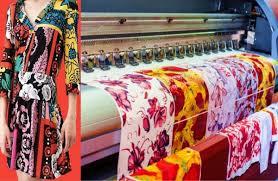
The textile industry has always been a blend of creativity and technology. Over the years, various printing methods have been introduced to enhance fabric design and production. Among these, digital printing on fabric has emerged as a revolutionary innovation. Unlike traditional techniques such as block or screen printing, digital fabric printing uses advanced inkjet technology to transfer designs directly from a computer to textiles.
This modern method is reshaping the way fabrics are created—offering unlimited design possibilities, faster production times, eco-friendly processes, and cost-effective solutions. From haute couture and fast fashion to home furnishings and promotional products, digital fabric printing is now a key driver of growth and innovation in the textile world.
What is Digital Printing on Fabric?
Digital printing on fabric is a non-contact printing process in which digital designs are printed directly onto textiles using inkjet-based printers. Instead of requiring physical stencils or screens, the printer applies specialized inks directly onto the fabric’s surface.
This process is highly flexible and allows for detailed, vibrant, and complex patterns that would be difficult to achieve through traditional methods. It also enables quick customization, making it popular among fashion designers and manufacturers.
The Process of Digital Fabric Printing
Design Preparation
Designers create patterns using computer software like Photoshop, Illustrator, or CAD. These designs are saved in digital formats and prepared for printing.
Fabric Pretreatment
Before printing, the fabric is coated with a pretreatment solution. This step ensures that inks bond well to fibers, resulting in sharper and brighter prints.
Printing
The fabric is fed into a digital printer. Inkjet nozzles spray tiny droplets of dye or pigment ink directly onto the surface, replicating the digital design.
Fixation & Curing
Heat or steam is applied to permanently fix the ink to the fabric. This makes the prints durable and resistant to fading.
5. Washing & Finishing
The printed fabric is washed to remove excess chemicals, then finished to restore softness, sheen, and flexibility.
Types of Digital Printing on Fabric
-
Direct-to-Fabric (DTF) Printing
Prints directly on textiles like cotton, silk, and polyester. Suitable for both small and large orders. -
Direct-to-Garment (DTG) Printing
Used for printing directly onto finished garments such as t-shirts, hoodies, and tote bags. -
Sublimation Printing
Ideal for polyester fabrics. The ink turns into gas and fuses with fibers, resulting in vibrant and durable prints. -
Reactive Dye Printing
Works well with natural fibers like cotton, linen, and silk, offering rich color depth and durability. -
Pigment Printing
An eco-friendly method suitable for multiple fabrics, requiring less water and fewer chemicals.
Advantages of Digital Printing on Fabric
-
High Resolution & Quality – Produces sharp details, photographic prints, and unlimited color combinations.
-
Cost-Effective for Small Runs – No need for costly screen setups, making it ideal for low-volume or customized printing.
-
Eco-Friendly – Consumes less water, energy, and chemicals compared to traditional printing methods.
-
Faster Production – Shortens lead times and enables quick design-to-production turnaround.
-
Personalization – Perfect for creating unique designs, one-off pieces, and customized apparel.
-
Sustainability – Supports the global shift towards sustainable fashion and textile production.
Applications of Digital Printing on Fabric
-
Fashion & Apparel
Designers use digital printing for high-fashion garments, casual wear, scarves, dresses, and fast fashion products. -
Home Furnishings
Cushions, curtains, bedsheets, and upholstery benefit from colorful, customizable digital prints. -
Sportswear & Activewear
Jerseys, leggings, and athletic apparel often rely on sublimation printing for durability and vibrant colors. -
Corporate & Promotional Items
Custom uniforms, branded tote bags, and promotional t-shirts are easily produced with digital printing. -
Interior & Decorative Fabrics
Digital printing is used in wall art, banners, tablecloths, and decorative textiles.
Challenges in Digital Fabric Printing
Despite its growing popularity, digital fabric printing faces some challenges:
-
High Initial Investment – Industrial digital printers are expensive.
-
Ink Costs – Specialized inks are pricier than traditional textile inks.
-
Fabric Limitations – Not all fabrics are compatible without pretreatment.
-
Speed for Bulk Orders – For massive volumes, traditional screen printing may still be more efficient.
-
Color Matching Issues – Maintaining consistency across large batches can be difficult.
Future of Digital Printing on Fabric
The future of digital fabric printing is extremely promising. With continuous innovation, the technology is becoming faster, more affordable, and more sustainable.
Key future trends include:
-
Eco-Friendly Inks – Development of biodegradable, water-based inks.
-
AI & Automation – Smart printers with automated design correction and improved color matching.
-
On-Demand Fashion – Growth of personalized clothing and accessories for e-commerce.
-
Industrial-Scale Adoption – Wider use of digital printing in mass production as printers become faster.
As the fashion and textile industries increasingly embrace sustainability and customization, digital printing will play a central role in their evolution.
FAQs About Digital Printing on Fabric
Which fabrics are suitable for digital printing?
Digital printing works best on cotton, silk, polyester, viscose, and blends. Fabric choice depends on the type of ink and printing method.
How long do digital prints last?
When properly fixed and cured, digital prints are highly durable, wash-resistant, and colorfast.
How is digital printing different from screen printing?
Screen printing is cost-effective for bulk production but limited in detail and color variety. Digital printing offers unlimited colors and complex designs but is more expensive for large orders.
Is digital printing environmentally friendly?
Yes. It requires less water and energy, produces minimal waste, and supports sustainable textile practices.
Can digital printing reproduce photographs on fabric?
Absolutely. Digital printing allows photo-quality prints with gradients, fine details, and lifelike color shades.
Conclusion
Digital printing on fabric has transformed the textile and fashion industry by merging creativity, efficiency, and sustainability. It enables high-quality designs, faster production, and eco-friendly practices, making it suitable for both small-scale customization and large-scale manufacturing.
While challenges such as equipment cost and fabric limitations remain, continuous advancements are addressing these issues. With the rising demand for personalized, sustainable, and on-demand textiles, digital fabric printing is not just a trend—it is the future of fabric design and production.
For businesses, designers, and consumers alike, embracing digital printing means unlocking endless possibilities in the world of textiles.

 English
 Arabic
 French
 Portuguese
 Deutsch
 Turkish
 Dutch
 Italiano
 Russian
 Romaian
 Portuguese (Brazil)
 Greek