

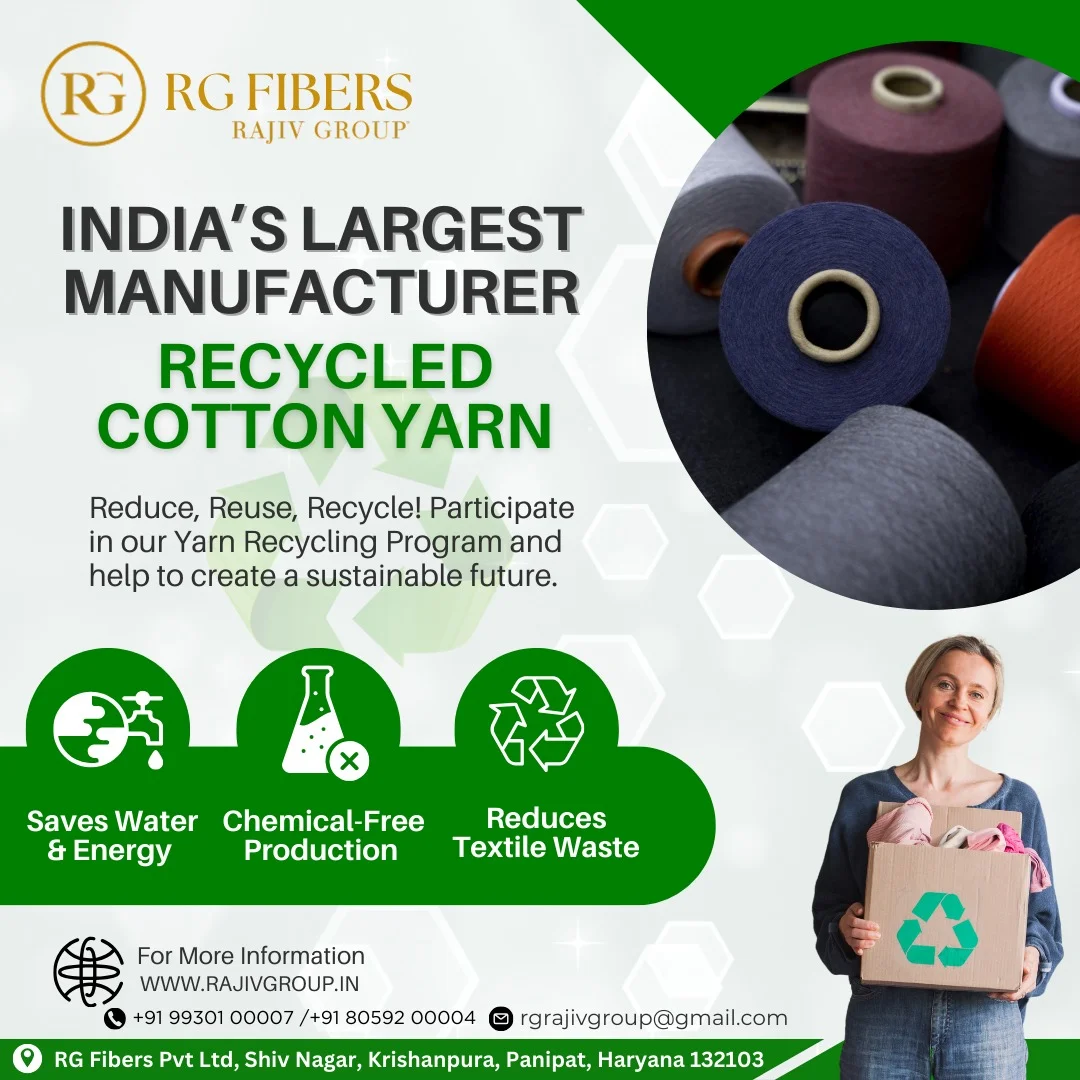
In today’s textile industry, sustainability is no longer a trend—it’s a necessity. With growing environmental concerns and increasing consumer demand for eco-friendly products, recycled cotton yarn has emerged as a viable and innovative solution for manufacturers, designers, and consumers alike. While sustainability is often highlighted as the key benefit of recycled cotton, its durability and quality are equally impressive, making it a practical choice for high-quality textiles.
Understanding Recycled Cotton Yarn
Recycled cotton yarn is produced from pre-consumer and post-consumer cotton waste, including scraps from garment manufacturing, leftover fabric, and old clothing. Through a careful process of sorting, cleaning, shredding, and spinning, these cotton fibers are transformed into usable yarn without compromising on texture or strength.
Leading recycled cotton yarn manufacturers ensure that the production process maintains fiber integrity while adhering to sustainable and eco-friendly practices. The result is yarn that not only reduces environmental impact but also provides excellent performance for various textile applications.
Durability of Recycled Cotton Yarn
Durability is a critical factor for any textile product, and recycled cotton yarn excels in this area. High-quality recycled cotton yarn can withstand frequent washing, stretching, and daily wear without losing its structural integrity. Here are some key aspects that contribute to its durability:
-
Fiber Selection and Processing
Recycled cotton yarn manufacturers carefully select fibers based on their quality and length. Longer fibers are preferred as they produce stronger and more durable yarn. The spinning process is optimized to retain fiber strength, ensuring that the yarn can endure rigorous use. -
Blending with Other Fibers
Many recycled cotton yarn suppliers blend cotton fibers with other natural or synthetic fibers to enhance strength and elasticity. This combination allows for yarn that is not only sustainable but also suitable for high-performance fabrics, including apparel, home textiles, and industrial uses. -
Resistance to Wear and Tear
Properly processed recycled cotton yarn exhibits high resistance to abrasion and pilling, which are common issues with low-quality textiles. This makes it ideal for clothing that undergoes frequent use, such as t-shirts, denim, and casual wear.
Quality Aspects of Recycled Cotton Yarn
Quality in yarn production is measured by factors like softness, uniformity, and appearance. High-quality recycled cotton yarn meets the standards required by premium brands and manufacturers. Key quality attributes include:
-
Softness and Comfort
Advanced processing techniques ensure that recycled cotton yarn retains a soft and comfortable feel comparable to virgin cotton. This makes it suitable for next-to-skin garments such as t-shirts, baby clothing, and undergarments. -
Color Consistency and Dyeing
Recycled cotton yarn can be dyed in a variety of colors while maintaining evenness and vibrancy. Top recycled cotton yarn suppliers often pre-treat fibers to ensure that the yarn accepts dyes effectively, resulting in rich and uniform colors for finished fabrics. -
Versatility in Textile Applications
From knitting and weaving to embroidery and industrial textiles, recycled cotton yarn offers excellent versatility. Its quality makes it suitable for producing durable home textiles, fashion apparel, and even technical fabrics.
Sustainability Meets Performance
One of the most compelling advantages of recycled cotton yarn is that it combines eco-friendliness with high performance. By opting for recycled cotton, manufacturers reduce textile waste, conserve water, and lower carbon emissions. Simultaneously, they receive a durable, high-quality product that meets both consumer expectations and industry standards.
For businesses, partnering with reputable recycled cotton yarn manufacturers ensures a consistent supply of premium yarn. Trusted suppliers provide not only quality products but also technical support, helping brands integrate recycled cotton into their production lines efficiently.
Choosing the Right Recycled Cotton Yarn Supplier
Selecting the right supplier is crucial for maintaining yarn quality and reliability. Consider these factors when choosing a recycled cotton yarn supplier:
-
Quality Certification: Look for suppliers with ISO or GRS (Global Recycle Standard) certifications to ensure sustainability and quality compliance.
-
Product Range: Suppliers offering a wide range of yarn counts, blends, and colors provide flexibility for diverse textile applications.
-
Technical Support: Experienced suppliers guide manufacturers on optimal yarn usage, blending, and finishing techniques.
-
Sustainable Practices: Verify that the supplier follows ethical recycling and production practices, including waste management and water conservation.
Applications of High-Quality Recycled Cotton Yarn
The durability and quality of recycled cotton yarn make it suitable for a wide array of applications:
-
Apparel: T-shirts, dresses, denim, activewear, and baby clothing.
-
Home Textiles: Bedsheets, curtains, towels, and rugs.
-
Industrial Uses: Non-woven fabrics, insulation materials, and packaging textiles.
-
Crafts and DIY Projects: Knitting, crochet, and weaving projects.
By incorporating recycled cotton yarn, brands can market eco-conscious products without compromising on durability, comfort, or aesthetics.
Conclusion
Recycled cotton yarn is no longer just an eco-friendly alternative—it is a durable, high-quality textile solution that meets the needs of modern manufacturers, designers, and consumers. From its excellent fiber strength to its soft texture and versatile applications, recycled cotton yarn demonstrates that sustainability and performance can go hand in hand.
For textile businesses aiming to produce environmentally responsible products, partnering with trusted recycled cotton yarn manufacturers and suppliers is the key to maintaining quality and reliability. By choosing recycled cotton yarn, brands can reduce their ecological footprint while offering durable, stylish, and high-performing textiles to their customers.
Embracing recycled cotton yarn is a win-win: better for the planet and better for your products.

 English
 Arabic
 French
 Spanish
 Portuguese
 Deutsch
 Turkish
 Italiano
 Russian
 Romaian
 Portuguese (Brazil)
 Greek