

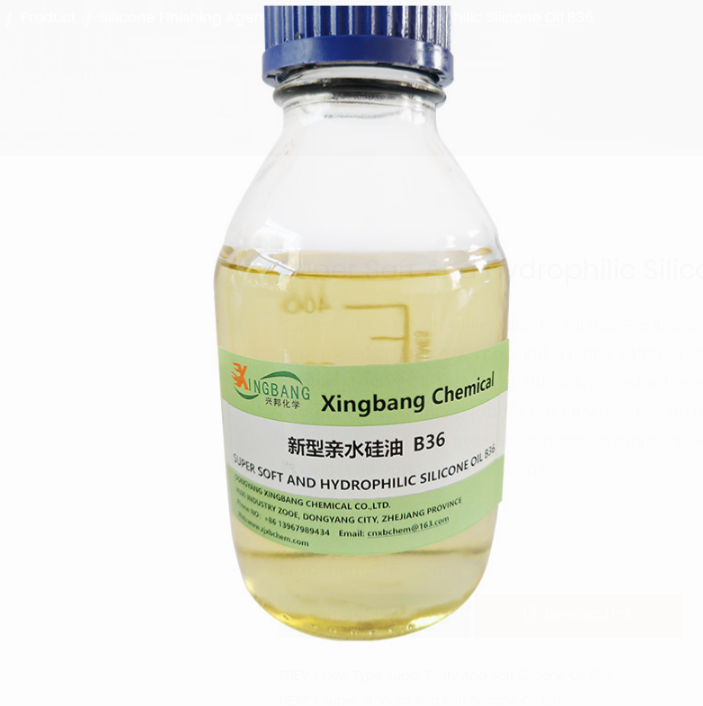
Finishing agents play an important role in the final stage of textile processing. These chemical compounds are applied to fabrics to enhance appearance, texture, and functional performance. Depending on the formulation, finishing agents can improve softness, smoothness, elasticity, or resistance to creasing and shrinkage.
During textile finishing, the agent forms a thin, even layer on the fabric surface, modifying its hand feel and improving handling characteristics. This treatment helps fabrics maintain their shape and visual appeal after repeated washing or wear. In addition, certain finishing agents can provide specific properties such as water repellence, antistatic behavior, or easy-care performance.
The selection of a suitable finishing agent depends on the type of fiber, desired fabric characteristics, and end-use requirements. Proper formulation and controlled application ensure consistent quality and stable results.
Finishing agents contribute to the efficiency of textile production and support the development of fabrics that meet both aesthetic and functional expectations. Their use demonstrates the connection between chemistry and textile performance, creating materials that respond effectively to modern consumer and industry needs.

 English
 Arabic
 French
 Spanish
 Portuguese
 Deutsch
 Turkish
 Dutch
 Russian
 Romaian
 Portuguese (Brazil)
 Greek