

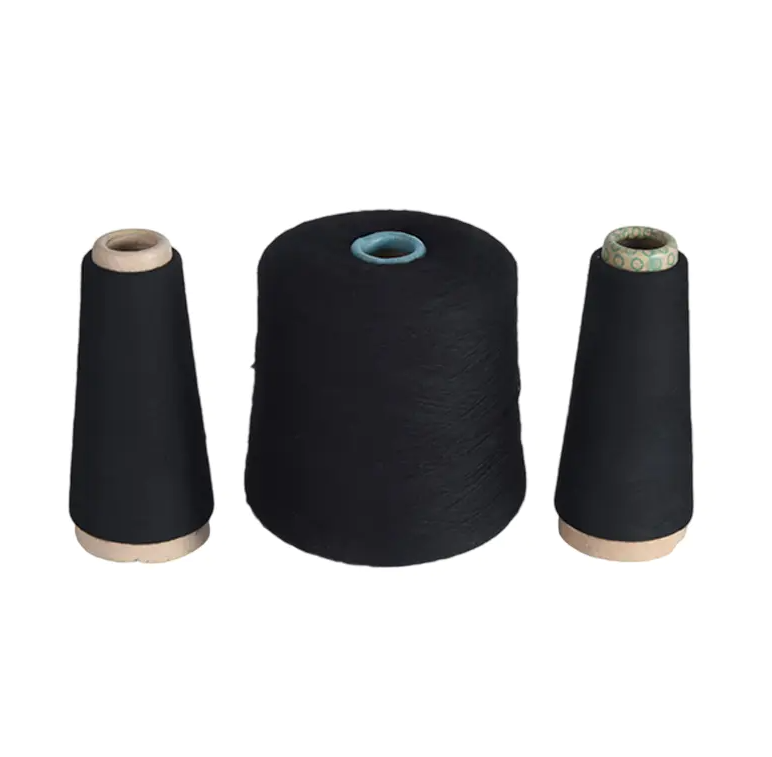
Thermal Endurance in High-Temperature Conditions
Non-Flammable Yarn is engineered to maintain its flame resistance and structural integrity even under prolonged exposure to heat. Unlike traditional synthetic or natural fibers that melt or ignite easily, this specialized yarn incorporates flame-retardant elements directly into its molecular structure. When exposed to high temperatures, the fiber forms a stable char layer, preventing oxygen penetration and flame spread. In laboratory tests, high-performance Non-Flammable Yarn can maintain effective resistance at temperatures ranging from 400°C to 600°C for several minutes, depending on the specific fiber composition and weave density.
Structural Stability and Molecular Design
The thermal stability of flame-resistant yarn largely depends on its polymer backbone and the chemical bonds that hold its structure. For instance, fibers such as meta-aramid and para-aramid exhibit aromatic ring structures that resist thermal decomposition, allowing them to maintain strength even after exposure to intense heat. This molecular stability means that the yarn does not drip, melt, or contribute to combustion. As a result, the fiber retains its shape and protective function even after repeated high-temperature exposure, making it ideal for industrial, aerospace, and military textile applications.
Testing Standards and Performance Evaluation
The endurance of this material under fire conditions is evaluated using international standards such as ISO 15025, NFPA 2112, and ASTM D6413. These tests assess parameters like after-flame time, char length, and residual tensile strength after exposure. In most cases, Non-Flammable Yarn demonstrates less than two seconds of after-flame duration and negligible damage to the surrounding fabric. In simulated environments, the yarn maintains its protective qualities for over ten minutes in intermittent flame exposure, showing excellent durability for safety garments and technical fabrics.
Influence of External Factors
Although Non-Flammable Yarn exhibits outstanding flame resistance, its performance can still be influenced by several external factors, such as ambient oxygen concentration, fabric blend composition, and humidity levels. Yarns used in mixed fabrics may experience reduced resistance if combined with untreated materials. Additionally, prolonged exposure beyond their designed thermal limit can lead to a gradual loss of tensile strength, even if the fabric does not ignite. Therefore, proper fabric design and maintenance are crucial to ensure consistent performance over time.
Long-Term Reliability and Applications
The high-temperature resistance of flame-retardant yarns makes them essential in environments where exposure to heat, sparks, or open flames is unavoidable. Applications include firefighter suits, electrical insulation, automotive interiors, and industrial protective gear. Over time, the yarn’s durability ensures safety without significant degradation, provided it is used within recommended conditions. The combination of inherent flame retardancy and structural endurance makes it a reliable material choice for long-term use in demanding thermal environments.

 English
 Arabic
 French
 Spanish
 Portuguese
 Deutsch
 Turkish
 Dutch
 Russian
 Romaian
 Portuguese (Brazil)
 Greek