

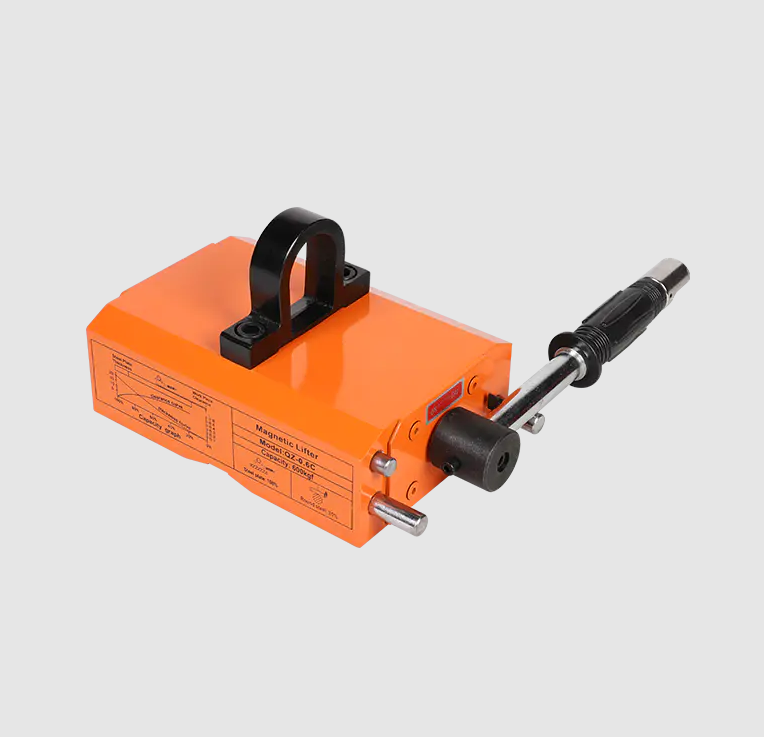
Introduction to Magnetic Lifting Challenges
A Permanent Magnetic Lifter is widely used in industrial settings for lifting and handling ferrous materials due to its convenience and energy efficiency. However, lifting steel plates that are irregularly shaped or contain holes presents unique challenges. Unlike flat, uniform surfaces, these types of plates reduce the contact area available for magnetic attraction, which directly affects the holding force. Understanding the limitations and strategies for optimizing magnetic performance is crucial for safe and effective operation.
Impact of Irregular Shapes on Magnetic Force
Irregular steel plates often feature curves, angles, or non-uniform thickness. These geometric variations create air gaps between the magnet and the metal surface, which significantly reduce the effective magnetic flux. Even small gaps can lead to a drastic decrease in lifting capacity, increasing the risk of slipping or dropping the load. Therefore, operators must carefully assess the shape and surface profile before attempting to lift such plates, often using multiple magnets or custom fixtures to distribute the force more evenly.
Lifting Perforated or Slotted Plates
Plates with holes or slots pose another set of challenges. The openings reduce the total area available for the magnet to attach, effectively weakening the magnetic grip. In these cases, the position of the holes relative to the magnetic poles is critical. If the holes align with the central lifting points, the magnet’s efficiency is greatly compromised. Solutions include positioning the magnet over solid sections of the plate, using multiple lifters in tandem, or selecting a lifter with a higher rated capacity to compensate for the loss of contact area.
Safety Considerations and Load Assessment
When handling irregular or perforated steel plates, safety precautions become even more important. Operators should always account for the reduced magnetic force by using appropriate safety factors. Conducting a test lift with a partial load or employing mechanical backup supports can help prevent accidents. Additionally, markings or guides on the lifter can assist in precise placement over optimal areas of the plate, ensuring the magnetic force is maximized.
Design Adaptations for Complex Surfaces
Some Permanent Magnetic Lifter models are designed specifically to handle non-flat or perforated materials. Features such as segmented magnets, adjustable magnetic poles, or pivoting base plates allow the magnet to conform better to uneven surfaces, increasing the effective contact area. These adaptations improve stability and load distribution, making lifting operations safer and more efficient even when working with irregular steel components.
Evaluating Feasibility Before Operation
While a Permanent Magnetic Lifter can be used on irregularly shaped or perforated steel plates, its performance is significantly affected by reduced contact areas and surface geometry. Proper assessment of plate shape, strategic placement of the magnet, and safety precautions are essential to ensure reliable lifting. Selecting lifters designed for complex surfaces or using multiple lifters in combination can mitigate the limitations, allowing operators to maintain efficiency and safety in challenging lifting scenarios.

 English
 Arabic
 French
 Spanish
 Portuguese
 Deutsch
 Turkish
 Dutch
 Russian
 Romaian
 Portuguese (Brazil)
 Greek