

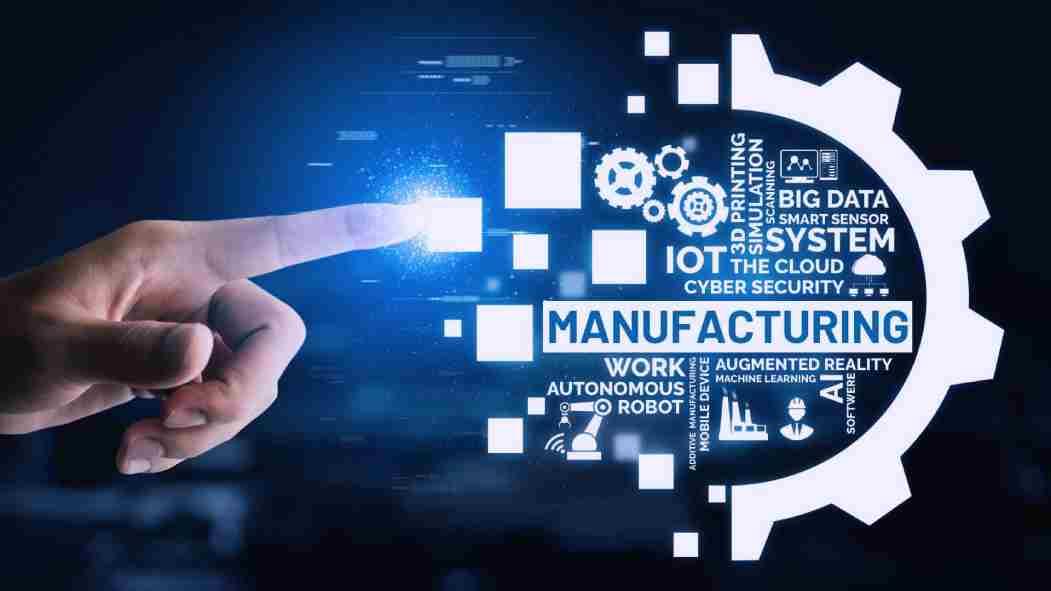
The future of global manufacturing is being actively forged by the powerful and divergent strategies of the leaders in the digital transformation market. A close examination of the Digital Transformation in Manufacturing Market Market Leaders—a group that includes OT champions like Siemens and IT titans like Microsoft—reveals a high-stakes competition between two fundamentally different approaches to building the smart factory of the future. These leaders are not just selling technology; they are selling a complete vision and architecture for how manufacturers should connect their physical operations to a digital nervous system. Their strategies are a direct response to the immense opportunity presented by Industry 4.0 and the challenge of bridging the historical gap between the factory floor and the enterprise IT environment. The market's massive growth potential provides the fuel for these ambitious, multi-billion-dollar strategic initiatives. The Digital Transformation in Manufacturing Market size is projected to grow USD 1144.60 Billion by 2035, exhibiting a CAGR of 9.36% during the forecast period 2025-2035. The companies that are leading the market are those with a clear, compelling, and executable strategy for delivering on the promise of a fully connected, intelligent, and automated manufacturing enterprise.
The strategy of the Operational Technology (OT) market leaders, exemplified by Siemens, is one of deep vertical integration and domain expertise. Siemens' strategy is built on leveraging its century-long dominance on the factory floor. Their goal is to create a seamless, end-to-end digital thread that connects every stage of the product lifecycle, from initial design to production and service. They have pursued this through a combination of in-house development and a series of major strategic acquisitions, purchasing leading software companies in areas like PLM (Product Lifecycle Management) and simulation. The culmination of this strategy is their "Digital Enterprise Suite" and their industrial IoT platform, MindSphere. The core of their strategic argument is that only a company with a deep, intrinsic understanding of the physical machines and manufacturing processes can build a truly effective digital twin and optimize production. They are building a more "closed" but highly optimized ecosystem where their software is designed to work perfectly with their own industrial hardware, offering customers the promise of a single, accountable vendor for their entire digital manufacturing stack. This is a strategy of building "up" from a position of strength on the shop floor.
In stark contrast, the strategy of the Information Technology (IT) market leaders, such as Microsoft and AWS, is one of an open, horizontal platform and ecosystem enablement. Their strategy is to provide the foundational cloud infrastructure and data analytics services that can support any manufacturing environment, regardless of what brand of machinery or industrial software the customer uses. Microsoft's strategy with its Azure cloud platform is particularly illustrative. They have built a comprehensive suite of services specifically for manufacturing, including Azure IoT Hub for device connectivity, Azure Data Lake for storing factory data, and a suite of Azure AI and Machine Learning services for building predictive models. Their strategy is not to build the factory-floor hardware, but to be the "intelligent cloud" that ingests data from it. A key part of their strategy is to build a massive partner ecosystem. They work closely with the OT vendors (including their competitors like Siemens), with system integrators, and with independent software vendors (ISVs) to ensure that their cloud platform can connect to everything and that a wide variety of manufacturing applications can run on it. This open, partnership-driven, horizontal platform strategy is one of building "down" from a position of strength in the cloud and enterprise IT. The Digital Transformation in Manufacturing Market size is projected to grow USD 1144.60 Billion by 2035, exhibiting a CAGR of 9.36% during the forecast period 2025-2035.
Top Trending Reports -
South Korea Graphical User Interface Design Software Market

 English
 Arabic
 French
 Spanish
 Portuguese
 Deutsch
 Turkish
 Dutch
 Russian
 Romaian
 Portuguese (Brazil)
 Greek