

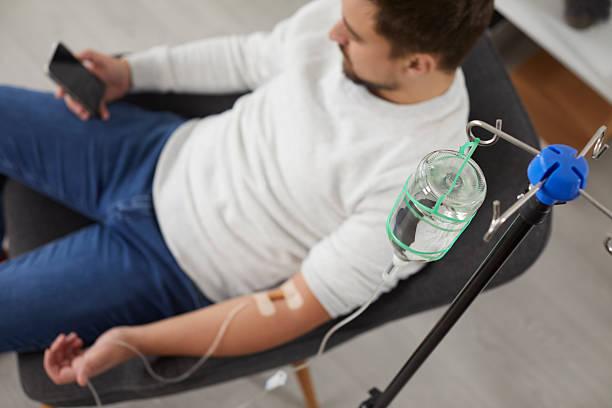
Introduction to Ketamine Infusion Therapy
On October 25, 2025, ketamine infusion therapy is a cornerstone of modern mental health care, offering rapid relief for treatment-resistant depression, anxiety, PTSD, and chronic pain. Once known only as an anesthetic, low-dose ketamine delivered via IV is transforming lives within hours. With over 300 certified clinics nationwide and growing insurance coverage, this therapy is no longer experimental—it’s essential. This blog explores how it works, the science, who benefits, and what to expect when considering ketamine infusion therapy.
What Is Ketamine Infusion Therapy?
Ketamine infusion therapy involves the slow, controlled delivery of sub-anesthetic doses of ketamine—typically 0.5 mg/kg—through an IV over 40–60 minutes in a medical setting. Unlike SSRIs that take weeks to adjust serotonin, ketamine targets the brain’s glutamate system, fostering neural plasticity and breaking negative cycles fast.
Administered by anesthesiologists, psychiatrists, or trained nurses in accredited facilities, patients remain conscious, experiencing mild dissociation—a serene, detached state—that resolves within 30 minutes. A standard protocol includes six infusions over 2–3 weeks, followed by personalized maintenance. It’s FDA-approved for anesthesia and used off-label for mood disorders, with esketamine (Spravato) as its FDA-approved nasal counterpart.
How Does Ketamine Infusion Therapy Work?
Ketamine blocks NMDA receptors, triggering a glutamate surge that activates mTOR pathways and boosts BDNF—driving synaptogenesis (new neural connections) within 24 hours. This rewires the default mode network (DMN)—the brain’s rumination engine—while calming the amygdala (fear center).
For depression: lifts emotional numbness.
For anxiety: reduces hypervigilance.
For PTSD: softens flashbacks.
The dissociative state acts as a “mental reset,” allowing patients to observe thoughts without being consumed—often described as “watching clouds drift by.” Neuroimaging confirms these shifts with decreased fear activity and enhanced emotional regulation.
The Science Behind Ketamine Infusion Therapy
The evidence is robust. A 2024 JAMA Psychiatry meta-analysis found 70% response rate and 48% remission rate in treatment-resistant depression after six infusions—vs. 10–20% with placebo. A 2025 VA study reported 68% reduction in suicidal ideation within 24 hours. For PTSD, a Johns Hopkins trial showed 57% symptom drop after three infusions.
Ketamine’s anti-inflammatory action reduces IL-6 and CRP—linked to mood disorders. In 2025, NIH trials are expanding to OCD, bipolar depression, and fibromyalgia, with early data showing 55–65% efficacy.
Benefits of Ketamine Infusion Therapy
Ketamine infusion therapy offers unmatched advantages:
-
Speed: Relief in hours—critical for crisis intervention.
-
Treatment Resistance: Works when SSRIs, SNRIs, TMS, ECT fail.
-
Broad Applications: Depression, anxiety, PTSD, OCD, CRPS, migraines.
-
Neuroplasticity Boost: Enhances therapy via new brain pathways.
-
Low Dependency Risk: Medically supervised, non-habit-forming.
Patients report “feeling human again,” “colors are vivid,” or “I can finally plan tomorrow.”
Who Can Benefit?
Ideal candidates:
-
Treatment-Resistant Depression: Failed ≥2 antidepressants.
-
Suicidal Ideation: Needing immediate stabilization.
-
PTSD & Trauma: Flashbacks, nightmares.
-
Chronic Pain: Fibromyalgia, CRPS.
-
Anxiety Disorders: GAD, panic, social anxiety.
Contraindications: Uncontrolled hypertension, psychosis, pregnancy. Full medical/psych eval required.
What to Expect in a Session
Pre-Treatment
-
Comprehensive screening (EKG, labs, psych history)
-
No food 4 hours prior; clear liquids OK
-
Bring a driver
During Infusion
-
Recliner, dim lights, music optional
-
IV placed; infusion over 40 minutes
-
Vital signs monitored
-
Mild dissociation: floating, time distortion
Post-Infusion
-
30-minute recovery with grounding
-
Mood lift often begins within 1–4 hours
-
Journaling encouraged
For those seeking deeper integration, ketamine assisted therapy near me connects you with clinics offering Ketamine-Assisted Psychotherapy (KAP) to process insights and sustain benefits.
Safety and Side Effects
Transient side effects: Nausea (10%), dizziness, mild BP rise—managed with meds or dose adjustment. No respiratory depression at therapeutic doses. Long-term use monitored; dependency risk minimal under medical care.
Integration for Lasting Results
Ketamine opens a 72-hour neuroplastic window—perfect for therapy, mindfulness, or habit change. KAP clinics report 82% sustained remission at 6 months vs. 52% with infusions alone.
Access and Insurance
Rural access improves via telemedicine + at-home esketamine. Insurance increasingly covers Spravato; IV ketamine often uses HSA/FSA. Contact clinics for flexible options.
Conclusion
On October 25, 2025, ketamine infusion therapy is a validated, rapid-acting lifeline for treatment-resistant minds and bodies. Backed by neuroscience, delivered with precision, and enhanced by integration, it doesn’t just treat symptoms—it rewires the brain for resilience. If traditional paths have failed, ketamine infusion therapy offers not gradual hope, but immediate possibility. Your breakthrough is closer than you think.
FAQs
-
How fast does ketamine infusion therapy work?
60–70% feel improvement within 4–24 hours; peak after 2–3 infusions. -
Is it safe?
Yes—administered by medical professionals with continuous monitoring. -
Will I be unconscious?
No—you remain awake and aware. Dissociation is mild and temporary. -
How long do benefits last?
3–6 weeks per series; maintenance infusions sustain remission. KAP extends duration. -
How do I find a provider?
Search the American Society of Ketamine Physicians or try ketamine assisted therapy near me for integrated care.

 English
 Arabic
 French
 Spanish
 Portuguese
 Deutsch
 Turkish
 Dutch
 Russian
 Romaian
 Portuguese (Brazil)
 Greek