

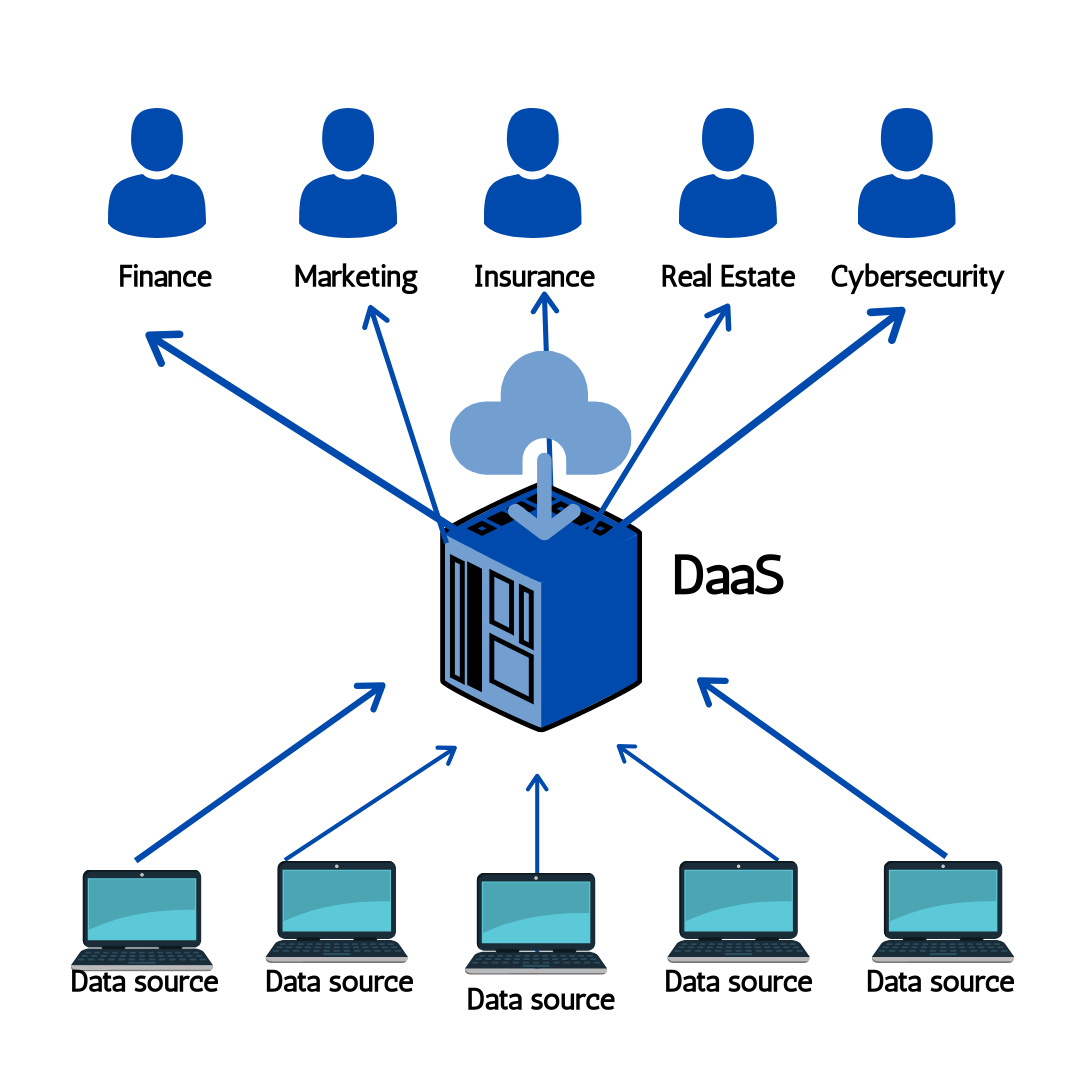
The Data as a Service (DaaS) Industry Competition is a complex and multi-layered battle fought over the quality, uniqueness, and accessibility of information. The competitive landscape is not a simple head-to-head rivalry but a dynamic interplay between different business models and data philosophies. The first major competitive front is the battle between the traditional, established data brokers and the new wave of agile data providers. The incumbents, such as Dun & Bradstreet, compete on the basis of their brand reputation, the perceived authoritativeness of their data, and their long-standing enterprise contracts. Their competitive moat is the trust they have built over decades and the deep integration of their data into their customers' core business processes. However, they face intense competition from newer, more technology-driven players who often claim to have more up-to-date data, more flexible delivery models (via modern APIs), and more transparent pricing. This forces the incumbents to invest heavily in modernizing their own technology stacks and data delivery mechanisms to avoid being seen as slow and outdated.
The second major competitive front is the battle for unique, proprietary datasets, particularly in the realm of alternative data. This is a high-stakes, "gold rush" environment where hundreds of companies are competing to find and commercialize the next valuable, alpha-generating dataset. The competition is fierce. One company might be using satellites to monitor agricultural fields, while another is using them to track activity at industrial facilities. One company might have an exclusive partnership to analyze credit card transaction data from a major bank, while another is scraping millions of online job postings. In this space, the competitive advantage is purely informational. The company with the most unique, most predictive, and most difficult-to-replicate dataset is the one that can command the highest prices from hedge funds and corporate clients. This competition is a relentless race for data exclusivity and analytical superiority. It is a battle fought by data scientists, where the quality of the data and the sophistication of the models used to process it are the key weapons.
A third, and often overlooked, competitive pressure comes from the proliferation of high-quality, open-source and government data. A vast amount of valuable data is now available for free from government agencies (like census data, economic data, and weather data) and from open-source projects. This puts a downward pressure on the pricing of commercial data providers, particularly for more commoditized datasets. A commercial DaaS provider cannot simply sell raw government data; they must add significant value to it to justify their price. This competition from "free" forces commercial providers to differentiate themselves by cleaning, enriching, and combining multiple data sources to create a more valuable and easier-to-use product. For example, a commercial provider might take raw census data and join it with other datasets to create a more powerful consumer segmentation product. The competition is therefore not just about having data, but about the value that is added to that data through processing, enrichment, and analysis. The Data as a Service (DaaS) Market size is projected to grow to USD 75.2 Billion by 2035, exhibiting a CAGR of 17.23% during the forecast period 2025-2035.
Top Trending Reports -
Japan Autonomous Mobile Manipulator Robots Ammr Market
South America Autonomous Mobile Manipulator Robots Ammr Market
South Korea Autonomous Mobile Manipulator Robots Ammr Market

 English
 French
 Spanish
 Portuguese
 Deutsch
 Turkish
 Dutch
 Italiano
 Russian
 Romaian
 Portuguese (Brazil)
 Greek