

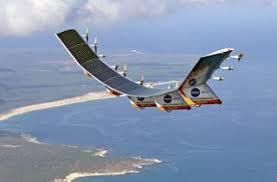
The remarkable capabilities of HALE platforms are not the result of a single breakthrough but rather the convergence of several advanced technologies that collectively enable flight at extreme altitudes for unprecedented durations. A technological deep-dive into the High Altitude Long Endurance market highlights advanced propulsion systems as a primary enabler. For missions requiring heavy payloads and high speeds, highly efficient turbofan engines, like those on the RQ-4 Global Hawk, have been optimized for performance in the thin air of the stratosphere. However, the most significant innovation is in the realm of ultra-long endurance platforms, where solar-electric propulsion is key. These systems use vast arrays of high-efficiency photovoltaic cells covering the aircraft's wings to capture solar energy during the day, which powers the electric motors and charges onboard batteries. At night, the aircraft flies on battery power, allowing for continuous, multi-week or even multi-month flight without refueling. This technology is fundamental to the concept of HAPS and persistent pseudo-satellites.
In parallel with propulsion, advancements in lightweight materials and aerostructures are critical for HALE platform viability. To operate efficiently in the thin atmosphere of the stratosphere, these aircraft require extremely long, slender wings to generate sufficient lift, and they must be incredibly lightweight. The market is therefore heavily reliant on advanced composite materials, such as carbon-fiber-reinforced polymers (CFRPs), which offer an exceptional strength-to-weight ratio. These materials allow for the construction of large, yet feather-light and structurally robust airframes capable of withstanding the operational stresses of high-altitude flight. The aerodynamic design of these platforms is also highly specialized, focusing on maximizing lift-to-drag ratio for extreme efficiency. The High Altitude Long Endurance size is projected to grow USD 39.28 Billion by 2035, exhibiting a CAGR of 7.3% during the forecast period 2025-2035. The continuous innovation in materials science and aerodynamic modeling is directly contributing to the increasing endurance and payload capacity of next-generation HALE systems.
A third pillar of HALE technology is the combination of advanced autonomous systems and sophisticated sensor payloads. Given their extremely long mission durations, it is impractical and cost-prohibitive for HALE platforms to be manually piloted in real-time. Therefore, they rely on highly advanced flight control and mission management systems that enable fully autonomous operation, from takeoff and landing to en-route navigation and execution of the mission plan. This autonomy is increasingly being augmented with artificial intelligence to allow the platform to react to unforeseen events and dynamically optimize its mission without human intervention. Simultaneously, the trend towards miniaturization is enabling more capable yet lighter sensor and communication payloads. The development of smaller, more powerful radars, cameras, and communication arrays allows HALE platforms to perform a wider range of missions without compromising their endurance, thereby increasing their versatility and overall market appeal.
Top Trending Reports -

 English
 Arabic
 French
 Spanish
 Portuguese
 Deutsch
 Dutch
 Italiano
 Russian
 Romaian
 Portuguese (Brazil)
 Greek