

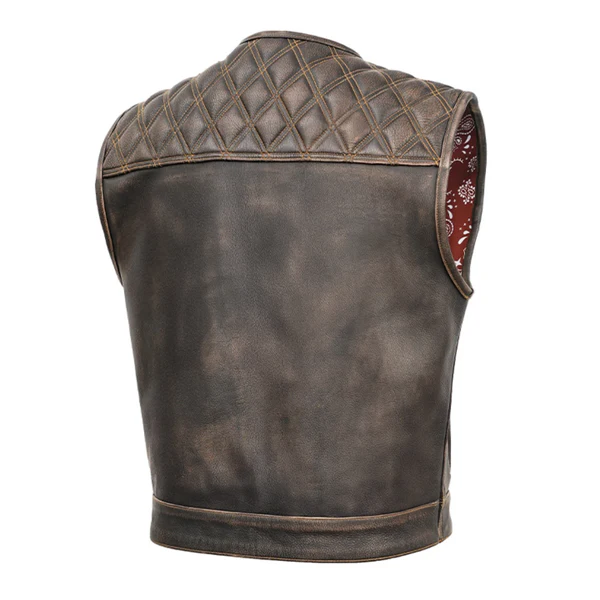
The durability of motorcycle gear is a fundamental concern for riders, manufacturers, and safety regulators. At the core of long‑lasting protective apparel lies one of the most overlooked yet critical engineering elements: stitching quality. Stitching connects panels and reinforcements, transfers load across materials, and significantly influences both the mechanical integrity and service life of gear designed to withstand the rigors of motorcycle use. This article examines how quality stitching affects longevity, performance, and safety, with particular emphasis on products such as the leather vest and textile vest.
Defining Quality Stitching and Its Role in Motorcycle Gear
What Constitutes “Quality Stitching”?
In technical apparel, quality stitching combines strong, UV- and abrasion-resistant thread, appropriate stitch types like lockstitch or bartacks, optimal stitch density, and well-designed seam configurations. Together, these factors ensure seams withstand mechanical stress, environmental exposure, and repeated use, enhancing the durability of leather and textile vests.
Why Stitching Is Crucial for Durability?
Stitching serves more than a basic joining function; it must transfer loads without thread breakage, maintain structural integrity under dynamic stresses such as wind and rider movement, resist environmental factors like UV exposure, moisture, and abrasion, and securely hold protective features, including armor pockets or reinforcement panels. When stitching is substandard, it often fails before the outer material—whether leather or textile—reaches its wear limits.
How Quality Stitching Improves Gear Performance
Load Distribution and Stress Management
In motorcycle gear, seams endure multidirectional forces from rider movement, aerodynamic drag, and incidental impacts, which create stress concentrations. Quality stitching distributes loads evenly across panels, reduces peak stress on thread and material interfaces, and minimizes seam puckering that can compromise performance. In high‑stress areas such as shoulders, elbows, and the back, reinforced stitching patterns like bar tacks and triple‑stitch lines are standard practices to ensure reliability.
Fatigue Resistance
Repeated loading and unloading cycles (vibrations, bending) induce fatigue failure. Higher stitch density and appropriate thread selection (e.g., bonded nylon or polyester with resistance to creep) significantly slow the onset of microscopic thread fractures.
Abrasion and Weather Resistance
Motorcycle gear is exposed to abrasion from road debris, rain, and rider contact. Quality stitching uses threads and seam sealing techniques that:
-
Resist fraying.
-
Maintain strength after exposure to moisture.
-
Withstand ultraviolet radiation without becoming brittle.
This is particularly important in textile vests, where synthetic fabrics paired with engineered threads must endure environmental wear without compromising seam integrity.
Material‑Specific Considerations
Leather Vests
Leather is a dense, non‑woven material with high tensile strength. However:
-
It lacks the uniform edge structure of woven textiles, making seam construction more challenging.
-
Stitch penetration holes do not close naturally, so thread quality and stitch technique determine long‑term seam strength.
-
Reinforcements around armholes and waist closures reduce tear propagation from stitch perforations.
Leather vest construction often uses heavier thread and lockstitch or bartack reinforcements to accommodate leather’s unique resistance to stretch while mitigating stress concentration around stitch holes.
Textile Vests
Textile materials (e.g., Cordura®, ballistic nylons) are engineered for abrasion resistance and flexibility. Characteristics include:
-
Uniform weave that interacts predictably with stitch patterns.
-
Compatibility with seam sealing technologies to maintain weather proofing.
-
Requirement for high‑tenacity synthetic threads that match fabric stretch properties to prevent seam failure.
Textile vest designs integrate multiple seam types to balance strength, flexibility, and comfort.
Expert Best Practices in Stitching for Motorcycle Gear
Thread Selection
Experts recommend using high‑tenacity polyester for its excellent UV resistance and minimal moisture absorption, or bonded nylon for its high tensile strength and reduced creep under load. Additionally, thread diameter and tensile rating should be carefully matched to the material’s thickness and the expected mechanical stresses to ensure optimal seam durability.
Stitch Type and Density
The general industry standard for heavy‑duty seams is 8–12 stitches per inch (SPI), with higher densities used in high‑stress areas. Double or triple needle stitching adds redundancy, ensuring that if one stitch line fails, the others continue to maintain seam integrity.
Seam Construction
Engineered seams (e.g., flat‑felled seams) protect thread from abrasion and distribute load over multiple layers of material. In contrast, exposed seams—if improperly constructed—are prone to early failure.
Common Mistakes and Misconceptions
Overemphasis on Material Alone
A common misconception is that superior outer materials (e.g., premium leather or high‑denier textiles) alone ensure durability. In reality, poorly executed stitching will fail before high‑quality materials, as stress localizes at stitch lines.
Ignoring Thread and Stitch Compatibility
Using mismatched thread or incorrect stitch density can cause thread breakage under moderate loads, create excessive seam bulk that affects comfort and fit, and lead to premature fabric wear around stitch holes.
Neglecting Environmental Factors
Threads sensitive to UV light or moisture degrade faster, weakening seams even in urban riding conditions. Experts select threads and finishes with proven environmental resistance.
Conclusion
Quality stitching is not ancillary to motorcycle gear durability— it is a core determinant of long‑term performance, safety, and value. Whether in a leather vest or a textile vest, the engineering of seams, selection of threads, and application of appropriate stitch patterns define how well the gear withstands mechanical loads and environmental stresses. Industry best practices emphasize material compatibility, strategic reinforcement, and proactive inspection to ensure that protective apparel performs reliably throughout its service life. For riders and manufacturers alike, understanding and prioritizing stitching quality is essential to achieving robust, long‑lasting motorcycle gear.
FAQs
1. How does stitch density affect motorcycle gear durability?
Higher stitch density generally improves seam strength by distributing load and reducingstress on each thread segment, particularly in high‑stress zones.
2. Why is thread material important in gear construction?
Thread material determines tensile strength, abrasion resistance, UV stability, and moisture performance, all of which influence seam longevity.
3. Can stitching quality outweigh material quality in gear durability?
Yes, even premium materials fail at weak seams. High‑quality stitching is essential to realize the full potential of the base material.
4. What stitch types are preferred for leather gear?
Leather gear commonly uses lockstitch combined with reinforcement techniques (e.g., bartacks) due to leather’s limited elasticity and high resistance to thread penetration.
5. Are textile vests more dependent on seam sealing than leather vests?
Yes, textile vests often require seam sealing to maintain water resistance, and proper stitching ensures the seal remains intact.
6. How often should motorcycle gear be inspected for seam wear?
Regular seasonal inspections are advisable, focusing on high‑stress areas such as shoulders, armholes, and closures.
7. Do all manufacturers use industry‑standard stitching practices?
Not all. Independent testing and certification (e.g., CE standards in protective gear) often reflect adherence to quality stitching benchmarks.
8. Is professional repair possible for failed stitching in motorcycle gear?
Yes, repairs can restore seam integrity if performed with appropriate thread, machine capability, and seam technique.

 English
 Arabic
 French
 Portuguese
 Deutsch
 Turkish
 Dutch
 Italiano
 Russian
 Romaian
 Portuguese (Brazil)
 Greek