

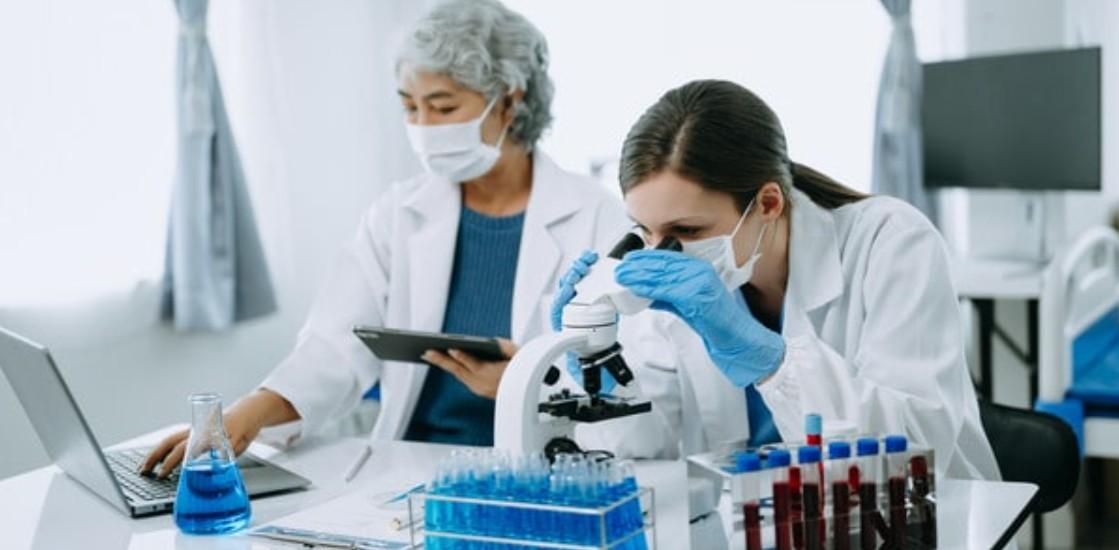
Liquid biopsy is an innovative diagnostic technique that allows clinicians to detect and monitor cancer using a simple blood sample rather than invasive tissue biopsies. This approach relies on identifying circulating tumor cells (CTCs) or fragments of tumor DNA (ctDNA) in the bloodstream. The method offers several advantages, including reduced patient discomfort, faster turnaround times, and the ability to track tumor dynamics over time. Laboratory professionals, particularly a lab technician, play a critical role in processing these samples accurately and maintaining the integrity of the biological material throughout the analysis process.
Understanding the Concept of Circulating Tumor Cells
Circulating tumor cells are cancer cells that have detached from a primary tumor and entered the bloodstream. These cells can serve as biomarkers, providing valuable information about the presence, type, and progression of cancer. Detecting CTCs is challenging due to their extremely low concentration relative to normal blood cells. Skilled laboratory personnel use precise techniques to enrich and identify these rare cells without compromising their viability. A lab technician trained in modern diagnostic methods learns how to distinguish CTCs from normal blood components and prepare samples for downstream analysis.
Blood Sample Collection and Preservation
Proper collection and preservation of blood samples are fundamental for successful liquid biopsy analysis. Blood is typically drawn into specialized tubes containing preservatives that prevent degradation of nucleated cells and ctDNA. Samples must be processed promptly or stored under controlled conditions to maintain cell integrity. Any mishandling can lead to cell lysis, contamination, or inaccurate results. In a professional setting, a lab technician is trained in aseptic techniques, handling protocols, and transport procedures to ensure that every sample remains viable for accurate testing.
Enrichment of Circulating Tumor Cells
Since CTCs are extremely rare, enrichment steps are necessary to isolate them from millions of normal blood cells. Techniques such as immunomagnetic separation, microfluidic devices, and density gradient centrifugation are commonly used. Immunomagnetic separation involves antibodies targeting specific tumor cell markers, allowing selective capture of CTCs. Microfluidic devices exploit differences in size and deformability to separate tumor cells from blood components. A lab technician gains hands-on experience with these enrichment technologies during training, learning to optimize protocols and troubleshoot inconsistencies to maximize recovery rates.
Identification and Characterization of CTCs
Once enriched, CTCs are identified and characterized using microscopic examination, immunofluorescence, or molecular assays. Fluorescently labeled antibodies targeting epithelial or tumor-specific markers help distinguish CTCs from other cells. Morphological assessment under a microscope also provides insights into cell viability and abnormalities. Molecular profiling can detect genetic mutations, helping clinicians personalize cancer treatment. Professional training equips a lab technician course with the skills to perform these complex analyses accurately, ensuring reliable results that can guide patient management.
Challenges in Liquid Biopsy Analysis
Despite its advantages, liquid biopsy presents several technical challenges. Low CTC counts, sample variability, and the risk of contamination can complicate interpretation. Additionally, the sensitivity and specificity of detection methods vary depending on the cancer type and stage. Laboratory professionals must be meticulous in maintaining quality control, validating protocols, and interpreting data carefully. A lab technician trained in modern laboratory standards understands these challenges and applies best practices to minimize errors, ensuring that results are both accurate and clinically meaningful.
Clinical Applications of Liquid Biopsies
Liquid biopsies have a wide range of clinical applications, from early cancer detection to monitoring treatment response and detecting resistance mutations. By tracking changes in CTC counts or ctDNA over time, clinicians can evaluate the effectiveness of therapies and adjust treatment plans accordingly. This non-invasive approach is particularly valuable for patients unable to undergo repeated tissue biopsies. A lab technician involved in liquid biopsy processing contributes directly to patient care, providing critical data that informs clinical decision-making and improves patient outcomes.
Quality Assurance and Laboratory Standards
Maintaining rigorous quality assurance standards is essential in liquid biopsy laboratories. Every step—from sample collection to enrichment, identification, and reporting—must comply with standardized protocols. Regular proficiency testing, equipment calibration, and documentation ensure reproducibility and reliability. Training in a lab technician program emphasizes adherence to these standards, preparing students to perform tasks with precision and integrity, while maintaining patient safety and regulatory compliance.
Future Perspectives in Liquid Biopsy
The field of liquid biopsy continues to evolve rapidly. Advances in single-cell sequencing, digital PCR, and AI-driven image analysis promise to enhance sensitivity, reduce processing times, and expand clinical applications. Laboratory professionals, particularly trained lab technicians, will increasingly need to integrate new technologies, interpret complex datasets, and ensure that diagnostic practices remain accurate and reliable. Continuous education and hands-on experience are critical to keeping pace with these innovations and delivering high-quality laboratory services.
Conclusion: The Role of the Lab Technician in Liquid Biopsy
Liquid biopsy represents a revolutionary approach in cancer diagnostics, providing a non-invasive method to detect and monitor tumor activity through blood samples. The isolation and analysis of circulating tumor cells require technical expertise, meticulous attention to detail, and adherence to strict laboratory protocols. A trained lab technician plays a pivotal role in ensuring that every step of the process—from sample collection to final analysis—is executed with accuracy and precision. Through structured training and hands-on experience, laboratory professionals contribute significantly to patient care, enabling clinicians to make informed decisions and ultimately improving cancer outcomes.

 English
 Arabic
 French
 Spanish
 Portuguese
 Deutsch
 Turkish
 Dutch
 Russian
 Romaian
 Portuguese (Brazil)
 Greek