

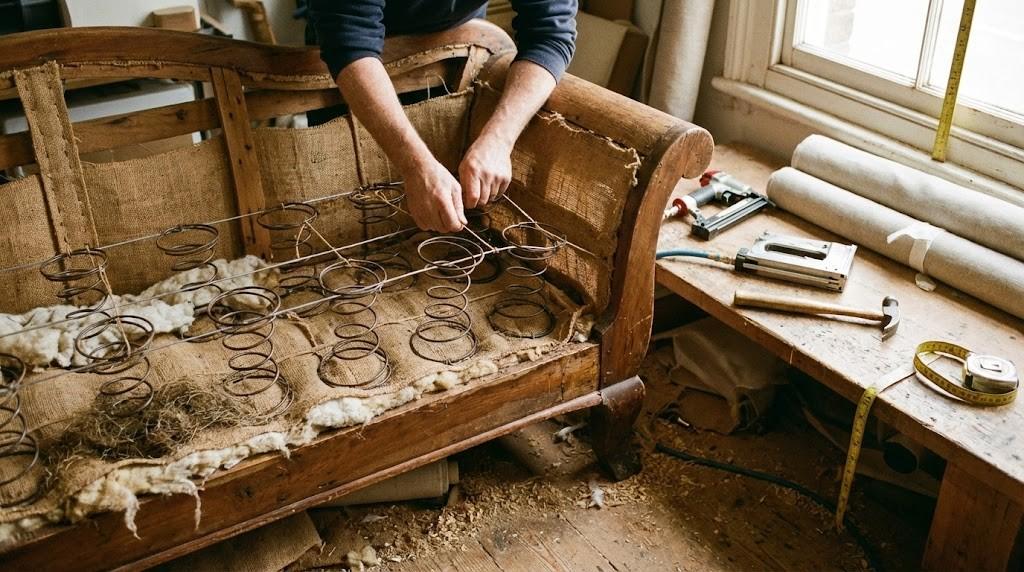
We live in an age of convenience. "Fast furniture" promises style now at a low price. It fills our homes quickly. But this convenience has a dark side. It creates a cycle of waste and pollution. This article uncovers that impact. It then presents a powerful alternative: professional sofa upholstery services. This choice is not just about decor. It is a conscious stand for sustainability.
Decoding the Fast Furniture Model
Fast furniture is like fast fashion. It is designed for quick turnover. Manufacturers use low-cost materials. Frames are often weak particleboard. Cushions have thin, low-density foam. Fabrics are synthetics that pill and tear easily. The goal is not to last. The goal is to get you to buy again in a few years.
When these pieces break or sag, repair is rarely an option. Parts aren't made to be fixed. The value is too low to justify a craftsman's time. So, the sofa gets hauled to the curb. Its journey ends in a landfill. This cycle is the engine of the fast furniture industry. Sofa reupholstery directly challenges this model by valuing what already exists.
The Manufacturing Burden Every New Sofa Carries
Think about what goes into a new sofa. Even an affordable one has a heavy environmental resume. Virgin resources are extracted. Factories run on energy, often from fossil fuels. Thousands of gallons of water treat and dye fabrics. Glues and finishes emit volatile organic compounds (VOCs).
Then, it ships. It may travel from another continent in a container ship. Then by truck to a warehouse. Then by delivery van to you. Each leg burns fuel. When you choose sofa upholstery services, you bypass almost all of this. The manufacturing phase is skipped. The long shipping journey is eliminated. The carbon savings are substantial.
How Reupholstery Preserves Embedded Energy
Every object has "embedded energy." This is the total energy used to make it. Your old sofa has already "spent" this energy. Throwing it away wastes that investment. Sofa reupholstery protects that embedded energy. You are not starting from zero. You are building upon an existing resource.
The frame is the biggest energy investment. A solid wood frame represents years of tree growth, processing, and skilled carpentry. By reusing it, you honor that energy. You also save the energy needed to process a new frame. This is the core efficiency of sofa reupholstery. It maximizes past resource use.
A Guide to Assessing Your Sofa’s Potential
Not every sofa is a candidate. How do you know? Follow this simple guide. First, check the frame. Sit on it. Does it creak or sway? Flip it over. Is the frame solid wood or flaky particleboard? Solid wood is good. Second, check the springs. Sit down and feel. Do you feel hard edges or wires poking? A good upholsterer can fix spring systems.
Third, be honest about sentimental and functional value. Do you love the sofa's size and comfort? If the structure is sound, sofa upholstery services can solve cosmetic issues. They can replace fabric and foam. They can make it feel brand new. This assessment is the first step toward a sustainable choice.
Health and Home: The Air Quality Advantage
New sofas can pollute your indoor air. That "new smell" comes from VOCs in adhesives, flame retardants, and fabric treatments. These chemicals can off-gas for months. They are linked to respiratory issues and headaches.
Sofa reupholstery gives you control. You can select Greenguard-certified fabrics. You can choose natural fiber cushions like latex or wool. You can avoid chemical flame retardants if local codes allow. You are not bringing a cocktail of new chemicals into your home. This makes your home healthier for your family.
Conclusion
Choosing sofa reupholstery is a meaningful decision. It rejects the throwaway culture of fast furniture. It reduces your carbon footprint and household waste. It safeguards your indoor air quality. It supports local craft and skill. Next time your sofa shows wear, pause. Consult with sofa upholstery services before browsing stores. You might find that the most eco-friendly, healthy, and beautiful solution is already in your living room, waiting for its second act.

 Arabic
 French
 Spanish
 Portuguese
 Deutsch
 Turkish
 Dutch
 Italiano
 Russian
 Romaian
 Portuguese (Brazil)
 Greek