

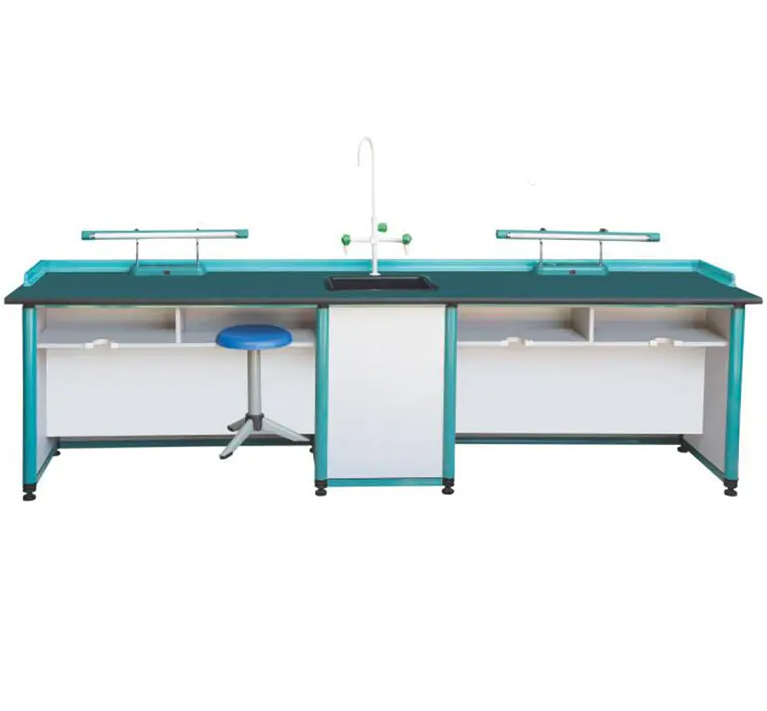
Laboratory stools provide essential support for scientists navigating busy research spaces. Sitting for long periods while handling experiments, microscopes, or instruments can cause fatigue, making comfortable seating a necessity. Adjustable height, swivel seats, and footrests allow researchers to maintain proper posture while working at benches of different heights. Scientists benefit from stools that adapt to both sitting and leaning positions, giving flexibility during repetitive or detailed tasks.
Durability and material selection are key aspects of laboratory stool design. Metal frames, reinforced plastics, and corrosion-resistant finishes withstand frequent cleaning and exposure to chemicals. Seat surfaces resistant to spills, stains, and moisture simplify sanitation, which is critical in environments where biological samples or reagents are used daily. Some designs incorporate padded seats covered with water-resistant or wipeable materials, balancing comfort and hygiene.
Mobility increases efficiency in laboratories. Casters allow smooth movement across floors, enabling researchers to transition between benches, instruments, and storage areas without unnecessary standing. Locking wheels stabilize stools when tasks demand precision, preventing unwanted movement. Swiveling seats allow quick access to tools and colleagues, promoting fluid collaboration. These design features reduce interruptions, minimize physical strain, and support a faster workflow.
Ergonomics play a major role in stool design. Seats with gently rounded edges prevent pressure points, while footrests maintain lower limb comfort. Height adjustability supports correct knee and hip angles, promoting better circulation. Partial backrests or leaning-friendly designs provide additional support during longer experiments. Laboratory stools reduce micro-movements that contribute to fatigue, helping researchers remain alert and comfortable during intensive work sessions.
Flexibility and adaptability make laboratory stools suitable for various lab layouts. Stackable or lightweight stools simplify storage in crowded areas, and compact designs allow easy movement without obstructing workflow. Adjustable features ensure suitability for different users, from technicians to senior scientists. Laboratories benefit from stools that combine stability with flexibility, providing comfort and accessibility without compromising floor space or bench access.
Maintenance considerations influence stool longevity. Surfaces that resist chemical spills, moisture, and scratches simplify cleaning and support hygiene protocols. Smooth finishes and minimal seams reduce contamination risks, allowing routine disinfection without damage. Durability in stool materials ensures that heavy daily use does not compromise appearance or function. Reliable laboratory stools withstand exposure to cleaning agents, spills, and frequent movement, maintaining usability over extended periods.
Laboratory stools also contribute to team collaboration. Adjustable heights let multiple users work comfortably at shared benches, and swivel or mobile stools facilitate communication during experiments. Users can pivot quickly to share observations, take notes, or access nearby equipment, promoting interaction without interrupting workflow. Flexible seating supports teamwork and efficiency, enhancing lab culture while maintaining focus on tasks.
Comfort and productivity go hand in hand. Laboratory stools help maintain proper posture, reduce fatigue, and allow dynamic movement during long work periods. Footrests, padded seats, and adjustable heights all contribute to user comfort, while mobility features support multitasking and collaboration.
Selecting laboratory stools involves evaluating lab needs, user preferences, and space constraints. Durability, ergonomics, mobility, and hygiene features all play a role in determining the right solution. Properly chosen stools enhance efficiency, maintain comfort, and support hygiene standards. Simple in appearance but versatile in function, laboratory stools provide practical solutions for demanding research environments, helping scientists work more effectively while keeping physical strain to a minimum.

 English
 Arabic
 French
 Spanish
 Portuguese
 Deutsch
 Turkish
 Dutch
 Russian
 Romaian
 Portuguese (Brazil)
 Greek