

Introduction: More Than Fashion
Denim Tears is not simply a clothing brand—it is a cultural statement. Founded by Tremaine Emory, Denim Tears sits at the intersection of fashion, history, and Black identity. Each piece functions like a wearable archive, carrying stories of pain, resilience, and pride. In a world where fashion often prioritizes trends over meaning, Denim Tears dares to slow things down and ask harder questions: Who are we? Where did we come from? And how do we remember?
The Vision of Tremaine Emory
Tremaine Emory, also known as “Denim Tears,” is a creative force shaped by music, art, and lived experience. Having worked with influential figures and brands such as Kanye West, Virgil Abloh, and Supreme, Emory understands the mechanics of global fashion. But with Denim Tears, he chose a different path—one rooted in truth rather than hype.
Emory uses fashion as a language. For him, garments are not decorative objects; they are political, emotional, and historical tools. Denim Tears was born out of a desire to confront America’s past honestly, especially the legacy of slavery and its ongoing impact on Black life.
Cotton Wreaths and Historical Memory
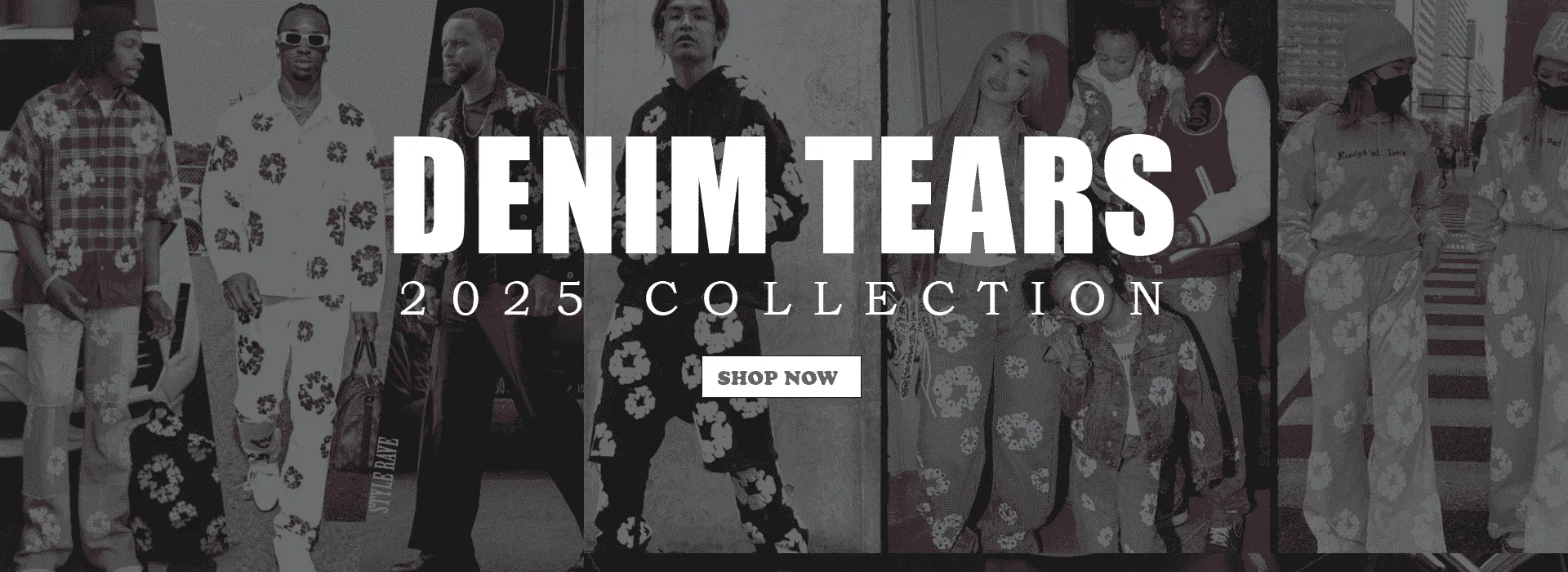
Perhaps the most recognizable symbol of Denim Tears is the cotton wreath. At first glance, it may appear minimal or even beautiful—but its meaning cuts deep. Cotton is inseparable from the history of slavery in the United States, representing forced labor, violence, and exploitation. By placing cotton imagery on denim—another fabric tied to labor—Emory forces the wearer and the viewer to confront uncomfortable truths.
This design choice is intentional and powerful. It reclaims symbols that were once used to dehumanize and transforms them into emblems of remembrance and resistance. Denim Tears does not allow history to fade into abstraction; it insists on visibility.
Fashion as Storytelling
Every Denim Tears collection feels like a chapter in a larger narrative. The brand often references the African diaspora, the Great Migration, Black church culture, and civil rights history. These are not vague inspirations but carefully researched themes woven into the fabric, graphics, and silhouettes.
In this way, Denim Tears aligns more closely with art than traditional fashion. The clothing tells stories that are often excluded from mainstream conversations. Wearing Denim Tears becomes an act of participation—an acknowledgment that fashion can carry weight and responsibility.
Collaboration Without Compromise
Denim Tears has collaborated with major brands like Levi’s, Converse, and Dior. What makes these collaborations stand out is that Emory does not dilute his message to fit corporate expectations. Instead, he brings his full vision into these partnerships, using their global platforms to amplify Black history and narratives.
The Levi’s x Denim Tears collaboration, for example, reexamined denim’s role in American labor history, while maintaining Levi’s iconic craftsmanship. These projects prove that meaningful storytelling and commercial success do not have to be mutually exclusive.
Cultural Impact and Community
Denim Tears resonates deeply with a generation seeking authenticity. In an era of fast fashion and algorithm-driven trends, the brand offers depth. It speaks to people who want their clothing to reflect values, not just aesthetics.
Beyond garments, Denim Tears contributes to cultural conversations about race, memory, and ownership. It challenges the idea that Black culture is merely a resource to be consumed. Instead, it asserts that Black stories deserve respect, context, and care.
Conclusion: Wearing the Truth
Denim Tears is beautiful not because it is easy to look at, but because it is honest. It reminds us that beauty can exist alongside grief, and that fashion can be a space for education and healing. Tremaine Emory has created more than a brand—he has created a platform for remembrance.
To wear Denim Tears is to carry history on your back and sleeves. It is to acknowledge the past while standing firmly in the present. In that sense, Denim Tears is not just about what we wear—it’s about what we choose to remember, and what we refuse to forget.

 English
 Arabic
 French
 Portuguese
 Deutsch
 Turkish
 Dutch
 Italiano
 Russian
 Romaian
 Portuguese (Brazil)
 Greek