

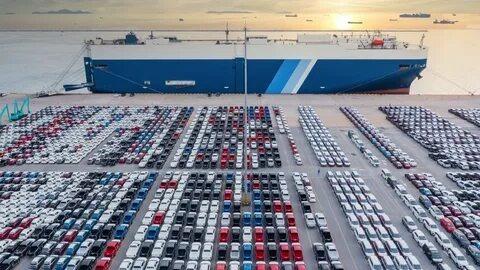
In an era of global connection and movement, the challenge of relocating our most prized vehicles—whether a beloved daily driver, a hard-won collector's item, or a critical business asset—demands solutions that match the value of what’s being transported. Beyond the open car carrier on the highway lies a world of precision, security, and absolute protection: the realm of container shipping. This method represents the pinnacle of secure vehicle transport, a process that transforms a standard steel box into a mobile, impenetrable vault. It is the choice for those who view their vehicle not merely as cargo, but as an irreplaceable possession requiring an uncompromising standard of care across any distance, especially over oceans. Understanding the nuances of container shipping is to understand the art of guaranteed preservation.
The Anatomy of a Mobile Fortress: More Than Just a Box
At its core, container shipping for vehicles utilizes the same standardized, intermodal steel containers that move the world’s commercial goods. A 20-foot or 40-foot corrugated steel box becomes a private garage. But the simplicity of the concept belies the sophistication of its execution. The container itself is a marvel of durability, designed to withstand the immense forces of sea travel, from towering waves to shifting loads in a ship's hold. When used for vehicle transport, this inherent strength is directed toward a single purpose: creating a sealed environment that is isolated from the external world.
This isolation is the defining characteristic. Unlike open or even enclosed trailer transport, a container provides a physical barrier against every elemental threat: salt spray, driving rain, sun exposure, wind-blown debris, and dust. For the vehicle inside, the chaotic outside environment ceases to exist. The container is then lifted, stacked, and secured aboard a colossal ocean-going vessel, becoming one unit in a meticulously engineered grid of thousands, traveling along established global trade routes from port to port. This method is not merely transport; it is the international relocation of a sealed microenvironment.
The Gold Standard: Understanding FCL, LCL, and the Art of Crating
Within container shipping, decisions about how the container space is utilized allow for customization based on need and value. The two primary designations are Full Container Load (FCL) and Less than Container Load (LCL).
Full Container Load (FCL) Shipping is the premier option. Your vehicle is the sole occupant of the container. This exclusive use guarantees no contact with other goods, allows for customized interior securement, and simplifies the logistics and customs process, as the entire container's contents are yours alone. It offers the highest level of control and security from the moment the doors are sealed at origin until they are opened at destination.
Less than Container Load (LCL) Shipping is a consolidated service. Your vehicle shares container space with other shippers' cargo, which is carefully packed and secured alongside it. While a cost-effective alternative to FCL, it introduces variables. The container may be opened and reconfigured at intermediate ports, and the vehicle will share space with non-automotive goods. Professional packing and bracing are critical in this scenario to ensure nothing shifts during transit.
The ultimate expression of protection within a container is crating. This involves constructing a custom-built wooden frame, or crate, around the vehicle inside the container. The vehicle is suspended within this frame, its tires off the container floor, immobilized against any movement. Crating is the absolute zenith of auto shipping, employed for multi-million-dollar classics, concours-level show cars, or prototype vehicles where not even a micron of vibration-induced wear is acceptable. It is the difference between placing an item in a vault and then suspending that item within the vault on a cushion of air.
The Sealed Journey: From Door to Dock and Across Oceans
The process of container shipping a vehicle is a methodical sequence, each step designed to maintain integrity. It begins with preparation at a dedicated facility or, for door-to-door service, at your location using specialized mobile container delivery. The vehicle is meticulously inspected and photographed, documenting its condition in minute detail. It is then loaded using precision ramps and guided by experts to ensure safe placement within the container.
Once positioned, the securement phase begins. Professional handlers use a system of heavy-duty, non-abrasive straps, wheel chocks, and sometimes soft-grounding to anchor the vehicle to the container's robust tie-down points. The goal is to make the car and the container move as a single, solid unit. Following this, the doors are closed, and a customs-approved seal—a numbered, tamper-evident bolt—is affixed. This seal's number is recorded on all shipping documents; if broken before official arrival, it signals potential tampering.
The container then journeys to the port, where it is scanned, logged, and lifted by gargantuan cranes onto the ship. For weeks, it travels in the stack, isolated and secure. Upon arrival at the destination port, it undergoes customs inspection, is cleared, and begins the reverse process: land transport to a depot or final destination, where the seal is officially broken, and your vehicle emerges, exactly as it was sealed.
Why Container? The Unmatched Advantages for Discerning Owners
The choice for container shipping is a deliberate one, driven by specific advantages that other methods cannot replicate.
-
Absolute Environmental Control: The sealed steel walls eliminate exposure to corrosive salt air, damaging UV rays, and precipitation. This is critical for classic cars with vulnerable original paint or for vehicles traveling through multiple climate zones.
-
Total Physical Security: The container is a locked, sealed unit. It prevents theft, vandalism, and accidental damage from contact with other vehicles or shifting cargo. The tamper-evident seal provides a clear audit trail.
-
Optimal for Non-Standard Vehicles: Container shipping is the only viable method for inoperable "project" cars, exceptionally low-clearance vehicles, or highly modified cars that cannot be driven onto a standard carrier. They can be winched in and secured safely.
-
Ideal for Integrated Moves: For families or individuals undergoing international relocation, a vehicle can be shipped in its own container alongside household goods in a separate container, keeping the entire move synchronized under a single logistics plan.
-
Streamlined International Protocol: As the backbone of global trade, container shipping is perfectly integrated into international customs and port systems, often facilitating a smoother paperwork process compared to more niche transport methods.
The Imperative of Partnership and Preparation
Given the technical nature and high stakes of container shipping, the selection of your logistics partner is paramount. You need a specialist with direct experience in containerized vehicle logistics, not a general auto transporter. This partner should manage the entire "door-to-door" chain, including the land transport to and from the ports, customs brokerage, and coordination with the ocean carrier.
Preparation is equally critical. The vehicle must be spotlessly clean for inspection, with a near-empty fuel tank (typically under a quarter) for safety. All personal items must be removed. The battery should be disconnected, and alarm systems disabled. Providing your partner with exact vehicle dimensions and condition is essential to plan the loading and securement strategy.
Conclusion: The Ultimate Investment in Certainty
Container shipping is not a commodity service; it is a premium solution for premium needs. It represents a commitment to the principle that some assets deserve a standard of care that eliminates risk rather than merely mitigating it. For the collector, the restorer, the relocating executive, or anyone for whom a vehicle's condition is sacrosanct, it is the clear and necessary choice.
It transforms the anxiety of long-distance or international vehicle movement into a process of confident expectation. When you choose container shipping, you are not just paying for transportation. You are investing in a climate-controlled, tamper-proof, individually monitored mobile garage. You are purchasing the certainty that your vehicle will arrive not just safely, but in precisely the same state it left—ready for its next chapter, wherever in the world that may be. In the end, container shipping isn't just about moving a car; it's about delivering peace of mind, sealed and delivered.

 Arabic
 French
 Spanish
 Portuguese
 Deutsch
 Turkish
 Dutch
 Italiano
 Russian
 Romaian
 Portuguese (Brazil)
 Greek