

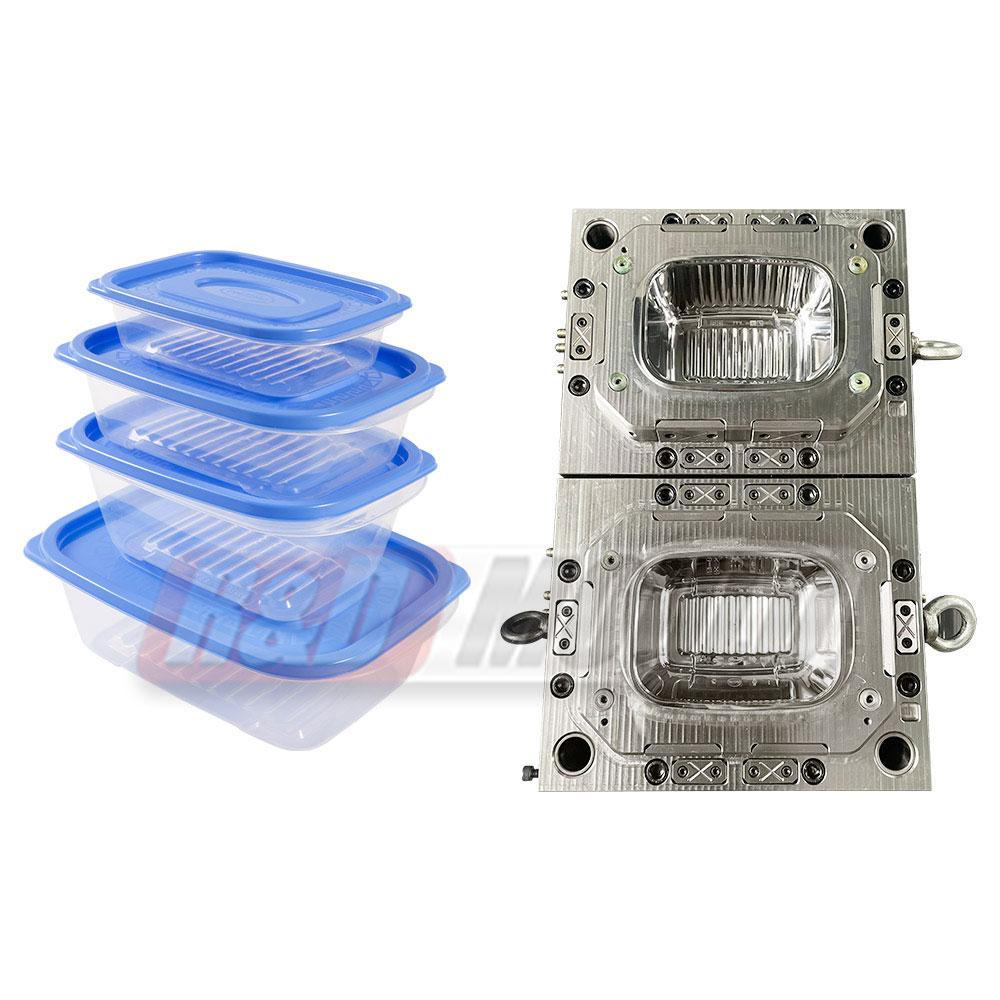
A Crate Mold is not just a tool for shaping plastic. For factories involved in storage, transport, or assembly, it directly affects how crates perform during daily use. Buyers often focus on crate price, but the mold behind it decides surface quality, load behavior, and how long production stays stable.
What buyers usually want to know about a Crate Mold
Many buyers ask how a Crate Mold supports repeated loading and unloading. In real applications, crates are stacked, dragged, and lifted by handles every day. This means the mold design must support smooth surfaces and a stable structure, not just a basic shape. A well-designed mold helps crates keep their form during long-term use and reduces visible marks on stress points.
Another common concern is service life. In factory production, a Crate Mold is expected to run for several years. Mold structure, steel choice, and machining accuracy all influence how long it stays usable. A typical service cycle can reach 5–8 years when the mold is designed for continuous production rather than short runs.
Different crate applications need different mold thinking.
Not all crates are used the same way. Collapsible crates focus ona folding structure. Bottles and milk crates need stable compartments. Fish and vegetable crates pay more attention to drainage and easy cleaning. Industrial crates often focus on load strength and stacking alignment.
This is why experienced Crate Mold Manufacturers usually divide molds by application instead of offering one general design. Each category needs different wall thickness planning, rib layout, and handle structure.
Technical points buyers rarely ask, but should
Steel selection is one of the quiet factors that shape mold performance. Mold base steel and core & cavity steel need controlled hardness. Overly hard steel increases processing difficulty and affects long-term stability.
Precision machining also matters. Moving areas and guiding systems must be processed by high-precision machines. Manual adjustment may look small, but it often shows up later as wear or alignment problems during mass production.
The exhaust system at the handle area is another key point. Handles carry the highest force when crates are loaded. If the exhaust design is weak, visible weld lines appear, and damage often starts from this point during use.
When sourcing from Crate Mold Manufacturers, buyers usually benefit from suppliers who understand crate applications instead of only mold dimensions. R&D Mould is a plastic crate mould manufacturer in China, supplying multiple crate types with smooth surfaces, stable loading performance, and long service cycles.

 English
 Arabic
 French
 Spanish
 Portuguese
 Deutsch
 Turkish
 Dutch
 Russian
 Romaian
 Portuguese (Brazil)
 Greek