

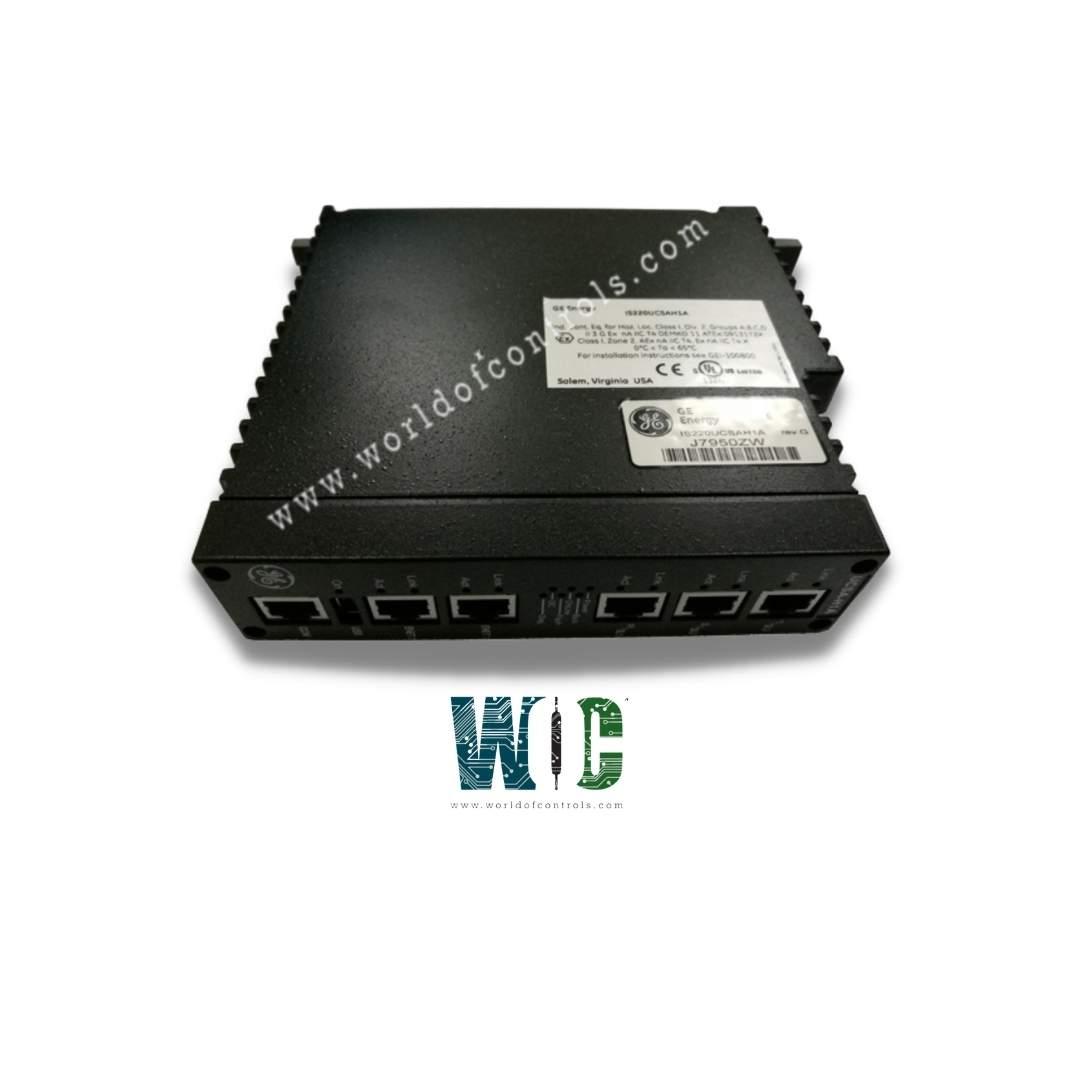
Introduction: Reliability at the Core of Turbine Operations
In the turbine industry—covering gas, steam, and hydro applications—reliability is the foundation of safe and profitable operations. Power plants, oil and gas facilities, and industrial complexes rely on turbines to deliver continuous energy output under demanding conditions. Even minor disruptions can lead to costly downtime, safety risks, and reduced efficiency.
At the center of this reliability is the embedded control system. Advanced embedded controller modules developed by General Electric (GE) are engineered to manage turbine performance with precision, speed, and resilience.
The Importance of Embedded Control in Turbine Systems
What Is an Embedded Controller?
An embedded controller is a dedicated industrial computing module designed to execute specific control tasks within a larger system. In turbine applications, these controllers:
-
Process real-time data from sensors
-
Execute control and protection algorithms
-
Manage startup and shutdown sequences
-
Regulate load and speed
-
Trigger alarms or protective trips when necessary
Unlike standard computing devices, embedded controllers are optimized for deterministic performance—meaning they respond within precise time frames, which is critical in turbine operations.
Why Turbine Control Demands Precision
Turbines operate under high temperatures, pressure variations, and rotational speeds. Any deviation from controlled parameters—such as fuel flow, vibration levels, or shaft speed—can escalate quickly into mechanical stress or failure.
Advanced embedded controllers ensure:
-
Accurate speed regulation
-
Fuel-air ratio optimization
-
Overspeed protection
-
Stable load management
-
Coordinated subsystem communication
This precision not only enhances safety but also extends equipment lifespan.
Embedded Controller Modules in the Turbine Industry
Core Functions Within Turbine Control Platforms
Within modern turbine control architectures—such as GE’s advanced Mark VIe systems—embedded controller modules act as the central processing unit of the control panel. Their responsibilities typically include:
1. Real-Time Data Processing
Controllers continuously collect data from temperature, pressure, and vibration sensors. They analyze this information in milliseconds to maintain optimal performance.
2. Execution of Control Logic
Preconfigured algorithms manage fuel systems, combustion sequences, lubrication circuits, and cooling mechanisms to ensure stable turbine operation.
3. System Integration
Embedded modules integrate multiple subsystems into a unified control strategy. This coordination ensures smooth transitions during startup, shutdown, and load changes.
4. Protective Functions
Built-in protection logic enables immediate corrective actions, such as reducing load or initiating shutdown procedures when abnormal conditions are detected.
Strengthening Industrial Reliability
Minimizing Unplanned Downtime
Unplanned turbine outages can result in significant financial losses. Advanced embedded control solutions help reduce downtime through:
-
Deterministic, high-speed processing
-
Redundant configuration capabilities
-
Continuous diagnostics and fault monitoring
By identifying early warning signs, operators can implement predictive maintenance strategies rather than reactive repairs.
Designed for Harsh Industrial Environments
Turbine control systems are often installed in environments exposed to vibration, electrical interference, and temperature fluctuations. GE’s embedded controller modules are engineered with industrial-grade components to withstand these stresses, ensuring long-term operational stability.
Scalable and Modular Architecture
Modern power plants demand flexibility. Embedded control platforms support modular expansion, enabling facilities to upgrade or expand capacity without redesigning the entire system. This scalability protects long-term investments while maintaining high reliability standards.
Enabling Digital Transformation in Power Generation
As the energy sector embraces digitalization, embedded control solutions play a key enabling role. These controllers support:
-
Real-time performance analytics
-
Remote monitoring capabilities
-
Data-driven maintenance planning
-
Integration with plant-wide distributed control systems
By serving as the processing backbone of turbine control systems, advanced embedded modules make intelligent power plant operations possible.
Conclusion: Engineering Reliability for Critical Infrastructure
Industrial turbines power essential infrastructure across the globe. Ensuring their reliable operation requires more than mechanical strength—it demands intelligent, responsive, and durable control systems.
GE’s advanced embedded control solutions provide the technological foundation for this reliability. Through precise real-time processing, integrated protection strategies, and scalable system architecture, these controllers help operators achieve safer, more efficient, and more resilient turbine performance.
In an industry where operational continuity is critical, embedded control technology remains a cornerstone of industrial reliability.

 English
 Arabic
 French
 Spanish
 Portuguese
 Deutsch
 Turkish
 Italiano
 Russian
 Romaian
 Portuguese (Brazil)
 Greek