

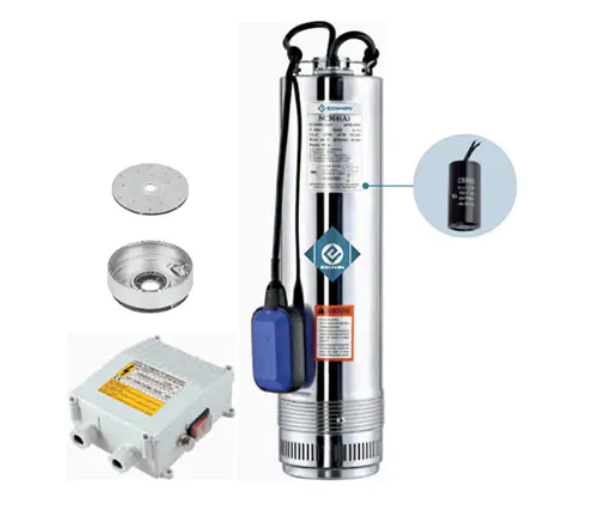
Accessing water from deep underground sources requires specialized equipment capable of handling high pressure and extended operation. A Deep Well Pump is designed to lift water from wells, reservoirs, or other deep water sources and deliver it efficiently to homes, farms, or industrial facilities. Its construction allows it to handle varying water levels and flow rates, making it a reliable option for consistent water supply.
The design of a Deep Well Pump focuses on durability and consistent performance. Many models include multi-stage impellers, which help increase pressure and lift water from greater depths. The pump motor is often located at the surface or in a submersible position, depending on the type of pump. Submersible designs allow the motor to operate underwater, reducing energy loss and preventing issues such as cavitation.
Material selection plays an important role in the performance of a Deep Well Pump. Components are commonly made from stainless steel, bronze, or corrosion-resistant alloys to prevent rust and degradation over time. Seals, bearings, and impellers are chosen to handle continuous operation and to resist wear from water and debris. Proper materials ensure the pump remains reliable under long-term use and challenging conditions.
Applications for a Deep Well Pump are diverse. In residential settings, it provides a steady water supply from private wells. On farms, the pump can support irrigation systems, ensuring that crops receive consistent water delivery. Industrial facilities use deep well pumps to supply process water or remove excess liquid from large tanks. The versatility of this pump allows it to meet different water demands across various environments.
Installation and operation require attention to detail with a Deep Well Pump. Correct alignment, pipe sizing, and electrical connections are essential for efficiency and safety. Monitoring flow rates and water levels helps prevent damage and ensures consistent performance. Proper installation also helps reduce energy consumption and wear on pump components, contributing to longer service life.
Maintenance is another key factor for a Deep Well Pump. Regular inspection of seals, bearings, and impellers helps detect issues early, preventing unexpected breakdowns. Cleaning screens and removing debris from intake areas maintains steady flow and prevents clogging. Routine lubrication and following manufacturer guidelines for operation can extend the pump's lifespan and maintain reliability.
Efficiency and safety are also considerations when using a Deep Well Pump. Ensuring that electrical connections are secure and that the pump operates within recommended pressure and temperature ranges reduces the risk of accidents. Submersible pumps must be monitored for water coverage to avoid overheating the motor, while surface-mounted pumps require proper ventilation for cooling.
Selecting the right Deep Well Pump depends on water depth, flow rate, and application type. Choosing a pump that meets these criteria ensures consistent performance and minimizes maintenance needs. The pump's construction, materials, and design features contribute to durability, efficiency, and reliable water delivery.
Overall, a Deep Well Pump provides a practical solution for accessing and distributing water from deep sources. Proper installation, material selection, and maintenance help maintain consistent operation while supporting residential, agricultural, and industrial applications. Understanding the capabilities and requirements of a deep well pump ensures a reliable water supply over time.
https://www.edwin-pump.com/product/borehole-submersible-pump-oil-filled-borehole-pump

 English
 Arabic
 French
 Spanish
 Portuguese
 Deutsch
 Turkish
 Dutch
 Russian
 Romaian
 Portuguese (Brazil)
 Greek