

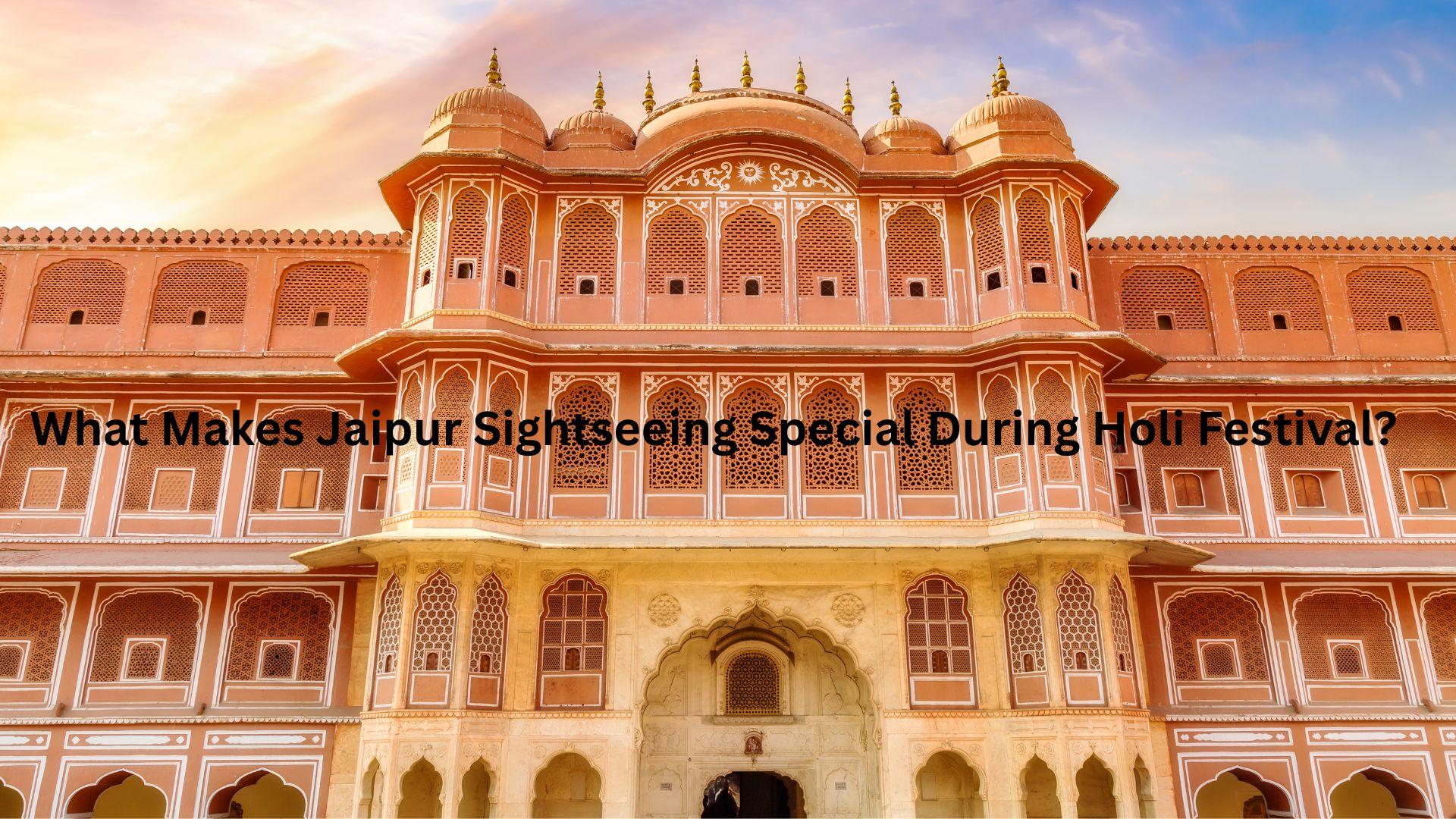
Holi in Jaipur is not just a festival, it turns the whole city into something alive and different. The pink walls, forts, palaces, and narrow bazaar lanes all become the backdrop for colours, music, water, and crowds that fill every street. For anyone who has already seen the usual sights, Amber Fort, City Palace, Hawa Mahal, coming during Holi adds a layer that makes the places feel new again. The monuments stay the same, but the way people move around them, the energy, the sounds, the colours, everything changes. Here’s what actually makes Jaipur sightseeing during Holi feel so special.
Jaipur Sightseeing Special During Holi Festival
The Pink City Turns Into a Living Canvas
Jaipur’s pink sandstone looks beautiful any time of year, but during Holi it becomes something else. The walls of Hawa Mahal and City Palace get splashed with gulal, red, pink, yellow, green, in patterns that look almost deliberate. The same colour mixes with the pink stone, so the buildings seem to glow brighter and softer at the same time. People climb onto rooftops near Hawa Mahal to throw colours down into the street, turning the whole view into a moving painting. The fort walls at Amber catch the morning light with streaks of colour from early celebrations, making the usual photo spots feel completely fresh. You don’t have to try hard to get good pictures, the festival does the work for you.
Morning and Afternoon Sightseeing Mixes With Festival Energy
Holi starts early in Jaipur. Locals begin throwing colours and playing music from 8–9 am in residential areas and markets. The main tourist sights open as usual, but by mid-morning the energy spills over. Groups walk from Amber Fort back down the hill covered in colours, laughing and taking photos. In the old city, narrow lanes around Johari Bazaar and Bapu Bazaar turn into colour zones, people dance to dhol, spray water, and offer thandai. Sightseeing in the afternoon means you’re moving through crowds that are happy and relaxed, not just tourists. The usual monuments feel less like “must-see” stops and more like part of the celebration.
Markets and Streets Become the Real Attraction
During Holi the bazaars are where the festival really lives. Johari Bazaar, Tripolia Bazaar, Bapu Bazaar, all of them filled with people in white clothes that quickly turn multicoloured. Vendors sell pichkari, gulal in buckets, water balloons, and fresh thandai. The usual shopping for jewellery and textiles mixes with festival chaos, you can buy a dupatta and have it covered in colour five minutes later. The streets around Hawa Mahal and City Palace turn into open party zones with dhol players, folk singers, and spontaneous dancing. Sightseeing stops feeling like a checklist and starts feeling like walking through a big family celebration.
The Forts and Palaces Take on a New Mood
Amber Fort in the morning during Holi is quieter than usual, most locals celebrate in the city below, so the fort feels peaceful. But the views from the top show the whole city dotted with colour. City Palace courtyards get used for small Holi events, music, dance, colour throwing, so you see the palace come alive in a way that normal days don’t show. Hawa Mahal looks even more striking with people on rooftops around it throwing colours into the street below. The monuments stay grand, but they feel less like frozen history and more like part of a living tradition.
Practical Things to Know for Holi Sightseeing
Holi usually falls in March (sometimes late February or early March). The main day is the full-colour celebration, but the day after (Dhuleti) is when many people go out again. Book your hotel early, central Jaipur fills up fast. Wear old clothes you don’t mind ruining, closed shoes (colours + water + dust = mess), and carry a small bag for your phone/camera wrapped in plastic. Most monuments allow entry during Holi, but some close early or have restrictions on colour inside. Morning sightseeing is quieter; afternoon and evening are when the streets get wild.
Wrapping Up!
Jaipur sightseeing during Holi turns the usual monuments into part of a bigger celebration, colours on pink walls, music in the lanes, crowds that are happy instead of hurried. The forts, palaces, and bazaars feel alive in a way normal days don’t show. If you’re planning a trip and want to see Jaipur at its most energetic, jaipur sightseeing tour during Holi is hard to beat. For groups that need comfortable transport around the city (especially with colour, water, and crowds), Hire Urbania Tempo Traveller in Jaipur makes moving around easier and drier. A good Rajasthan tour operator can help you time it right and keep the day smooth.

 English
 Arabic
 French
 Spanish
 Portuguese
 Deutsch
 Turkish
 Dutch
 Russian
 Romaian
 Portuguese (Brazil)
 Greek