

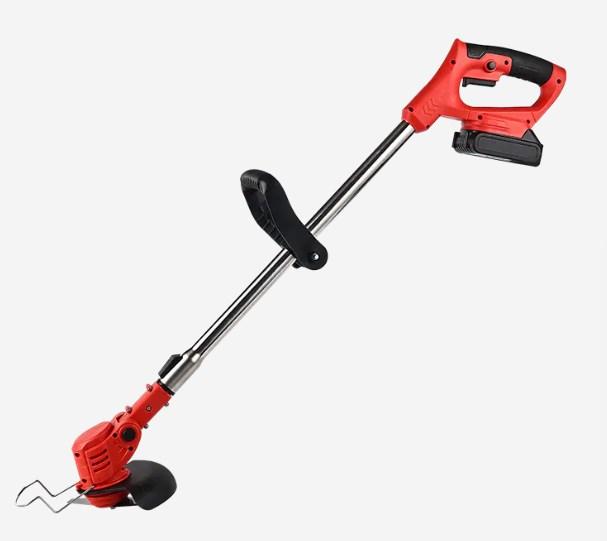
The ongoing debate between the power capabilities of lithium battery garden tools and their gasoline-powered counterparts is a significant one in the realm of landscaping and gardening equipment. As technology advances, the performance of lithium battery garden tools has been steadily improving, challenging the long-standing dominance of traditional gasoline-powered tools. This article delves into the power dynamics of these two types of equipment, examining the strengths and limitations of each.
Lithium battery garden tools have made significant strides in recent years, with advancements in battery technology allowing for higher energy density and longer runtimes. These tools are now capable of delivering power outputs that rival or even surpass those of their gasoline counterparts in many cases. The key advantage of lithium battery garden tools lies in their instant torque, which provides immediate power upon activation. This feature is particularly beneficial for tasks that require quick bursts of power, such as trimming or cutting through tough materials.
In contrast, gasoline-powered tools have traditionally been known for their consistent power output, which is crucial for heavy-duty tasks. However, the power of these tools is often accompanied by a trade-off in terms of noise, emissions, and maintenance requirements. The internal combustion engines of gasoline tools can be loud, contributing to noise pollution, and they emit exhaust fumes that can be harmful to the environment and human health. Additionally, the need for regular maintenance, such as oil changes and spark plug replacements, can be a drawback for some users.
The power-to-weight ratio is another important factor to consider when comparing lithium battery garden tools with gasoline-powered tools. Lithium battery tools are generally lighter and more compact, making them easier to maneuver and handle for extended periods. This advantage is particularly noticeable in cordless models, which offer the added benefit of greater mobility without the constraints of a power cord or the need for refueling.
Another aspect to consider is the environmental impact of these tools. Lithium battery garden tools are more eco-friendly, producing zero emissions during operation and reducing the overall carbon footprint. This is an increasingly important consideration for consumers and businesses alike, as there is a growing awareness of the need to protect the environment and reduce our reliance on fossil fuels.
The cost of operation is also a significant factor in the power comparison. While the initial investment for lithium battery garden tools can be higher, the long-term savings in terms of reduced fuel costs and lower maintenance requirements can make them a more economical choice over time. Additionally, the development of more efficient batteries and charging systems is expected to further improve the cost-effectiveness of lithium battery garden tools.
In terms of versatility, lithium battery garden tools are often part of a modular system, allowing users to interchange batteries between different tools. This feature not only provides convenience but also adds to the overall value of the investment, as users can build their collection of tools without the need for multiple battery packs.
However, it is important to acknowledge that lithium battery garden tools may still face limitations in certain situations. For example, in applications that require prolonged use without breaks, gasoline-powered tools may still hold an advantage due to their ability to operate continuously as long as there is fuel available. Additionally, in extremely cold weather conditions, the performance of lithium batteries can be affected, potentially leading to reduced runtimes.
In conclusion, the power capabilities of lithium battery garden tools have come a long way, and in many instances, they can match or even outperform traditional gasoline-powered tools. The choice between the two ultimately depends on the specific needs of the user, taking into account factors such as the type of tasks to be performed, the desired level of mobility, environmental considerations, and the overall cost of operation. As technology continues to evolve, likely, lithium battery garden tools will only become more powerful and efficient, further solidifying their position as a viable and preferred alternative to gasoline-powered equipment in the gardening and landscaping industry.

 English
 Arabic
 French
 Spanish
 Portuguese
 Deutsch
 Turkish
 Dutch
 Russian
 Romaian
 Portuguese (Brazil)
 Greek