

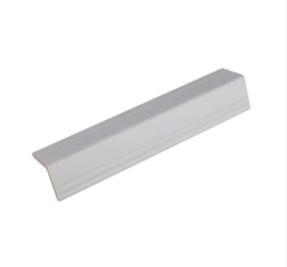
PS mouldings have long been a staple in the manufacturing and packaging industries due to their versatility and cost-effectiveness. However, the true testament to the value of a product lies in its durability—the ability to withstand the test of time and maintain its functionality without significant degradation. This article delves into the durability of PS mouldings, exploring the factors that contribute to their longevity and the implications for various applications.
The first aspect to consider when evaluating the durability of PS mouldings is the inherent properties of the polystyrene material itself. Polystyrene is a thermoplastic polymer known for its clarity, lightweight nature, and ease of processing. It is resistant to water, moisture, and many solvents, which contributes to its stability in various environments. The resistance to water means that PS mouldings are less likely to be affected by humidity or condensation, which is a common issue with other materials that can lead to warping or weakening over time.
Another factor that enhances the durability of PS mouldings is the manufacturing process. High-quality moldings are produced using precision machinery that ensures consistency and uniformity in the final product. This precision helps to eliminate weak points or inconsistencies that could lead to breakage or failure under stress. Additionally, the use of advanced materials and additives can further improve the strength and resilience of the moldings, tailoring them to specific applications and environments.
The application of PS mouldings also plays a significant role in their durability. In packaging, for instance, PS mouldings are often used for protective purposes, cushioning fragile items during transport. The material's ability to absorb and distribute shock loads without breaking makes it an ideal choice for this application. Moreover, the lightweight nature of PS mouldings means that they do not add unnecessary weight to the package, which is beneficial for both shipping costs and the environment.
In the construction industry, PS mouldings are used for insulation and as a component in various building materials. The durability of these moldings is crucial, as they must maintain their structural integrity and insulation properties over long periods. The resistance to moisture and the ability to withstand temperature fluctuations contribute to the longevity of PS mouldings in these applications.
The durability of PS mouldings is also evident in their use in the automotive and aerospace industries. Here, the moldings are subjected to extreme conditions, including high speeds, vibrations, and temperature changes. The material's ability to maintain its shape and properties under these conditions is a testament to its resilience and reliability.
Furthermore, the recyclability of PS mouldings adds another dimension to their durability. By reusing and recycling PS materials, the lifecycle of the moldings is effectively extended, reducing waste and the demand for new raw materials. This not only contributes to the sustainability of the industry but also ensures that the moldings remain a viable option for manufacturers and consumers alike.
However, it is important to note that the durability of PS mouldings can be influenced by external factors such as exposure to sunlight, which can cause discoloration and degradation over time. To mitigate this, manufacturers often incorporate UV stabilizers into the moldings to protect them from the harmful effects of ultraviolet radiation.
In conclusion, the durability of PS mouldings is a multifaceted attribute that is influenced by the material's inherent properties, the manufacturing process, the application, and the environmental conditions in which they are used. By understanding these factors and implementing strategies to enhance and protect the moldings, manufacturers can ensure that PS mouldings continue to be a reliable and long-lasting option for a wide range of industries. The resilience of PS mouldings is a testament to the versatility and enduring quality of this material, making it a preferred choice for many applications where durability is paramount.

 English
 Arabic
 French
 Spanish
 Portuguese
 Deutsch
 Turkish
 Dutch
 Italiano
 Russian
 Portuguese (Brazil)
 Greek