• Top 10 Companies Leading the Global CAR-NK Cell Development Services

    According to a newly published market research report by 24LifeSciences, global CAR-NK cell development service market was valued at USD 582 million in 2024 and is projected to reach USD 797 million by 2031, growing at a compound annual growth rate (CAGR) of 5.2% during the forecast period 2025-2032.
    CAR-NK cell development services provide comprehensive solutions for designing, engineering, and optimizing chimeric antigen receptor natural killer cells for therapeutic applications. These services include vector design and construction, cell isolation and expansion, genetic modification and engineering, functional validation and characterization, as well as scale-up and manufacturing support. The market growth is driven by increasing investment in cell and gene therapy research, rising prevalence of hematological malignancies, and growing adoption of off-the-shelf cell therapies.

    Download a Free Sample Report (PDF): https://www.24lifesciences.com/download-sample/4874/car-nk-cell-development-service-market
    Top 10 Companies Leading the Global CAR-NK Cell Development Services According to a newly published market research report by 24LifeSciences, global CAR-NK cell development service market was valued at USD 582 million in 2024 and is projected to reach USD 797 million by 2031, growing at a compound annual growth rate (CAGR) of 5.2% during the forecast period 2025-2032. CAR-NK cell development services provide comprehensive solutions for designing, engineering, and optimizing chimeric antigen receptor natural killer cells for therapeutic applications. These services include vector design and construction, cell isolation and expansion, genetic modification and engineering, functional validation and characterization, as well as scale-up and manufacturing support. The market growth is driven by increasing investment in cell and gene therapy research, rising prevalence of hematological malignancies, and growing adoption of off-the-shelf cell therapies. Download a Free Sample Report (PDF): https://www.24lifesciences.com/download-sample/4874/car-nk-cell-development-service-market
    0 Commenti 0 condivisioni
  • Wipes Market Expected to Register Strong CAGR Through 2032

    Wipes Market to Record Strong Growth as Hygiene Awareness and Convenience Drive Global Adoption

    Market Estimation & Definition
    The global wipes market encompasses a broad range of disposable, pre‑moistened wipes designed for personal care, hygiene, and surface cleaning applications. These products are widely used across homes, healthcare facilities, hospitality, and industrial settings due to their convenience, portability, and effectiveness. According to the latest industry analysis, the wipes market is estimated to be valued at USD 13.54 billion in 2024 and is expected to grow to approximately USD 20.98 billion by 2032, exhibiting a compound annual growth rate (CAGR) of about 5.71% during the forecast period. Wipes include various product categories such as baby wipes, adult incontinence wipes, disinfectant and surface wipes, personal care wipes, and industrial/household cleaning wipes. These products are characterized by their pre‑moistened structure, convenience of use, and capacity to provide quick and effective cleaning without additional water or tools. The ongoing emphasis on hygiene and sanitation across sectors has positioned wipes as essential daily products for consumers and institutions alike.

    Request Free Sample Report : https://www.stellarmr.com/report/req_sample/Wipes-Market/295

    Market Growth Drivers & Opportunity
    Rising hygiene awareness among consumers is a core driver fueling demand for wipes globally. Frequent handwashing and surface cleaning recommendations during public health initiatives, especially during the COVID‑19 pandemic, have led many consumers and facilities to adopt wipes as a preferred hygiene solution. Even as pandemic conditions ease, sustained awareness of personal and environmental cleanliness continues to support market expansion.

    Another key growth driver is the increasing elderly population and the rising demand for adult incontinence products, which often include specialized wipes for skin care and comfort. Additionally, the growing number of working professionals and on‑the‑go lifestyles have reinforced wipes as convenient hygiene companions, particularly in travel, commuting, and outdoor scenarios.

    Opportunity lies in product innovation—especially in biodegradable, eco‑friendly, and skin‑sensitive wipe formulations. Consumer preferences are shifting toward wipes produced with sustainable non‑woven fabrics, natural ingredients, and reduced chemical content, creating space for premium and green product offerings in the marketplace.

    What Lies Ahead: Emerging Trends Shaping the Future
    Looking ahead, emerging trends in the wipes market include a strong focus on sustainability and environmentally conscious product development. Manufacturers are investing in biodegradable substrates, compostable packaging, and reduced‑chemical formulations to meet evolving environmental standards and customer expectations.

    Personalization and niche offerings are on the rise, with brands expanding into specialized categories such as anti‑bacterial baby wipes, fragrance‑free personal care wipes, and wipes targeted for sensitive skin use. Retail and e‑commerce platforms are also enhancing accessibility and convenience, enabling subscription‑based purchases and direct‑to‑consumer delivery models.

    Technological improvements in non‑woven fabric engineering are enabling wipes with enhanced strength, absorbency, and texture, further expanding usage applications across sectors.

    Request Free Sample Report : https://www.stellarmr.com/report/req_sample/Wipes-Market/295

    Segmentation Analysis
    The wipes market is segmented by product type and end‑use application:

    Product Type: The market includes baby wipes, disinfectant wipes, personal care wipes, adult incontinence wipes, and industrial/household cleaning wipes. Among these, baby wipes and disinfectant wipes are major contributors due to broad consumer usage and residential demand.

    About us

    Phase 3,Navale IT Zone, S.No. 51/2A/2,

    Office No. 202, 2nd floor,

    Near, Navale Brg,Narhe,

    Pune, Maharashtra 411041

    sales@stellarmr.com

    Wipes Market Expected to Register Strong CAGR Through 2032 Wipes Market to Record Strong Growth as Hygiene Awareness and Convenience Drive Global Adoption Market Estimation & Definition The global wipes market encompasses a broad range of disposable, pre‑moistened wipes designed for personal care, hygiene, and surface cleaning applications. These products are widely used across homes, healthcare facilities, hospitality, and industrial settings due to their convenience, portability, and effectiveness. According to the latest industry analysis, the wipes market is estimated to be valued at USD 13.54 billion in 2024 and is expected to grow to approximately USD 20.98 billion by 2032, exhibiting a compound annual growth rate (CAGR) of about 5.71% during the forecast period. Wipes include various product categories such as baby wipes, adult incontinence wipes, disinfectant and surface wipes, personal care wipes, and industrial/household cleaning wipes. These products are characterized by their pre‑moistened structure, convenience of use, and capacity to provide quick and effective cleaning without additional water or tools. The ongoing emphasis on hygiene and sanitation across sectors has positioned wipes as essential daily products for consumers and institutions alike. Request Free Sample Report : https://www.stellarmr.com/report/req_sample/Wipes-Market/295 Market Growth Drivers & Opportunity Rising hygiene awareness among consumers is a core driver fueling demand for wipes globally. Frequent handwashing and surface cleaning recommendations during public health initiatives, especially during the COVID‑19 pandemic, have led many consumers and facilities to adopt wipes as a preferred hygiene solution. Even as pandemic conditions ease, sustained awareness of personal and environmental cleanliness continues to support market expansion. Another key growth driver is the increasing elderly population and the rising demand for adult incontinence products, which often include specialized wipes for skin care and comfort. Additionally, the growing number of working professionals and on‑the‑go lifestyles have reinforced wipes as convenient hygiene companions, particularly in travel, commuting, and outdoor scenarios. Opportunity lies in product innovation—especially in biodegradable, eco‑friendly, and skin‑sensitive wipe formulations. Consumer preferences are shifting toward wipes produced with sustainable non‑woven fabrics, natural ingredients, and reduced chemical content, creating space for premium and green product offerings in the marketplace. What Lies Ahead: Emerging Trends Shaping the Future Looking ahead, emerging trends in the wipes market include a strong focus on sustainability and environmentally conscious product development. Manufacturers are investing in biodegradable substrates, compostable packaging, and reduced‑chemical formulations to meet evolving environmental standards and customer expectations. Personalization and niche offerings are on the rise, with brands expanding into specialized categories such as anti‑bacterial baby wipes, fragrance‑free personal care wipes, and wipes targeted for sensitive skin use. Retail and e‑commerce platforms are also enhancing accessibility and convenience, enabling subscription‑based purchases and direct‑to‑consumer delivery models. Technological improvements in non‑woven fabric engineering are enabling wipes with enhanced strength, absorbency, and texture, further expanding usage applications across sectors. Request Free Sample Report : https://www.stellarmr.com/report/req_sample/Wipes-Market/295 Segmentation Analysis The wipes market is segmented by product type and end‑use application: Product Type: The market includes baby wipes, disinfectant wipes, personal care wipes, adult incontinence wipes, and industrial/household cleaning wipes. Among these, baby wipes and disinfectant wipes are major contributors due to broad consumer usage and residential demand. About us Phase 3,Navale IT Zone, S.No. 51/2A/2, Office No. 202, 2nd floor, Near, Navale Brg,Narhe, Pune, Maharashtra 411041 sales@stellarmr.com

    0 Commenti 0 condivisioni
  • Hemorrhoids Treatment Market Growth Analysis & Opportunities

    According to a newly published market research report by 24LifeSciences, global hemorrhoids treatment market was valued at USD 725.8 million in 2024 and is projected to reach USD 1.07 billion by 2032, growing at a compound annual growth rate (CAGR) of 4.5% during the forecast period 2025–2032.

    Hemorrhoids, clinically known as piles, are swollen veins in the lower rectum and anus that cause discomfort, itching, and bleeding. The condition affects nearly 50% of the adult population over age 50 and represents a significant healthcare burden globally. Treatment modalities range from over-the-counter topical preparations to advanced minimally invasive procedures like rubber band ligation, sclerotherapy, infrared coagulation, and surgical interventions. The market's growth is primarily driven by increasing prevalence, aging demographics, and technological advancements favoring less invasive treatment options.

    Download a Free Sample Report (PDF): https://www.24lifesciences.com/download-sample/10096/hemorrhoids-treatment-market
    Hemorrhoids Treatment Market Growth Analysis & Opportunities According to a newly published market research report by 24LifeSciences, global hemorrhoids treatment market was valued at USD 725.8 million in 2024 and is projected to reach USD 1.07 billion by 2032, growing at a compound annual growth rate (CAGR) of 4.5% during the forecast period 2025–2032. Hemorrhoids, clinically known as piles, are swollen veins in the lower rectum and anus that cause discomfort, itching, and bleeding. The condition affects nearly 50% of the adult population over age 50 and represents a significant healthcare burden globally. Treatment modalities range from over-the-counter topical preparations to advanced minimally invasive procedures like rubber band ligation, sclerotherapy, infrared coagulation, and surgical interventions. The market's growth is primarily driven by increasing prevalence, aging demographics, and technological advancements favoring less invasive treatment options. Download a Free Sample Report (PDF): https://www.24lifesciences.com/download-sample/10096/hemorrhoids-treatment-market
    0 Commenti 0 condivisioni
  • How Immunotherapy Drives Brain Tumor Therapeutics Market Growth

    According to a newly published market research report by 24LifeSciences, global brain tumor therapeutics market was valued at USD 1.27 billion in 2025 and is projected to grow from USD 1.41 billion in 2025 to reach USD 2.63 billion by 2034, growing at a compound annual growth rate (CAGR) of 11.3% during the forecast period.

    Brain tumor therapeutics encompass a comprehensive range of treatments, including surgery, radiation therapy, targeted therapy, chemotherapy, and immunotherapy, all designed to address abnormal cellular growth within the brain. These therapeutic modalities are critical for removing or destroying tumor cells, controlling their proliferation, and managing debilitating symptoms. The choice of treatment strategy is highly individualized, often involving a tailored combination of these approaches based on the specific tumor type, its grade and location, and the patient's overall health status. While surgical intervention remains a foundational element for many primary brain tumors, the ongoing development of novel targeted agents and sophisticated immunotherapies is actively revolutionizing the treatment landscape, offering renewed hope for patients confronting aggressive and recurrent tumor types.

    Download a Free Sample Report (PDF): https://www.24lifesciences.com/download-sample/8975/brain-tumor-therapeutics-market
    How Immunotherapy Drives Brain Tumor Therapeutics Market Growth According to a newly published market research report by 24LifeSciences, global brain tumor therapeutics market was valued at USD 1.27 billion in 2025 and is projected to grow from USD 1.41 billion in 2025 to reach USD 2.63 billion by 2034, growing at a compound annual growth rate (CAGR) of 11.3% during the forecast period. Brain tumor therapeutics encompass a comprehensive range of treatments, including surgery, radiation therapy, targeted therapy, chemotherapy, and immunotherapy, all designed to address abnormal cellular growth within the brain. These therapeutic modalities are critical for removing or destroying tumor cells, controlling their proliferation, and managing debilitating symptoms. The choice of treatment strategy is highly individualized, often involving a tailored combination of these approaches based on the specific tumor type, its grade and location, and the patient's overall health status. While surgical intervention remains a foundational element for many primary brain tumors, the ongoing development of novel targeted agents and sophisticated immunotherapies is actively revolutionizing the treatment landscape, offering renewed hope for patients confronting aggressive and recurrent tumor types. Download a Free Sample Report (PDF): https://www.24lifesciences.com/download-sample/8975/brain-tumor-therapeutics-market
    0 Commenti 0 condivisioni
  • Smartphone Camera Innovation Fuels CMOS Image Sensor Market Expansion

    CMOS Image Sensor Market Press Release Overview
    Market Estimation & Definition
    The global CMOS image sensor market represents a vital segment of the semiconductor and imaging technology industry, providing high-performance image sensing solutions for applications such as smartphones, automotive systems, medical imaging, surveillance, and industrial automation. CMOS image sensors (CIS) are semiconductor devices that convert light into electrical signals, offering advantages such as low power consumption, high integration capability, and cost-efficient manufacturing.

    The market is witnessing strong expansion due to its essential role in digital imaging and sensing technologies. The increasing integration of cameras and imaging modules into consumer electronics, vehicles, and smart infrastructure is significantly driving market valuation and long-term growth potential. CMOS image sensors have become the dominant technology in imaging due to their scalability and compatibility with advanced semiconductor processes.

    Request Free Sample Report : https://www.stellarmr.com/report/req_sample/cmos-image-sensor-market/2299

    Market Growth Drivers & Opportunity
    A key driver of the CMOS image sensor market is the rapid expansion of smartphone and consumer electronics industries, where multi-camera systems and higher resolution imaging have become standard features. The growing demand for enhanced photography, augmented reality, and video capabilities is accelerating sensor adoption across devices.

    Another major growth factor is the rising deployment of advanced driver assistance systems (ADAS) and autonomous driving technologies. CMOS sensors are widely used in automotive applications such as lane detection, parking assistance, and collision avoidance, making them essential components in next-generation mobility systems.

    The healthcare sector is also creating new opportunities with the increasing use of imaging systems in diagnostics, endoscopy, and minimally invasive procedures. CMOS sensors offer high sensitivity and compact design, which are ideal for modern medical devices.


    About us
    Phase 3,Navale IT Zone, S.No. 51/2A/2,

    Office No. 202, 2nd floor,

    Near, Navale Brg,Narhe,

    Pune, Maharashtra 411041

    sales@stellarmr.com

    Smartphone Camera Innovation Fuels CMOS Image Sensor Market Expansion CMOS Image Sensor Market Press Release Overview Market Estimation & Definition The global CMOS image sensor market represents a vital segment of the semiconductor and imaging technology industry, providing high-performance image sensing solutions for applications such as smartphones, automotive systems, medical imaging, surveillance, and industrial automation. CMOS image sensors (CIS) are semiconductor devices that convert light into electrical signals, offering advantages such as low power consumption, high integration capability, and cost-efficient manufacturing. The market is witnessing strong expansion due to its essential role in digital imaging and sensing technologies. The increasing integration of cameras and imaging modules into consumer electronics, vehicles, and smart infrastructure is significantly driving market valuation and long-term growth potential. CMOS image sensors have become the dominant technology in imaging due to their scalability and compatibility with advanced semiconductor processes. Request Free Sample Report : https://www.stellarmr.com/report/req_sample/cmos-image-sensor-market/2299 Market Growth Drivers & Opportunity A key driver of the CMOS image sensor market is the rapid expansion of smartphone and consumer electronics industries, where multi-camera systems and higher resolution imaging have become standard features. The growing demand for enhanced photography, augmented reality, and video capabilities is accelerating sensor adoption across devices. Another major growth factor is the rising deployment of advanced driver assistance systems (ADAS) and autonomous driving technologies. CMOS sensors are widely used in automotive applications such as lane detection, parking assistance, and collision avoidance, making them essential components in next-generation mobility systems. The healthcare sector is also creating new opportunities with the increasing use of imaging systems in diagnostics, endoscopy, and minimally invasive procedures. CMOS sensors offer high sensitivity and compact design, which are ideal for modern medical devices. About us Phase 3,Navale IT Zone, S.No. 51/2A/2, Office No. 202, 2nd floor, Near, Navale Brg,Narhe, Pune, Maharashtra 411041 sales@stellarmr.com
    0 Commenti 0 condivisioni
  • Vitamin Supplements Market Growth: From $59.6 Bn in 2024 to Over $108 Bn by 2032

    Vitamin Supplements Market: From $59.6 Bn in 2024 to Over $108 Bn by 2032 — A Nutritional Health Revolution
    The Vitamin Supplements Market is poised for rapid expansion as global demand for preventive healthcare, nutritional wellbeing, and immunity-boosting solutions continues to surge. According to Stellar Market Research, the market is valued at approximately USD 59.57 billion in 2024 and is projected to reach more than USD 108 billion by 2032, growing at a compound annual growth rate (CAGR) of about 7.77 % from 2025 to 2032.

    Request Free Sample Report : https://www.stellarmr.com/report/req_sample/vitamin-supplements-market/2343
    Market Estimation & Definition
    Vitamin supplements are dietary products formulated to provide essential vitamins — such as A, B, C, D, E and K — and micronutrients that may be lacking in daily diets. These supplements are commonly available in forms including tablets, capsules, softgels, gummies, powders and liquids, and are consumed by diverse population groups ranging from children and adults to the geriatric demographic. They are designed to support vital bodily functions like immune health, bone strength, metabolism and overall wellbeing.

    The market spans both over-the-counter (OTC) supplements as well as products recommended by healthcare professionals. Growing awareness of preventive healthcare and a shift toward personalized nutrition have transformed vitamin supplements from optional wellness aids into mainstream health priorities.

    Market Growth Drivers & Opportunities
    The global vitamin supplements market growth is underpinned by several key drivers:

    Rising Awareness of Preventive Healthcare:
    Consumers across age groups increasingly recognize the role of micronutrients in maintaining health and reducing the risk of chronic conditions. This has led to higher adoption of vitamin supplements as part of daily wellness routines.

    Aging Population and Nutritional Needs:
    Aging populations in developed and emerging markets are more likely to experience vitamin deficiencies due to physiological changes and dietary gaps. As a result, demand for targeted supplements like vitamin D for bone health and B-complex for cognitive support is growing steadily.

    Lifestyle Shifts and Health Consciousness:
    Modern lifestyles characterized by processed foods, high stress and limited outdoor activity contribute to nutrient insufficiencies. Consumers are turning to supplements to complement dietary intake and support immune function, especially post-COVID, when immunity became a top health concern globally.

    Expansion of E-Commerce and Retail Channels:
    Online marketplaces and direct-to-consumer models have made vitamin supplements more accessible, allowing consumers to purchase products conveniently while exploring a wider range of brands and formulations.

    Product Innovation and Segment Diversification:
    Manufacturers are introducing specialized formulations — such as gummies for children, immune blends for adults, prenatal supplements for women, and age-specific combinations for the elderly — which broadens appeal and supports sustained growth.

    Request Free Sample Report : https://www.stellarmr.com/report/req_sample/vitamin-supplements-market/2343
    What Lies Ahead: Emerging Trends Shaping the Future
    Several trends are reshaping the vitamin supplements market environment:

    Personalized Nutrition and Data-Driven Wellness:
    Advancements in health tracking technology and personalized nutrition platforms are enabling consumers to receive tailored supplement recommendations based on biometric data, dietary habits and health goals. This personalization trend is expected to foster deeper consumer engagement and long-term loyalty.

    Natural and Clean Label Formulations:
    Consumers are increasingly seeking products with natural, organic, non-GMO and clean-label credentials. Brands are responding by emphasizing ingredient transparency and sourcing practices, which can enhance consumer trust and market appeal.

    Growth of Functional Formats:
    Innovative dosage forms like softgels, chews, effervescent tablets and liquid concentrates are gaining popularity due to convenience, palatability and faster absorption, especially among younger and health-conscious consumers.

    About us

    Phase 3,Navale IT Zone, S.No. 51/2A/2,

    Office No. 202, 2nd floor,

    Near, Navale Brg,Narhe,

    Pune, Maharashtra 411041

    sales@stellarmr.com
    Vitamin Supplements Market Growth: From $59.6 Bn in 2024 to Over $108 Bn by 2032 Vitamin Supplements Market: From $59.6 Bn in 2024 to Over $108 Bn by 2032 — A Nutritional Health Revolution The Vitamin Supplements Market is poised for rapid expansion as global demand for preventive healthcare, nutritional wellbeing, and immunity-boosting solutions continues to surge. According to Stellar Market Research, the market is valued at approximately USD 59.57 billion in 2024 and is projected to reach more than USD 108 billion by 2032, growing at a compound annual growth rate (CAGR) of about 7.77 % from 2025 to 2032. Request Free Sample Report : https://www.stellarmr.com/report/req_sample/vitamin-supplements-market/2343 Market Estimation & Definition Vitamin supplements are dietary products formulated to provide essential vitamins — such as A, B, C, D, E and K — and micronutrients that may be lacking in daily diets. These supplements are commonly available in forms including tablets, capsules, softgels, gummies, powders and liquids, and are consumed by diverse population groups ranging from children and adults to the geriatric demographic. They are designed to support vital bodily functions like immune health, bone strength, metabolism and overall wellbeing. The market spans both over-the-counter (OTC) supplements as well as products recommended by healthcare professionals. Growing awareness of preventive healthcare and a shift toward personalized nutrition have transformed vitamin supplements from optional wellness aids into mainstream health priorities. Market Growth Drivers & Opportunities The global vitamin supplements market growth is underpinned by several key drivers: Rising Awareness of Preventive Healthcare: Consumers across age groups increasingly recognize the role of micronutrients in maintaining health and reducing the risk of chronic conditions. This has led to higher adoption of vitamin supplements as part of daily wellness routines. Aging Population and Nutritional Needs: Aging populations in developed and emerging markets are more likely to experience vitamin deficiencies due to physiological changes and dietary gaps. As a result, demand for targeted supplements like vitamin D for bone health and B-complex for cognitive support is growing steadily. Lifestyle Shifts and Health Consciousness: Modern lifestyles characterized by processed foods, high stress and limited outdoor activity contribute to nutrient insufficiencies. Consumers are turning to supplements to complement dietary intake and support immune function, especially post-COVID, when immunity became a top health concern globally. Expansion of E-Commerce and Retail Channels: Online marketplaces and direct-to-consumer models have made vitamin supplements more accessible, allowing consumers to purchase products conveniently while exploring a wider range of brands and formulations. Product Innovation and Segment Diversification: Manufacturers are introducing specialized formulations — such as gummies for children, immune blends for adults, prenatal supplements for women, and age-specific combinations for the elderly — which broadens appeal and supports sustained growth. Request Free Sample Report : https://www.stellarmr.com/report/req_sample/vitamin-supplements-market/2343 What Lies Ahead: Emerging Trends Shaping the Future Several trends are reshaping the vitamin supplements market environment: Personalized Nutrition and Data-Driven Wellness: Advancements in health tracking technology and personalized nutrition platforms are enabling consumers to receive tailored supplement recommendations based on biometric data, dietary habits and health goals. This personalization trend is expected to foster deeper consumer engagement and long-term loyalty. Natural and Clean Label Formulations: Consumers are increasingly seeking products with natural, organic, non-GMO and clean-label credentials. Brands are responding by emphasizing ingredient transparency and sourcing practices, which can enhance consumer trust and market appeal. Growth of Functional Formats: Innovative dosage forms like softgels, chews, effervescent tablets and liquid concentrates are gaining popularity due to convenience, palatability and faster absorption, especially among younger and health-conscious consumers. About us Phase 3,Navale IT Zone, S.No. 51/2A/2, Office No. 202, 2nd floor, Near, Navale Brg,Narhe, Pune, Maharashtra 411041 sales@stellarmr.com
    0 Commenti 0 condivisioni
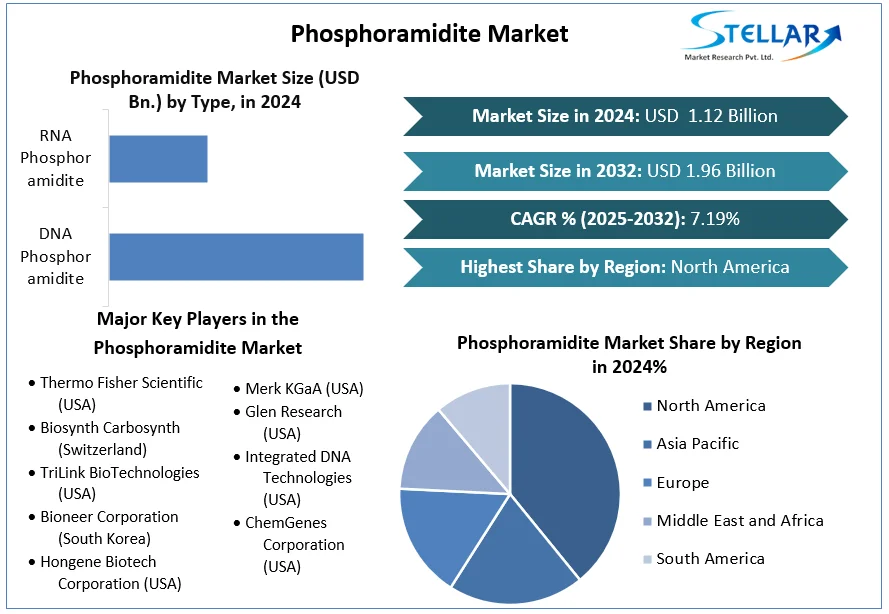
  • Global Phosphoramidite Market Growth Outlook 2025–2032: Trends, Size & Projections (from USD 1.12 Billion to ~USD 1.96 Billion)

    Phosphoramidite Market: Fueling the Future of Genetic Medicine and Oligonucleotide Innovation

    The Phosphoramidite Market is poised for substantial expansion as demand for synthetic DNA and RNA technologies grows across therapeutic development, diagnostics, and genomic research. According to industry analysis, the global market has witnessed steady growth driven by key life sciences trends, with projections indicating robust expansion through 2032 and beyond. Phosphoramidites — the fundamental chemical building blocks used in oligonucleotide synthesis — are essential for precise DNA and RNA sequence assembly, making them critical to modern biotechnology and pharmaceutical innovation.

    Request Free Sample Report : https://www.stellarmr.com/report/req_sample/Phosphoramidite-Market/2144

    Market Estimation & Definition

    Phosphoramidites refer to a class of highly reactive chemical intermediates used primarily in solid-phase oligonucleotide synthesis. They enable the stepwise assembly of nucleotide sequences required for applications such as gene synthesis, PCR primers, sequencing adapters, and therapeutic oligonucleotides. Their role is central to producing high-purity artificial DNA and RNA strands that serve as building blocks for drug discovery, diagnostic assays, next-generation sequencing, and synthetic biology initiatives.

    Globally, the phosphoramidite market has grown in prominence as genetic medicine advances, supporting demand for gene therapies, RNA-based vaccines, and precision medicine platforms. Industry estimates indicate that markets based on related chemistry are expected to more than double over the next decade, reflecting broad adoption across research and commercial pipelines.

    Market Growth Drivers & Opportunity

    The phosphoramidite market is being propelled by several interlinked trends:

    Oligonucleotide Therapeutics Expansion: The development of antisense oligonucleotides, small interfering RNA (siRNA), and mRNA vaccines has surged as pharmaceutical companies leverage nucleic acid modalities to address genetic disorders, infectious diseases, and cancer. These therapies rely on precise, high-fidelity oligonucleotide synthesis, directly driving demand for phosphoramidite reagents.

    Genomic Research and Diagnostic Growth: Next-generation sequencing (NGS), molecular diagnostics, and point-of-care genetic testing require large volumes of synthetic oligos — all made using phosphoramidite chemistry. As personalized medicine and screening grow, so does the need for the reagents that make these technologies possible.

    Synthetic Biology Innovation: Beyond human health, phosphoramidites are also being used in synthetic biology applications — from engineering crop genetics to designing environmentally responsive biological circuits. These expanding domains generate new use cases and consumer segments for phosphoramidite supplies.

    Technological Advancements in Automated Synthesis: High-throughput DNA and RNA synthesizers have improved efficiency and throughput, encouraging broader adoption in biotechnology and commercial manufacturing. This trend boosts reagent consumption as laboratories and contract manufacturers scale up nucleotide production.

    These drivers not only reinforce the core market for therapeutic and research use but also reveal opportunities in emerging applications where custom sequence synthesis is becoming critical.

    Request Free Sample Report : https://www.stellarmr.com/report/req_sample/Phosphoramidite-Market/2144

    About us

    Phase 3,Navale IT Zone, S.No. 51/2A/2,

    Office No. 202, 2nd floor,

    Near, Navale Brg,Narhe,

    Pune, Maharashtra 411041

    sales@stellarmr.com
    Global Phosphoramidite Market Growth Outlook 2025–2032: Trends, Size & Projections (from USD 1.12 Billion to ~USD 1.96 Billion) Phosphoramidite Market: Fueling the Future of Genetic Medicine and Oligonucleotide Innovation The Phosphoramidite Market is poised for substantial expansion as demand for synthetic DNA and RNA technologies grows across therapeutic development, diagnostics, and genomic research. According to industry analysis, the global market has witnessed steady growth driven by key life sciences trends, with projections indicating robust expansion through 2032 and beyond. Phosphoramidites — the fundamental chemical building blocks used in oligonucleotide synthesis — are essential for precise DNA and RNA sequence assembly, making them critical to modern biotechnology and pharmaceutical innovation. Request Free Sample Report : https://www.stellarmr.com/report/req_sample/Phosphoramidite-Market/2144 Market Estimation & Definition Phosphoramidites refer to a class of highly reactive chemical intermediates used primarily in solid-phase oligonucleotide synthesis. They enable the stepwise assembly of nucleotide sequences required for applications such as gene synthesis, PCR primers, sequencing adapters, and therapeutic oligonucleotides. Their role is central to producing high-purity artificial DNA and RNA strands that serve as building blocks for drug discovery, diagnostic assays, next-generation sequencing, and synthetic biology initiatives. Globally, the phosphoramidite market has grown in prominence as genetic medicine advances, supporting demand for gene therapies, RNA-based vaccines, and precision medicine platforms. Industry estimates indicate that markets based on related chemistry are expected to more than double over the next decade, reflecting broad adoption across research and commercial pipelines. Market Growth Drivers & Opportunity The phosphoramidite market is being propelled by several interlinked trends: Oligonucleotide Therapeutics Expansion: The development of antisense oligonucleotides, small interfering RNA (siRNA), and mRNA vaccines has surged as pharmaceutical companies leverage nucleic acid modalities to address genetic disorders, infectious diseases, and cancer. These therapies rely on precise, high-fidelity oligonucleotide synthesis, directly driving demand for phosphoramidite reagents. Genomic Research and Diagnostic Growth: Next-generation sequencing (NGS), molecular diagnostics, and point-of-care genetic testing require large volumes of synthetic oligos — all made using phosphoramidite chemistry. As personalized medicine and screening grow, so does the need for the reagents that make these technologies possible. Synthetic Biology Innovation: Beyond human health, phosphoramidites are also being used in synthetic biology applications — from engineering crop genetics to designing environmentally responsive biological circuits. These expanding domains generate new use cases and consumer segments for phosphoramidite supplies. Technological Advancements in Automated Synthesis: High-throughput DNA and RNA synthesizers have improved efficiency and throughput, encouraging broader adoption in biotechnology and commercial manufacturing. This trend boosts reagent consumption as laboratories and contract manufacturers scale up nucleotide production. These drivers not only reinforce the core market for therapeutic and research use but also reveal opportunities in emerging applications where custom sequence synthesis is becoming critical. Request Free Sample Report : https://www.stellarmr.com/report/req_sample/Phosphoramidite-Market/2144 About us Phase 3,Navale IT Zone, S.No. 51/2A/2, Office No. 202, 2nd floor, Near, Navale Brg,Narhe, Pune, Maharashtra 411041 sales@stellarmr.com
    0 Commenti 0 condivisioni
  • Acrylic Intraocular Lens Market Growth Analysis: Opportunities & Forecasts

    According to a newly published market research report by 24LifeSciences, global acrylic intraocular lens market was valued at USD 4.34 billion in 2025 and is projected to grow from USD 4.57 billion in 2026 to reach USD 6.22 billion by 2034, growing at a compound annual growth rate (CAGR) of 5.3% during the forecast period.

    An Acrylic Intraocular Lens (Acrylic IOL) is an implantable medical device used primarily in cataract surgery to replace the eyes natural lens that has become clouded. These lenses are manufactured from acrylic-based polymer materials, such as hydrophobic or hydrophilic acrylic, chosen for their excellent optical clarity, biocompatibility, and inherent ultraviolet light absorption. The primary function of an Acrylic IOL is to restore clear vision and reduce dependency on corrective eyewear post-surgery, playing a transformative role in ophthalmic care and quality of life for millions.

    Download a Free Sample Report (PDF): https://www.24lifesciences.com/download-sample/8767/acrylic-intraocular-lens-market
    Acrylic Intraocular Lens Market Growth Analysis: Opportunities & Forecasts According to a newly published market research report by 24LifeSciences, global acrylic intraocular lens market was valued at USD 4.34 billion in 2025 and is projected to grow from USD 4.57 billion in 2026 to reach USD 6.22 billion by 2034, growing at a compound annual growth rate (CAGR) of 5.3% during the forecast period. An Acrylic Intraocular Lens (Acrylic IOL) is an implantable medical device used primarily in cataract surgery to replace the eyes natural lens that has become clouded. These lenses are manufactured from acrylic-based polymer materials, such as hydrophobic or hydrophilic acrylic, chosen for their excellent optical clarity, biocompatibility, and inherent ultraviolet light absorption. The primary function of an Acrylic IOL is to restore clear vision and reduce dependency on corrective eyewear post-surgery, playing a transformative role in ophthalmic care and quality of life for millions. Download a Free Sample Report (PDF): https://www.24lifesciences.com/download-sample/8767/acrylic-intraocular-lens-market
    0 Commenti 0 condivisioni
  • Global Neuromorphic Computing Market Set to Grow from USD 7.82 Billion in 2024 to USD 45.72 Billion by 2032

    Neuromorphic Computing Market: Brain-Inspired Architectures Powering the Next Era of Intelligent Systems

    The Neuromorphic Computing Market represents one of the most promising frontiers in computing technology as industries seek faster, more energy-efficient, and human-like data processing solutions. In 2024, the market was valued at around USD 7.82 billion, and it is expected to expand rapidly at a compound annual growth rate (CAGR) of approximately 24.7 % through 2032, reaching nearly USD 45.72 billion by the end of the forecast period. This surge reflects growing demand for brain-inspired computing architectures that outperform traditional systems in tasks such as artificial intelligence (AI), autonomous systems, and real-time edge processing.

    Request Free Sample Report : https://www.stellarmr.com/report/req_sample/neuromorphic-computing-market/2595

    Market Estimation & Definition

    Neuromorphic computing refers to a class of computing architectures inspired by the structure and functions of the human brain and nervous system. Unlike conventional von Neumann designs — which separate data storage from processing — neuromorphic systems mimic neural networks by co-locating memory and computation, employing spiking neural networks and specialized hardware that simulates neurons and synapses. This design enables highly parallel, low-power processing that can learn and adapt in real time, making it ideal for applications requiring rapid, energy-efficient decision-making.

    Neuromorphic systems are poised to fuel advances in next-generation AI, robotics, autonomous vehicles, smart sensors, and edge computing platforms that must process large amounts of data with minimal energy consumption.

    Market Growth Drivers & Opportunity

    Several key forces are driving the market’s accelerated growth:

    Energy-Efficient AI Requirements: As demand for AI accelerates globally — from data centers to mobile devices and autonomous machines — traditional processors struggle with high power consumption and latency. Neuromorphic architectures significantly reduce energy usage while maintaining performance, making them attractive for sustainable AI solutions.

    Autonomous Systems and Robotics: Real-world applications such as self-driving cars, drones, industrial automation, and humanoid robots require real-time perception, adaptation, and decision-making. Neuromorphic systems are uniquely suited to these workloads, particularly those involving sensor fusion, object detection, and environment interaction.

    Edge Computing Demand: Neuromorphic chips’ ability to process data locally — close to the source — with low latency and minimal power makes them ideal for edge deployments in IoT devices, wearables, smart cameras, and healthcare monitoring tools.

    Academic and Government Research: Widespread interest from universities and government programs in brain-inspired computing accelerates innovation and fosters collaborations between research labs and industry, fueling technology breakthroughs.

    These drivers create significant opportunities for vendors, system integrators, and technology innovators to develop scalable solutions that can replace or augment traditional computing in AI-intensive applications.

    Request Free Sample Report : https://www.stellarmr.com/report/req_sample/neuromorphic-computing-market/2595

    What Lies Ahead: Emerging Trends Shaping the Future

    The future of neuromorphic computing is shaped by several notable trends:


    About us

    Phase 3,Navale IT Zone, S.No. 51/2A/2,

    Office No. 202, 2nd floor,

    Near, Navale Brg,Narhe,

    Pune, Maharashtra 411041

    sales@stellarmr.com
    Global Neuromorphic Computing Market Set to Grow from USD 7.82 Billion in 2024 to USD 45.72 Billion by 2032 Neuromorphic Computing Market: Brain-Inspired Architectures Powering the Next Era of Intelligent Systems The Neuromorphic Computing Market represents one of the most promising frontiers in computing technology as industries seek faster, more energy-efficient, and human-like data processing solutions. In 2024, the market was valued at around USD 7.82 billion, and it is expected to expand rapidly at a compound annual growth rate (CAGR) of approximately 24.7 % through 2032, reaching nearly USD 45.72 billion by the end of the forecast period. This surge reflects growing demand for brain-inspired computing architectures that outperform traditional systems in tasks such as artificial intelligence (AI), autonomous systems, and real-time edge processing. Request Free Sample Report : https://www.stellarmr.com/report/req_sample/neuromorphic-computing-market/2595 Market Estimation & Definition Neuromorphic computing refers to a class of computing architectures inspired by the structure and functions of the human brain and nervous system. Unlike conventional von Neumann designs — which separate data storage from processing — neuromorphic systems mimic neural networks by co-locating memory and computation, employing spiking neural networks and specialized hardware that simulates neurons and synapses. This design enables highly parallel, low-power processing that can learn and adapt in real time, making it ideal for applications requiring rapid, energy-efficient decision-making. Neuromorphic systems are poised to fuel advances in next-generation AI, robotics, autonomous vehicles, smart sensors, and edge computing platforms that must process large amounts of data with minimal energy consumption. Market Growth Drivers & Opportunity Several key forces are driving the market’s accelerated growth: Energy-Efficient AI Requirements: As demand for AI accelerates globally — from data centers to mobile devices and autonomous machines — traditional processors struggle with high power consumption and latency. Neuromorphic architectures significantly reduce energy usage while maintaining performance, making them attractive for sustainable AI solutions. Autonomous Systems and Robotics: Real-world applications such as self-driving cars, drones, industrial automation, and humanoid robots require real-time perception, adaptation, and decision-making. Neuromorphic systems are uniquely suited to these workloads, particularly those involving sensor fusion, object detection, and environment interaction. Edge Computing Demand: Neuromorphic chips’ ability to process data locally — close to the source — with low latency and minimal power makes them ideal for edge deployments in IoT devices, wearables, smart cameras, and healthcare monitoring tools. Academic and Government Research: Widespread interest from universities and government programs in brain-inspired computing accelerates innovation and fosters collaborations between research labs and industry, fueling technology breakthroughs. These drivers create significant opportunities for vendors, system integrators, and technology innovators to develop scalable solutions that can replace or augment traditional computing in AI-intensive applications. Request Free Sample Report : https://www.stellarmr.com/report/req_sample/neuromorphic-computing-market/2595 What Lies Ahead: Emerging Trends Shaping the Future The future of neuromorphic computing is shaped by several notable trends: About us Phase 3,Navale IT Zone, S.No. 51/2A/2, Office No. 202, 2nd floor, Near, Navale Brg,Narhe, Pune, Maharashtra 411041 sales@stellarmr.com
    0 Commenti 0 condivisioni
  • Global Crop Protection Chemicals Market to Reach USD 109.16 Billion by 2032: Trends & Forecast

    Global Crop Protection Chemicals Market: Catalyzing Agricultural Productivity and Food Security

    The Crop Protection Chemicals Market is witnessing sustained growth as agricultural producers seek effective solutions to protect crops from pests, weeds, and diseases — key threats to food security and yield stability. According to industry estimates, the market was valued at around USD 76.18 billion in 2024 and is expected to reach approximately USD 109.16 billion by 2032, growing at a compound annual growth rate (CAGR) of roughly 4.6 % during the forecast period of 2025–2032. This projected expansion reflects rising demand for advanced crop protection solutions and an increasing global need for higher agricultural productivity.

    Request Free Sample Report : https://www.stellarmr.com/report/req_sample/crop-protection-chemicals-market/2445

    Market Estimation & Definition

    Crop protection chemicals are agrochemicals used to guard agricultural yields against crop‑destroying agents such as weeds, insects, fungi, and other pests. These chemicals include herbicides, insecticides, fungicides, biopesticides, and other specialty formulations that help stabilize yields and improve crop quality. By preventing losses caused by biological and environmental stresses, crop protection chemicals play a central role in modern agriculture — enhancing food production capacity while contributing to the economic viability of farming operations.

    The importance of these chemicals increases as farmers aim to meet the rising global demand for food, driven by population growth and changing dietary patterns. In addition to traditional chemicals, biopesticides and natural crop protection solutions are gaining attention for their reduced environmental impact and alignment with sustainable agriculture practices.

    Market Growth Drivers & Opportunity

    One of the primary drivers for the crop protection chemicals market is the growing global population and the corresponding need to increase crop yields and food supply. As the world’s population continues to rise, agricultural systems must produce more food from limited arable land, intensifying the need for effective pest and weed control solutions that optimize crop performance.

    Climate change — with its impacts on pest prevalence, weed resilience, and crop disease spread — exacerbates agricultural vulnerabilities, pushing farmers to adopt advanced protection chemicals to sustain yields under increasingly unpredictable conditions. Extreme weather events and shifting pest patterns challenge crop resilience, reinforcing the role of crop protection inputs in maintaining production stability.

    Opportunities in the market also arise from technological integration and precision agriculture tools that improve the targeting and efficiency of chemical applications. Drones, automated sprayers, and IoT‑linked monitoring systems help reduce chemical usage while maximizing protective effects. In addition, continued research into biopesticides and environmentally safer formulations presents growth prospects as regulatory frameworks and consumer preferences evolve toward sustainability.

    Request Free Sample Report : https://www.stellarmr.com/report/req_sample/crop-protection-chemicals-market/2445

    What Lies Ahead: Emerging Trends Shaping the Future

    The crop protection market is evolving with several emerging trends that will shape its future:

    Biopesticide Adoption: With increased awareness of environmental and health impacts, biopesticides and natural crop protection solutions are poised for higher adoption. These products offer reduced ecological footprints and align with sustainability goals embraced by many agribusinesses and policy frameworks.

    Precision Agriculture Integration: Advanced farming technologies — including GPS‑guided application, drones, and smart sensors — are enabling more precise chemical deployment, reducing waste and environmental exposure while improving efficacy.

    Formulation Innovation: Enhanced product formulations, such as controlled‑release and microencapsulated chemicals, are improving target specificity, reducing application frequency, and supporting integrated pest management strategies.

    Regulatory and Sustainability Shifts: Regulatory shifts toward tighter safety standards and sustainable practices are encouraging investment in safer, more effective crop protection solutions that meet both environmental and yield goals.
    About us

    Phase 3,Navale IT Zone, S.No. 51/2A/2,

    Office No. 202, 2nd floor,

    Near, Navale Brg,Narhe,

    Pune, Maharashtra 411041

    sales@stellarmr.com
    Global Crop Protection Chemicals Market to Reach USD 109.16 Billion by 2032: Trends & Forecast Global Crop Protection Chemicals Market: Catalyzing Agricultural Productivity and Food Security The Crop Protection Chemicals Market is witnessing sustained growth as agricultural producers seek effective solutions to protect crops from pests, weeds, and diseases — key threats to food security and yield stability. According to industry estimates, the market was valued at around USD 76.18 billion in 2024 and is expected to reach approximately USD 109.16 billion by 2032, growing at a compound annual growth rate (CAGR) of roughly 4.6 % during the forecast period of 2025–2032. This projected expansion reflects rising demand for advanced crop protection solutions and an increasing global need for higher agricultural productivity. Request Free Sample Report : https://www.stellarmr.com/report/req_sample/crop-protection-chemicals-market/2445 Market Estimation & Definition Crop protection chemicals are agrochemicals used to guard agricultural yields against crop‑destroying agents such as weeds, insects, fungi, and other pests. These chemicals include herbicides, insecticides, fungicides, biopesticides, and other specialty formulations that help stabilize yields and improve crop quality. By preventing losses caused by biological and environmental stresses, crop protection chemicals play a central role in modern agriculture — enhancing food production capacity while contributing to the economic viability of farming operations. The importance of these chemicals increases as farmers aim to meet the rising global demand for food, driven by population growth and changing dietary patterns. In addition to traditional chemicals, biopesticides and natural crop protection solutions are gaining attention for their reduced environmental impact and alignment with sustainable agriculture practices. Market Growth Drivers & Opportunity One of the primary drivers for the crop protection chemicals market is the growing global population and the corresponding need to increase crop yields and food supply. As the world’s population continues to rise, agricultural systems must produce more food from limited arable land, intensifying the need for effective pest and weed control solutions that optimize crop performance. Climate change — with its impacts on pest prevalence, weed resilience, and crop disease spread — exacerbates agricultural vulnerabilities, pushing farmers to adopt advanced protection chemicals to sustain yields under increasingly unpredictable conditions. Extreme weather events and shifting pest patterns challenge crop resilience, reinforcing the role of crop protection inputs in maintaining production stability. Opportunities in the market also arise from technological integration and precision agriculture tools that improve the targeting and efficiency of chemical applications. Drones, automated sprayers, and IoT‑linked monitoring systems help reduce chemical usage while maximizing protective effects. In addition, continued research into biopesticides and environmentally safer formulations presents growth prospects as regulatory frameworks and consumer preferences evolve toward sustainability. Request Free Sample Report : https://www.stellarmr.com/report/req_sample/crop-protection-chemicals-market/2445 What Lies Ahead: Emerging Trends Shaping the Future The crop protection market is evolving with several emerging trends that will shape its future: Biopesticide Adoption: With increased awareness of environmental and health impacts, biopesticides and natural crop protection solutions are poised for higher adoption. These products offer reduced ecological footprints and align with sustainability goals embraced by many agribusinesses and policy frameworks. Precision Agriculture Integration: Advanced farming technologies — including GPS‑guided application, drones, and smart sensors — are enabling more precise chemical deployment, reducing waste and environmental exposure while improving efficacy. Formulation Innovation: Enhanced product formulations, such as controlled‑release and microencapsulated chemicals, are improving target specificity, reducing application frequency, and supporting integrated pest management strategies. Regulatory and Sustainability Shifts: Regulatory shifts toward tighter safety standards and sustainable practices are encouraging investment in safer, more effective crop protection solutions that meet both environmental and yield goals. About us Phase 3,Navale IT Zone, S.No. 51/2A/2, Office No. 202, 2nd floor, Near, Navale Brg,Narhe, Pune, Maharashtra 411041 sales@stellarmr.com
    0 Commenti 0 condivisioni
Pagine in Evidenza