• Global Semiconductor Lasers Market Set to Reach USD 21.46 Billion by 2032: Growth Drivers & Forecast

    Semiconductor Lasers Market: Innovation Driving Global Growth and Technological Leadership

    The Semiconductor Lasers Market is poised for remarkable expansion as photonics and optoelectronics transform modern technology landscapes. According to the Stellar Market Research analysis, the global semiconductor lasers market was valued at approximately USD 8.18 billion in 2024. It is projected to grow at a compound annual growth rate (CAGR) of 12.80 % from 2025 to 2032, reaching near USD 21.46 billion by 2032. This projected growth highlights the increasing adoption of semiconductor lasers across multiple sectors, including communications, healthcare, industrial applications, and defense.

    Request Free Sample Report : https://www.stellarmr.com/report/req_sample/semiconductor-lasers-market/2296

    Market Estimation & Definition

    Semiconductor lasers — also known as laser diodes — are unique laser sources that use heavily doped semiconductor materials to generate coherent light. Unlike traditional gas or solid-state lasers, semiconductor lasers are compact in size, energy-efficient, and highly suitable for integration into electronic and photonic systems. Materials such as Gallium Arsenide (GaAs) and Indium Phosphide (InP) serve as base materials in these devices, enabling efficient light emission with minimal external components. Their versatility in direct modulation, small footprint, and superior energy profiles make them essential in advanced technologies ranging from fiber-optic communications to augmented reality systems.

    Market Growth Drivers & Opportunity

    The semiconductor lasers market is experiencing strong growth propelled by several key factors:

    High-Speed Communication Networks: Increasing demand for high-speed data transmission and global broadband connectivity — driven by 5G, cloud computing, and data center expansion — is fuelling the need for semiconductor lasers in optical communication systems. These lasers form the backbone of fiber-optic communication links, enabling faster, low-latency data transfer across networks.

    Emerging Technology Integration: Applications such as LiDAR for autonomous vehicles and sensor systems in robotics and smart devices are expanding demand. Semiconductor lasers are vital components in augmented reality (AR) and virtual reality (VR) hardware, supporting advanced projection displays, optical sensors, and gesture detection systems used across consumer electronics and industrial automation.

    Medical & Healthcare Uptake: The medical industry is increasingly integrating semiconductor lasers in diagnostic imaging, surgical devices, dermatology, and dental procedures. Their precision, efficiency, and relatively compact systems are key contributors to expanding clinical applications.

    These drivers create extensive opportunities for both existing players and new entrants to innovate and tailor solutions for specific industry requirements, pushing the market beyond traditional defense and communication segments.

    Request Free Sample Report : https://www.stellarmr.com/report/req_sample/semiconductor-lasers-market/2296

    About us

    Phase 3,Navale IT Zone, S.No. 51/2A/2,

    Office No. 202, 2nd floor,

    Near, Navale Brg,Narhe,

    Pune, Maharashtra 411041

    sales@stellarmr.com

    Global Semiconductor Lasers Market Set to Reach USD 21.46 Billion by 2032: Growth Drivers & Forecast Semiconductor Lasers Market: Innovation Driving Global Growth and Technological Leadership The Semiconductor Lasers Market is poised for remarkable expansion as photonics and optoelectronics transform modern technology landscapes. According to the Stellar Market Research analysis, the global semiconductor lasers market was valued at approximately USD 8.18 billion in 2024. It is projected to grow at a compound annual growth rate (CAGR) of 12.80 % from 2025 to 2032, reaching near USD 21.46 billion by 2032. This projected growth highlights the increasing adoption of semiconductor lasers across multiple sectors, including communications, healthcare, industrial applications, and defense. Request Free Sample Report : https://www.stellarmr.com/report/req_sample/semiconductor-lasers-market/2296 Market Estimation & Definition Semiconductor lasers — also known as laser diodes — are unique laser sources that use heavily doped semiconductor materials to generate coherent light. Unlike traditional gas or solid-state lasers, semiconductor lasers are compact in size, energy-efficient, and highly suitable for integration into electronic and photonic systems. Materials such as Gallium Arsenide (GaAs) and Indium Phosphide (InP) serve as base materials in these devices, enabling efficient light emission with minimal external components. Their versatility in direct modulation, small footprint, and superior energy profiles make them essential in advanced technologies ranging from fiber-optic communications to augmented reality systems. Market Growth Drivers & Opportunity The semiconductor lasers market is experiencing strong growth propelled by several key factors: High-Speed Communication Networks: Increasing demand for high-speed data transmission and global broadband connectivity — driven by 5G, cloud computing, and data center expansion — is fuelling the need for semiconductor lasers in optical communication systems. These lasers form the backbone of fiber-optic communication links, enabling faster, low-latency data transfer across networks. Emerging Technology Integration: Applications such as LiDAR for autonomous vehicles and sensor systems in robotics and smart devices are expanding demand. Semiconductor lasers are vital components in augmented reality (AR) and virtual reality (VR) hardware, supporting advanced projection displays, optical sensors, and gesture detection systems used across consumer electronics and industrial automation. Medical & Healthcare Uptake: The medical industry is increasingly integrating semiconductor lasers in diagnostic imaging, surgical devices, dermatology, and dental procedures. Their precision, efficiency, and relatively compact systems are key contributors to expanding clinical applications. These drivers create extensive opportunities for both existing players and new entrants to innovate and tailor solutions for specific industry requirements, pushing the market beyond traditional defense and communication segments. Request Free Sample Report : https://www.stellarmr.com/report/req_sample/semiconductor-lasers-market/2296 About us Phase 3,Navale IT Zone, S.No. 51/2A/2, Office No. 202, 2nd floor, Near, Navale Brg,Narhe, Pune, Maharashtra 411041 sales@stellarmr.com
    0 Commenti 0 condivisioni

  • Thermal Energy Storage Market Growth: Driving the Future of Renewable Integration

    Thermal Energy Storage Market: Growth Dynamics, Key Trends & Future Outlook

    Market Estimation & Definition
    The Thermal Energy Storage (TES) market refers to technologies that store thermal energy — either heat or cold — for later use in power generation, industrial processes, building heating/cooling, and renewable energy integration. TES systems enable energy captured during low‑demand or peak generation periods to be deployed when needed, improving efficiency, flexibility, and grid reliability. These systems use mediums such as water, molten salt, and phase change materials to store energy through sensible heat, latent heat, or thermochemical processes.

    In 2024, the global thermal energy storage market was valued at approximately USD 6.94 billion. It is projected to grow to around USD 19.25 billion by 2032, expanding at a compound annual growth rate (CAGR) of about 13.6 % through 2032, driven by increasing renewable energy penetration and rising demand for grid‑scale storage solutions.

    Purchase This Research Report at up to 30% Off @ https://www.stellarmr.com/report/req_sample/Thermal-Energy-Storage-Market/356

    Market Growth Drivers & Opportunity
    A key growth driver for the TES market is the integration with renewable energy sources, especially solar thermal and concentrated solar power (CSP). Because solar generation is intermittent, storing excess heat for use during non‑sunlight hours enhances energy reliability and enables continuous power generation from renewable energy. TES systems are essential in CSP plants to prolong generation beyond daylight hours.

    Decarbonization and energy transition goals globally are pushing utilities, governments, and industries to adopt storage solutions that reduce dependence on fossil fuels and balance supply‑demand variability in grids with high shares of wind and solar. TES helps to lower carbon emissions by shifting energy supply from peak fossil fuel generation to stored renewable heat or cold.

    Opportunities also arise from the growing district heating and cooling applications, where thermal storage decouples generation from demand, enabling seasonal and peak load management to reduce overall energy consumption in buildings and industry.

    What Lies Ahead: Emerging Trends Shaping the Future
    Several trends are poised to shape TES market growth in the coming years:

    • Advancement in materials and technology — Thermochemical storage and enhanced phase change materials (PCMs) are gaining interest for their high energy density and long‑term stability, offering efficiency improvements over traditional methods.

    • Grid‑scale integration with renewables — As energy systems expand solar and wind capacity, TES solutions will be increasingly deployed alongside digital grid platforms and smart energy management systems to balance intermittent outputs.

    • Cold storage and HVAC innovation — Ice and chilled water storage systems are being adopted for sustainable cooling solutions in large buildings and data centers, which helps flatten peak electricity demand and improve efficiency.

    • Policy and incentive support — Government incentives and regulatory frameworks aimed at decarbonization and energy efficiency are expected to accelerate TES adoption in utility and industrial applications.

    Purchase This Research Report at up to 30% Off @ https://www.stellarmr.com/report/req_sample/Thermal-Energy-Storage-Market/356

    Segmentation Analysis from the URL
    According to the industry report, the thermal energy storage market is segmented across type, technology, application, and end‑user.

    By Type:
    • Water — Common in sensible heat storage due to low cost and simplicity.
    • Molten Salt — Widely used in CSP and high‑temperature industrial applications.
    • Phase Change Material — Stores and releases energy at specific phase transition temperatures to enhance efficiency.

    By Technology:
    • Sensible Heat Storage — Dominates due to maturity and cost‑effectiveness for large thermal loads.
    • Latent Heat Storage — Efficient for moderate temperature applications.
    • Thermochemical Storage — Emerging for high‑density, long‑duration storage.

    By Application:
    • Power Generation — Largest share, enabling utilities to use stored heat during peak demand.
    • Heating & Cooling — Used in buildings, campuses, and industrial processes to shift energy usage patterns.

    By End‑User:
    • Residential — Smaller systems for home heating/cooling.
    • Commercial & Industrial — Large‑scale installations in factories, campuses, and commercial complexes.
    • Utility — Grid‑scale systems integrated with renewable energy and district energy networks.


    About us

    Phase 3,Navale IT Zone, S.No. 51/2A/2,

    Office No. 202, 2nd floor,

    Near, Navale Brg,Narhe,

    Pune, Maharashtra 411041

    sales@stellarmr.com
    Thermal Energy Storage Market Growth: Driving the Future of Renewable Integration Thermal Energy Storage Market: Growth Dynamics, Key Trends & Future Outlook Market Estimation & Definition The Thermal Energy Storage (TES) market refers to technologies that store thermal energy — either heat or cold — for later use in power generation, industrial processes, building heating/cooling, and renewable energy integration. TES systems enable energy captured during low‑demand or peak generation periods to be deployed when needed, improving efficiency, flexibility, and grid reliability. These systems use mediums such as water, molten salt, and phase change materials to store energy through sensible heat, latent heat, or thermochemical processes. In 2024, the global thermal energy storage market was valued at approximately USD 6.94 billion. It is projected to grow to around USD 19.25 billion by 2032, expanding at a compound annual growth rate (CAGR) of about 13.6 % through 2032, driven by increasing renewable energy penetration and rising demand for grid‑scale storage solutions. Purchase This Research Report at up to 30% Off @ https://www.stellarmr.com/report/req_sample/Thermal-Energy-Storage-Market/356 Market Growth Drivers & Opportunity A key growth driver for the TES market is the integration with renewable energy sources, especially solar thermal and concentrated solar power (CSP). Because solar generation is intermittent, storing excess heat for use during non‑sunlight hours enhances energy reliability and enables continuous power generation from renewable energy. TES systems are essential in CSP plants to prolong generation beyond daylight hours. Decarbonization and energy transition goals globally are pushing utilities, governments, and industries to adopt storage solutions that reduce dependence on fossil fuels and balance supply‑demand variability in grids with high shares of wind and solar. TES helps to lower carbon emissions by shifting energy supply from peak fossil fuel generation to stored renewable heat or cold. Opportunities also arise from the growing district heating and cooling applications, where thermal storage decouples generation from demand, enabling seasonal and peak load management to reduce overall energy consumption in buildings and industry. What Lies Ahead: Emerging Trends Shaping the Future Several trends are poised to shape TES market growth in the coming years: • Advancement in materials and technology — Thermochemical storage and enhanced phase change materials (PCMs) are gaining interest for their high energy density and long‑term stability, offering efficiency improvements over traditional methods. • Grid‑scale integration with renewables — As energy systems expand solar and wind capacity, TES solutions will be increasingly deployed alongside digital grid platforms and smart energy management systems to balance intermittent outputs. • Cold storage and HVAC innovation — Ice and chilled water storage systems are being adopted for sustainable cooling solutions in large buildings and data centers, which helps flatten peak electricity demand and improve efficiency. • Policy and incentive support — Government incentives and regulatory frameworks aimed at decarbonization and energy efficiency are expected to accelerate TES adoption in utility and industrial applications. Purchase This Research Report at up to 30% Off @ https://www.stellarmr.com/report/req_sample/Thermal-Energy-Storage-Market/356 Segmentation Analysis from the URL According to the industry report, the thermal energy storage market is segmented across type, technology, application, and end‑user. By Type: • Water — Common in sensible heat storage due to low cost and simplicity. • Molten Salt — Widely used in CSP and high‑temperature industrial applications. • Phase Change Material — Stores and releases energy at specific phase transition temperatures to enhance efficiency. By Technology: • Sensible Heat Storage — Dominates due to maturity and cost‑effectiveness for large thermal loads. • Latent Heat Storage — Efficient for moderate temperature applications. • Thermochemical Storage — Emerging for high‑density, long‑duration storage. By Application: • Power Generation — Largest share, enabling utilities to use stored heat during peak demand. • Heating & Cooling — Used in buildings, campuses, and industrial processes to shift energy usage patterns. By End‑User: • Residential — Smaller systems for home heating/cooling. • Commercial & Industrial — Large‑scale installations in factories, campuses, and commercial complexes. • Utility — Grid‑scale systems integrated with renewable energy and district energy networks. About us Phase 3,Navale IT Zone, S.No. 51/2A/2, Office No. 202, 2nd floor, Near, Navale Brg,Narhe, Pune, Maharashtra 411041 sales@stellarmr.com
    0 Commenti 0 condivisioni
  • 2025–2032 Potato Starch Market Forecast: Growth Opportunities and Challenges

    Global Potato Starch Market Projected to Reach $904 Million by 2032, Fueled by Clean-Label Food Trends and Industrial Demand

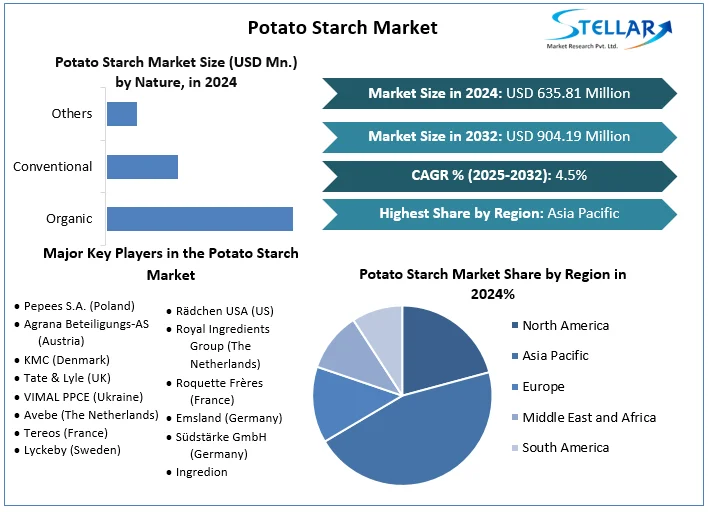
    The global potato starch market, a versatile ingredient essential to numerous industries, is on a steady growth path driven by the demand for natural products and convenience foods. Valued at US$ 635.81 million in 2024, the market is projected to expand at a Compound Annual Growth Rate (CAGR) of 4.5%, reaching US$ 904.19 million by 2032. This sustained growth highlights the ingredient's critical functional role as a binder, thickener, and stabilizer across the food, pharmaceutical, and textile sectors, even as it navigates evolving consumer dietary trends.

    Purchase This Research Report at up to 30% Off @ https://www.stellarmr.com/report/req_sample/Potato-Starch-Market/319

    Market Estimation & Definition

    Potato starch is a refined carbohydrate powder extracted from potato tubers, prized for its neutral flavor, high clarity, strong binding properties, and smooth texture. It is a multifunctional ingredient used extensively to thicken, stabilize, gel, and add bulk to a vast array of products. The market's solid valuation and consistent growth forecast underscore its entrenched position as a fundamental processing aid in both food and non-food industrial applications worldwide.

    Market Growth Drivers & Opportunity

    A primary driver for the market is the significant shift in consumer preference toward natural and native ingredient-based products. This "clean-label" trend is moving demand away from artificial additives and fueling growth for native starches like potato starch. Concurrently, the global rise in consumption of processed and convenience foods—including soups, sauces, bakery items, and instant meals—creates sustained demand for its functional thickening and stabilizing properties.

    A major growth opportunity lies in its expanding industrial applications, particularly in the textile sector. In developing economies like China and India, the booming textile industry utilizes potato starch as a cost-effective and efficient adhesive in the fabric sizing process. This industrial demand, coupled with its established use in paper manufacturing and as a pharmaceutical excipient (binder and disintegrant in tablets), provides diversified channels for market expansion beyond the food industry.

    Purchase This Research Report at up to 30% Off @ https://www.stellarmr.com/report/req_sample/Potato-Starch-Market/319

    What Lies Ahead: Emerging Trends and Challenges

    The market's future is shaped by the powerful counter-currents of health trends and ingredient innovation. A significant challenge is the growing consumer awareness of health risks associated with high carbohydrate consumption. Popular diets like keto, which severely restrict carbs, directly conflict with potato starch's nutritional profile, posing a restraint to growth in certain consumer segments.

    In response, a defining trend is the rapid growth of the organic segment, which held a commanding 61.8% market share in 2024. Organic potato starch is marketed not just as a functional ingredient but for its potential digestive health benefits as a source of resistant starch, appealing to health-conscious consumers. This trend dovetails with ongoing production innovations, where manufacturers are employing specialized enzymes and processes to enhance product quality and functionality for specific end-uses.

    Segmentation Analysis: Organic and Food Industry Lead

    By nature, the Organic segment is the dominant force, holding a 61.8% share. This dominance is directly tied to the global clean-label movement and the perception of organic starch as a healthier, more natural choice with associated gut health benefits.

    About us

    Phase 3,Navale IT Zone, S.No. 51/2A/2,

    Office No. 202, 2nd floor,

    Near, Navale Brg,Narhe,

    Pune, Maharashtra 411041

    sales@stellarmr.com
    2025–2032 Potato Starch Market Forecast: Growth Opportunities and Challenges Global Potato Starch Market Projected to Reach $904 Million by 2032, Fueled by Clean-Label Food Trends and Industrial Demand The global potato starch market, a versatile ingredient essential to numerous industries, is on a steady growth path driven by the demand for natural products and convenience foods. Valued at US$ 635.81 million in 2024, the market is projected to expand at a Compound Annual Growth Rate (CAGR) of 4.5%, reaching US$ 904.19 million by 2032. This sustained growth highlights the ingredient's critical functional role as a binder, thickener, and stabilizer across the food, pharmaceutical, and textile sectors, even as it navigates evolving consumer dietary trends. Purchase This Research Report at up to 30% Off @ https://www.stellarmr.com/report/req_sample/Potato-Starch-Market/319 Market Estimation & Definition Potato starch is a refined carbohydrate powder extracted from potato tubers, prized for its neutral flavor, high clarity, strong binding properties, and smooth texture. It is a multifunctional ingredient used extensively to thicken, stabilize, gel, and add bulk to a vast array of products. The market's solid valuation and consistent growth forecast underscore its entrenched position as a fundamental processing aid in both food and non-food industrial applications worldwide. Market Growth Drivers & Opportunity A primary driver for the market is the significant shift in consumer preference toward natural and native ingredient-based products. This "clean-label" trend is moving demand away from artificial additives and fueling growth for native starches like potato starch. Concurrently, the global rise in consumption of processed and convenience foods—including soups, sauces, bakery items, and instant meals—creates sustained demand for its functional thickening and stabilizing properties. A major growth opportunity lies in its expanding industrial applications, particularly in the textile sector. In developing economies like China and India, the booming textile industry utilizes potato starch as a cost-effective and efficient adhesive in the fabric sizing process. This industrial demand, coupled with its established use in paper manufacturing and as a pharmaceutical excipient (binder and disintegrant in tablets), provides diversified channels for market expansion beyond the food industry. Purchase This Research Report at up to 30% Off @ https://www.stellarmr.com/report/req_sample/Potato-Starch-Market/319 What Lies Ahead: Emerging Trends and Challenges The market's future is shaped by the powerful counter-currents of health trends and ingredient innovation. A significant challenge is the growing consumer awareness of health risks associated with high carbohydrate consumption. Popular diets like keto, which severely restrict carbs, directly conflict with potato starch's nutritional profile, posing a restraint to growth in certain consumer segments. In response, a defining trend is the rapid growth of the organic segment, which held a commanding 61.8% market share in 2024. Organic potato starch is marketed not just as a functional ingredient but for its potential digestive health benefits as a source of resistant starch, appealing to health-conscious consumers. This trend dovetails with ongoing production innovations, where manufacturers are employing specialized enzymes and processes to enhance product quality and functionality for specific end-uses. Segmentation Analysis: Organic and Food Industry Lead By nature, the Organic segment is the dominant force, holding a 61.8% share. This dominance is directly tied to the global clean-label movement and the perception of organic starch as a healthier, more natural choice with associated gut health benefits. About us Phase 3,Navale IT Zone, S.No. 51/2A/2, Office No. 202, 2nd floor, Near, Navale Brg,Narhe, Pune, Maharashtra 411041 sales@stellarmr.com
    0 Commenti 0 condivisioni

  • Plywood Industry Growth Drivers and Future Projections

    Global Plywood Market Set to Surpass $95 Billion by 2032, Driven by Construction Boom and Furniture Industry Demand

    The global Plywood Market, a cornerstone of the construction and manufacturing sectors, is on a steady path of expansion. Valued at $59.49 billion in 2024, the market is projected to grow at a compound annual growth rate (CAGR) of 6.05%, reaching $95.18 billion by 2032. This robust growth is fueled by a powerful combination of global urbanization, a thriving furniture industry, and the material's inherent advantages of durability, versatility, and cost-effectiveness.

    Purchase This Research Report at up to 30% Off @ https://www.stellarmr.com/report/req_sample/Plywood-Market/2012

    1. Market Estimation and Core Definition
    Plywood is an engineered wood panel product made by bonding thin layers of wood veneer together, with each layer's grain direction rotated relative to adjacent layers. This cross-graining technique gives plywood superior strength, dimensional stability, and resistance to cracking and warping compared to solid wood. The global market encompasses various types, including hardwood and softwood plywood, and serves as a critical material across multiple industries. Its valuation reflects its indispensable role in residential and commercial construction, furniture manufacturing, industrial applications, and interior design, underpinned by a steady demand for reliable and adaptable building materials.

    2. Market Growth Drivers and Key Opportunity
    The primary engine of market growth is the synchronized expansion of the global construction and furniture industries. Rapid urbanization, particularly in the Asia-Pacific region, drives massive demand for residential and commercial building materials, with plywood being a preferred choice for structural and finishing applications. Concurrently, the growth of the furniture sector—both mass-produced and luxury—relies heavily on plywood for its strength, workability, and aesthetic potential when finished with decorative veneers. A significant opportunity lies in innovation and specialization within the plywood product range. The development of value-added products, such as fire-resistant, moisture-proof, and specialty hardwood plywood, allows manufacturers to cater to niche markets, command premium prices, and differentiate themselves from lower-cost substitute materials like MDF and particleboard.

    3. What Lies Ahead: Emerging Trends Shaping the Future
    The market's evolution is being defined by regional dynamics and a heightened focus on sustainability. The unstoppable dominance of the Asia-Pacific (APAC) region is the defining geographic trend, with China and India leading demand fueled by government infrastructure investments and a booming urban middle class. Secondly, stringent environmental regulations and shifting consumer values, especially in Europe and North America, are pushing the industry toward sustainable and certified sourcing practices. This includes a growing emphasis on eco-friendly production and the use of recycled wood content. However, the industry must navigate persistent challenges, including volatile raw material (timber) costs, which squeeze manufacturer margins, and intense competition from engineered wood substitutes that offer cost advantages for certain applications.

    4. Segmentation Analysis
    The market is segmented by type, application, and end-user, revealing clear patterns of use:

    By Type: The Hardwood segment is highly valued for its aesthetic and durable qualities, commanding premium prices in furniture and high-end interior applications. The Softwood segment is widely used in construction and industrial applications for its strength and cost-efficiency.

    By Application: The Construction sector is the largest application segment, utilizing plywood for flooring, roofing, sheathing, and concrete formwork. The Furniture industry is the second major driver, relying on plywood for everything from cabinet carcasses to finished decorative pieces.

    By End User: Both Residential and Non-Residential (commercial, industrial) construction are key end-users, with demand closely tied to global real estate and infrastructure development cycles.

    Purchase This Research Report at up to 30% Off @ https://www.stellarmr.com/report/req_sample/Plywood-Market/2012

    About us

    Phase 3,Navale IT Zone, S.No. 51/2A/2,

    Office No. 202, 2nd floor,

    Near, Navale Brg,Narhe,

    Pune, Maharashtra 411041

    sales@stellarmr.com
    Plywood Industry Growth Drivers and Future Projections Global Plywood Market Set to Surpass $95 Billion by 2032, Driven by Construction Boom and Furniture Industry Demand The global Plywood Market, a cornerstone of the construction and manufacturing sectors, is on a steady path of expansion. Valued at $59.49 billion in 2024, the market is projected to grow at a compound annual growth rate (CAGR) of 6.05%, reaching $95.18 billion by 2032. This robust growth is fueled by a powerful combination of global urbanization, a thriving furniture industry, and the material's inherent advantages of durability, versatility, and cost-effectiveness. Purchase This Research Report at up to 30% Off @ https://www.stellarmr.com/report/req_sample/Plywood-Market/2012 1. Market Estimation and Core Definition Plywood is an engineered wood panel product made by bonding thin layers of wood veneer together, with each layer's grain direction rotated relative to adjacent layers. This cross-graining technique gives plywood superior strength, dimensional stability, and resistance to cracking and warping compared to solid wood. The global market encompasses various types, including hardwood and softwood plywood, and serves as a critical material across multiple industries. Its valuation reflects its indispensable role in residential and commercial construction, furniture manufacturing, industrial applications, and interior design, underpinned by a steady demand for reliable and adaptable building materials. 2. Market Growth Drivers and Key Opportunity The primary engine of market growth is the synchronized expansion of the global construction and furniture industries. Rapid urbanization, particularly in the Asia-Pacific region, drives massive demand for residential and commercial building materials, with plywood being a preferred choice for structural and finishing applications. Concurrently, the growth of the furniture sector—both mass-produced and luxury—relies heavily on plywood for its strength, workability, and aesthetic potential when finished with decorative veneers. A significant opportunity lies in innovation and specialization within the plywood product range. The development of value-added products, such as fire-resistant, moisture-proof, and specialty hardwood plywood, allows manufacturers to cater to niche markets, command premium prices, and differentiate themselves from lower-cost substitute materials like MDF and particleboard. 3. What Lies Ahead: Emerging Trends Shaping the Future The market's evolution is being defined by regional dynamics and a heightened focus on sustainability. The unstoppable dominance of the Asia-Pacific (APAC) region is the defining geographic trend, with China and India leading demand fueled by government infrastructure investments and a booming urban middle class. Secondly, stringent environmental regulations and shifting consumer values, especially in Europe and North America, are pushing the industry toward sustainable and certified sourcing practices. This includes a growing emphasis on eco-friendly production and the use of recycled wood content. However, the industry must navigate persistent challenges, including volatile raw material (timber) costs, which squeeze manufacturer margins, and intense competition from engineered wood substitutes that offer cost advantages for certain applications. 4. Segmentation Analysis The market is segmented by type, application, and end-user, revealing clear patterns of use: By Type: The Hardwood segment is highly valued for its aesthetic and durable qualities, commanding premium prices in furniture and high-end interior applications. The Softwood segment is widely used in construction and industrial applications for its strength and cost-efficiency. By Application: The Construction sector is the largest application segment, utilizing plywood for flooring, roofing, sheathing, and concrete formwork. The Furniture industry is the second major driver, relying on plywood for everything from cabinet carcasses to finished decorative pieces. By End User: Both Residential and Non-Residential (commercial, industrial) construction are key end-users, with demand closely tied to global real estate and infrastructure development cycles. Purchase This Research Report at up to 30% Off @ https://www.stellarmr.com/report/req_sample/Plywood-Market/2012 About us Phase 3,Navale IT Zone, S.No. 51/2A/2, Office No. 202, 2nd floor, Near, Navale Brg,Narhe, Pune, Maharashtra 411041 sales@stellarmr.com
    0 Commenti 0 condivisioni
  • Global Watermelon Seed Market Outlook 2025–2032: Size, Trends & Strategic Forecast

    Global Watermelon Seed Market Set for Strong Growth, Projected to Exceed USD 5 Billion by 2032, Fueled by Health and Wellness Trends

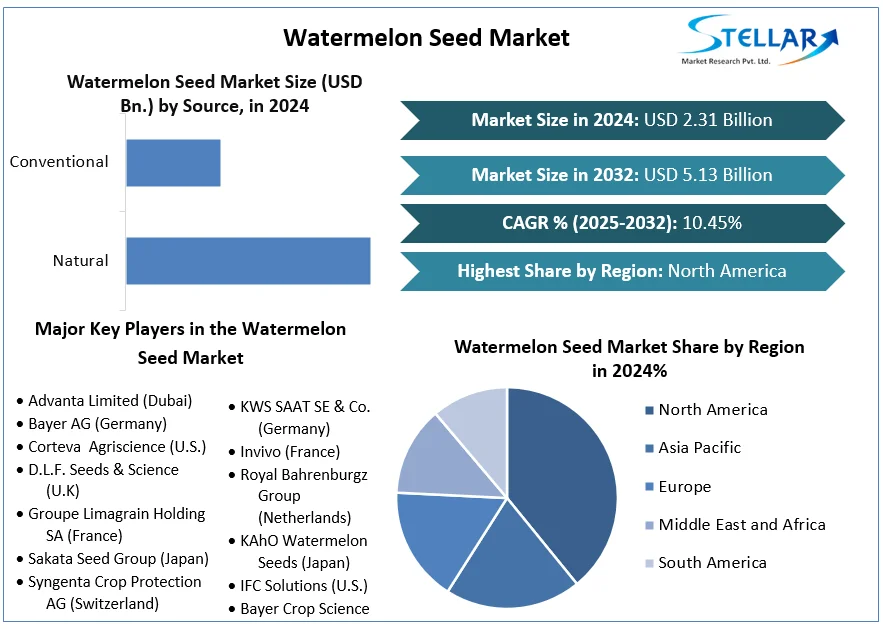
    A new comprehensive market analysis forecasts a period of robust expansion for the global watermelon seed industry, driven by a powerful consumer shift towards nutrient-dense, plant-based foods. The market, valued at USD 2.31 Billion in 2024, is projected to grow at a compound annual growth rate (CAGR) of 10.45% from 2025 to 2032, reaching nearly USD 5.13 Billion. This significant growth trajectory underscores the transformation of watermelon seeds from a byproduct to a valued superfood, prized for their rich nutritional profile including protein, healthy fats, and essential minerals.

    Purchase This Research Report at up to 30% Off @ https://www.stellarmr.com/report/req_sample/Watermelon-Seed-Market/1815

    Market Estimation & Definition

    The global watermelon seed market encompasses the cultivation, processing, and distribution of seeds from the watermelon fruit for human consumption and various industrial applications. These seeds are recognized as a rich source of plant-based protein, omega-3 and omega-6 fatty acids, magnesium, zinc, and iron. With a valuation of USD 2.31 Billion in 2024, the market's expansion to USD 5.13 Billion by 2032 reflects its successful integration into the health food sector. The seeds are consumed in raw, roasted, or dried forms and are increasingly used as ingredients in the food, nutraceutical, dietary supplement, and personal care industries.

    Market Growth Drivers & Opportunity

    The market's primary engine is the growing global consumer demand for organic, gluten-free, and vegan products. As health consciousness rises, consumers are actively seeking natural, nutrient-packed snacks, positioning watermelon seeds as an ideal choice. Their status as a complete plant-based protein source makes them particularly attractive to the expanding vegan and vegetarian populations. This aligns with broader dietary shifts towards cleaner labels and functional foods.

    A pivotal market opportunity lies in the explosive growth of e-commerce. Online platforms have dramatically increased accessibility, allowing consumers worldwide to easily discover and purchase specialized watermelon seed products, from simple raw seeds to flavored snacks and seed oils. This channel has been instrumental in educating consumers and driving trial. Furthermore, continuous product innovation in processing and formulation—such as creating convenient snack packs, incorporating seeds into protein bars and baked goods, or extracting seed oil for cosmetics—allows companies to capture higher value and cater to diverse consumer preferences.

    What Lies Ahead: Emerging Trends Shaping the Future

    The future of the watermelon seed market will be characterized by deeper diversification and increased market sophistication. Expect accelerated product development beyond basic snacks, with seeds being integrated into a wider array of functional foods, dietary supplements, and natural personal care products leveraging their oil and nutrient content. The raw seed segment, which offers maximum flexibility for further processing, is expected to maintain its dominant market share, serving as the foundational input for various value-added products.

    However, the industry must navigate several persistent challenges. Agricultural vulnerabilities, including crop susceptibility to adverse weather, pests, and diseases, can impact seed supply and quality. Raising broader consumer awareness beyond early adopters will be crucial to compete with more established nuts and seeds. Additionally, managing volatility in production costs and market prices will be key for maintaining stable growth and farmer engagement.

    Purchase This Research Report at up to 30% Off @ https://www.stellarmr.com/report/req_sample/Watermelon-Seed-Market/1815

    Segmentation Analysis

    The market is segmented by Product, End-Use, and Distribution Channel, revealing key consumption patterns.

    By Product: The Raw Seeds segment dominated the market with a 57.4% share in 2024. Its leadership is due to raw seeds' versatility as the primary input for further processing (roasting, oil extraction, milling into flour) and their use in planting, ensuring consistent demand from both food processors and agricultural sectors.

    By End-Use: Key consuming industries include the Food Industry (for snacks and ingredients), Nutraceuticals, Dietary Supplements, and Personal Care & Cosmetics. The food industry currently represents the largest application area, driven by the snacking trend.

    About us

    Phase 3,Navale IT Zone, S.No. 51/2A/2,

    Office No. 202, 2nd floor,

    Near, Navale Brg,Narhe,

    Pune, Maharashtra 411041

    sales@stellarmr.com


    Global Watermelon Seed Market Outlook 2025–2032: Size, Trends & Strategic Forecast Global Watermelon Seed Market Set for Strong Growth, Projected to Exceed USD 5 Billion by 2032, Fueled by Health and Wellness Trends A new comprehensive market analysis forecasts a period of robust expansion for the global watermelon seed industry, driven by a powerful consumer shift towards nutrient-dense, plant-based foods. The market, valued at USD 2.31 Billion in 2024, is projected to grow at a compound annual growth rate (CAGR) of 10.45% from 2025 to 2032, reaching nearly USD 5.13 Billion. This significant growth trajectory underscores the transformation of watermelon seeds from a byproduct to a valued superfood, prized for their rich nutritional profile including protein, healthy fats, and essential minerals. Purchase This Research Report at up to 30% Off @ https://www.stellarmr.com/report/req_sample/Watermelon-Seed-Market/1815 Market Estimation & Definition The global watermelon seed market encompasses the cultivation, processing, and distribution of seeds from the watermelon fruit for human consumption and various industrial applications. These seeds are recognized as a rich source of plant-based protein, omega-3 and omega-6 fatty acids, magnesium, zinc, and iron. With a valuation of USD 2.31 Billion in 2024, the market's expansion to USD 5.13 Billion by 2032 reflects its successful integration into the health food sector. The seeds are consumed in raw, roasted, or dried forms and are increasingly used as ingredients in the food, nutraceutical, dietary supplement, and personal care industries. Market Growth Drivers & Opportunity The market's primary engine is the growing global consumer demand for organic, gluten-free, and vegan products. As health consciousness rises, consumers are actively seeking natural, nutrient-packed snacks, positioning watermelon seeds as an ideal choice. Their status as a complete plant-based protein source makes them particularly attractive to the expanding vegan and vegetarian populations. This aligns with broader dietary shifts towards cleaner labels and functional foods. A pivotal market opportunity lies in the explosive growth of e-commerce. Online platforms have dramatically increased accessibility, allowing consumers worldwide to easily discover and purchase specialized watermelon seed products, from simple raw seeds to flavored snacks and seed oils. This channel has been instrumental in educating consumers and driving trial. Furthermore, continuous product innovation in processing and formulation—such as creating convenient snack packs, incorporating seeds into protein bars and baked goods, or extracting seed oil for cosmetics—allows companies to capture higher value and cater to diverse consumer preferences. What Lies Ahead: Emerging Trends Shaping the Future The future of the watermelon seed market will be characterized by deeper diversification and increased market sophistication. Expect accelerated product development beyond basic snacks, with seeds being integrated into a wider array of functional foods, dietary supplements, and natural personal care products leveraging their oil and nutrient content. The raw seed segment, which offers maximum flexibility for further processing, is expected to maintain its dominant market share, serving as the foundational input for various value-added products. However, the industry must navigate several persistent challenges. Agricultural vulnerabilities, including crop susceptibility to adverse weather, pests, and diseases, can impact seed supply and quality. Raising broader consumer awareness beyond early adopters will be crucial to compete with more established nuts and seeds. Additionally, managing volatility in production costs and market prices will be key for maintaining stable growth and farmer engagement. Purchase This Research Report at up to 30% Off @ https://www.stellarmr.com/report/req_sample/Watermelon-Seed-Market/1815 Segmentation Analysis The market is segmented by Product, End-Use, and Distribution Channel, revealing key consumption patterns. By Product: The Raw Seeds segment dominated the market with a 57.4% share in 2024. Its leadership is due to raw seeds' versatility as the primary input for further processing (roasting, oil extraction, milling into flour) and their use in planting, ensuring consistent demand from both food processors and agricultural sectors. By End-Use: Key consuming industries include the Food Industry (for snacks and ingredients), Nutraceuticals, Dietary Supplements, and Personal Care & Cosmetics. The food industry currently represents the largest application area, driven by the snacking trend. About us Phase 3,Navale IT Zone, S.No. 51/2A/2, Office No. 202, 2nd floor, Near, Navale Brg,Narhe, Pune, Maharashtra 411041 sales@stellarmr.com
    0 Commenti 0 condivisioni

  • Shredder Blades Market Trends 2025 | Size, Share, Price, Analysis, Report And Forecast 2032

    Shredder Blades Market Set for Steady Growth as Waste Management and Recycling Demand Intensifies

    The global shredder blades market is poised for consistent expansion, driven by rising industrial activity, stringent environmental regulations, and the growing imperative for efficient waste processing solutions. Shredder blades — the cutting components used in industrial shredders — are essential for reducing the size of diverse materials including plastics, metals, wood, rubber, e‑waste, paper, and cardboard. As organizations across waste management, recycling, manufacturing, and other sectors seek to optimize material handling and comply with sustainability norms, demand for durable, high‑performance shredder blades continues to grow. Current market estimates report a value of approximately USD 471.36 million in 2024, with projections pointing toward nearly USD 707.11 million by 2032 at a compound annual growth rate (CAGR) of around 5.2 percent.

    Purchase This Research Report at up to 30% Off @ https://www.stellarmr.com/report/req_sample/Shredder-Blades-Market/2164

    Market Estimation and Definition

    Shredder blades are specialized cutting tools designed to withstand extreme stress while reducing the size of discarded or surplus materials for further processing or recycling. They are integral components of industrial shredders, which serve as the first stage in material recovery and recycling operations. The blades are engineered from high‑strength materials and are designed to maintain sharpness, resist wear, and operate efficiently across a range of industrial applications. The performance of shredder blades directly influences operational efficiency, throughput, energy consumption, and maintenance requirements in shredding machinery, making their design, material choice, and durability key factors in market demand.


    About us

    Phase 3,Navale IT Zone, S.No. 51/2A/2,

    Office No. 202, 2nd floor,

    Near, Navale Brg,Narhe,

    Pune, Maharashtra 411041

    sales@stellarmr.com
    Shredder Blades Market Trends 2025 | Size, Share, Price, Analysis, Report And Forecast 2032 Shredder Blades Market Set for Steady Growth as Waste Management and Recycling Demand Intensifies The global shredder blades market is poised for consistent expansion, driven by rising industrial activity, stringent environmental regulations, and the growing imperative for efficient waste processing solutions. Shredder blades — the cutting components used in industrial shredders — are essential for reducing the size of diverse materials including plastics, metals, wood, rubber, e‑waste, paper, and cardboard. As organizations across waste management, recycling, manufacturing, and other sectors seek to optimize material handling and comply with sustainability norms, demand for durable, high‑performance shredder blades continues to grow. Current market estimates report a value of approximately USD 471.36 million in 2024, with projections pointing toward nearly USD 707.11 million by 2032 at a compound annual growth rate (CAGR) of around 5.2 percent. Purchase This Research Report at up to 30% Off @ https://www.stellarmr.com/report/req_sample/Shredder-Blades-Market/2164 Market Estimation and Definition Shredder blades are specialized cutting tools designed to withstand extreme stress while reducing the size of discarded or surplus materials for further processing or recycling. They are integral components of industrial shredders, which serve as the first stage in material recovery and recycling operations. The blades are engineered from high‑strength materials and are designed to maintain sharpness, resist wear, and operate efficiently across a range of industrial applications. The performance of shredder blades directly influences operational efficiency, throughput, energy consumption, and maintenance requirements in shredding machinery, making their design, material choice, and durability key factors in market demand. About us Phase 3,Navale IT Zone, S.No. 51/2A/2, Office No. 202, 2nd floor, Near, Navale Brg,Narhe, Pune, Maharashtra 411041 sales@stellarmr.com
    0 Commenti 0 condivisioni

  • South America Micro Electric Vehicle (EV) Market Size To Grow At A CAGR Of 13.5% In The Forecast Period Of 2025-2032

    South America Micro Electric Vehicle Market Accelerates Toward USD 4.4 Billion by 2032

    A High-Growth 13.5% CAGR Projected, Driven by Sustainable Urban Transport and Ambitious Government Targets

    A new regional industry analysis reveals exceptionally strong growth for the South America Micro Electric Vehicle (EV) market, a sector poised to transform urban mobility. These compact, efficient vehicles—including e-bikes, electric scooters, microcars, and specialized industrial units—are emerging as a key solution for cities tackling pollution and congestion, supported by a clear policy push towards sustainable transportation.

    Purchase This Research Report at up to 30% Off @ https://www.stellarmr.com/report/req_sample/South-America-Micro-Electric-Vehicle--EV--Market/843

    Market Estimation & Definition
    The South America Micro EV market encompasses a range of small, lightweight electric vehicles ideal for short to medium-distance urban travel, including passenger, commercial, and industrial applications. This segment represents a critical pathway toward energy-efficient, low-emission transportation as the region develops smarter city infrastructure. According to the report, the market was valued at USD 1,596.45 Million in 2024. It is projected to grow at a robust Compound Annual Growth Rate (CAGR) of 13.5% from 2025 to 2032, reaching USD 4,396.67 Million by 2032. This rapid expansion signals a significant shift in the region's automotive and urban mobility landscape.

    Market Growth Drivers & Opportunity
    The market's acceleration is fueled by a powerful convergence of environmental urgency and proactive government strategy. A primary driver is the severe air pollution crisis in major cities, with countries like Colombia implementing aggressive national strategies and offering tax incentives to electrify fleets and combat health risks. Concurrently, the broader regional shift toward sustainable transportation creates a fertile environment, with industries and logistics companies increasingly adopting micro EVs for their operational and environmental benefits.

    Significant opportunities are unfolding as local governments and industries actively engage in market development. Partnerships between vehicle manufacturers, utility companies, and charging infrastructure firms are forming to overcome adoption barriers. Furthermore, the gradual expansion of available micro EV models tailored for commercial, industrial, and private use is directly responding to and stimulating new demand across the continent.

    What Lies Ahead: Emerging Trends Shaping the Future
    The future of South America's micro-mobility will be defined by public-sector leadership, technological diversification, and strategic partnerships. A dominant trend is the large-scale adoption of electric micro-buses and commercial fleets by city governments, as seen in Santiago, Medellin, and Buenos Aires, which serves to demonstrate technology and build public acceptance. Market growth will also be supported by the continued dominance of affordable slow-charging solutions and advancements in battery technology (from lead-acid to lithium-ion) to improve vehicle range and performance. Finally, the success of the market hinges on continued collaboration across the ecosystem—between OEMs, energy providers, and policymakers—to simultaneously develop vehicles, charging networks, and supportive regulations.

    Segmentation Analysis: A Detailed Market View

    By Vehicle User: The Passenger Vehicle segment is expected to be the fastest-growing, with a projected annual growth rate of 17%. This is driven by manufacturers introducing new microcar and e-bike models and by city governments leading with electric bus fleets, as seen with BYD's orders in Argentina.

    By Type of Charging: Slow Charging currently dominates the market. Its popularity is attributed to lower cost, suitability for overnight or workplace charging, and its alignment with current vehicle usage patterns and existing electrical infrastructure, making it a practical choice for early adoption.

    Country-Level Analysis: Regional Leaders

    Colombia: Positioned as the highest-growth market, Colombia's drive is fueled by an urgent need to improve air quality in cities like Bogotá. The government's ambitious National Electromobility Strategy, which targets 600,000 EVs (with a significant portion being micro) by 2030 and offers substantial tax incentives, is a powerful market catalyst.

    About us

    Phase 3,Navale IT Zone, S.No. 51/2A/2,

    Office No. 202, 2nd floor,

    Near, Navale Brg,Narhe,

    Pune, Maharashtra 411041

    sales@stellarmr.com
    South America Micro Electric Vehicle (EV) Market Size To Grow At A CAGR Of 13.5% In The Forecast Period Of 2025-2032 South America Micro Electric Vehicle Market Accelerates Toward USD 4.4 Billion by 2032 A High-Growth 13.5% CAGR Projected, Driven by Sustainable Urban Transport and Ambitious Government Targets A new regional industry analysis reveals exceptionally strong growth for the South America Micro Electric Vehicle (EV) market, a sector poised to transform urban mobility. These compact, efficient vehicles—including e-bikes, electric scooters, microcars, and specialized industrial units—are emerging as a key solution for cities tackling pollution and congestion, supported by a clear policy push towards sustainable transportation. Purchase This Research Report at up to 30% Off @ https://www.stellarmr.com/report/req_sample/South-America-Micro-Electric-Vehicle--EV--Market/843 Market Estimation & Definition The South America Micro EV market encompasses a range of small, lightweight electric vehicles ideal for short to medium-distance urban travel, including passenger, commercial, and industrial applications. This segment represents a critical pathway toward energy-efficient, low-emission transportation as the region develops smarter city infrastructure. According to the report, the market was valued at USD 1,596.45 Million in 2024. It is projected to grow at a robust Compound Annual Growth Rate (CAGR) of 13.5% from 2025 to 2032, reaching USD 4,396.67 Million by 2032. This rapid expansion signals a significant shift in the region's automotive and urban mobility landscape. Market Growth Drivers & Opportunity The market's acceleration is fueled by a powerful convergence of environmental urgency and proactive government strategy. A primary driver is the severe air pollution crisis in major cities, with countries like Colombia implementing aggressive national strategies and offering tax incentives to electrify fleets and combat health risks. Concurrently, the broader regional shift toward sustainable transportation creates a fertile environment, with industries and logistics companies increasingly adopting micro EVs for their operational and environmental benefits. Significant opportunities are unfolding as local governments and industries actively engage in market development. Partnerships between vehicle manufacturers, utility companies, and charging infrastructure firms are forming to overcome adoption barriers. Furthermore, the gradual expansion of available micro EV models tailored for commercial, industrial, and private use is directly responding to and stimulating new demand across the continent. What Lies Ahead: Emerging Trends Shaping the Future The future of South America's micro-mobility will be defined by public-sector leadership, technological diversification, and strategic partnerships. A dominant trend is the large-scale adoption of electric micro-buses and commercial fleets by city governments, as seen in Santiago, Medellin, and Buenos Aires, which serves to demonstrate technology and build public acceptance. Market growth will also be supported by the continued dominance of affordable slow-charging solutions and advancements in battery technology (from lead-acid to lithium-ion) to improve vehicle range and performance. Finally, the success of the market hinges on continued collaboration across the ecosystem—between OEMs, energy providers, and policymakers—to simultaneously develop vehicles, charging networks, and supportive regulations. Segmentation Analysis: A Detailed Market View By Vehicle User: The Passenger Vehicle segment is expected to be the fastest-growing, with a projected annual growth rate of 17%. This is driven by manufacturers introducing new microcar and e-bike models and by city governments leading with electric bus fleets, as seen with BYD's orders in Argentina. By Type of Charging: Slow Charging currently dominates the market. Its popularity is attributed to lower cost, suitability for overnight or workplace charging, and its alignment with current vehicle usage patterns and existing electrical infrastructure, making it a practical choice for early adoption. Country-Level Analysis: Regional Leaders Colombia: Positioned as the highest-growth market, Colombia's drive is fueled by an urgent need to improve air quality in cities like Bogotá. The government's ambitious National Electromobility Strategy, which targets 600,000 EVs (with a significant portion being micro) by 2030 and offers substantial tax incentives, is a powerful market catalyst. About us Phase 3,Navale IT Zone, S.No. 51/2A/2, Office No. 202, 2nd floor, Near, Navale Brg,Narhe, Pune, Maharashtra 411041 sales@stellarmr.com
    0 Commenti 0 condivisioni

  • Strategic Outlook for Hydrogenated Polyisobutene Market : Competitive & Future Insight

    Global Hydrogenated Polyisobutene Market demonstrates significant growth potential, with rising demand across cosmetics, pharmaceuticals, and industrial applications. Known for its exceptional emollient properties and stability, this specialty chemical continues gaining traction as a sustainable alternative to traditional mineral oils in formulations. According to recent industry analysis, the market is projected to witness steady expansion driven by innovations in personal care formulations and increasing adoption in high-performance lubricants

    Download FREE Sample Report: https://www.24chemicalresearch.com/download-sample/272339/global-hydrogenated-polyisobutene-market-2024-2030-759
    Strategic Outlook for Hydrogenated Polyisobutene Market : Competitive & Future Insight Global Hydrogenated Polyisobutene Market demonstrates significant growth potential, with rising demand across cosmetics, pharmaceuticals, and industrial applications. Known for its exceptional emollient properties and stability, this specialty chemical continues gaining traction as a sustainable alternative to traditional mineral oils in formulations. According to recent industry analysis, the market is projected to witness steady expansion driven by innovations in personal care formulations and increasing adoption in high-performance lubricants Download FREE Sample Report: https://www.24chemicalresearch.com/download-sample/272339/global-hydrogenated-polyisobutene-market-2024-2030-759
    Love
    1
    0 Commenti 0 condivisioni
  • Fiber Optic Sensor Market Size To Grow At A CAGR Of 9.61% In The Forecast Period Of 2025-2032

    Global Fiber Optic Sensor Market Set for Robust Growth, Driven by Industrial Automation and Safety Imperatives

    A new detailed industry analysis forecasts sustained expansion for the global fiber optic sensor market, propelled by their unique advantages in harsh and critical environments. The market is projected to grow at a steady compound annual growth rate (CAGR) over the forecast period, underscoring its essential role in modern industrial and safety infrastructure.

    Purchase This Research Report at up to 30% Off @ https://www.stellarmr.com/report/req_sample/fiber-optic-sensor-market/2298

    Market Estimation & Definition
    The fiber optic sensor market encompasses devices that use optical fibers as the sensing element to measure physical parameters such as temperature, strain, pressure, vibration, and chemical composition. Unlike traditional electronic sensors, they convert environmental changes into variations in light properties (intensity, wavelength, phase, or polarization) transmitted through the fiber. This market is defined by sensors that offer key benefits: immunity to electromagnetic interference (EMI), intrinsic safety in explosive atmospheres, small size, multiplexing capability (many sensors on one fiber), and resilience in harsh conditions (high temperature, corrosive environments). They are critical for applications where conventional sensors fail or pose safety risks.

    Market Growth Drivers & Opportunity
    The market's growth is anchored in the accelerating global trend of industrial automation and Industry 4.0. As manufacturing, energy, and process industries seek greater efficiency, predictive maintenance, and real-time asset health monitoring, fiber optic sensors provide reliable, distributed data in electrically noisy factory environments. Their ability to be embedded in composite materials for structural health monitoring is also pivotal for aerospace and renewable energy. Concurrently, stringent safety regulations and the need for risk mitigation in sectors like oil & gas, power generation, and mining drive adoption. Their intrinsic safety (no electrical spark risk) makes them the preferred choice for monitoring temperature and strain in refineries, pipelines, and downhole applications.

    Substantial opportunities are emerging from infrastructure development and next-generation technologies. The expansion of smart city projects and critical infrastructure (bridges, tunnels, dams) creates demand for long-term, durable structural health monitoring systems. Furthermore, the rise of new energy and advanced transportation sectors presents fresh frontiers. Fiber optic sensors are crucial for monitoring the integrity of wind turbine blades, high-voltage power cables, and the thermal management of electric vehicle batteries and fuel cells, positioning the market at the forefront of the energy transition.

    What Lies Ahead: Emerging Trends Shaping the Future
    The market's evolution is being shaped by technological miniaturization and the push for smarter sensing networks. A key trend is the development of advanced and miniaturized sensor designs. Innovations in Fiber Bragg Gratings (FBGs), distributed acoustic sensing (DAS), and Fabry-Perot interferometers are enabling more precise, multi-parameter measurements in increasingly compact form factors. This is closely linked to the growing demand for multiplexed and distributed sensing systems, where dozens or even hundreds of sensing points along a single fiber cable provide a continuous profile of temperature or strain over many kilometers—revolutionizing pipeline monitoring, perimeter security, and geothermal well tracking.

    The competitive environment is intensifying, with increasing specialization and strategic partnerships. While established players dominate broad industrial markets, niche specialists are emerging focused on high-value applications in medical devices, scientific research, and defense. Success increasingly depends on deep application engineering expertise, the ability to provide complete turnkey monitoring solutions (not just sensors), and forming alliances with system integrators and end-users in key vertical industries like civil engineering and energy.

    Segmentation Analysis
    The market's structure is defined by its operating principles and diverse industrial applications:

    About us

    Phase 3,Navale IT Zone, S.No. 51/2A/2,

    Office No. 202, 2nd floor,

    Near, Navale Brg,Narhe,

    Pune, Maharashtra 411041

    sales@stellarmr.com
    Fiber Optic Sensor Market Size To Grow At A CAGR Of 9.61% In The Forecast Period Of 2025-2032 Global Fiber Optic Sensor Market Set for Robust Growth, Driven by Industrial Automation and Safety Imperatives A new detailed industry analysis forecasts sustained expansion for the global fiber optic sensor market, propelled by their unique advantages in harsh and critical environments. The market is projected to grow at a steady compound annual growth rate (CAGR) over the forecast period, underscoring its essential role in modern industrial and safety infrastructure. Purchase This Research Report at up to 30% Off @ https://www.stellarmr.com/report/req_sample/fiber-optic-sensor-market/2298 Market Estimation & Definition The fiber optic sensor market encompasses devices that use optical fibers as the sensing element to measure physical parameters such as temperature, strain, pressure, vibration, and chemical composition. Unlike traditional electronic sensors, they convert environmental changes into variations in light properties (intensity, wavelength, phase, or polarization) transmitted through the fiber. This market is defined by sensors that offer key benefits: immunity to electromagnetic interference (EMI), intrinsic safety in explosive atmospheres, small size, multiplexing capability (many sensors on one fiber), and resilience in harsh conditions (high temperature, corrosive environments). They are critical for applications where conventional sensors fail or pose safety risks. Market Growth Drivers & Opportunity The market's growth is anchored in the accelerating global trend of industrial automation and Industry 4.0. As manufacturing, energy, and process industries seek greater efficiency, predictive maintenance, and real-time asset health monitoring, fiber optic sensors provide reliable, distributed data in electrically noisy factory environments. Their ability to be embedded in composite materials for structural health monitoring is also pivotal for aerospace and renewable energy. Concurrently, stringent safety regulations and the need for risk mitigation in sectors like oil & gas, power generation, and mining drive adoption. Their intrinsic safety (no electrical spark risk) makes them the preferred choice for monitoring temperature and strain in refineries, pipelines, and downhole applications. Substantial opportunities are emerging from infrastructure development and next-generation technologies. The expansion of smart city projects and critical infrastructure (bridges, tunnels, dams) creates demand for long-term, durable structural health monitoring systems. Furthermore, the rise of new energy and advanced transportation sectors presents fresh frontiers. Fiber optic sensors are crucial for monitoring the integrity of wind turbine blades, high-voltage power cables, and the thermal management of electric vehicle batteries and fuel cells, positioning the market at the forefront of the energy transition. What Lies Ahead: Emerging Trends Shaping the Future The market's evolution is being shaped by technological miniaturization and the push for smarter sensing networks. A key trend is the development of advanced and miniaturized sensor designs. Innovations in Fiber Bragg Gratings (FBGs), distributed acoustic sensing (DAS), and Fabry-Perot interferometers are enabling more precise, multi-parameter measurements in increasingly compact form factors. This is closely linked to the growing demand for multiplexed and distributed sensing systems, where dozens or even hundreds of sensing points along a single fiber cable provide a continuous profile of temperature or strain over many kilometers—revolutionizing pipeline monitoring, perimeter security, and geothermal well tracking. The competitive environment is intensifying, with increasing specialization and strategic partnerships. While established players dominate broad industrial markets, niche specialists are emerging focused on high-value applications in medical devices, scientific research, and defense. Success increasingly depends on deep application engineering expertise, the ability to provide complete turnkey monitoring solutions (not just sensors), and forming alliances with system integrators and end-users in key vertical industries like civil engineering and energy. Segmentation Analysis The market's structure is defined by its operating principles and diverse industrial applications: About us Phase 3,Navale IT Zone, S.No. 51/2A/2, Office No. 202, 2nd floor, Near, Navale Brg,Narhe, Pune, Maharashtra 411041 sales@stellarmr.com
    0 Commenti 0 condivisioni

  • 6 High Leveler Manufacturers are revolutionizing steel processing, helping manufacturers achieve higher precision, efficiency, and sustainability. Among them, SUMIKURA Co., Ltd is recognized for its cutting-edge Cut To Length Lines, combining robust engineering with advanced automation.
    https://sumikura.jp/cut-to-length-lines-1.html
    High-traffic Google searches show rising interest in Industry 4.0, digital manufacturing, industrial automation, and green production technologies. In steel processing, high levelers play a critical role. These machines flatten steel sheets to exact tolerances, ensuring uniform thickness, superior flatness, and repeatable quality—key for automotive, construction, appliance, energy, and heavy industries.

    Cut To Length Lines: Precision Meets Productivity
    Modern cut to length lines integrate uncoiling, leveling, measuring, shearing, and stacking. Leveraging expertise from 6 High Leveler Manufacturers, including SUMIKURA, these systems produce steel sheets that meet the highest quality standards. This precision reduces waste, maximizes material use, and improves overall throughput, supporting both high-volume and flexible production environments.

    Automation and Industry 4.0 Integration
    Automation is a leading trend in manufacturing. High levelers from 6 High Leveler Manufacturers feature intelligent PLC controls, servo-driven leveling, and real-time monitoring. SUMIKURA Co., Ltd integrates these capabilities with smart factory systems, enabling predictive maintenance, process optimization, and minimized downtime, fully aligned with Industry 4.0 standards.

    Sustainability Drives Adoption
    Sustainable manufacturing is a growing priority. Companies aim to reduce scrap, energy consumption, and carbon emissions. Precision leveling from 6 High Leveler Manufacturers helps maximize coil utilization and minimize waste. SUMIKURA’s solutions enhance efficiency and environmental performance, helping manufacturers meet ESG objectives while maintaining high output.

    SUMIKURA Co., Ltd: Engineering Excellence
    SUMIKURA Co., Ltd is a leading provider of high-performance cut to length lines and leveling systems for steel, stainless steel, and aluminum. By combining innovations from 6 High Leveler Manufacturers, SUMIKURA delivers equipment with superior flatness, stability, and repeatability—ensuring reliable operation for diverse industrial applications.

    Supporting EV and Infrastructure Growth
    Global investment in electric vehicles, renewable energy, and infrastructure projects is accelerating. Battery enclosures, structural frames, and construction panels demand precise steel sheets. Solutions from 6 High Leveler Manufacturers, including SUMIKURA, ensure consistent accuracy and repeatable output, efficiently meeting industrial demand and supporting global infrastructure development.

    Why Market Interest Keeps Rising
    Manufacturers searching for industrial automation equipment and advanced steel processing solutions prioritize durability, precision, and smart integration. Using advanced leveling systems from 6 High Leveler Manufacturers ensures superior quality, operational efficiency, and long-term strategic advantage.

    The Future of Steel Processing
    Cut to length lines and high levelers will continue evolving with faster speeds, smarter controls, and deeper connectivity. Investing in systems from 6 High Leveler Manufacturers, led by SUMIKURA, is more than a productivity upgrade—it’s a step toward sustainable, future-ready manufacturing operations.
    6 High Leveler Manufacturers are revolutionizing steel processing, helping manufacturers achieve higher precision, efficiency, and sustainability. Among them, SUMIKURA Co., Ltd is recognized for its cutting-edge Cut To Length Lines, combining robust engineering with advanced automation. https://sumikura.jp/cut-to-length-lines-1.html High-traffic Google searches show rising interest in Industry 4.0, digital manufacturing, industrial automation, and green production technologies. In steel processing, high levelers play a critical role. These machines flatten steel sheets to exact tolerances, ensuring uniform thickness, superior flatness, and repeatable quality—key for automotive, construction, appliance, energy, and heavy industries. Cut To Length Lines: Precision Meets Productivity Modern cut to length lines integrate uncoiling, leveling, measuring, shearing, and stacking. Leveraging expertise from 6 High Leveler Manufacturers, including SUMIKURA, these systems produce steel sheets that meet the highest quality standards. This precision reduces waste, maximizes material use, and improves overall throughput, supporting both high-volume and flexible production environments. Automation and Industry 4.0 Integration Automation is a leading trend in manufacturing. High levelers from 6 High Leveler Manufacturers feature intelligent PLC controls, servo-driven leveling, and real-time monitoring. SUMIKURA Co., Ltd integrates these capabilities with smart factory systems, enabling predictive maintenance, process optimization, and minimized downtime, fully aligned with Industry 4.0 standards. Sustainability Drives Adoption Sustainable manufacturing is a growing priority. Companies aim to reduce scrap, energy consumption, and carbon emissions. Precision leveling from 6 High Leveler Manufacturers helps maximize coil utilization and minimize waste. SUMIKURA’s solutions enhance efficiency and environmental performance, helping manufacturers meet ESG objectives while maintaining high output. SUMIKURA Co., Ltd: Engineering Excellence SUMIKURA Co., Ltd is a leading provider of high-performance cut to length lines and leveling systems for steel, stainless steel, and aluminum. By combining innovations from 6 High Leveler Manufacturers, SUMIKURA delivers equipment with superior flatness, stability, and repeatability—ensuring reliable operation for diverse industrial applications. Supporting EV and Infrastructure Growth Global investment in electric vehicles, renewable energy, and infrastructure projects is accelerating. Battery enclosures, structural frames, and construction panels demand precise steel sheets. Solutions from 6 High Leveler Manufacturers, including SUMIKURA, ensure consistent accuracy and repeatable output, efficiently meeting industrial demand and supporting global infrastructure development. Why Market Interest Keeps Rising Manufacturers searching for industrial automation equipment and advanced steel processing solutions prioritize durability, precision, and smart integration. Using advanced leveling systems from 6 High Leveler Manufacturers ensures superior quality, operational efficiency, and long-term strategic advantage. The Future of Steel Processing Cut to length lines and high levelers will continue evolving with faster speeds, smarter controls, and deeper connectivity. Investing in systems from 6 High Leveler Manufacturers, led by SUMIKURA, is more than a productivity upgrade—it’s a step toward sustainable, future-ready manufacturing operations.
    6 High Stretch Leveler Production Manufacturer - SUMIKURA Co., Ltd
    Engineered for high precision and heavy-duty applications, 6 high Stretch leveler Production line integrates robust leveling technology with versatile shear options, ensuring reliable and efficient coil-to-sheet processing.
    0 Commenti 0 condivisioni
Pagine in Evidenza