• Challenges for Businesses Entering India’s Digital Market
    Developing mobile applications for India requires attention to a variety of factors.

    Visit site: https://www.digittrix.com/web-development

    High device fragmentation, variable network speeds, regional languages, and differing purchasing habits mean that a one-size-fits-all approach rarely works. Businesses need apps that are lightweight, functional on multiple platforms, and capable of providing seamless experiences to users across regions. Customization, security, and scalability become critical for retaining users and ensuring operational efficiency.
    Challenges for Businesses Entering India’s Digital Market Developing mobile applications for India requires attention to a variety of factors. Visit site: https://www.digittrix.com/web-development High device fragmentation, variable network speeds, regional languages, and differing purchasing habits mean that a one-size-fits-all approach rarely works. Businesses need apps that are lightweight, functional on multiple platforms, and capable of providing seamless experiences to users across regions. Customization, security, and scalability become critical for retaining users and ensuring operational efficiency.
    WWW.DIGITTRIX.COM
    Best website development company in Chandigarh
    Professional web development services to create modern, user-friendly websites that improve performance and engage visitors for business growth
    Love
    1
    0 Commenti 0 condivisioni
  • Lightweight Materials Reshape Transportation: Insights on North America’s Composites Market

    North America Transportation Composites Market Poised for Steady Growth, Driven by Lightweighting Demands and Roadway Applications

    The North America Transportation Composites Market, a critical enabler of advanced material innovation in automotive and aerospace sectors, is on a path of steady expansion. Valued at $10.32 billion in 2024, the market is projected to grow to $15.24 billion by 2032, advancing at a compound annual growth rate (CAGR) of 5%. This growth is primarily fueled by the relentless industry drive for lightweighting to enhance fuel efficiency and performance, though it navigates significant challenges including environmental regulations and material standardization issues.

    Purchase This Research Report at up to 30% Off @ https://www.stellarmr.com/report/req_sample/North-America-Transportation-Composites-Market/831

    1. Market Estimation and Core Definition
    Transportation composites are advanced materials combining two or more constituents—typically a high-strength fiber and a polymer matrix—to create a superior-performance material. In the transportation sector, they are prized for properties such as high strength-to-weight ratio, low density, corrosion resistance, and design flexibility. These materials are extensively used across automotive machinery, internal panels, aerospace structures, marine vessels, and rail components. The North American market's valuation reflects the consumption of these materials in manufacturing vehicles and transport equipment to meet stringent efficiency and emissions standards.

    2. Market Growth Drivers and Key Opportunity
    The fundamental driver for this market is the imperative for vehicle lightweighting. As manufacturers across automotive and aerospace strive to improve fuel economy, reduce emissions, and enhance performance, composites offer a vital solution by significantly reducing component weight without compromising strength. This is especially critical for the burgeoning electric vehicle (EV) segment, where reducing vehicle mass directly extends driving range. A significant opportunity lies in the road transportation sector, which is the fastest-growing end-user segment. The demand for composites in cars, trucks, buses, and commercial vehicles is surging as original equipment manufacturers (OEMs) leverage these materials for both interior and exterior components to meet tough environmental regulations. Government initiatives, such as the U.S. Department of Energy's funding for EV research, further bolster this long-term growth trajectory.

    3. Emerging Trends Shaping the Future
    The market's evolution is being shaped by material innovation and shifting regulatory landscapes. A key trend is the growing focus on thermoplastic composites. Unlike traditional thermoset composites, thermoplastics are reformable, recyclable, and suitable for high-volume production, aligning with both sustainability goals and manufacturing scalability needs. Concurrently, the market faces a counter-trend: increasingly strict environmental policies around plastic waste and end-of-life disposal are placing composite materials under greater scrutiny, pushing the industry toward more sustainable life-cycle solutions. Finally, strategic industry collaboration is accelerating innovation, as seen in partnerships like Hexcel and Arkema's joint project to develop advanced materials for aerospace, indicating a trend towards combining expertise to overcome technical and cost barriers.

    Purchase This Research Report at up to 30% Off @ https://www.stellarmr.com/report/req_sample/North-America-Transportation-Composites-Market/831

    4. Segmentation Analysis
    The market structure reveals distinct dynamics across two primary segments:

    By Type: The market is divided into Thermoset and Thermoplastic composites. Thermosets are traditionally dominant, valued for their high-temperature stability and structural performance. However, the Thermoplastic segment is gaining prominence due to its recyclability, reformability, and suitability for faster, more automated manufacturing processes, representing a significant shift in material preference.

    About us

    Phase 3,Navale IT Zone, S.No. 51/2A/2,

    Office No. 202, 2nd floor,

    Near, Navale Brg,Narhe,

    Pune, Maharashtra 411041

    sales@stellarmr.com

    Lightweight Materials Reshape Transportation: Insights on North America’s Composites Market North America Transportation Composites Market Poised for Steady Growth, Driven by Lightweighting Demands and Roadway Applications The North America Transportation Composites Market, a critical enabler of advanced material innovation in automotive and aerospace sectors, is on a path of steady expansion. Valued at $10.32 billion in 2024, the market is projected to grow to $15.24 billion by 2032, advancing at a compound annual growth rate (CAGR) of 5%. This growth is primarily fueled by the relentless industry drive for lightweighting to enhance fuel efficiency and performance, though it navigates significant challenges including environmental regulations and material standardization issues. Purchase This Research Report at up to 30% Off @ https://www.stellarmr.com/report/req_sample/North-America-Transportation-Composites-Market/831 1. Market Estimation and Core Definition Transportation composites are advanced materials combining two or more constituents—typically a high-strength fiber and a polymer matrix—to create a superior-performance material. In the transportation sector, they are prized for properties such as high strength-to-weight ratio, low density, corrosion resistance, and design flexibility. These materials are extensively used across automotive machinery, internal panels, aerospace structures, marine vessels, and rail components. The North American market's valuation reflects the consumption of these materials in manufacturing vehicles and transport equipment to meet stringent efficiency and emissions standards. 2. Market Growth Drivers and Key Opportunity The fundamental driver for this market is the imperative for vehicle lightweighting. As manufacturers across automotive and aerospace strive to improve fuel economy, reduce emissions, and enhance performance, composites offer a vital solution by significantly reducing component weight without compromising strength. This is especially critical for the burgeoning electric vehicle (EV) segment, where reducing vehicle mass directly extends driving range. A significant opportunity lies in the road transportation sector, which is the fastest-growing end-user segment. The demand for composites in cars, trucks, buses, and commercial vehicles is surging as original equipment manufacturers (OEMs) leverage these materials for both interior and exterior components to meet tough environmental regulations. Government initiatives, such as the U.S. Department of Energy's funding for EV research, further bolster this long-term growth trajectory. 3. Emerging Trends Shaping the Future The market's evolution is being shaped by material innovation and shifting regulatory landscapes. A key trend is the growing focus on thermoplastic composites. Unlike traditional thermoset composites, thermoplastics are reformable, recyclable, and suitable for high-volume production, aligning with both sustainability goals and manufacturing scalability needs. Concurrently, the market faces a counter-trend: increasingly strict environmental policies around plastic waste and end-of-life disposal are placing composite materials under greater scrutiny, pushing the industry toward more sustainable life-cycle solutions. Finally, strategic industry collaboration is accelerating innovation, as seen in partnerships like Hexcel and Arkema's joint project to develop advanced materials for aerospace, indicating a trend towards combining expertise to overcome technical and cost barriers. Purchase This Research Report at up to 30% Off @ https://www.stellarmr.com/report/req_sample/North-America-Transportation-Composites-Market/831 4. Segmentation Analysis The market structure reveals distinct dynamics across two primary segments: By Type: The market is divided into Thermoset and Thermoplastic composites. Thermosets are traditionally dominant, valued for their high-temperature stability and structural performance. However, the Thermoplastic segment is gaining prominence due to its recyclability, reformability, and suitability for faster, more automated manufacturing processes, representing a significant shift in material preference. About us Phase 3,Navale IT Zone, S.No. 51/2A/2, Office No. 202, 2nd floor, Near, Navale Brg,Narhe, Pune, Maharashtra 411041 sales@stellarmr.com

    0 Commenti 0 condivisioni
  • 0.9D Micro Polyester Staple Fiber — the premium alternative to down with a feather-like feel.
    With a 0.9 denier microfiber structure and silicone oil finishing, it delivers ultra-softness, high loft, and silky smooth touch.
    Lightweight & warm
    Down-like comfort without allergies
    Durable and wash-resistant
    Perfect for pillows, cushions, duvet inserts, and plush toys.

    https://www.daxinfiber.com/mirco-fiber-series-2.html

    #MicroFiber #PolyesterFiber #DownAlternative #HomeTextiles #LuxuryBedding #PillowFilling #EcoFriendly
    ✨ 0.9D Micro Polyester Staple Fiber — the premium alternative to down with a feather-like feel. With a 0.9 denier microfiber structure and silicone oil finishing, it delivers ultra-softness, high loft, and silky smooth touch. 🌟 Lightweight & warm 🌟 Down-like comfort without allergies 🌟 Durable and wash-resistant Perfect for pillows, cushions, duvet inserts, and plush toys. 🛏️🧸 https://www.daxinfiber.com/mirco-fiber-series-2.html #MicroFiber #PolyesterFiber #DownAlternative #HomeTextiles #LuxuryBedding #PillowFilling #EcoFriendly
    0 Commenti 0 condivisioni
  • South America Micro Electric Vehicle (EV) Market Size To Grow At A CAGR Of 13.5% In The Forecast Period Of 2025-2032

    South America Micro Electric Vehicle Market Accelerates Toward USD 4.4 Billion by 2032

    A High-Growth 13.5% CAGR Projected, Driven by Sustainable Urban Transport and Ambitious Government Targets

    A new regional industry analysis reveals exceptionally strong growth for the South America Micro Electric Vehicle (EV) market, a sector poised to transform urban mobility. These compact, efficient vehicles—including e-bikes, electric scooters, microcars, and specialized industrial units—are emerging as a key solution for cities tackling pollution and congestion, supported by a clear policy push towards sustainable transportation.

    Purchase This Research Report at up to 30% Off @ https://www.stellarmr.com/report/req_sample/South-America-Micro-Electric-Vehicle--EV--Market/843

    Market Estimation & Definition
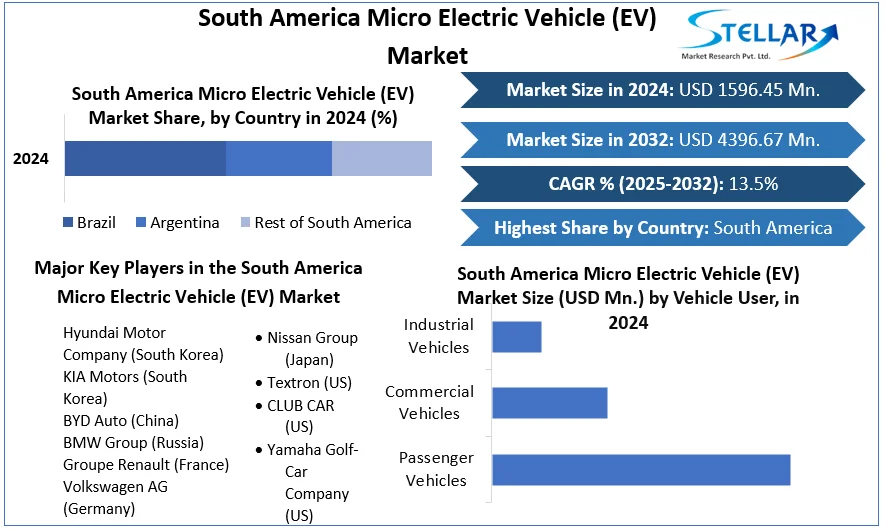
    The South America Micro EV market encompasses a range of small, lightweight electric vehicles ideal for short to medium-distance urban travel, including passenger, commercial, and industrial applications. This segment represents a critical pathway toward energy-efficient, low-emission transportation as the region develops smarter city infrastructure. According to the report, the market was valued at USD 1,596.45 Million in 2024. It is projected to grow at a robust Compound Annual Growth Rate (CAGR) of 13.5% from 2025 to 2032, reaching USD 4,396.67 Million by 2032. This rapid expansion signals a significant shift in the region's automotive and urban mobility landscape.

    Market Growth Drivers & Opportunity
    The market's acceleration is fueled by a powerful convergence of environmental urgency and proactive government strategy. A primary driver is the severe air pollution crisis in major cities, with countries like Colombia implementing aggressive national strategies and offering tax incentives to electrify fleets and combat health risks. Concurrently, the broader regional shift toward sustainable transportation creates a fertile environment, with industries and logistics companies increasingly adopting micro EVs for their operational and environmental benefits.

    Significant opportunities are unfolding as local governments and industries actively engage in market development. Partnerships between vehicle manufacturers, utility companies, and charging infrastructure firms are forming to overcome adoption barriers. Furthermore, the gradual expansion of available micro EV models tailored for commercial, industrial, and private use is directly responding to and stimulating new demand across the continent.

    What Lies Ahead: Emerging Trends Shaping the Future
    The future of South America's micro-mobility will be defined by public-sector leadership, technological diversification, and strategic partnerships. A dominant trend is the large-scale adoption of electric micro-buses and commercial fleets by city governments, as seen in Santiago, Medellin, and Buenos Aires, which serves to demonstrate technology and build public acceptance. Market growth will also be supported by the continued dominance of affordable slow-charging solutions and advancements in battery technology (from lead-acid to lithium-ion) to improve vehicle range and performance. Finally, the success of the market hinges on continued collaboration across the ecosystem—between OEMs, energy providers, and policymakers—to simultaneously develop vehicles, charging networks, and supportive regulations.

    Segmentation Analysis: A Detailed Market View

    By Vehicle User: The Passenger Vehicle segment is expected to be the fastest-growing, with a projected annual growth rate of 17%. This is driven by manufacturers introducing new microcar and e-bike models and by city governments leading with electric bus fleets, as seen with BYD's orders in Argentina.

    By Type of Charging: Slow Charging currently dominates the market. Its popularity is attributed to lower cost, suitability for overnight or workplace charging, and its alignment with current vehicle usage patterns and existing electrical infrastructure, making it a practical choice for early adoption.

    Country-Level Analysis: Regional Leaders

    Colombia: Positioned as the highest-growth market, Colombia's drive is fueled by an urgent need to improve air quality in cities like Bogotá. The government's ambitious National Electromobility Strategy, which targets 600,000 EVs (with a significant portion being micro) by 2030 and offers substantial tax incentives, is a powerful market catalyst.

    About us

    Phase 3,Navale IT Zone, S.No. 51/2A/2,

    Office No. 202, 2nd floor,

    Near, Navale Brg,Narhe,

    Pune, Maharashtra 411041

    sales@stellarmr.com
    South America Micro Electric Vehicle (EV) Market Size To Grow At A CAGR Of 13.5% In The Forecast Period Of 2025-2032 South America Micro Electric Vehicle Market Accelerates Toward USD 4.4 Billion by 2032 A High-Growth 13.5% CAGR Projected, Driven by Sustainable Urban Transport and Ambitious Government Targets A new regional industry analysis reveals exceptionally strong growth for the South America Micro Electric Vehicle (EV) market, a sector poised to transform urban mobility. These compact, efficient vehicles—including e-bikes, electric scooters, microcars, and specialized industrial units—are emerging as a key solution for cities tackling pollution and congestion, supported by a clear policy push towards sustainable transportation. Purchase This Research Report at up to 30% Off @ https://www.stellarmr.com/report/req_sample/South-America-Micro-Electric-Vehicle--EV--Market/843 Market Estimation & Definition The South America Micro EV market encompasses a range of small, lightweight electric vehicles ideal for short to medium-distance urban travel, including passenger, commercial, and industrial applications. This segment represents a critical pathway toward energy-efficient, low-emission transportation as the region develops smarter city infrastructure. According to the report, the market was valued at USD 1,596.45 Million in 2024. It is projected to grow at a robust Compound Annual Growth Rate (CAGR) of 13.5% from 2025 to 2032, reaching USD 4,396.67 Million by 2032. This rapid expansion signals a significant shift in the region's automotive and urban mobility landscape. Market Growth Drivers & Opportunity The market's acceleration is fueled by a powerful convergence of environmental urgency and proactive government strategy. A primary driver is the severe air pollution crisis in major cities, with countries like Colombia implementing aggressive national strategies and offering tax incentives to electrify fleets and combat health risks. Concurrently, the broader regional shift toward sustainable transportation creates a fertile environment, with industries and logistics companies increasingly adopting micro EVs for their operational and environmental benefits. Significant opportunities are unfolding as local governments and industries actively engage in market development. Partnerships between vehicle manufacturers, utility companies, and charging infrastructure firms are forming to overcome adoption barriers. Furthermore, the gradual expansion of available micro EV models tailored for commercial, industrial, and private use is directly responding to and stimulating new demand across the continent. What Lies Ahead: Emerging Trends Shaping the Future The future of South America's micro-mobility will be defined by public-sector leadership, technological diversification, and strategic partnerships. A dominant trend is the large-scale adoption of electric micro-buses and commercial fleets by city governments, as seen in Santiago, Medellin, and Buenos Aires, which serves to demonstrate technology and build public acceptance. Market growth will also be supported by the continued dominance of affordable slow-charging solutions and advancements in battery technology (from lead-acid to lithium-ion) to improve vehicle range and performance. Finally, the success of the market hinges on continued collaboration across the ecosystem—between OEMs, energy providers, and policymakers—to simultaneously develop vehicles, charging networks, and supportive regulations. Segmentation Analysis: A Detailed Market View By Vehicle User: The Passenger Vehicle segment is expected to be the fastest-growing, with a projected annual growth rate of 17%. This is driven by manufacturers introducing new microcar and e-bike models and by city governments leading with electric bus fleets, as seen with BYD's orders in Argentina. By Type of Charging: Slow Charging currently dominates the market. Its popularity is attributed to lower cost, suitability for overnight or workplace charging, and its alignment with current vehicle usage patterns and existing electrical infrastructure, making it a practical choice for early adoption. Country-Level Analysis: Regional Leaders Colombia: Positioned as the highest-growth market, Colombia's drive is fueled by an urgent need to improve air quality in cities like Bogotá. The government's ambitious National Electromobility Strategy, which targets 600,000 EVs (with a significant portion being micro) by 2030 and offers substantial tax incentives, is a powerful market catalyst. About us Phase 3,Navale IT Zone, S.No. 51/2A/2, Office No. 202, 2nd floor, Near, Navale Brg,Narhe, Pune, Maharashtra 411041 sales@stellarmr.com

    0 Commenti 0 condivisioni
  • Manufacturing in 2025 is all about AI, automation, sustainability & smart supply chains— and nothing embodies that shift like Steel Cut To Length Equipment powering modern industry!
    https://sumikura.jp/cut-to-length-lines-2.html
    Steel Cut To Length Equipment is transforming how steel and aluminum coils become precise flat sheets, supporting everything from EVs and renewable energy infrastructure to smart appliances and high-performance construction materials. At the core of today’s #SmartFactory revolution, these systems are fully automated, IoT-ready, and engineered for precision—reducing waste and boosting productivity at scale.

    Why this matters now: Smart manufacturing isn’t just a buzzword—it’s reshaping global production. According to industry analysts, future-ready cut-to-length lines integrate sensors and real-time monitoring that optimize efficiency and ensure tight tolerances down to fractions of a millimeter.

    Steel Cut To Length Equipment isn’t one-size-fits-all. Modern CTL lines handle multiple materials (HSS, CRS, HRS, stainless, aluminum), widths up to 2,500 mm, thicknesses from ultra-thin foils to heavy plates, and lengths up to 12,000 mm with speeds up to 80 m/min—all while leveling, shearing, and stacking seamlessly.

    AI + Robotics = Next-Gen Metal Processing
    Artificial intelligence and automated controls are driving smarter manufacturing. Predictive maintenance cuts downtime, while robotics and AI-driven quality inspection deliver consistent output. This means Steel Cut To Length Equipment can support digital supply chains that are faster, greener, and more resilient against disruptions like global logistics bottlenecks.

    Sustainability isn’t optional—it's imperative.
    With tightening environmental standards and the rise of “green steel,” modern CTL systems reduce energy use by up to 40% and support materials recycling strategies.

    Industry leaders like SUMIKURA Co., Ltd—with decades of engineering expertise and production lines across Japan and China—are at the forefront of delivering these advanced CTL solutions globally. Their precision lines aren’t just about cutting metal; they’re about empowering manufacturers to meet the demands of automotive OEMs, service centers, builders, and appliance makers with quality, speed, and low waste.

    From Automotive to Aerospace
    These systems underpin industries where precision and consistency are critical — think EV chassis panels, appliance housing, shipbuilding components, and structural construction sheets. Whether it’s trimming steel for safety frames or trimming sustainably sourced aluminum for lightweight designs, CTL technology is enabling smarter engineering outcomes.

    In a world shifting to AI-driven, connected supply chains and sustainability goals, Steel Cut To Length Equipment isn’t just industrial gear — it’s a competitive advantage.
    Manufacturers embracing it are future-proofing operations, reducing waste, and moving toward Industry 4.0 at scale.
    Manufacturing in 2025 is all about AI, automation, sustainability & smart supply chains— and nothing embodies that shift like Steel Cut To Length Equipment powering modern industry! https://sumikura.jp/cut-to-length-lines-2.html Steel Cut To Length Equipment is transforming how steel and aluminum coils become precise flat sheets, supporting everything from EVs and renewable energy infrastructure to smart appliances and high-performance construction materials. At the core of today’s #SmartFactory revolution, these systems are fully automated, IoT-ready, and engineered for precision—reducing waste and boosting productivity at scale. Why this matters now: Smart manufacturing isn’t just a buzzword—it’s reshaping global production. According to industry analysts, future-ready cut-to-length lines integrate sensors and real-time monitoring that optimize efficiency and ensure tight tolerances down to fractions of a millimeter. Steel Cut To Length Equipment isn’t one-size-fits-all. Modern CTL lines handle multiple materials (HSS, CRS, HRS, stainless, aluminum), widths up to 2,500 mm, thicknesses from ultra-thin foils to heavy plates, and lengths up to 12,000 mm with speeds up to 80 m/min—all while leveling, shearing, and stacking seamlessly. AI + Robotics = Next-Gen Metal Processing Artificial intelligence and automated controls are driving smarter manufacturing. Predictive maintenance cuts downtime, while robotics and AI-driven quality inspection deliver consistent output. This means Steel Cut To Length Equipment can support digital supply chains that are faster, greener, and more resilient against disruptions like global logistics bottlenecks. Sustainability isn’t optional—it's imperative. With tightening environmental standards and the rise of “green steel,” modern CTL systems reduce energy use by up to 40% and support materials recycling strategies. Industry leaders like SUMIKURA Co., Ltd—with decades of engineering expertise and production lines across Japan and China—are at the forefront of delivering these advanced CTL solutions globally. Their precision lines aren’t just about cutting metal; they’re about empowering manufacturers to meet the demands of automotive OEMs, service centers, builders, and appliance makers with quality, speed, and low waste. From Automotive to Aerospace These systems underpin industries where precision and consistency are critical — think EV chassis panels, appliance housing, shipbuilding components, and structural construction sheets. Whether it’s trimming steel for safety frames or trimming sustainably sourced aluminum for lightweight designs, CTL technology is enabling smarter engineering outcomes. In a world shifting to AI-driven, connected supply chains and sustainability goals, Steel Cut To Length Equipment isn’t just industrial gear — it’s a competitive advantage. Manufacturers embracing it are future-proofing operations, reducing waste, and moving toward Industry 4.0 at scale.
    China Steel Cut To Length Equipment Factory Supplier - SUMIKURA Co., Ltd
    Compact yet powerful, Steel cut to length equipment is designed for medium coil sizes and ensures efficiency, reliability, and versatility across a wide range of applications.
    0 Commenti 0 condivisioni
  • Green Coatings Market Size To Grow At A CAGR Of 3.9% In The Forecast Period Of 2025-2032

    Green Coatings Market Rises: Sustainability & Regulation Fuel Demand for Eco‑Friendly Finishes
    Market Estimation & Definition
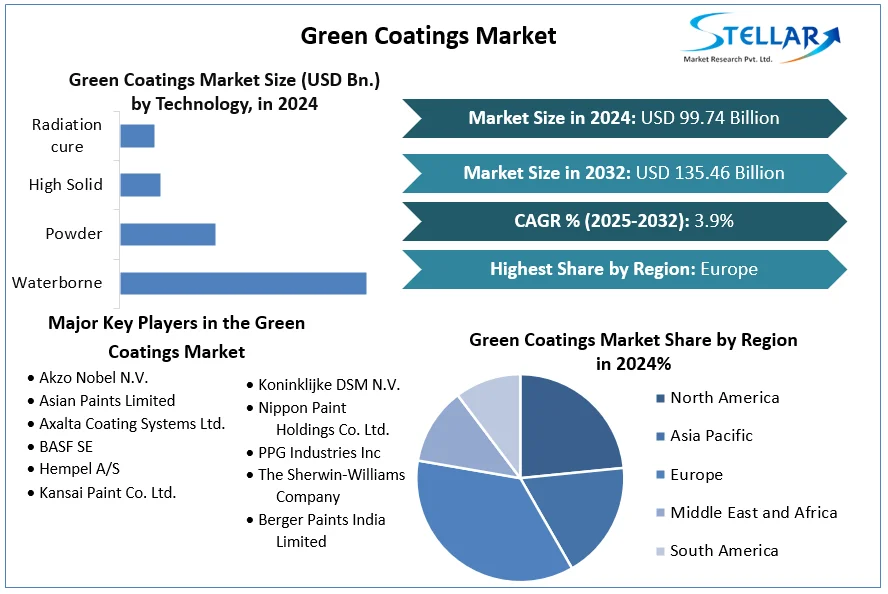
    Green coatings refer to protective or decorative surface coatings (paints, varnishes, lacquers, specialized finishes) formulated to be environmentally friendly — with low or zero volatile organic compounds (VOCs), minimal hazardous chemicals, and compliance with stricter environmental and health regulations. These coatings are widely used in construction, automotive, furniture, industrial equipment, infrastructure, and consumer goods.

    With global emphasis on reducing environmental impact, improving indoor air quality, and meeting regulatory requirements on emissions and hazardous substances, demand for green coatings is growing. Manufacturers and end users increasingly prefer sustainable coating solutions over traditional solvent‑based paints.

    Request Free Sample Report:https://www.stellarmr.com/report/req_sample/green-coatings-market/2330

    Market Growth Drivers & Opportunities
    Stricter Environmental Regulations & Health Awareness
    Governments and regulatory bodies worldwide are enforcing laws limiting VOC emissions and hazardous chemical use. This drives industries toward compliant green coatings. Growing awareness of indoor air quality and environmental health among consumers also fuels demand.

    Sustainability Goals & Corporate ESG Policies
    Companies across construction, automotive, furniture, and manufacturing sectors are incorporating ESG (Environmental, Social, Governance) targets. Adopting green coatings helps meet sustainability commitments, reduce environmental footprint, and improve brand reputation.

    Growing Construction & Infrastructure Development
    Rapid urbanization and infrastructure expansion in many countries — including residential, commercial, public works and transportation projects — increases demand for coatings. Green coatings are preferred to meet environmental and regulatory standards for buildings and public structures.

    Automotive Industry Shift & Lightweight Materials
    As automobile manufacturers move toward lightweight materials and eco‑conscious production, green coatings compatible with modern substrates (plastics, composites, lighter metals) are increasingly used for vehicle exteriors and interiors.

    Consumer Demand for Eco-Friendly Products
    Consumers are more conscious about sustainability, low chemical exposure, and product life‑cycle impact. For furniture, home décor, appliances and consumer goods — green coatings offer a selling point, driving manufacturers to adopt them.

    What Lies Ahead: Emerging Trends Shaping the Future
    Water‑Based & High‑Solid Coatings
    Water‑borne coatings and high‑solid formulations (less solvent, more solids) will gain traction as they reduce VOC emissions while maintaining performance standards for durability and finish.

    Powder Coatings & UV‑Cured Coatings
    Alternative technologies like powder coatings and UV-cured coatings — which eliminate solvents and lower emissions — are expected to expand in industrial and furniture applications.

    Bio‑Based & Sustainable Raw Materials
    Use of bio‑derived resins, natural pigments, and sustainable additives will rise to reduce reliance on petrochemical feedstock and improve biodegradability/eco‑friendliness.

    Performance‑Optimized Green Coatings
    Improved formulations combining eco‑friendliness with high durability, corrosion resistance, UV‑protection, scratch resistance — suitable for harsh industrial or outdoor conditions — will push adoption beyond consumer use to heavy‑duty industrial and infrastructure applications.

    Regulation‑Driven Retrofits and Renovations
    New regulatory mandates for public buildings, schools, hospitals and offices on indoor air quality and emissions compliance may lead to widespread repainting or retrofitting using green coatings.

    Segmentation Analysis
    Based on typical segmentation frameworks, the green coatings market can be divided as:

    By Coating Type / Technology

    Water‑based Coatings

    Powder Coatings

    High‑Solid / Low‑VOC Solvent‑Reduced Coatings

    UV‑Cured Coatings

    Bio‑Based / Eco-Friendly Resin Coatings

    By Application / End‑Use Sector

    Residential & Commercial Construction (walls, ceilings, infrastructure)

    Industrial & Infrastructure (metal structures, pipelines, bridges, rail, power assets)

    Automotive & Transportation (vehicles, components)

    Furniture & Wood Products

    Consumer Goods & Appliances

    By Functionality

    Protective Coatings (anti‑corrosion, weather-resistant, abrasion‑resistant)

    About us

    Phase 3,Navale IT Zone, S.No. 51/2A/2,

    Office No. 202, 2nd floor,

    Near, Navale Brg,Narhe,

    Pune, Maharashtra 411041

    sales@stellarmr.com

    Green Coatings Market Size To Grow At A CAGR Of 3.9% In The Forecast Period Of 2025-2032 Green Coatings Market Rises: Sustainability & Regulation Fuel Demand for Eco‑Friendly Finishes Market Estimation & Definition Green coatings refer to protective or decorative surface coatings (paints, varnishes, lacquers, specialized finishes) formulated to be environmentally friendly — with low or zero volatile organic compounds (VOCs), minimal hazardous chemicals, and compliance with stricter environmental and health regulations. These coatings are widely used in construction, automotive, furniture, industrial equipment, infrastructure, and consumer goods. With global emphasis on reducing environmental impact, improving indoor air quality, and meeting regulatory requirements on emissions and hazardous substances, demand for green coatings is growing. Manufacturers and end users increasingly prefer sustainable coating solutions over traditional solvent‑based paints. Request Free Sample Report:https://www.stellarmr.com/report/req_sample/green-coatings-market/2330 Market Growth Drivers & Opportunities Stricter Environmental Regulations & Health Awareness Governments and regulatory bodies worldwide are enforcing laws limiting VOC emissions and hazardous chemical use. This drives industries toward compliant green coatings. Growing awareness of indoor air quality and environmental health among consumers also fuels demand. Sustainability Goals & Corporate ESG Policies Companies across construction, automotive, furniture, and manufacturing sectors are incorporating ESG (Environmental, Social, Governance) targets. Adopting green coatings helps meet sustainability commitments, reduce environmental footprint, and improve brand reputation. Growing Construction & Infrastructure Development Rapid urbanization and infrastructure expansion in many countries — including residential, commercial, public works and transportation projects — increases demand for coatings. Green coatings are preferred to meet environmental and regulatory standards for buildings and public structures. Automotive Industry Shift & Lightweight Materials As automobile manufacturers move toward lightweight materials and eco‑conscious production, green coatings compatible with modern substrates (plastics, composites, lighter metals) are increasingly used for vehicle exteriors and interiors. Consumer Demand for Eco-Friendly Products Consumers are more conscious about sustainability, low chemical exposure, and product life‑cycle impact. For furniture, home décor, appliances and consumer goods — green coatings offer a selling point, driving manufacturers to adopt them. What Lies Ahead: Emerging Trends Shaping the Future Water‑Based & High‑Solid Coatings Water‑borne coatings and high‑solid formulations (less solvent, more solids) will gain traction as they reduce VOC emissions while maintaining performance standards for durability and finish. Powder Coatings & UV‑Cured Coatings Alternative technologies like powder coatings and UV-cured coatings — which eliminate solvents and lower emissions — are expected to expand in industrial and furniture applications. Bio‑Based & Sustainable Raw Materials Use of bio‑derived resins, natural pigments, and sustainable additives will rise to reduce reliance on petrochemical feedstock and improve biodegradability/eco‑friendliness. Performance‑Optimized Green Coatings Improved formulations combining eco‑friendliness with high durability, corrosion resistance, UV‑protection, scratch resistance — suitable for harsh industrial or outdoor conditions — will push adoption beyond consumer use to heavy‑duty industrial and infrastructure applications. Regulation‑Driven Retrofits and Renovations New regulatory mandates for public buildings, schools, hospitals and offices on indoor air quality and emissions compliance may lead to widespread repainting or retrofitting using green coatings. Segmentation Analysis Based on typical segmentation frameworks, the green coatings market can be divided as: By Coating Type / Technology Water‑based Coatings Powder Coatings High‑Solid / Low‑VOC Solvent‑Reduced Coatings UV‑Cured Coatings Bio‑Based / Eco-Friendly Resin Coatings By Application / End‑Use Sector Residential & Commercial Construction (walls, ceilings, infrastructure) Industrial & Infrastructure (metal structures, pipelines, bridges, rail, power assets) Automotive & Transportation (vehicles, components) Furniture & Wood Products Consumer Goods & Appliances By Functionality Protective Coatings (anti‑corrosion, weather-resistant, abrasion‑resistant) About us Phase 3,Navale IT Zone, S.No. 51/2A/2, Office No. 202, 2nd floor, Near, Navale Brg,Narhe, Pune, Maharashtra 411041 sales@stellarmr.com

    0 Commenti 0 condivisioni
  • Aircraft Cockpit Display System Market Size To Grow At A CAGR Of 4.8% In The Forecast Period Of 2025-2032

    Aircraft Cockpit Display System Market Soars: Innovation & Safety Driving Growth
    Market Estimation & Definition
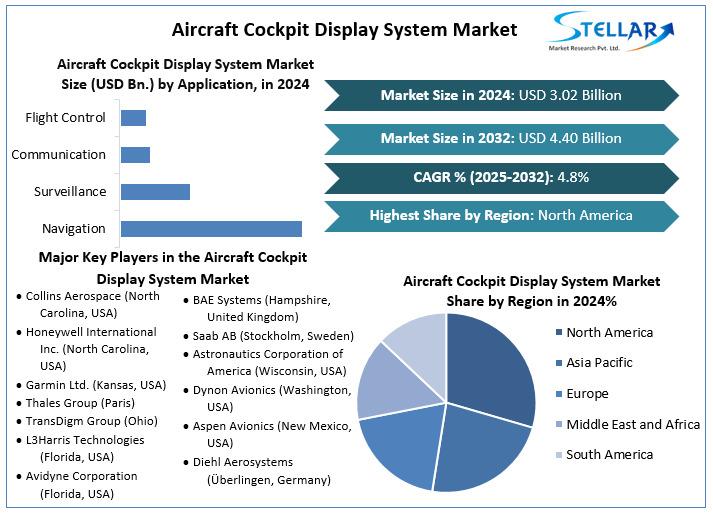
    Aircraft cockpit display systems (CDS) are advanced avionics solutions that provide pilots with real-time flight data, navigation information, weather updates, and critical system alerts through integrated digital displays. Replacing traditional analog gauges, modern cockpit display systems enhance situational awareness, flight safety, and operational efficiency in commercial, military, and general aviation aircraft.

    The global aircraft cockpit display system market encompasses primary flight displays (PFDs), multi-function displays (MFDs), electronic flight instrument systems (EFIS), head-up displays (HUDs), and touch-based interface modules. Increasing adoption of digital avionics, rising commercial and defense aircraft production, and stringent safety regulations are driving strong market growth.

    Request Free sample Report:https://www.stellarmr.com/report/req_sample/Aircraft-Cockpit-Display-System-Market/1993

    Market Growth Drivers & Opportunities
    1. Growth in Commercial Aircraft Fleet
    The rising number of commercial flights and expansion of global airline fleets have boosted demand for cockpit display systems. Airlines are investing in next-generation avionics to enhance operational efficiency, reduce pilot workload, and ensure adherence to global aviation safety standards.

    2. Advancements in Digital Avionics
    Transition from analog to digital display systems has led to demand for EFIS, HUDs, and multifunction displays, offering better integration, high-resolution imaging, and enhanced navigation capabilities. Advanced avionics systems improve situational awareness and safety in all flight phases.

    3. Defense and Military Aircraft Modernization
    Modern military aircraft increasingly rely on cockpit display systems for mission-critical operations, tactical awareness, and real-time data integration. Upgrades in fighter jets, transport aircraft, and UAVs are major growth contributors.

    4. Enhanced Pilot Efficiency & Reduced Workload
    Cockpit display systems streamline information, automate alerts, and integrate multiple data sources into centralized screens, reducing pilot fatigue and improving decision-making under complex flight conditions.

    5. Replacement & Retrofit Opportunities
    Aging aircraft in both commercial and defense fleets present a lucrative retrofit market, with operators upgrading older analog or outdated digital systems to modern cockpit display solutions.

    What Lies Ahead: Emerging Trends Shaping the Future
    Touchscreen & Gesture-Based Displays
    Next-generation cockpit displays are incorporating touchscreens, gesture controls, and voice commands, enhancing pilot interaction and reducing dependence on traditional physical controls.

    Augmented Reality & Enhanced HUDs
    Augmented reality overlays on head-up displays provide real-time flight guidance, terrain awareness, and obstacle detection, improving situational awareness and safety.

    Integration with Aircraft Data Networks
    Advanced cockpit display systems integrate seamlessly with avionics networks, flight management systems (FMS), and electronic flight bags (EFBs), offering centralized access to critical operational data.

    Lightweight, Energy-Efficient Displays
    Development of lightweight, low-power, and high-resolution displays is crucial for aircraft efficiency, reducing energy consumption and overall aircraft weight.

    Cybersecurity & Data Integrity Enhancements
    As cockpit systems become more networked, ensuring data integrity and protecting avionics from cyber threats is a key focus for manufacturers and operators.

    Expansion in UAVs & Civil Aviation Automation
    With the growth of unmanned aerial vehicles (UAVs) and autonomous aircraft, cockpit display systems adapted for remote monitoring and automated flight control are emerging as a significant growth segment.

    Segmentation Analysis
    Based on typical segmentation in cockpit display system reports:

    By Display Type

    Primary Flight Displays (PFD)

    Multi-Function Displays (MFD)

    Head-Up Displays (HUD)

    Enhanced Vision Systems (EVS)

    Touchscreen / Interactive Displays

    By Aircraft Type

    Commercial Aircraft (passenger jets, regional jets)

    Military Aircraft (fighter jets, transport, trainer aircraft)

    General Aviation Aircraft (private jets, helicopters, UAVs)

    By Component

    Display Screens (LCD, LED, OLED, TFT)

    Processors & Graphics Modules

    Sensors & Integrated Avionics Units


    About us
    Phase 3,Navale IT Zone, S.No. 51/2A/2,

    Office No. 202, 2nd floor,

    Near, Navale Brg,Narhe,

    Pune, Maharashtra 411041

    sales@stellarmr.com
    Aircraft Cockpit Display System Market Size To Grow At A CAGR Of 4.8% In The Forecast Period Of 2025-2032 Aircraft Cockpit Display System Market Soars: Innovation & Safety Driving Growth Market Estimation & Definition Aircraft cockpit display systems (CDS) are advanced avionics solutions that provide pilots with real-time flight data, navigation information, weather updates, and critical system alerts through integrated digital displays. Replacing traditional analog gauges, modern cockpit display systems enhance situational awareness, flight safety, and operational efficiency in commercial, military, and general aviation aircraft. The global aircraft cockpit display system market encompasses primary flight displays (PFDs), multi-function displays (MFDs), electronic flight instrument systems (EFIS), head-up displays (HUDs), and touch-based interface modules. Increasing adoption of digital avionics, rising commercial and defense aircraft production, and stringent safety regulations are driving strong market growth. Request Free sample Report:https://www.stellarmr.com/report/req_sample/Aircraft-Cockpit-Display-System-Market/1993 Market Growth Drivers & Opportunities 1. Growth in Commercial Aircraft Fleet The rising number of commercial flights and expansion of global airline fleets have boosted demand for cockpit display systems. Airlines are investing in next-generation avionics to enhance operational efficiency, reduce pilot workload, and ensure adherence to global aviation safety standards. 2. Advancements in Digital Avionics Transition from analog to digital display systems has led to demand for EFIS, HUDs, and multifunction displays, offering better integration, high-resolution imaging, and enhanced navigation capabilities. Advanced avionics systems improve situational awareness and safety in all flight phases. 3. Defense and Military Aircraft Modernization Modern military aircraft increasingly rely on cockpit display systems for mission-critical operations, tactical awareness, and real-time data integration. Upgrades in fighter jets, transport aircraft, and UAVs are major growth contributors. 4. Enhanced Pilot Efficiency & Reduced Workload Cockpit display systems streamline information, automate alerts, and integrate multiple data sources into centralized screens, reducing pilot fatigue and improving decision-making under complex flight conditions. 5. Replacement & Retrofit Opportunities Aging aircraft in both commercial and defense fleets present a lucrative retrofit market, with operators upgrading older analog or outdated digital systems to modern cockpit display solutions. What Lies Ahead: Emerging Trends Shaping the Future Touchscreen & Gesture-Based Displays Next-generation cockpit displays are incorporating touchscreens, gesture controls, and voice commands, enhancing pilot interaction and reducing dependence on traditional physical controls. Augmented Reality & Enhanced HUDs Augmented reality overlays on head-up displays provide real-time flight guidance, terrain awareness, and obstacle detection, improving situational awareness and safety. Integration with Aircraft Data Networks Advanced cockpit display systems integrate seamlessly with avionics networks, flight management systems (FMS), and electronic flight bags (EFBs), offering centralized access to critical operational data. Lightweight, Energy-Efficient Displays Development of lightweight, low-power, and high-resolution displays is crucial for aircraft efficiency, reducing energy consumption and overall aircraft weight. Cybersecurity & Data Integrity Enhancements As cockpit systems become more networked, ensuring data integrity and protecting avionics from cyber threats is a key focus for manufacturers and operators. Expansion in UAVs & Civil Aviation Automation With the growth of unmanned aerial vehicles (UAVs) and autonomous aircraft, cockpit display systems adapted for remote monitoring and automated flight control are emerging as a significant growth segment. Segmentation Analysis Based on typical segmentation in cockpit display system reports: By Display Type Primary Flight Displays (PFD) Multi-Function Displays (MFD) Head-Up Displays (HUD) Enhanced Vision Systems (EVS) Touchscreen / Interactive Displays By Aircraft Type Commercial Aircraft (passenger jets, regional jets) Military Aircraft (fighter jets, transport, trainer aircraft) General Aviation Aircraft (private jets, helicopters, UAVs) By Component Display Screens (LCD, LED, OLED, TFT) Processors & Graphics Modules Sensors & Integrated Avionics Units About us Phase 3,Navale IT Zone, S.No. 51/2A/2, Office No. 202, 2nd floor, Near, Navale Brg,Narhe, Pune, Maharashtra 411041 sales@stellarmr.com
    0 Commenti 0 condivisioni
  • Fiber Optic Sensor Market Share, Price, Trends, Growth, Analysis, Key Players, Outlook, Report, Forecast 2025-2032

    Fiber Optic Sensor Market Poised for Strong Growth as Industries Accelerate Toward High-Precision Monitoring Solutions
    Market Estimation & Definition
    The global Fiber Optic Sensor Market is witnessing rapid expansion driven by increasing demand for high-accuracy sensing solutions in industrial, civil, energy, and defence sectors. According to the report, fiber optic sensors are devices that use optical fibers as the sensing element to measure temperature, pressure, strain, vibration, acoustic signals and other physical parameters. Their immunity to electromagnetic interference, long-distance signal transmission capability, lightweight structure, and high sensitivity make them ideal for harsh and challenging environments.

    The market is expected to grow consistently over the forecast period, supported by large-scale infrastructure development, increasing automation, and expanding adoption across energy and oil & gas sectors.

    Request Free Sample Report:https://www.stellarmr.com/report/req_sample/fiber-optic-sensor-market/2298

    Market Growth Drivers & Opportunity
    • Rising Infrastructure Health Monitoring Requirements
    Rapid global urbanisation has increased the deployment of bridges, tunnels, dams, rail networks, and industrial structures. Fiber optic sensors are preferred for structural health monitoring due to their durability, real-time monitoring capability, and ability to operate in environments where traditional electronic sensors fail.

    • Growth in Oil & Gas and Energy Applications
    The oil & gas sector heavily relies on real-time pressure, strain, and temperature monitoring along pipelines and downhole operations. Fiber optic sensors provide safe and accurate solutions, increasing operational efficiency and safety. Similar adoption is rising in renewable energy systems and power grid monitoring.

    • High Demand in Aerospace & Defence
    These sensors support vibration monitoring, material strain measurements, and flight system monitoring. Their immunity to electromagnetic interference makes them critical in defence and aviation environments.

    • Accelerating Industrial Automation
    Industries are transitioning toward intelligent monitoring and predictive maintenance. Fiber optic sensors contribute to Industry 4.0 by enabling precise, continuous monitoring across manufacturing processes.

    • Opportunities in Smart Cities & Smart Infrastructure
    As governments invest in smart transportation, utility systems, and urban infrastructure, fiber optic sensing technology will gain substantial growth potential.

    What Lies Ahead: Emerging Trends Shaping the Future
    • Growth of Distributed Fiber Optic Sensing (DFOS)
    DFOS technology is expected to become mainstream as industries demand long-range continuous monitoring. It will especially gain ground in pipeline surveillance, perimeter security, mining, and large-scale geotechnical applications.

    • Expansion of Hybrid Fiber Sensing Solutions
    Future smart systems will combine fiber sensors with IoT platforms, cloud analytics, and AI-enabled predictive maintenance tools, supporting faster industrial digitalization.

    • Increased Use in Renewables
    Wind turbine structural monitoring, solar farm cable monitoring, and geothermal operations are anticipated to adopt fiber sensors due to harsh operating conditions.

    • Miniaturization and Ruggedization
    Next-generation fiber sensors will be smaller, more durable, and more energy-efficient, making them suitable for medical devices, robotics, and aerospace components.

    • Rising Investments in Security & Border Monitoring
    Fiber optic intruder-detection systems are expected to grow due to rising geopolitical risks and increased demand for secure perimeter monitoring.

    Segmentation Analysis (from the report)
    By Type
    Intrinsic Fiber Optic Sensors

    Extrinsic Fiber Optic Sensors

    By Application
    Temperature Monitoring

    Strain and Stress Measurement

    Pressure Monitoring

    Vibration and Acoustic Sensing

    Other Physical Parameter Monitoring

    By End-User Industry
    Oil & Gas

    Civil & Structural Engineering

    Aerospace & Defence

    Industrial & Manufacturing

    Power & Energy

    Others

    About us

    Phase 3,Navale IT Zone, S.No. 51/2A/2,

    Office No. 202, 2nd floor,

    Near, Navale Brg,Narhe,

    Pune, Maharashtra 411041

    sales@stellarmr.com
    Fiber Optic Sensor Market Share, Price, Trends, Growth, Analysis, Key Players, Outlook, Report, Forecast 2025-2032 Fiber Optic Sensor Market Poised for Strong Growth as Industries Accelerate Toward High-Precision Monitoring Solutions Market Estimation & Definition The global Fiber Optic Sensor Market is witnessing rapid expansion driven by increasing demand for high-accuracy sensing solutions in industrial, civil, energy, and defence sectors. According to the report, fiber optic sensors are devices that use optical fibers as the sensing element to measure temperature, pressure, strain, vibration, acoustic signals and other physical parameters. Their immunity to electromagnetic interference, long-distance signal transmission capability, lightweight structure, and high sensitivity make them ideal for harsh and challenging environments. The market is expected to grow consistently over the forecast period, supported by large-scale infrastructure development, increasing automation, and expanding adoption across energy and oil & gas sectors. Request Free Sample Report:https://www.stellarmr.com/report/req_sample/fiber-optic-sensor-market/2298 Market Growth Drivers & Opportunity • Rising Infrastructure Health Monitoring Requirements Rapid global urbanisation has increased the deployment of bridges, tunnels, dams, rail networks, and industrial structures. Fiber optic sensors are preferred for structural health monitoring due to their durability, real-time monitoring capability, and ability to operate in environments where traditional electronic sensors fail. • Growth in Oil & Gas and Energy Applications The oil & gas sector heavily relies on real-time pressure, strain, and temperature monitoring along pipelines and downhole operations. Fiber optic sensors provide safe and accurate solutions, increasing operational efficiency and safety. Similar adoption is rising in renewable energy systems and power grid monitoring. • High Demand in Aerospace & Defence These sensors support vibration monitoring, material strain measurements, and flight system monitoring. Their immunity to electromagnetic interference makes them critical in defence and aviation environments. • Accelerating Industrial Automation Industries are transitioning toward intelligent monitoring and predictive maintenance. Fiber optic sensors contribute to Industry 4.0 by enabling precise, continuous monitoring across manufacturing processes. • Opportunities in Smart Cities & Smart Infrastructure As governments invest in smart transportation, utility systems, and urban infrastructure, fiber optic sensing technology will gain substantial growth potential. What Lies Ahead: Emerging Trends Shaping the Future • Growth of Distributed Fiber Optic Sensing (DFOS) DFOS technology is expected to become mainstream as industries demand long-range continuous monitoring. It will especially gain ground in pipeline surveillance, perimeter security, mining, and large-scale geotechnical applications. • Expansion of Hybrid Fiber Sensing Solutions Future smart systems will combine fiber sensors with IoT platforms, cloud analytics, and AI-enabled predictive maintenance tools, supporting faster industrial digitalization. • Increased Use in Renewables Wind turbine structural monitoring, solar farm cable monitoring, and geothermal operations are anticipated to adopt fiber sensors due to harsh operating conditions. • Miniaturization and Ruggedization Next-generation fiber sensors will be smaller, more durable, and more energy-efficient, making them suitable for medical devices, robotics, and aerospace components. • Rising Investments in Security & Border Monitoring Fiber optic intruder-detection systems are expected to grow due to rising geopolitical risks and increased demand for secure perimeter monitoring. Segmentation Analysis (from the report) By Type Intrinsic Fiber Optic Sensors Extrinsic Fiber Optic Sensors By Application Temperature Monitoring Strain and Stress Measurement Pressure Monitoring Vibration and Acoustic Sensing Other Physical Parameter Monitoring By End-User Industry Oil & Gas Civil & Structural Engineering Aerospace & Defence Industrial & Manufacturing Power & Energy Others About us Phase 3,Navale IT Zone, S.No. 51/2A/2, Office No. 202, 2nd floor, Near, Navale Brg,Narhe, Pune, Maharashtra 411041 sales@stellarmr.com
    0 Commenti 0 condivisioni
  • In the evolving automotive industry, precision, speed, and efficiency are critical in metal processing. The Automotive Blanking Line is a state-of-the-art solution designed to meet the demanding production standards of automotive sheet metal fabrication. Engineered for high performance, this advanced system delivers exceptional accuracy in cutting and stacking steel and aluminum sheets, optimizing production flow for car body components and structural parts.
    https://sumikura.jp/blanking-lines-2.html
    This high-performance blanking line is compatible with a wide range of materials including Cold Rolled Steel (CRS), Hot Rolled Steel (HRS), and Aluminum, providing flexibility for different manufacturing requirements. With a press capacity of up to 800mm and a sheet size range of 5,200×2,750mm, it can efficiently handle both small and large blanks required in vehicle body production.

    The machine supports material widths from 300 to 2,080mm and lengths from 300 to 4,300mm, accommodating diverse automotive part designs. Its thickness capacity from 0.5 to 3.0mm ensures it can process everything from lightweight panels to stronger structural components, making it suitable for both traditional and electric vehicle (EV) applications.

    With a production speed of up to 65 strokes per minute (SPM), this blanking line maximizes productivity without compromising precision. The system’s magnetic and vacuum stacking technology provides smooth and accurate stacking of finished blanks, preventing surface damage and ensuring consistent quality during high-speed operations. These automated stacking systems reduce labor costs and enhance operational efficiency.

    In addition to speed and precision, the Automotive Blanking Line emphasizes energy efficiency and automation integration. Its intelligent control system allows seamless synchronization with modern factory automation and Industry 4.0 standards. Real-time monitoring and adaptive controls ensure minimal material waste, optimized cutting patterns, and improved overall yield.

    For automotive manufacturers, the benefits are clear: higher productivity, superior sheet quality, and reduced operational downtime. The versatility of the system makes it ideal for large-scale OEM production lines as well as specialized automotive component suppliers.

    In an era where precision and efficiency define competitiveness, the Automotive Blanking Line stands out as a vital investment for advanced vehicle manufacturing. Combining cutting-edge technology, robust construction, and intelligent automation, it delivers the performance and reliability needed to drive the next generation of automotive production.
    In the evolving automotive industry, precision, speed, and efficiency are critical in metal processing. The Automotive Blanking Line is a state-of-the-art solution designed to meet the demanding production standards of automotive sheet metal fabrication. Engineered for high performance, this advanced system delivers exceptional accuracy in cutting and stacking steel and aluminum sheets, optimizing production flow for car body components and structural parts. https://sumikura.jp/blanking-lines-2.html This high-performance blanking line is compatible with a wide range of materials including Cold Rolled Steel (CRS), Hot Rolled Steel (HRS), and Aluminum, providing flexibility for different manufacturing requirements. With a press capacity of up to 800mm and a sheet size range of 5,200×2,750mm, it can efficiently handle both small and large blanks required in vehicle body production. The machine supports material widths from 300 to 2,080mm and lengths from 300 to 4,300mm, accommodating diverse automotive part designs. Its thickness capacity from 0.5 to 3.0mm ensures it can process everything from lightweight panels to stronger structural components, making it suitable for both traditional and electric vehicle (EV) applications. With a production speed of up to 65 strokes per minute (SPM), this blanking line maximizes productivity without compromising precision. The system’s magnetic and vacuum stacking technology provides smooth and accurate stacking of finished blanks, preventing surface damage and ensuring consistent quality during high-speed operations. These automated stacking systems reduce labor costs and enhance operational efficiency. In addition to speed and precision, the Automotive Blanking Line emphasizes energy efficiency and automation integration. Its intelligent control system allows seamless synchronization with modern factory automation and Industry 4.0 standards. Real-time monitoring and adaptive controls ensure minimal material waste, optimized cutting patterns, and improved overall yield. For automotive manufacturers, the benefits are clear: higher productivity, superior sheet quality, and reduced operational downtime. The versatility of the system makes it ideal for large-scale OEM production lines as well as specialized automotive component suppliers. In an era where precision and efficiency define competitiveness, the Automotive Blanking Line stands out as a vital investment for advanced vehicle manufacturing. Combining cutting-edge technology, robust construction, and intelligent automation, it delivers the performance and reliability needed to drive the next generation of automotive production.
    Automotive Sheet Metal Blanking Production Line - SUMIKURA Co., Ltd
    Automotive Sheet metal blanking production line is specifically designed for automotive inner and outer body panels, structural reinforcements, chassis components, and aluminum body parts, where surface quality, flatness, and accuracy are critical.
    0 Commenti 0 condivisioni
  • European Flax Linen Knit Fabric

    The Legacy of European Flax

    European flax linen has long been celebrated as one of the world’s finest natural fibers. Cultivated primarily in Western Europe — especially in France, Belgium, and the Netherlands — flax is grown under ideal climatic conditions that promote both strength and softness in the fiber.

    From Flax to Fabric

    Traditional linen is woven, but recent textile innovations have made it possible to create knit fabrics using European flax fibers. Unlike woven linen, which is known for its crisp structure, linen knit fabric offers stretch, drape, and softness — qualities that make it suitable for a wide range of modern apparel.

    The process begins with carefully retted flax stalks, which are processed into long, lustrous fibers. These fibers are then spun into fine yarns that can be knit into jersey, rib, or interlock fabrics. The result is a breathable, moisture-wicking material that retains linen’s signature cool touch while offering the elasticity and comfort of knitwear.

    Sustainability and Certification

    European Flax™ certification ensures that the linen is:

    100% traceable from seed to fiber.

    Cultivated without irrigation, relying solely on natural rainfall.

    Produced without GMOs and with minimal pesticide use.

    Processed responsibly, adhering to strict environmental and social standards.

    This makes European flax linen knit fabric a sustainable alternative to synthetic and cotton-based knits, aligning with the growing demand for eco-friendly textiles in fashion and home décor.

    Characteristics and Benefits

    European flax linen knit fabric is prized for its unique blend of performance and comfort:

    Breathable and moisture-absorbing, ideal for warm climates.

    Naturally hypoallergenic and antibacterial.

    Thermoregulating, keeping the body cool in summer and warm in cooler weather.

    Durable yet soft, improving with every wash.

    Elegant texture with a subtle, natural sheen.

    These qualities make it perfect for casual wear, loungewear, summer dresses, T-shirts, and lightweight sweaters, as well as luxury bedding and home textiles.

    A Fabric for the Future

    The rise of European flax linen knit fabric marks a fusion of tradition and technology. By combining the heritage of European flax cultivation with modern knitting techniques, designers and manufacturers can offer consumers a fabric that is both authentically natural and innovatively versatile.

    As sustainability becomes central to the textile industry, European flax linen knit stands out as a responsible and refined choice — a fabric that embodies Europe’s legacy of craftsmanship while meeting the needs of contemporary design.
    https://www.zjgcmfz.com/product/
    European Flax Linen Knit Fabric The Legacy of European Flax European flax linen has long been celebrated as one of the world’s finest natural fibers. Cultivated primarily in Western Europe — especially in France, Belgium, and the Netherlands — flax is grown under ideal climatic conditions that promote both strength and softness in the fiber. From Flax to Fabric Traditional linen is woven, but recent textile innovations have made it possible to create knit fabrics using European flax fibers. Unlike woven linen, which is known for its crisp structure, linen knit fabric offers stretch, drape, and softness — qualities that make it suitable for a wide range of modern apparel. The process begins with carefully retted flax stalks, which are processed into long, lustrous fibers. These fibers are then spun into fine yarns that can be knit into jersey, rib, or interlock fabrics. The result is a breathable, moisture-wicking material that retains linen’s signature cool touch while offering the elasticity and comfort of knitwear. Sustainability and Certification European Flax™ certification ensures that the linen is: 100% traceable from seed to fiber. Cultivated without irrigation, relying solely on natural rainfall. Produced without GMOs and with minimal pesticide use. Processed responsibly, adhering to strict environmental and social standards. This makes European flax linen knit fabric a sustainable alternative to synthetic and cotton-based knits, aligning with the growing demand for eco-friendly textiles in fashion and home décor. Characteristics and Benefits European flax linen knit fabric is prized for its unique blend of performance and comfort: Breathable and moisture-absorbing, ideal for warm climates. Naturally hypoallergenic and antibacterial. Thermoregulating, keeping the body cool in summer and warm in cooler weather. Durable yet soft, improving with every wash. Elegant texture with a subtle, natural sheen. These qualities make it perfect for casual wear, loungewear, summer dresses, T-shirts, and lightweight sweaters, as well as luxury bedding and home textiles. A Fabric for the Future The rise of European flax linen knit fabric marks a fusion of tradition and technology. By combining the heritage of European flax cultivation with modern knitting techniques, designers and manufacturers can offer consumers a fabric that is both authentically natural and innovatively versatile. As sustainability becomes central to the textile industry, European flax linen knit stands out as a responsible and refined choice — a fabric that embodies Europe’s legacy of craftsmanship while meeting the needs of contemporary design. https://www.zjgcmfz.com/product/
    European Flax Linen Knit Fabric Manufacturer - Zhejiang Guocheng Linen Knitting Co., ltd
    Made with the finest European-grade flax fibers, this linen is known for its breathability, softness, and durability.
    0 Commenti 0 condivisioni
Pagine in Evidenza