

• Smartphone Camera Innovation Fuels CMOS Image Sensor Market Expansion

    CMOS Image Sensor Market Press Release Overview
    Market Estimation & Definition
    The global CMOS image sensor market represents a vital segment of the semiconductor and imaging technology industry, providing high-performance image sensing solutions for applications such as smartphones, automotive systems, medical imaging, surveillance, and industrial automation. CMOS image sensors (CIS) are semiconductor devices that convert light into electrical signals, offering advantages such as low power consumption, high integration capability, and cost-efficient manufacturing.

    The market is witnessing strong expansion due to its essential role in digital imaging and sensing technologies. The increasing integration of cameras and imaging modules into consumer electronics, vehicles, and smart infrastructure is significantly driving market valuation and long-term growth potential. CMOS image sensors have become the dominant technology in imaging due to their scalability and compatibility with advanced semiconductor processes.

    Request Free Sample Report : https://www.stellarmr.com/report/req_sample/cmos-image-sensor-market/2299

    Market Growth Drivers & Opportunity
    A key driver of the CMOS image sensor market is the rapid expansion of smartphone and consumer electronics industries, where multi-camera systems and higher resolution imaging have become standard features. The growing demand for enhanced photography, augmented reality, and video capabilities is accelerating sensor adoption across devices.

    Another major growth factor is the rising deployment of advanced driver assistance systems (ADAS) and autonomous driving technologies. CMOS sensors are widely used in automotive applications such as lane detection, parking assistance, and collision avoidance, making them essential components in next-generation mobility systems.

    The healthcare sector is also creating new opportunities with the increasing use of imaging systems in diagnostics, endoscopy, and minimally invasive procedures. CMOS sensors offer high sensitivity and compact design, which are ideal for modern medical devices.


    About us
    Phase 3,Navale IT Zone, S.No. 51/2A/2,

    Office No. 202, 2nd floor,

    Near, Navale Brg,Narhe,

    Pune, Maharashtra 411041

    sales@stellarmr.com
    Smartphone Camera Innovation Fuels CMOS Image Sensor Market Expansion CMOS Image Sensor Market Press Release Overview Market Estimation & Definition The global CMOS image sensor market represents a vital segment of the semiconductor and imaging technology industry, providing high-performance image sensing solutions for applications such as smartphones, automotive systems, medical imaging, surveillance, and industrial automation. CMOS image sensors (CIS) are semiconductor devices that convert light into electrical signals, offering advantages such as low power consumption, high integration capability, and cost-efficient manufacturing. The market is witnessing strong expansion due to its essential role in digital imaging and sensing technologies. The increasing integration of cameras and imaging modules into consumer electronics, vehicles, and smart infrastructure is significantly driving market valuation and long-term growth potential. CMOS image sensors have become the dominant technology in imaging due to their scalability and compatibility with advanced semiconductor processes. Request Free Sample Report : https://www.stellarmr.com/report/req_sample/cmos-image-sensor-market/2299 Market Growth Drivers & Opportunity A key driver of the CMOS image sensor market is the rapid expansion of smartphone and consumer electronics industries, where multi-camera systems and higher resolution imaging have become standard features. The growing demand for enhanced photography, augmented reality, and video capabilities is accelerating sensor adoption across devices. Another major growth factor is the rising deployment of advanced driver assistance systems (ADAS) and autonomous driving technologies. CMOS sensors are widely used in automotive applications such as lane detection, parking assistance, and collision avoidance, making them essential components in next-generation mobility systems. The healthcare sector is also creating new opportunities with the increasing use of imaging systems in diagnostics, endoscopy, and minimally invasive procedures. CMOS sensors offer high sensitivity and compact design, which are ideal for modern medical devices. About us Phase 3,Navale IT Zone, S.No. 51/2A/2, Office No. 202, 2nd floor, Near, Navale Brg,Narhe, Pune, Maharashtra 411041 sales@stellarmr.com
    0 Commenti 0 condivisioni

  • qiqiyg.com Official Whatsapp: +8613859845573 | Luxury Handbags & Shoes 2025 Hot Sale - Wholesale Dropshipping Catalog Nuovo
    €135
    In stock
    Whatsapp:+8613859845573
    https://yangguangbags668.x.yupoo.com
    Click here contact yupoo seller via
    https://wa.me/8613859845573
    https://qiqiyg.com

    https://www.facebook.com/Qiqiygcom-61561725909309
    https://www.facebook.com/qiqiygcom
    https://www.instagram.com/qiqiyg.com.official.qiqiyg
    https://www.youtube.com/watch?v=48b0sDyUa4E
    https://www.tiktok.com/@qiqiyg_com
    https://www.linkedin.com/in/ygsellcom-qiqiygcom-09b269296
    https://ygsell.com
    https://allmylinks.com/ygshoes188
    https://linktr.ee/qiqiyg.com_qiqiygcom
    https://sites.google.com/view/qiqiygcom
    https://www.youtube.com/@qiqiygcom/shorts
    https://medium.com/@qiqiyg.com.qiqiygcom
    https://lnk.bio/qiqiygcom
    https://www.tiktok.com/@qiqiyg_com/video/7546219839392795921
    https://fahionshoes2026.blogspot.com/
    https://fashionhandbagsbelt.blogspot.com/
    https://taxshape.com/membros/qiqiygcom-bruce/
    https://sites.google.com/view/qiqiygcom-official-qiqiyg/
    https://www.linkedin.com/in/ygsellcom-qiqiygcom-09b269296/
    https://medium.com/@qiqiygcomofficial
    https://fr.pinterest.com/qiqiygcom_official
    https://magicbox.mg/pages/qiqiygseller
    https://www.facebook.com/qiqiyg.com.official.qiqiyg
    https://yangguangbags668.x.yupoo.com Click here contact yupoo seller via https://wa.me/8613859845573 https://qiqiyg.com https://www.facebook.com/Qiqiygcom-61561725909309 https://www.facebook.com/qiqiygcom https://www.instagram.com/qiqiyg.com.official.qiqiyg https://www.youtube.com/watch?v=48b0sDyUa4E https://www.tiktok.com/@qiqiyg_com https://www.linkedin.com/in/ygsellcom-qiqiygcom-09b269296 https://ygsell.com https://allmylinks.com/ygshoes188 https://linktr.ee/qiqiyg.com_qiqiygcom https://sites.google.com/view/qiqiygcom https://www.youtube.com/@qiqiygcom/shorts https://medium.com/@qiqiyg.com.qiqiygcom https://lnk.bio/qiqiygcom https://www.tiktok.com/@qiqiyg_com/video/7546219839392795921 https://fahionshoes2026.blogspot.com/ https://fashionhandbagsbelt.blogspot.com/ https://taxshape.com/membros/qiqiygcom-bruce/ https://sites.google.com/view/qiqiygcom-official-qiqiyg/ https://www.linkedin.com/in/ygsellcom-qiqiygcom-09b269296/ https://medium.com/@qiqiygcomofficial https://fr.pinterest.com/qiqiygcom_official https://magicbox.mg/pages/qiqiygseller https://www.facebook.com/qiqiyg.com.official.qiqiyg
    0 Commenti 0 condivisioni
  • Wireless Display Market Set to Grow from USD 5.87 Billion in 2024 to USD 15.49 Billion by 2032 at 12.9% CAGR

    Wireless Display Market Analysis: Growth Drivers, Trends, Segmentation, Country Insights, and Future Outlook
    The Wireless Display Market is rapidly transforming how people consume, share, and interact with visual content across consumer, business, education, and entertainment arenas. Defined broadly, a wireless display allows video, images, and data to be transmitted from a source device such as a smartphone, laptop, or tablet to a display screen — such as a flat-panel TV, monitor, projector, or video wall — without cables or physical connections. This market is expanding as connectivity technologies such as Wi-Fi, Bluetooth, and other wireless protocols evolve and become more reliable and capable.

    According to recent industry estimates, the global Wireless Display Market was valued at around USD 5.87 billion in 2024 and is expected to grow to nearly USD 15.49 billion by 2032, exhibiting a strong compound annual growth rate (CAGR) of approximately 12.9 percent from 2025 to 2032.

    Request Free Sample Report : https://www.stellarmr.com/report/req_sample/Wireless-Display-Market/2189
    Market Estimation & Definition
    At its core, wireless display technology eliminates the need for HDMI cables and similar wired connections by using wireless networking standards — predominantly Wi-Fi — to mirror or stream content between devices. Modern solutions range from dedicated hardware devices and adapters to integrated software protocols that support high-resolution streaming, screen sharing, and seamless connectivity across ecosystems. These technologies are now embedded in many consumer electronics and professional collaboration tools, reflecting their broad utility across residential and enterprise environments.

    Wireless display solutions are increasingly relied upon for entertainment streaming, remote collaboration, classroom teaching, digital signage, corporate presentations, and more. They are also instrumental in supporting BYOD (Bring Your Own Device) trends in enterprise and educational settings, enabling users to project content directly from their personal devices.

    Market Growth Drivers & Opportunity
    A convergence of technological trends and user-centric requirements is driving market growth. One of the most significant drivers is the surge in adoption of smart and connected devices. Smartphones, tablets, smart TVs, and laptops now commonly enable wireless casting and screen-mirroring technologies, prompting households and organizations to seek convenient ways to share high-quality content without cables.

    The demand for seamless collaboration in hybrid and remote work environments further propels the market. As businesses adopt flexible workplace models, wireless display tools are becoming essential for presentations, team meetings, and interactive workflows that support diverse device ecosystems.

    Another growth catalyst is advancement in connectivity technologies such as Wi-Fi 6 and 5G. These standards enable faster data transmission, reduced latency, and more reliable streaming — all critical for wireless displays to support high-resolution content and multi-screen synchronization.

    Consumer preferences for entertainment on large screens are also contributing to market expansion. As on-demand streaming services, gaming, and multimedia consumption rise, users increasingly rely on wireless display systems to watch content on TVs or projectors without the inconvenience of physical wires.

    Request Free Sample Report : https://www.stellarmr.com/report/req_sample/Wireless-Display-Market/2189
    What Lies Ahead: Emerging Trends Shaping the Future
    Several forward-looking trends are expected to define the trajectory of the Wireless Display Market. Integration with Internet of Things (IoT) ecosystems will allow wireless displays to become part of broader connected environments where content, controls, and user profiles are synchronized across devices.

    The expansion of augmented reality (AR) and virtual reality (VR) applications also offers opportunities for immersive visual experiences that leverage wireless display technologies, especially in gaming, training simulations, and interactive education.

    Additionally, ongoing improvements in video quality, such as 4K and ultra-high-definition streaming with reduced latency, are enhancing user experiences across consumer and professional use cases. Manufacturers are focusing on lowering latency, boosting frame rates, and ensuring smooth multi-device synchronization to support these advanced capabilities.

    About us

    Phase 3,Navale IT Zone, S.No. 51/2A/2,

    Office No. 202, 2nd floor,

    Near, Navale Brg,Narhe,

    Pune, Maharashtra 411041

    sales@stellarmr.com
    Wireless Display Market Set to Grow from USD 5.87 Billion in 2024 to USD 15.49 Billion by 2032 at 12.9% CAGR Wireless Display Market Analysis: Growth Drivers, Trends, Segmentation, Country Insights, and Future Outlook The Wireless Display Market is rapidly transforming how people consume, share, and interact with visual content across consumer, business, education, and entertainment arenas. Defined broadly, a wireless display allows video, images, and data to be transmitted from a source device such as a smartphone, laptop, or tablet to a display screen — such as a flat-panel TV, monitor, projector, or video wall — without cables or physical connections. This market is expanding as connectivity technologies such as Wi-Fi, Bluetooth, and other wireless protocols evolve and become more reliable and capable. According to recent industry estimates, the global Wireless Display Market was valued at around USD 5.87 billion in 2024 and is expected to grow to nearly USD 15.49 billion by 2032, exhibiting a strong compound annual growth rate (CAGR) of approximately 12.9 percent from 2025 to 2032. Request Free Sample Report : https://www.stellarmr.com/report/req_sample/Wireless-Display-Market/2189 Market Estimation & Definition At its core, wireless display technology eliminates the need for HDMI cables and similar wired connections by using wireless networking standards — predominantly Wi-Fi — to mirror or stream content between devices. Modern solutions range from dedicated hardware devices and adapters to integrated software protocols that support high-resolution streaming, screen sharing, and seamless connectivity across ecosystems. These technologies are now embedded in many consumer electronics and professional collaboration tools, reflecting their broad utility across residential and enterprise environments. Wireless display solutions are increasingly relied upon for entertainment streaming, remote collaboration, classroom teaching, digital signage, corporate presentations, and more. They are also instrumental in supporting BYOD (Bring Your Own Device) trends in enterprise and educational settings, enabling users to project content directly from their personal devices. Market Growth Drivers & Opportunity A convergence of technological trends and user-centric requirements is driving market growth. One of the most significant drivers is the surge in adoption of smart and connected devices. Smartphones, tablets, smart TVs, and laptops now commonly enable wireless casting and screen-mirroring technologies, prompting households and organizations to seek convenient ways to share high-quality content without cables. The demand for seamless collaboration in hybrid and remote work environments further propels the market. As businesses adopt flexible workplace models, wireless display tools are becoming essential for presentations, team meetings, and interactive workflows that support diverse device ecosystems. Another growth catalyst is advancement in connectivity technologies such as Wi-Fi 6 and 5G. These standards enable faster data transmission, reduced latency, and more reliable streaming — all critical for wireless displays to support high-resolution content and multi-screen synchronization. Consumer preferences for entertainment on large screens are also contributing to market expansion. As on-demand streaming services, gaming, and multimedia consumption rise, users increasingly rely on wireless display systems to watch content on TVs or projectors without the inconvenience of physical wires. Request Free Sample Report : https://www.stellarmr.com/report/req_sample/Wireless-Display-Market/2189 What Lies Ahead: Emerging Trends Shaping the Future Several forward-looking trends are expected to define the trajectory of the Wireless Display Market. Integration with Internet of Things (IoT) ecosystems will allow wireless displays to become part of broader connected environments where content, controls, and user profiles are synchronized across devices. The expansion of augmented reality (AR) and virtual reality (VR) applications also offers opportunities for immersive visual experiences that leverage wireless display technologies, especially in gaming, training simulations, and interactive education. Additionally, ongoing improvements in video quality, such as 4K and ultra-high-definition streaming with reduced latency, are enhancing user experiences across consumer and professional use cases. Manufacturers are focusing on lowering latency, boosting frame rates, and ensuring smooth multi-device synchronization to support these advanced capabilities. About us Phase 3,Navale IT Zone, S.No. 51/2A/2, Office No. 202, 2nd floor, Near, Navale Brg,Narhe, Pune, Maharashtra 411041 sales@stellarmr.com
    0 Commenti 0 condivisioni
  • Alarm, Barrier & Advanced Detection Systems Shaping Security Solutions

    Perimeter Security Market: Strengthening Defense for Critical Infrastructure Worldwide

    The Perimeter Security Market is rapidly gaining global attention as organizations and governments prioritize protecting physical boundaries against unauthorized access, intrusion, and security breaches. Perimeter security encompasses a wide range of systems and services designed to monitor, detect, and respond to threats targeting property, assets, people, and critical infrastructure. With escalating concerns over terrorism, crime, industrial threats, and sophisticated intrusion techniques, perimeter security solutions are evolving with advanced technologies such as AI‑powered surveillance, sensor networks, and managed monitoring to address modern security needs.

    Request Free Sample Report : https://www.stellarmr.com/report/req_sample/Perimeter-Security-Market/2178

    Market Estimation & Definition

    The Perimeter Security Market includes systems and services deployed to safeguard outdoor boundaries of facilities, campuses, transportation hubs, and strategic assets. These solutions are designed to detect, deter, and respond to unauthorized physical activities and intrusion attempts. Core systems include perimeter intrusion detection systems (PIDS), video surveillance systems, alarm and notification systems, barrier systems, and other related technologies that combine hardware, software, and services to enable comprehensive protection. The global perimeter security market was valued at approximately USD 75.30 billion in 2024 and is projected to grow to around USD 153.39 billion by 2032, exhibiting a CAGR of about 9.3% over the forecast period.

    Market Growth Drivers & Opportunity

    A range of factors are fueling expansion in the perimeter security market:

    Escalating Security Threats: With the rising frequency and sophistication of intrusions, theft, and terrorism across public and private environments, organizations are adopting perimeter security solutions as a first line of defense. These systems enable real‑time detection, threat visualization, and rapid response, reducing vulnerability to breaches and external attacks.

    Urbanization and Smart Infrastructure Projects: Urban growth, smart city initiatives, and expansion of critical infrastructure projects require robust security frameworks to protect assets, public spaces, and transportation systems. Smart cities integrate perimeter security with citywide sensors, analytics, and IoT technologies to ensure seamless protection.

    Technological Advancements: Integration of advanced technologies — including artificial intelligence (AI), machine learning (ML), IoT connectivity, cloud‑based monitoring, and thermal imaging — has significantly enhanced perimeter protection capabilities. AI‑enabled video analytics minimize false alarms and enhance anomaly detection, while cloud solutions offer scalable, centralized management.

    Regulatory and Compliance Standards: Government and industry regulations have mandated robust security measures for critical sectors, including defense, transportation, energy, and commercial facilities. These mandates drive adoption of advanced perimeter systems to meet compliance and safety standards.

    What Lies Ahead: Emerging Trends Shaping the Future

    The perimeter security market is advancing along several key trends:

    AI‑Powered Surveillance and Analytics: The integration of AI and ML into video surveillance systems significantly improves threat detection, pattern recognition, and predictive security capabilities — allowing systems to autonomously identify suspicious behavior and reduce manual monitoring burdens.

    Cloud‑Based and Managed Security Services: Cloud deployments and managed perimeter security services (often delivered through a Security‑as‑a‑Service model) are gaining traction as businesses seek scalable, cost‑effective security management with real‑time data access and remote oversight.

    Integration with Broader Security Ecosystems: Perimeter security systems are increasingly being integrated with broader access control, identity management, and cyber‑physical security frameworks to provide unified protection across physical and digital domains.

    Advanced Sensor Technologies and Drone Detection: Emerging technologies such as radar sensors, LiDAR imaging, biometric access, and counter‑drone systems are being incorporated to extend coverage and enhance detection across challenging terrain and expansive perimeters.

    Request Free Sample Report : https://www.stellarmr.com/report/req_sample/Perimeter-Security-Market/2178

    About us


    Phase 3,Navale IT Zone, S.No. 51/2A/2,

    Office No. 202, 2nd floor,

    Near, Navale Brg,Narhe,

    Pune, Maharashtra 411041

    sales@stellarmr.com
    Alarm, Barrier & Advanced Detection Systems Shaping Security Solutions Perimeter Security Market: Strengthening Defense for Critical Infrastructure Worldwide The Perimeter Security Market is rapidly gaining global attention as organizations and governments prioritize protecting physical boundaries against unauthorized access, intrusion, and security breaches. Perimeter security encompasses a wide range of systems and services designed to monitor, detect, and respond to threats targeting property, assets, people, and critical infrastructure. With escalating concerns over terrorism, crime, industrial threats, and sophisticated intrusion techniques, perimeter security solutions are evolving with advanced technologies such as AI‑powered surveillance, sensor networks, and managed monitoring to address modern security needs. Request Free Sample Report : https://www.stellarmr.com/report/req_sample/Perimeter-Security-Market/2178 Market Estimation & Definition The Perimeter Security Market includes systems and services deployed to safeguard outdoor boundaries of facilities, campuses, transportation hubs, and strategic assets. These solutions are designed to detect, deter, and respond to unauthorized physical activities and intrusion attempts. Core systems include perimeter intrusion detection systems (PIDS), video surveillance systems, alarm and notification systems, barrier systems, and other related technologies that combine hardware, software, and services to enable comprehensive protection. The global perimeter security market was valued at approximately USD 75.30 billion in 2024 and is projected to grow to around USD 153.39 billion by 2032, exhibiting a CAGR of about 9.3% over the forecast period. Market Growth Drivers & Opportunity A range of factors are fueling expansion in the perimeter security market: Escalating Security Threats: With the rising frequency and sophistication of intrusions, theft, and terrorism across public and private environments, organizations are adopting perimeter security solutions as a first line of defense. These systems enable real‑time detection, threat visualization, and rapid response, reducing vulnerability to breaches and external attacks. Urbanization and Smart Infrastructure Projects: Urban growth, smart city initiatives, and expansion of critical infrastructure projects require robust security frameworks to protect assets, public spaces, and transportation systems. Smart cities integrate perimeter security with citywide sensors, analytics, and IoT technologies to ensure seamless protection. Technological Advancements: Integration of advanced technologies — including artificial intelligence (AI), machine learning (ML), IoT connectivity, cloud‑based monitoring, and thermal imaging — has significantly enhanced perimeter protection capabilities. AI‑enabled video analytics minimize false alarms and enhance anomaly detection, while cloud solutions offer scalable, centralized management. Regulatory and Compliance Standards: Government and industry regulations have mandated robust security measures for critical sectors, including defense, transportation, energy, and commercial facilities. These mandates drive adoption of advanced perimeter systems to meet compliance and safety standards. What Lies Ahead: Emerging Trends Shaping the Future The perimeter security market is advancing along several key trends: AI‑Powered Surveillance and Analytics: The integration of AI and ML into video surveillance systems significantly improves threat detection, pattern recognition, and predictive security capabilities — allowing systems to autonomously identify suspicious behavior and reduce manual monitoring burdens. Cloud‑Based and Managed Security Services: Cloud deployments and managed perimeter security services (often delivered through a Security‑as‑a‑Service model) are gaining traction as businesses seek scalable, cost‑effective security management with real‑time data access and remote oversight. Integration with Broader Security Ecosystems: Perimeter security systems are increasingly being integrated with broader access control, identity management, and cyber‑physical security frameworks to provide unified protection across physical and digital domains. Advanced Sensor Technologies and Drone Detection: Emerging technologies such as radar sensors, LiDAR imaging, biometric access, and counter‑drone systems are being incorporated to extend coverage and enhance detection across challenging terrain and expansive perimeters. Request Free Sample Report : https://www.stellarmr.com/report/req_sample/Perimeter-Security-Market/2178 About us Phase 3,Navale IT Zone, S.No. 51/2A/2, Office No. 202, 2nd floor, Near, Navale Brg,Narhe, Pune, Maharashtra 411041 sales@stellarmr.com
    0 Commenti 0 condivisioni
  • How Drone Communication Technologies Are Reshaping UAV Operations Across Industries

    Drone Communication Market: Growth Drivers, Trends & Future Outlook

    Market Estimation & Definition
    The drone communication market refers to systems and technologies that enable data transmission, control signals, video, and sensor information between unmanned aerial vehicles (UAVs) and ground control stations, other drones, and network infrastructure. This includes radio frequency (RF), satellite communication (SATCOM), cellular (4G/LTE, 5G), and drone‑to‑drone communication solutions designed to ensure reliable and secure connectivity for various drone operations such as surveillance, inspection, agriculture, logistics, and defense. The global drone communication market was valued at approximately USD 3.88 billion in 2024 and is expected to grow at a compound annual growth rate (CAGR) of around 21.5 % from 2025 to 2032, reaching nearly USD 18.46 billion by 2032.

    Purchase This Research Report at up to 30% Off @ https://www.stellarmr.com/report/req_sample/drone-communication-market/2473

    Market Growth Drivers & Opportunity
    Several key drivers are shaping this market. Advancements in communication technologies, including enhanced RF systems, expanded satellite connectivity, and the adoption of 4G/LTE and 5G networks, enable faster, low‑latency data transfer and broader operational range — which is critical for tasks like real‑time high‑definition video streaming and autonomous navigation. These capabilities widen the scope of drone applications across commercial and industrial sectors.

    Another significant driver is increasing demand for drone applications across sectors like agriculture, construction, inspection, and oil & gas, where communication systems are essential for remote monitoring, data collection, and proactive decision‑making. Agriculture, in particular, benefits from precision farming enabled by drones that collect and transmit real‑time data to optimize crop management.

    The military and defense sector is also a major growth catalyst. Drones are increasingly used for surveillance, reconnaissance, and secure battlefield communication, necessitating resilient, encrypted channels that maintain operational reliability and mission effectiveness.

    What Lies Ahead: Emerging Trends Shaping the Future
    Integration with 5G Network Infrastructure: The rollout of 5G networks is transforming drone communication by offering ultra‑fast speeds, very low latency, and high bandwidth for transmitting complex data streams such as real‑time video, LiDAR information, and sensor analytics. This trend supports advanced autonomous operations and BVLOS (beyond visual line of sight) missions that require robust connectivity.

    AI‑Enabled Communication Systems: Artificial intelligence and machine learning are increasingly integrated into drone systems to enhance navigation, obstacle detection, and autonomous data processing, enabling drones to operate with higher levels of independence and connectivity efficiency.

    Expansion of SATCOM: Satellite communication remains critical for long‑range and remote operations, especially for defense, maritime, and emergency response applications where coverage beyond terrestrial networks is required. SATCOM provides constant data relay and operational support even in areas without cellular connectivity.

    Drone Swarms & Mesh Networking: There’s increasing emphasis on drone‑to‑drone communication and mesh networking that allows multiple UAVs to coordinate and share data without relying solely on a ground station, improving redundancy and mission flexibility.

    Purchase This Research Report at up to 30% Off @ https://www.stellarmr.com/report/req_sample/drone-communication-market/2473

    Segmentation Analysis from the URL
    The drone communication market is segmented by communication method and application:

    About us

    Phase 3,Navale IT Zone, S.No. 51/2A/2,

    Office No. 202, 2nd floor,

    Near, Navale Brg,Narhe,

    Pune, Maharashtra 411041

    sales@stellarmr.com
    How Drone Communication Technologies Are Reshaping UAV Operations Across Industries Drone Communication Market: Growth Drivers, Trends & Future Outlook Market Estimation & Definition The drone communication market refers to systems and technologies that enable data transmission, control signals, video, and sensor information between unmanned aerial vehicles (UAVs) and ground control stations, other drones, and network infrastructure. This includes radio frequency (RF), satellite communication (SATCOM), cellular (4G/LTE, 5G), and drone‑to‑drone communication solutions designed to ensure reliable and secure connectivity for various drone operations such as surveillance, inspection, agriculture, logistics, and defense. The global drone communication market was valued at approximately USD 3.88 billion in 2024 and is expected to grow at a compound annual growth rate (CAGR) of around 21.5 % from 2025 to 2032, reaching nearly USD 18.46 billion by 2032. Purchase This Research Report at up to 30% Off @ https://www.stellarmr.com/report/req_sample/drone-communication-market/2473 Market Growth Drivers & Opportunity Several key drivers are shaping this market. Advancements in communication technologies, including enhanced RF systems, expanded satellite connectivity, and the adoption of 4G/LTE and 5G networks, enable faster, low‑latency data transfer and broader operational range — which is critical for tasks like real‑time high‑definition video streaming and autonomous navigation. These capabilities widen the scope of drone applications across commercial and industrial sectors. Another significant driver is increasing demand for drone applications across sectors like agriculture, construction, inspection, and oil & gas, where communication systems are essential for remote monitoring, data collection, and proactive decision‑making. Agriculture, in particular, benefits from precision farming enabled by drones that collect and transmit real‑time data to optimize crop management. The military and defense sector is also a major growth catalyst. Drones are increasingly used for surveillance, reconnaissance, and secure battlefield communication, necessitating resilient, encrypted channels that maintain operational reliability and mission effectiveness. What Lies Ahead: Emerging Trends Shaping the Future Integration with 5G Network Infrastructure: The rollout of 5G networks is transforming drone communication by offering ultra‑fast speeds, very low latency, and high bandwidth for transmitting complex data streams such as real‑time video, LiDAR information, and sensor analytics. This trend supports advanced autonomous operations and BVLOS (beyond visual line of sight) missions that require robust connectivity. AI‑Enabled Communication Systems: Artificial intelligence and machine learning are increasingly integrated into drone systems to enhance navigation, obstacle detection, and autonomous data processing, enabling drones to operate with higher levels of independence and connectivity efficiency. Expansion of SATCOM: Satellite communication remains critical for long‑range and remote operations, especially for defense, maritime, and emergency response applications where coverage beyond terrestrial networks is required. SATCOM provides constant data relay and operational support even in areas without cellular connectivity. Drone Swarms & Mesh Networking: There’s increasing emphasis on drone‑to‑drone communication and mesh networking that allows multiple UAVs to coordinate and share data without relying solely on a ground station, improving redundancy and mission flexibility. Purchase This Research Report at up to 30% Off @ https://www.stellarmr.com/report/req_sample/drone-communication-market/2473 Segmentation Analysis from the URL The drone communication market is segmented by communication method and application: About us Phase 3,Navale IT Zone, S.No. 51/2A/2, Office No. 202, 2nd floor, Near, Navale Brg,Narhe, Pune, Maharashtra 411041 sales@stellarmr.com
    0 Commenti 0 condivisioni

  • download instagram video made simple and fast. With this tool, you can save any Instagram video in high quality directly to your device. Just copy the link, paste it, and get instant access to smooth, HD downloads. Whether it's reels, posts, or stories, download instagram video features help you keep your favorite content offline anytime you want. Easy, quick, and completely free.
    https://indown.io/en1
    download instagram video made simple and fast. With this tool, you can save any Instagram video in high quality directly to your device. Just copy the link, paste it, and get instant access to smooth, HD downloads. Whether it's reels, posts, or stories, download instagram video features help you keep your favorite content offline anytime you want. Easy, quick, and completely free. https://indown.io/en1
    Instagram Video Downloader | Fast & Secure
    A free & fast tool to download Instagram video online. Easy to use & provide Instagram video download without any login or signup.
    0 Commenti 0 condivisioni
  • PROVA QUESTO BOT CRYPTO GRATIS!
    100% senza rischi... NON TE NE PENTIRAI!

    POI DECIDI SE VALE LA PENA INVESTIRE

    GUARDA QUESTO VIDEO
    Tutorial per provarlo in demo. Iniziare è facilissimo!

    Provalo GRATIS in demo
    https://zopair.com?ref=IOMIPIDS49

    LA DEMO MOSTRA GLI STESSI RISULTATI DEL REALE (BOT COLLEGATO A EXCHANGE)

    STORICO REALE DI 1 ANNO
    Media mensile nello storico: tra 110% e 120%

    NON È UN BOT QUALUNQUE – È UNA MACCHINA DA TRADING
    GUADAGNI REALI CON SCALPING TESTATO DA 8 ANNI

    Per perdere il capitale, servono 100 SL di fila. Quasi impossibile con media del 90% di operazioni in positivo.

    SICUREZZA: collegamento via API. Capitale sempre sotto controllo.

    OPERA IN USDT.. NO PROBLEM IN CASO DI CROLLI

    5 TP e 5 SL. Dopo il 1° TP guadagno assicurato. SL si muove e protegge.

    Perdi solo se non arriva al 1° TP (perdita max 10%)

    Se c’è troppa volatilità, NON OPERA!

    Scrivimi in pvt per il gruppo ufficiale
    💥 PROVA QUESTO BOT CRYPTO GRATIS! 💥 🤖 100% senza rischi... NON TE NE PENTIRAI! 😍🔥 💸 POI DECIDI SE VALE LA PENA INVESTIRE 😉 🎥 GUARDA QUESTO VIDEO 👆 Tutorial per provarlo in demo. Iniziare è facilissimo! 🔥 Provalo GRATIS in demo 👇 https://zopair.com?ref=IOMIPIDS49 LA DEMO MOSTRA GLI STESSI RISULTATI DEL REALE (BOT COLLEGATO A EXCHANGE) 📈 STORICO REALE DI 1 ANNO 😱 Media mensile nello storico: tra 110% e 120% 😱 🔥 NON È UN BOT QUALUNQUE – È UNA MACCHINA DA TRADING 💸 GUADAGNI REALI CON SCALPING TESTATO DA 8 ANNI 💸 ⚠️ Per perdere il capitale, servono 100 SL di fila. Quasi impossibile con media del 90% di operazioni in positivo. ✅ SICUREZZA: collegamento via API. Capitale sempre sotto controllo. 💵 OPERA IN USDT.. NO PROBLEM IN CASO DI CROLLI 📊 5 TP e 5 SL. Dopo il 1° TP guadagno assicurato. SL si muove e protegge. ❌ Perdi solo se non arriva al 1° TP (perdita max 10%) 📉 Se c’è troppa volatilità, NON OPERA! ⚠️ Scrivimi in pvt per il gruppo ufficiale
    Love
    1
    1 Commenti 0 condivisioni 247
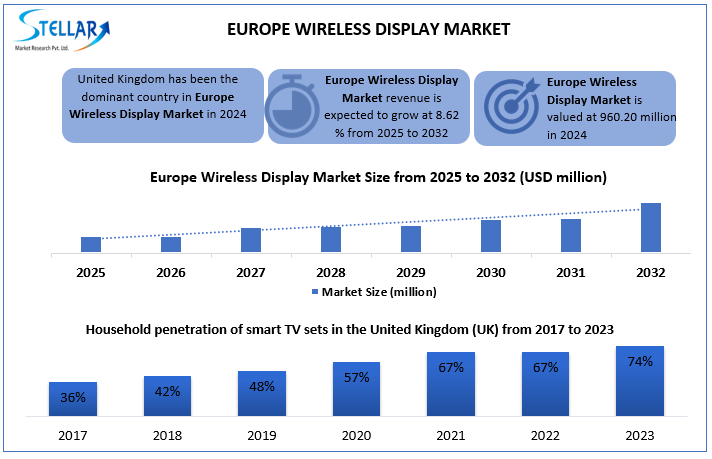
  • Europe Wireless Display Market Size To Grow At A CAGR Of 8.62% In The Forecast Period Of 2025-2032

    Europe Wireless Display Market Outlook: Market Estimation, Growth Drivers, Emerging Trends, and Competitive Landscape
    The Europe wireless display market is experiencing strong growth as businesses, educational institutions, and consumers increasingly adopt seamless screen‑sharing and content delivery technologies. Wireless display solutions enable users to mirror or extend the content from a computing device—such as a laptop, smartphone, or tablet—to larger screens like TVs, projectors, and digital signage without physical cables. With rising demand for flexible collaboration tools, hybrid learning environments, and enhanced multimedia experiences, the wireless display market is poised for expanded adoption across Europe.

    Request Free Sample Report:https://www.stellarmr.com/report/req_sample/Europe-Wireless-Display-Market/2568

    1. Market Estimation & Definition
    The wireless display market refers to technologies and solutions that allow screens to wirelessly transmit video and audio content between devices. These technologies include Wi‑Fi‑based standards such as Miracast, AirPlay, and Google Cast, as well as enterprise‑grade solutions designed for corporate, educational, and public spaces. Key components include wireless display adapters, receivers, smart displays with built‑in support, and software platforms that facilitate seamless connectivity. The market supports applications ranging from business presentations and collaborative meetings to home entertainment and digital signage.

    2. Market Growth Drivers & Opportunity
    Several fundamental factors are driving growth in the Europe wireless display market:

    Shift Toward Hybrid Work and Learning: With the rise of remote and hybrid work models, wireless display solutions enable flexible, collaborative environments where participants can share content easily without physical connections.

    Demand for Contactless and Cable‑Free Solutions: Wireless display technologies eliminate the need for cables, reducing clutter and enhancing convenience in meeting rooms, classrooms, and public spaces.

    Enhanced Multimedia and Smart Workplace Integration: Adoption of interactive displays, smart whiteboards, and integrated conferencing solutions increases reliance on wireless screen‑sharing capabilities.

    Growth of Connected Consumer Electronics: Smart TVs, media streaming devices, and mobile platforms increasingly include native wireless display support, boosting consumer adoption.

    Need for Seamless Presentations and Collaboration: Businesses and educational institutions prioritize ease of use and interoperability, making wireless display solutions a key collaboration tool.

    These drivers present significant opportunities for hardware manufacturers, software developers, and integration service providers to innovate and expand offerings tailored to diverse end users.

    About us

    Phase 3,Navale IT Zone, S.No. 51/2A/2,

    Office No. 202, 2nd floor,

    Near, Navale Brg,Narhe,

    Pune, Maharashtra 411041

    sales@stellarmr.com
    Europe Wireless Display Market Size To Grow At A CAGR Of 8.62% In The Forecast Period Of 2025-2032 Europe Wireless Display Market Outlook: Market Estimation, Growth Drivers, Emerging Trends, and Competitive Landscape The Europe wireless display market is experiencing strong growth as businesses, educational institutions, and consumers increasingly adopt seamless screen‑sharing and content delivery technologies. Wireless display solutions enable users to mirror or extend the content from a computing device—such as a laptop, smartphone, or tablet—to larger screens like TVs, projectors, and digital signage without physical cables. With rising demand for flexible collaboration tools, hybrid learning environments, and enhanced multimedia experiences, the wireless display market is poised for expanded adoption across Europe. Request Free Sample Report:https://www.stellarmr.com/report/req_sample/Europe-Wireless-Display-Market/2568 1. Market Estimation & Definition The wireless display market refers to technologies and solutions that allow screens to wirelessly transmit video and audio content between devices. These technologies include Wi‑Fi‑based standards such as Miracast, AirPlay, and Google Cast, as well as enterprise‑grade solutions designed for corporate, educational, and public spaces. Key components include wireless display adapters, receivers, smart displays with built‑in support, and software platforms that facilitate seamless connectivity. The market supports applications ranging from business presentations and collaborative meetings to home entertainment and digital signage. 2. Market Growth Drivers & Opportunity Several fundamental factors are driving growth in the Europe wireless display market: Shift Toward Hybrid Work and Learning: With the rise of remote and hybrid work models, wireless display solutions enable flexible, collaborative environments where participants can share content easily without physical connections. Demand for Contactless and Cable‑Free Solutions: Wireless display technologies eliminate the need for cables, reducing clutter and enhancing convenience in meeting rooms, classrooms, and public spaces. Enhanced Multimedia and Smart Workplace Integration: Adoption of interactive displays, smart whiteboards, and integrated conferencing solutions increases reliance on wireless screen‑sharing capabilities. Growth of Connected Consumer Electronics: Smart TVs, media streaming devices, and mobile platforms increasingly include native wireless display support, boosting consumer adoption. Need for Seamless Presentations and Collaboration: Businesses and educational institutions prioritize ease of use and interoperability, making wireless display solutions a key collaboration tool. These drivers present significant opportunities for hardware manufacturers, software developers, and integration service providers to innovate and expand offerings tailored to diverse end users. About us Phase 3,Navale IT Zone, S.No. 51/2A/2, Office No. 202, 2nd floor, Near, Navale Brg,Narhe, Pune, Maharashtra 411041 sales@stellarmr.com
    0 Commenti 0 condivisioni

  • qiqiyg.com official Whatsapp:+8613859845573 💎 Bolsas de couro real & relógios de luxo! Preços de fábrica. Fornecedor confiável ✅ Nuovo
    €135
    In stock
    qiqiygcom whatsapp:+8613859845573
    qiqiyg.com official Whatsapp:+8613859845573 Bolsas de couro real & relógios de luxo! Preços de fábrica. Fornecedor confiável

    https://yangguangbags668.x.yupoo.com
    Click here contact yupoo seller via
    https://wa.me/8613859845573
    https://qiqiyg.com

    https://www.facebook.com/Qiqiygcom-61561725909309
    https://www.facebook.com/qiqiygcom
    https://www.instagram.com/qiqiyg.com.official.qiqiyg
    https://www.youtube.com/watch?v=48b0sDyUa4E

    https://www.tiktok.com/@qiqiyg_com
    https://www.linkedin.com/in/ygsellcom-qiqiygcom-09b269296

    https://ygsell.com
    https://allmylinks.com/ygshoes188
    https://linktr.ee/qiqiyg.com_qiqiygcom
    https://sites.google.com/view/qiqiygcom
    https://www.youtube.com/@qiqiygcom/shorts
    https://medium.com/@qiqiyg.com.qiqiygcom
    https://qiqiygdotcom.blogspot.com/
    https://yangguangbags668xyupoo.blogspot.com
    https://lnk.bio/qiqiygcom
    https://www.tiktok.com/@qiqiyg_com/video/7546219839392795921
    qiqiyg.com official Whatsapp:+8613859845573 💎 Bolsas de couro real & relógios de luxo! Preços de fábrica. Fornecedor confiável ✅ https://yangguangbags668.x.yupoo.com Click here contact yupoo seller via https://wa.me/8613859845573 https://qiqiyg.com https://www.facebook.com/Qiqiygcom-61561725909309 https://www.facebook.com/qiqiygcom https://www.instagram.com/qiqiyg.com.official.qiqiyg https://www.youtube.com/watch?v=48b0sDyUa4E https://www.tiktok.com/@qiqiyg_com https://www.linkedin.com/in/ygsellcom-qiqiygcom-09b269296 https://ygsell.com https://allmylinks.com/ygshoes188 https://linktr.ee/qiqiyg.com_qiqiygcom https://sites.google.com/view/qiqiygcom https://www.youtube.com/@qiqiygcom/shorts https://medium.com/@qiqiyg.com.qiqiygcom https://qiqiygdotcom.blogspot.com/ https://yangguangbags668xyupoo.blogspot.com https://lnk.bio/qiqiygcom https://www.tiktok.com/@qiqiyg_com/video/7546219839392795921
    0 Commenti 0 condivisioni
  • Europe Wireless Display Market to be driven by the rising demand for personal mobility devices in the Forecast 2025–2032

    Europe Wireless Display Market Accelerates: Connectivity & Digital Transformation Fuel Adoption
    Market Definition & Overview
    The Europe Wireless Display Market refers to technologies and solutions that enable video, audio and multimedia content to be transmitted from a source device (such as a smartphone, laptop, tablet or media player) to a display screen (TV, monitor, projector or digital signage) without the need for physical cables. Wireless display technologies include Wi-Fi-based standards (e.g., Miracast, AirPlay, Google Cast), Bluetooth, and other proprietary protocols that support screen mirroring, casting, and content sharing across consumer, enterprise and commercial applications.

    As businesses, educational institutions and households increasingly embrace flexible connectivity, wireless display solutions enhance collaboration, entertainment and digital communication — allowing users to stream content effortlessly across devices, present information in meetings or classrooms, and create immersive home-entertainment experiences.

    Request Free Sample Report:https://www.stellarmr.com/report/req_sample/Europe-Wireless-Display-Market/2568

    Market Growth Drivers & Opportunity Landscape
    • Rising Demand for Seamless Connectivity
    European consumers and enterprises alike are moving toward cord-free environments where devices communicate seamlessly. Wireless display technologies meet this demand by removing physical cable constraints, simplifying connectivity between devices and screens, and supporting the growing variety of smart devices in homes and workplaces.

    • Adoption of Smart Devices & Smart TVs
    Smartphones, tablets and smart TVs equipped with wireless display capabilities are increasingly popular across Europe. The proliferation of smart consumer electronics fuels demand for wireless display — enabling users to cast photos, videos, presentations and gaming content effortlessly from handheld devices to larger screens.

    • Growth in Remote Work & Hybrid Learning
    As remote and hybrid work models remain prevalent, collaboration tools that support wireless screen sharing have become essential. Businesses utilize wireless display systems in meeting rooms and huddle spaces to support virtual collaboration, while education institutions adopt wireless classroom displays to facilitate interactive teaching and learning.

    • Digital Signage & Interactive Displays in Commercial Spaces
    Retail stores, airports, hospitality venues and public spaces are increasingly deploying wireless display systems for digital signage, advertising, and real-time information screens. These applications allow centralized management of content without the limitations and maintenance costs associated with wired systems.

    • Expansion of Collaborative Workspaces & Enterprise Investments
    Corporate investment in digital transformation and collaborative infrastructure — such as conference room AV systems with wireless casting — supports productivity and employee engagement. Wireless display solutions reduce setup complexity, support multi-device sharing and enhance user experience in enterprise settings.

    What Lies Ahead: Emerging Trends & Market Dynamics
    • Integration with IoT & Smart Building Ecosystems
    Wireless display systems are increasingly integrated with IoT platforms and smart building technologies, enabling centralized control and enhanced automation. For example, displays can receive content triggered by sensors, schedules, or interactive user commands — opening new use cases in smart offices and public installations.

    • Higher Adoption of Next-Gen Networking Technologies (Wi-Fi 6 & 5G)
    Improved wireless bandwidth, reduced latency and better network reliability — driven by Wi-Fi 6 and expanding 5G coverage — support higher-quality wireless display streaming, including 4K/video conferencing and multi-screen collaboration. These advancements make wireless display more viable for mission-critical and high-performance environments.

    About us

    Phase 3,Navale IT Zone, S.No. 51/2A/2,

    Office No. 202, 2nd floor,

    Near, Navale Brg,Narhe,

    Pune, Maharashtra 411041

    sales@stellarmr.com
    Europe Wireless Display Market to be driven by the rising demand for personal mobility devices in the Forecast 2025–2032 Europe Wireless Display Market Accelerates: Connectivity & Digital Transformation Fuel Adoption Market Definition & Overview The Europe Wireless Display Market refers to technologies and solutions that enable video, audio and multimedia content to be transmitted from a source device (such as a smartphone, laptop, tablet or media player) to a display screen (TV, monitor, projector or digital signage) without the need for physical cables. Wireless display technologies include Wi-Fi-based standards (e.g., Miracast, AirPlay, Google Cast), Bluetooth, and other proprietary protocols that support screen mirroring, casting, and content sharing across consumer, enterprise and commercial applications. As businesses, educational institutions and households increasingly embrace flexible connectivity, wireless display solutions enhance collaboration, entertainment and digital communication — allowing users to stream content effortlessly across devices, present information in meetings or classrooms, and create immersive home-entertainment experiences. Request Free Sample Report:https://www.stellarmr.com/report/req_sample/Europe-Wireless-Display-Market/2568 Market Growth Drivers & Opportunity Landscape • Rising Demand for Seamless Connectivity European consumers and enterprises alike are moving toward cord-free environments where devices communicate seamlessly. Wireless display technologies meet this demand by removing physical cable constraints, simplifying connectivity between devices and screens, and supporting the growing variety of smart devices in homes and workplaces. • Adoption of Smart Devices & Smart TVs Smartphones, tablets and smart TVs equipped with wireless display capabilities are increasingly popular across Europe. The proliferation of smart consumer electronics fuels demand for wireless display — enabling users to cast photos, videos, presentations and gaming content effortlessly from handheld devices to larger screens. • Growth in Remote Work & Hybrid Learning As remote and hybrid work models remain prevalent, collaboration tools that support wireless screen sharing have become essential. Businesses utilize wireless display systems in meeting rooms and huddle spaces to support virtual collaboration, while education institutions adopt wireless classroom displays to facilitate interactive teaching and learning. • Digital Signage & Interactive Displays in Commercial Spaces Retail stores, airports, hospitality venues and public spaces are increasingly deploying wireless display systems for digital signage, advertising, and real-time information screens. These applications allow centralized management of content without the limitations and maintenance costs associated with wired systems. • Expansion of Collaborative Workspaces & Enterprise Investments Corporate investment in digital transformation and collaborative infrastructure — such as conference room AV systems with wireless casting — supports productivity and employee engagement. Wireless display solutions reduce setup complexity, support multi-device sharing and enhance user experience in enterprise settings. What Lies Ahead: Emerging Trends & Market Dynamics • Integration with IoT & Smart Building Ecosystems Wireless display systems are increasingly integrated with IoT platforms and smart building technologies, enabling centralized control and enhanced automation. For example, displays can receive content triggered by sensors, schedules, or interactive user commands — opening new use cases in smart offices and public installations. • Higher Adoption of Next-Gen Networking Technologies (Wi-Fi 6 & 5G) Improved wireless bandwidth, reduced latency and better network reliability — driven by Wi-Fi 6 and expanding 5G coverage — support higher-quality wireless display streaming, including 4K/video conferencing and multi-screen collaboration. These advancements make wireless display more viable for mission-critical and high-performance environments. About us Phase 3,Navale IT Zone, S.No. 51/2A/2, Office No. 202, 2nd floor, Near, Navale Brg,Narhe, Pune, Maharashtra 411041 sales@stellarmr.com
    0 Commenti 0 condivisioni
Pagine in Evidenza