

2025 has ramped up the stakes for HIPAA compliance, making it essential for every healthcare organization to stay vigilant.A single oversight—like an expired Business Associate Agreement or unencrypted backup—can trigger six‑figure penalties.
This guide breaks down the critical steps you need to follow to avoid fines and protect patient trust.From continuous risk assessments to robust incident response plans, our checklist covers every facet of HIPAA’s Security Rule.
You’ll find clear, actionable advice for administrative, physical, and technical safeguards.Let’s dive in and turn compliance into a proactive advantage for your practice.
Why Compliance Matters in 2025
Protecting electronic protected health information (ePHI) is no longer optional. Regulators are imposing steeper penalties with each passing year. Your organization’s reputation, finances, and patient trust depend on robust safeguards.
In 2023, the HHS Office for Civil Rights (OCR) reported 725 data breaches, exposing over 133 million patient records. Even small clinics face six‑figure fines for minor oversights.
The average cost of a healthcare breach reached USD 9.77 million in 2024, per IBM’s Cost of a Data Breach Report. These numbers serve as a stark reminder: prevention is far cheaper than remediation.
1. Continuous Risk Assessment
Automate and Adapt
Static, annual risk reviews won’t cut it. Implement monthly automated vulnerability scans across on‑premises and cloud environments. Automated tools quickly flag misconfigurations before attackers can exploit them.
Pair scans with quarterly manual walk‑throughs. Physically inspect server rooms, review user access lists, and confirm cloud settings. Hands‑on checks catch issues automated tools might miss.
Third‑Party Audits
Engage external auditors at least once a year. Third‑party experts bring fresh perspectives, often uncovering hidden risks that internal teams overlook. Their independent findings carry weight with regulators.
Use audit results to update your risk register promptly. Document findings, assign remediation tasks, and track closure dates. A living risk register demonstrates proactive compliance during OCR investigations.
2. Strong Access Controls
Multi‑Factor Authentication
Passwords alone are vulnerable. Require multi‑factor authentication (MFA) for all ePHI systems—EHRs, cloud portals, VPNs, and remote desktops. MFA blocks over 99% of automated phishing attacks.
Use hardware tokens or authenticator apps rather than SMS, which can be intercepted. Ensure that all privileged accounts—service, admin, and root—also leverage MFA without exception.
Least‑Privilege Access
Grant employees only the minimum permissions needed for their job functions. Over‑privileged accounts are a common cause of data exposures. In 2023, role‑based access failures contributed to over 40% of corrective action plans.
Establish role‑based access control (RBAC) policies, review them monthly, and revoke outdated or unnecessary permissions immediately. Implement automated de‑provisioning when employees change roles or leave.
3. Comprehensive Encryption
Data at Rest
Encryption is your last line of defense if attackers breach your perimeter. Encrypt all stored ePHI—databases, file shares, backups—using AES‑256 or FIPS‑validated modules.
Document your encryption standards and key‑management procedures. Regularly rotate keys (at least every 90 days) and store them in a secure hardware security module (HSM) to prevent unauthorized access.
Data in Transit
Enforce TLS 1.3 or higher for all data in motion—email, web portals, file transfers, and telehealth sessions. Disable outdated protocols like SSL and early TLS versions, which are vulnerable to known exploits.
Verify certificate validity and automate renewals. Even short lapses can expose data during transmission and attract hefty fines.
4. Workforce Training
Interactive Modules
Human error accounts for roughly 74% of healthcare breaches. Transform training from a checkbox exercise into an engaging learning experience with scenario‑based modules.
Use real‑world simulations, like phishing emails or fake ransomware pop‑ups, to test staff reactions. Interactive training boosts retention and prepares your team for actual threats.
Simulation Drills
Conduct phishing and social engineering simulations quarterly. Provide immediate feedback: highlight the red flags users missed and coach them on best practices.
Track failure rates across departments. High failure rates may indicate the need for targeted follow‑up sessions or role‑specific training.
5. Vendor Management
Inventory and Agreements
Every vendor with potential ePHI access—billing services, cloud storage, IT contractors—must be listed in your vendor inventory. No exceptions.
Ensure each has a current Business Associate Agreement (BAA). Missing or outdated BAAs were cited in multiple enforcement actions in 2023.
Ongoing Oversight
Require annual security attestations, such as SOC 2 Type II reports or ISO 27001 certifications. Review these reports to confirm vendors’ controls match your standards.
Conduct on‑site or virtual vendor audits if red flags arise. Hold vendors to the same compliance timeline you set for internal teams.
6. Monitoring and Logging
SIEM Implementation
Deploy a Security Information and Event Management (SIEM) platform to centralize logs from EHRs, firewalls, VPNs, and cloud services. SIEM tools correlate events and spotlight anomalies.
Use built‑in analytics to detect unusual patterns—mass downloads, odd login times, or repeated failed access attempts. Early detection reduces breach impact.
Alert Management
Define clear alert thresholds to minimize noise. Tune the system to escalate only verified threats. Assign a dedicated responder to review and triage alerts within 15 minutes.
Conduct quarterly “alert fatigue” reviews to refine rules, ensuring critical events are never overlooked.
7. Incident Response Planning
Defined Roles
Your incident response (IR) plan should name specific individuals for each role—IT lead, compliance officer, legal counsel, and PR spokesperson. Clarity prevents confusion during crises.
Include contact information, backup personnel, and decision‑making authorities. Time lost in role confusion can add millions to breach costs.
Testing and Drills
Run IR tabletop exercises twice a year. Simulate scenarios: ransomware attack, insider data theft, cloud misconfiguration. Walk through every step—from detection to notification—to identify gaps.
Measure your average time to identify and contain (MTTI + MTTC). The industry average is 277 days; aiming for under 200 days can save an average of USD 1.76 million per breach.
8. Policy and Documentation
Regular Reviews
Policies and procedures are living artifacts. Review them annually or whenever regulations change. After technology upgrades or staff turnover, update your documents to reflect reality.
Outdated policies were cited in over 55% of enforcement actions against small practices. Keeping documentation current demonstrates ongoing commitment to compliance.
Employee Acknowledgment
Track when each team member reads and signs off on policies. Use electronic acknowledgment logs that timestamp approvals. This audit trail proves your organization’s dedication to HIPAA requirements.
Building a Compliance Culture
Embedding compliance into daily routines is more effective than imposing top‑down mandates. Celebrate team members who report near‑misses. Highlight success stories where proactive measures prevented incidents.
Host monthly “security huddles” to share updates and reinforce best practices. Encourage open dialogue—staff should feel comfortable raising concerns without fear of blame.
Bringing It All Together
Consistency across these eight pillars creates a multi‑layered defense that regulators—and cybercriminals—can’t easily penetrate. Assign owners for each task, set clear deadlines, and review progress in leadership meetings.
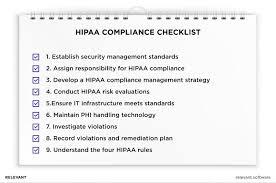
For a concise, actionable resource you can implement immediately, check out our HIPAA Compliance Checklist. It breaks down every task into daily, monthly, and annual activities.
Conclusion
Avoiding fines in 2025 demands more than one‑and‑done audits. It requires ongoing vigilance—continuous risk assessments, robust encryption, vigilant monitoring, and a culture that values security. Start implementing these steps today to protect patient data, preserve trust, and safeguard your bottom line.

 English
 Arabic
 French
 Spanish
 Portuguese
 Deutsch
 Turkish
 Dutch
 Russian
 Romaian
 Portuguese (Brazil)
 Greek