

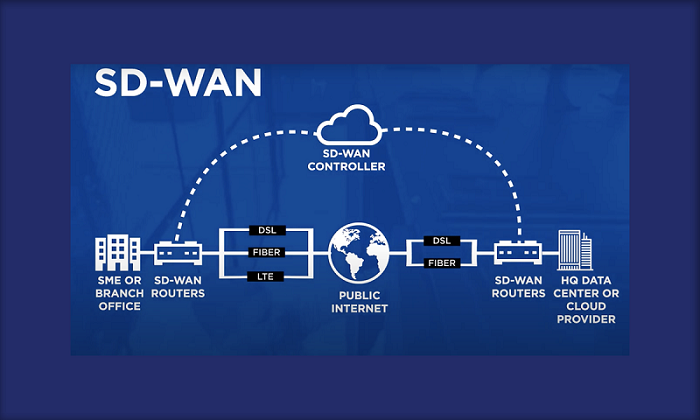
A thorough and balanced evaluation of the software-defined networking landscape requires a classic SWOT framework to understand its internal capabilities and external pressures. A strategic SD-WAN Market Analysis reveals a technology whose strengths in cost reduction and performance optimization are undeniably transformative. However, these are counterbalanced by internal weaknesses related to implementation complexity and security considerations. This dynamic is further influenced by a rich landscape of external opportunities for convergence with security and AI, alongside significant threats from intense market competition and the inherent unpredictability of the public internet. For enterprises evaluating a migration, and for vendors competing in this space, this analysis provides a critical roadmap, highlighting the immense value to be captured while also flagging the potential risks and challenges that must be proactively managed to ensure a successful and secure deployment. The journey to a software-defined WAN is one of strategic trade-offs, and a clear understanding of these factors is paramount.
The strengths of SD-WAN are clear, compelling, and directly address the primary pain points of legacy WAN architectures. The most significant strength is the dramatic potential for cost savings. By enabling the use of low-cost, high-bandwidth broadband internet to augment or replace expensive MPLS circuits, SD-WAN can deliver a significant reduction in WAN operational expenditure, often with a return on investment of less than a year. The second major strength is the vast improvement in cloud application performance. The ability to provide secure, direct internet access from the branch office eliminates the latency caused by backhauling cloud traffic, resulting in a faster, more responsive experience for users of SaaS applications. Centralized management and zero-touch provisioning provide another powerful strength, simplifying network operations, reducing the reliance on skilled IT staff at remote locations, and increasing business agility by allowing new sites to be brought online rapidly. Finally, the unprecedented visibility into network and application performance gives IT teams the insights they need to proactively troubleshoot issues and optimize the user experience.
Despite its many advantages, SD-WAN is not without its weaknesses. The primary weakness is the complexity of migration and initial implementation. Transitioning from a well-understood, stable MPLS network to a new, software-defined paradigm can be a daunting task, requiring careful planning, new skill sets, and a phased rollout approach to minimize disruption. Another weakness is the potential for vendor lock-in. While SD-WAN promotes transport independence, the control and management planes are often highly proprietary, making it difficult to switch from one SD-WAN vendor to another without a complete "rip and replace" of all edge hardware. A third and crucial weakness is the reliance on the public internet. While broadband is cheap and fast, it lacks the service level agreements (SLAs) for uptime and performance that come with private MPLS. This can introduce a degree of unpredictability, and if not architected with sufficient redundancy and intelligent path selection, can lead to a less reliable user experience, especially for real-time applications like voice and video.
The external environment presents a dynamic mix of opportunities and threats. The single largest opportunity is the evolution from SD-WAN to a full Secure Access Service Edge (SASE) architecture. SASE represents the convergence of SD-WAN networking capabilities with a full suite of cloud-delivered security services, creating a unified platform for secure access. This is the clear future direction of the market, offering a massive opportunity for vendors who can provide a tightly integrated networking and security solution. The integration of artificial intelligence for IT operations (AIOps) is another major opportunity, promising to create self-healing networks that can predict and automatically remediate issues. However, significant threats exist. Intense competition among a crowded field of vendors is leading to commoditization and price pressure, which could erode profitability. A major threat is the ever-growing sophistication of cyberattacks; a poorly secured direct internet breakout at a branch can become an easy entry point for attackers. Finally, there is the overarching threat that a new, more disruptive technology could emerge, leapfrogging SD-WAN just as it leapfrogged MPLS.
Explore More Like This in Our Regional Reports:

 English
 French
 Spanish
 Portuguese
 Deutsch
 Turkish
 Dutch
 Italiano
 Russian
 Romaian
 Portuguese (Brazil)
 Greek