

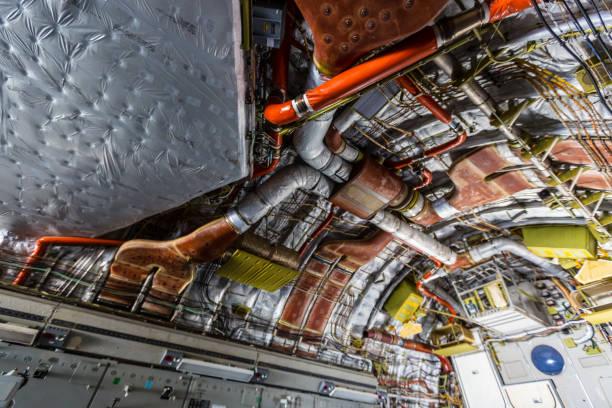
Aircraft tube and duct assemblies form the circulatory framework of modern aircraft, enabling controlled movement of fluids and air throughout complex onboard systems. These assemblies must deliver exceptional reliability under intense operational conditions. From environmental control systems to fuel and hydraulic networks, their performance directly affects aircraft safety and efficiency. Continuous advancements in aerospace engineering are increasing the sophistication and customization required for these components.
The expanding global fleet is significantly shaping the Aircraft Tube And Duct Assemblies Market. Evaluating Aircraft Tube And Duct Assemblies market share provides insights into competitive positioning among leading suppliers and regional manufacturers. As aircraft production scales up to meet rising passenger traffic and defense procurement, companies are intensifying efforts to secure long-term supply agreements.
Lightweight design remains central to innovation strategies. Advanced materials such as titanium alloys and composite structures enhance durability while minimizing weight. Reduced weight directly contributes to improved fuel efficiency and lower operational costs. Manufacturers are leveraging precision forming techniques and advanced joining technologies to optimize structural performance without increasing material usage.
Digital transformation is influencing manufacturing and operational monitoring. Integration of smart sensors within duct assemblies enables predictive maintenance and real-time performance tracking. These capabilities reduce unexpected downtime and improve aircraft reliability. Suppliers investing in digital capabilities gain a competitive advantage by offering value-added solutions beyond traditional component manufacturing.
Defense modernization initiatives continue to support consistent demand. Next-generation combat aircraft and transport systems require highly specialized duct assemblies capable of operating in extreme environments. High-pressure hydraulic systems and advanced cooling technologies demand customized engineering solutions. Long-term defense contracts provide financial stability and encourage innovation.
The aftermarket segment also remains vital. Maintenance, repair, and overhaul services require certified replacement parts to ensure airworthiness compliance. Aging aircraft fleets in multiple regions generate recurring demand, reinforcing steady revenue growth across the product lifecycle.
Regionally, North America leads due to established aerospace supply chains and technological expertise. Europe maintains a strong market presence supported by collaborative research initiatives. Asia-Pacific is rapidly expanding as governments invest in aviation infrastructure and domestic production capabilities. These geographic developments influence shifts in Aircraft Tube And Duct Assemblies market share among global competitors.
Sustainability considerations are becoming increasingly prominent. Aerospace manufacturers are aligning with environmental targets by prioritizing lightweight, energy-efficient designs. Tube and duct suppliers are responding with optimized configurations that reduce emissions while maintaining safety standards.
Overall, competitive dynamics are shaped by technological innovation, strategic partnerships, and operational excellence. Companies that enhance digital integration, material expertise, and production scalability are likely to strengthen their long-term market position. As aviation continues to evolve, high-performance tube and duct assemblies will remain essential to aircraft reliability and operational advancement.

 English
 Arabic
 French
 Spanish
 Portuguese
 Deutsch
 Turkish
 Dutch
 Russian
 Romaian
 Portuguese (Brazil)
 Greek