

UK Pea Protein Industry Outlook: Trends, Forecasts & Growth Drivers (2025–2032)
United Kingdom Pea Protein Market Analysis: Growth Landscape, Trends, and Future Outlook
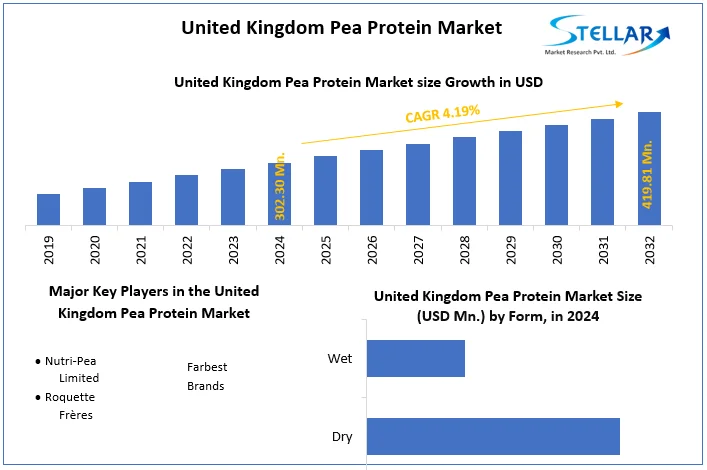
The United Kingdom Pea Protein Market is expanding steadily as plant‑based nutrition gains traction among consumers seeking health‑oriented and sustainable food options. According to industry estimates, the market was valued at approximately USD 302.30 million in 2024 and is projected to reach around USD 419.81 million by 2032, growing at a compound annual growth rate (CAGR) of about 4.19 percent during the forecast period. This growth reflects a broader shift in dietary preferences, increasing vegan and flexitarian populations, and rising reformulation of food products to include high‑quality plant proteins in mainstream and specialty foods.
Request Free Sample Report : https://www.stellarmr.com/report/req_sample/United-Kingdom-Pea-Protein-Market/1675
Market Estimation & Definition
Pea protein refers to protein extracted from legumes such as yellow split peas, chickpeas, and lentils, valued for its nutritional strengths, functional performance, and hypoallergenic properties. It provides a high‑quality plant protein source, with an amino acid profile that supports muscle health while being free from common allergens such as soy and dairy. Pea protein’s functional characteristics — including emulsification, water binding, foaming, and gelation — make it suitable for a wide range of food and beverage formulations. Within the UK market, pea protein is used in meat alternatives, nutritional supplements, beverages, and snacks, increasingly replacing traditional proteins in both retail and foodservice products.
Market Growth Drivers & Opportunity
Evolving Consumer Lifestyles: One of the major factors driving the growth of the pea protein market in the United Kingdom is the rise of plant‑based diets and health‑conscious consumption. An increasing number of UK consumers are adopting vegan, vegetarian, or flexitarian lifestyles, motivated by concerns about personal health, animal welfare, and environmental sustainability. This trend is translating into higher demand for plant‑derived proteins that deliver nutritional value and align with lifestyle choices.
Environmental Sustainability Trends: Increasing awareness about the environmental impact of food production has spurred interest in plant‑based proteins, including pea protein. Pea cultivation typically requires fewer resources such as water and land compared to animal protein production, and has a lower carbon footprint, making it an attractive ingredient for sustainability‑focused food brands and consumers. These environmental benefits are resonating strongly with UK buyers and increasing plant‑based adoption.
Food Reformulation Across Categories: UK food manufacturers are actively reformulating products to meet consumer demand for higher protein content, clean‑label ingredients, and allergen‑free formulations. This has encouraged the inclusion of pea protein in products ranging from meat analogues and beverages to fortified snacks and nutrition bars. Growth in the sports and health nutrition sector also supports use of pea protein as a key ingredient in protein powders and supplements aimed at fitness‑oriented consumers.
Despite these opportunities, the market faces challenges related to the higher production costs of pea protein compared with some conventional proteins and supply chain dynamics typical of commodity‑based markets. Addressing these issues through innovation and strategic alliances across the supply chain could unlock further growth potential.
Request Free Sample Report : https://www.stellarmr.com/report/req_sample/United-Kingdom-Pea-Protein-Market/1675
What Lies Ahead: Emerging Trends Shaping the Future
Innovation in Processing and Functionality: Advances in protein extraction and formulation technologies are improving the functional attributes of pea protein, making it easier to incorporate into diverse food products without compromising taste, texture, or nutritional value. These improvements are expanding the range of applications for pea protein in both mainstream and specialized products.
About us
Phase 3,Navale IT Zone, S.No. 51/2A/2,
Office No. 202, 2nd floor,
Near, Navale Brg,Narhe,
Pune, Maharashtra 411041
sales@stellarmr.com
United Kingdom Pea Protein Market Analysis: Growth Landscape, Trends, and Future Outlook
The United Kingdom Pea Protein Market is expanding steadily as plant‑based nutrition gains traction among consumers seeking health‑oriented and sustainable food options. According to industry estimates, the market was valued at approximately USD 302.30 million in 2024 and is projected to reach around USD 419.81 million by 2032, growing at a compound annual growth rate (CAGR) of about 4.19 percent during the forecast period. This growth reflects a broader shift in dietary preferences, increasing vegan and flexitarian populations, and rising reformulation of food products to include high‑quality plant proteins in mainstream and specialty foods.
Request Free Sample Report : https://www.stellarmr.com/report/req_sample/United-Kingdom-Pea-Protein-Market/1675
Market Estimation & Definition
Pea protein refers to protein extracted from legumes such as yellow split peas, chickpeas, and lentils, valued for its nutritional strengths, functional performance, and hypoallergenic properties. It provides a high‑quality plant protein source, with an amino acid profile that supports muscle health while being free from common allergens such as soy and dairy. Pea protein’s functional characteristics — including emulsification, water binding, foaming, and gelation — make it suitable for a wide range of food and beverage formulations. Within the UK market, pea protein is used in meat alternatives, nutritional supplements, beverages, and snacks, increasingly replacing traditional proteins in both retail and foodservice products.
Market Growth Drivers & Opportunity
Evolving Consumer Lifestyles: One of the major factors driving the growth of the pea protein market in the United Kingdom is the rise of plant‑based diets and health‑conscious consumption. An increasing number of UK consumers are adopting vegan, vegetarian, or flexitarian lifestyles, motivated by concerns about personal health, animal welfare, and environmental sustainability. This trend is translating into higher demand for plant‑derived proteins that deliver nutritional value and align with lifestyle choices.
Environmental Sustainability Trends: Increasing awareness about the environmental impact of food production has spurred interest in plant‑based proteins, including pea protein. Pea cultivation typically requires fewer resources such as water and land compared to animal protein production, and has a lower carbon footprint, making it an attractive ingredient for sustainability‑focused food brands and consumers. These environmental benefits are resonating strongly with UK buyers and increasing plant‑based adoption.
Food Reformulation Across Categories: UK food manufacturers are actively reformulating products to meet consumer demand for higher protein content, clean‑label ingredients, and allergen‑free formulations. This has encouraged the inclusion of pea protein in products ranging from meat analogues and beverages to fortified snacks and nutrition bars. Growth in the sports and health nutrition sector also supports use of pea protein as a key ingredient in protein powders and supplements aimed at fitness‑oriented consumers.
Despite these opportunities, the market faces challenges related to the higher production costs of pea protein compared with some conventional proteins and supply chain dynamics typical of commodity‑based markets. Addressing these issues through innovation and strategic alliances across the supply chain could unlock further growth potential.
Request Free Sample Report : https://www.stellarmr.com/report/req_sample/United-Kingdom-Pea-Protein-Market/1675
What Lies Ahead: Emerging Trends Shaping the Future
Innovation in Processing and Functionality: Advances in protein extraction and formulation technologies are improving the functional attributes of pea protein, making it easier to incorporate into diverse food products without compromising taste, texture, or nutritional value. These improvements are expanding the range of applications for pea protein in both mainstream and specialized products.
About us
Phase 3,Navale IT Zone, S.No. 51/2A/2,
Office No. 202, 2nd floor,
Near, Navale Brg,Narhe,
Pune, Maharashtra 411041
sales@stellarmr.com
UK Pea Protein Industry Outlook: Trends, Forecasts & Growth Drivers (2025–2032)
United Kingdom Pea Protein Market Analysis: Growth Landscape, Trends, and Future Outlook
The United Kingdom Pea Protein Market is expanding steadily as plant‑based nutrition gains traction among consumers seeking health‑oriented and sustainable food options. According to industry estimates, the market was valued at approximately USD 302.30 million in 2024 and is projected to reach around USD 419.81 million by 2032, growing at a compound annual growth rate (CAGR) of about 4.19 percent during the forecast period. This growth reflects a broader shift in dietary preferences, increasing vegan and flexitarian populations, and rising reformulation of food products to include high‑quality plant proteins in mainstream and specialty foods.
Request Free Sample Report : https://www.stellarmr.com/report/req_sample/United-Kingdom-Pea-Protein-Market/1675
Market Estimation & Definition
Pea protein refers to protein extracted from legumes such as yellow split peas, chickpeas, and lentils, valued for its nutritional strengths, functional performance, and hypoallergenic properties. It provides a high‑quality plant protein source, with an amino acid profile that supports muscle health while being free from common allergens such as soy and dairy. Pea protein’s functional characteristics — including emulsification, water binding, foaming, and gelation — make it suitable for a wide range of food and beverage formulations. Within the UK market, pea protein is used in meat alternatives, nutritional supplements, beverages, and snacks, increasingly replacing traditional proteins in both retail and foodservice products.
Market Growth Drivers & Opportunity
Evolving Consumer Lifestyles: One of the major factors driving the growth of the pea protein market in the United Kingdom is the rise of plant‑based diets and health‑conscious consumption. An increasing number of UK consumers are adopting vegan, vegetarian, or flexitarian lifestyles, motivated by concerns about personal health, animal welfare, and environmental sustainability. This trend is translating into higher demand for plant‑derived proteins that deliver nutritional value and align with lifestyle choices.
Environmental Sustainability Trends: Increasing awareness about the environmental impact of food production has spurred interest in plant‑based proteins, including pea protein. Pea cultivation typically requires fewer resources such as water and land compared to animal protein production, and has a lower carbon footprint, making it an attractive ingredient for sustainability‑focused food brands and consumers. These environmental benefits are resonating strongly with UK buyers and increasing plant‑based adoption.
Food Reformulation Across Categories: UK food manufacturers are actively reformulating products to meet consumer demand for higher protein content, clean‑label ingredients, and allergen‑free formulations. This has encouraged the inclusion of pea protein in products ranging from meat analogues and beverages to fortified snacks and nutrition bars. Growth in the sports and health nutrition sector also supports use of pea protein as a key ingredient in protein powders and supplements aimed at fitness‑oriented consumers.
Despite these opportunities, the market faces challenges related to the higher production costs of pea protein compared with some conventional proteins and supply chain dynamics typical of commodity‑based markets. Addressing these issues through innovation and strategic alliances across the supply chain could unlock further growth potential.
Request Free Sample Report : https://www.stellarmr.com/report/req_sample/United-Kingdom-Pea-Protein-Market/1675
What Lies Ahead: Emerging Trends Shaping the Future
Innovation in Processing and Functionality: Advances in protein extraction and formulation technologies are improving the functional attributes of pea protein, making it easier to incorporate into diverse food products without compromising taste, texture, or nutritional value. These improvements are expanding the range of applications for pea protein in both mainstream and specialized products.
About us
Phase 3,Navale IT Zone, S.No. 51/2A/2,
Office No. 202, 2nd floor,
Near, Navale Brg,Narhe,
Pune, Maharashtra 411041
sales@stellarmr.com
0 Commenti
0 condivisioni


 English
 Arabic
 French
 Spanish
 Portuguese
 Deutsch
 Turkish
 Dutch
Dutch
 Russian
 Romaian
 Portuguese (Brazil)
 Greek
Greek