


• Smart Home Market to Surge from ~$129B in 2024 to Over $1T by 2032

    Smart Home Market: Global Overview, Drivers, Trends & Competitive Outlook

    Market Estimation & Definition
    The Smart Home Market refers to the global industry for internet‑connected devices, systems, and appliances that enable automation, remote monitoring, and control of residential functions such as lighting, security, climate control, entertainment, and kitchen/home appliances. These technologies rely on IoT (Internet of Things), AI (Artificial Intelligence), and wireless connectivity to create a connected living environment that improves convenience, safety, and energy efficiency.

    In 2024, the Smart Home market was valued at about USD 129.17 billion. It is expected to grow at a CAGR of around 29.17 % from 2025 to 2032, reaching nearly USD 1,001.04 billion by 2032 — a dramatic expansion driven by increasing adoption of smart devices and automation technologies in homes worldwide.

    Purchase This Research Report at up to 30% Off @ https://www.stellarmr.com/report/req_sample/smart-home-market/2486

    Market Growth Drivers & Opportunity
    Growth in the Smart Home market is propelled by a combination of technological innovation and shifting consumer priorities:

    • Security & Safety Concerns: Homeowners increasingly value remote monitoring solutions, smart locks, and security cameras that improve personal safety and property protection even when away from home. Voice assistants and automation also contribute to convenience and peace of mind.

    • Energy Efficiency & Sustainability: Smart thermostats, lighting controls, and HVAC systems help optimize energy consumption, reduce utility bills, and support sustainable living — factors that resonate with environmentally conscious consumers.

    • Advancements in AI and IoT: Artificial intelligence and IoT technologies enable seamless integration and intelligent automation across appliances, enhancing user experience with features such as voice control, personalized routines, and predictive behaviors.

    • Consumer Awareness & Connectivity: Rising awareness of the benefits of smart living, coupled with broader internet penetration and wireless networking infrastructure, increases demand for connected home ecosystems. Research indicates strong adoption, with core drivers including convenience and real‑time remote control of home systems.

    Purchase This Research Report at up to 30% Off @ https://www.stellarmr.com/report/req_sample/smart-home-market/2486

    What Lies Ahead: Emerging Trends Shaping the Future
    Several emerging trends will shape the future of the Smart Home market:

    • Voice and Assistant Integration: Smart homes increasingly leverage voice control through platforms like Amazon Alexa, Google Assistant, and Siri, making interaction more intuitive and hands‑free.

    • AI‑Driven Automation: Devices that learn user preferences and automate routines — from lighting and climate to energy management — improve convenience and personalization.

    • Energy and Resource Optimization: Smart energy management systems are growing rapidly as homeowners seek to monitor and reduce consumption, especially with rising utility costs.

    • Interoperability and Ecosystems: Demand is rising for unified ecosystems where multiple brands and devices communicate seamlessly, reducing fragmentation in smart home setups.

    • Retrofit vs. New Construction: Although the retrofit segment — converting existing homes with smart technologies — currently dominates due to lower costs and easier adoption, smart‑ready design in new construction is also gaining momentum as builders integrate automation infrastructure from the start.

    Segmentation Analysis (from Stellarmr)
    According to Stellarmr, the Smart Home market is segmented by device type, application, and protocol:

    By Device Type:
    • Safety & Security Access Control — Includes smart locks, cameras, and alarm systems (major market share).
    • Home Appliances — Smart refrigerators, washers, and other IoT‑enabled appliances.
    • HVAC Control — Smart thermostats and climate systems.
    • Lighting Control — Automated and energy‑saving lighting.
    • Smart Entertainment Devices — Smart TVs, speakers, and media integration.
    • Smart Kitchen Appliances — Connected kitchen devices.
    • Others — Other connected home devices.

    About us

    Phase 3,Navale IT Zone, S.No. 51/2A/2,

    Office No. 202, 2nd floor,

    Near, Navale Brg,Narhe,

    Pune, Maharashtra 411041

    sales@stellarmr.com
    Smart Home Market to Surge from ~$129B in 2024 to Over $1T by 2032 Smart Home Market: Global Overview, Drivers, Trends & Competitive Outlook Market Estimation & Definition The Smart Home Market refers to the global industry for internet‑connected devices, systems, and appliances that enable automation, remote monitoring, and control of residential functions such as lighting, security, climate control, entertainment, and kitchen/home appliances. These technologies rely on IoT (Internet of Things), AI (Artificial Intelligence), and wireless connectivity to create a connected living environment that improves convenience, safety, and energy efficiency. In 2024, the Smart Home market was valued at about USD 129.17 billion. It is expected to grow at a CAGR of around 29.17 % from 2025 to 2032, reaching nearly USD 1,001.04 billion by 2032 — a dramatic expansion driven by increasing adoption of smart devices and automation technologies in homes worldwide. Purchase This Research Report at up to 30% Off @ https://www.stellarmr.com/report/req_sample/smart-home-market/2486 Market Growth Drivers & Opportunity Growth in the Smart Home market is propelled by a combination of technological innovation and shifting consumer priorities: • Security & Safety Concerns: Homeowners increasingly value remote monitoring solutions, smart locks, and security cameras that improve personal safety and property protection even when away from home. Voice assistants and automation also contribute to convenience and peace of mind. • Energy Efficiency & Sustainability: Smart thermostats, lighting controls, and HVAC systems help optimize energy consumption, reduce utility bills, and support sustainable living — factors that resonate with environmentally conscious consumers. • Advancements in AI and IoT: Artificial intelligence and IoT technologies enable seamless integration and intelligent automation across appliances, enhancing user experience with features such as voice control, personalized routines, and predictive behaviors. • Consumer Awareness & Connectivity: Rising awareness of the benefits of smart living, coupled with broader internet penetration and wireless networking infrastructure, increases demand for connected home ecosystems. Research indicates strong adoption, with core drivers including convenience and real‑time remote control of home systems. Purchase This Research Report at up to 30% Off @ https://www.stellarmr.com/report/req_sample/smart-home-market/2486 What Lies Ahead: Emerging Trends Shaping the Future Several emerging trends will shape the future of the Smart Home market: • Voice and Assistant Integration: Smart homes increasingly leverage voice control through platforms like Amazon Alexa, Google Assistant, and Siri, making interaction more intuitive and hands‑free. • AI‑Driven Automation: Devices that learn user preferences and automate routines — from lighting and climate to energy management — improve convenience and personalization. • Energy and Resource Optimization: Smart energy management systems are growing rapidly as homeowners seek to monitor and reduce consumption, especially with rising utility costs. • Interoperability and Ecosystems: Demand is rising for unified ecosystems where multiple brands and devices communicate seamlessly, reducing fragmentation in smart home setups. • Retrofit vs. New Construction: Although the retrofit segment — converting existing homes with smart technologies — currently dominates due to lower costs and easier adoption, smart‑ready design in new construction is also gaining momentum as builders integrate automation infrastructure from the start. Segmentation Analysis (from Stellarmr) According to Stellarmr, the Smart Home market is segmented by device type, application, and protocol: By Device Type: • Safety & Security Access Control — Includes smart locks, cameras, and alarm systems (major market share). • Home Appliances — Smart refrigerators, washers, and other IoT‑enabled appliances. • HVAC Control — Smart thermostats and climate systems. • Lighting Control — Automated and energy‑saving lighting. • Smart Entertainment Devices — Smart TVs, speakers, and media integration. • Smart Kitchen Appliances — Connected kitchen devices. • Others — Other connected home devices. About us Phase 3,Navale IT Zone, S.No. 51/2A/2, Office No. 202, 2nd floor, Near, Navale Brg,Narhe, Pune, Maharashtra 411041 sales@stellarmr.com
    0 Commenti 0 condivisioni
  • Thermal Energy Storage Market Growth: Driving the Future of Renewable Integration

    Thermal Energy Storage Market: Growth Dynamics, Key Trends & Future Outlook

    Market Estimation & Definition
    The Thermal Energy Storage (TES) market refers to technologies that store thermal energy — either heat or cold — for later use in power generation, industrial processes, building heating/cooling, and renewable energy integration. TES systems enable energy captured during low‑demand or peak generation periods to be deployed when needed, improving efficiency, flexibility, and grid reliability. These systems use mediums such as water, molten salt, and phase change materials to store energy through sensible heat, latent heat, or thermochemical processes.

    In 2024, the global thermal energy storage market was valued at approximately USD 6.94 billion. It is projected to grow to around USD 19.25 billion by 2032, expanding at a compound annual growth rate (CAGR) of about 13.6 % through 2032, driven by increasing renewable energy penetration and rising demand for grid‑scale storage solutions.

    Purchase This Research Report at up to 30% Off @ https://www.stellarmr.com/report/req_sample/Thermal-Energy-Storage-Market/356

    Market Growth Drivers & Opportunity
    A key growth driver for the TES market is the integration with renewable energy sources, especially solar thermal and concentrated solar power (CSP). Because solar generation is intermittent, storing excess heat for use during non‑sunlight hours enhances energy reliability and enables continuous power generation from renewable energy. TES systems are essential in CSP plants to prolong generation beyond daylight hours.

    Decarbonization and energy transition goals globally are pushing utilities, governments, and industries to adopt storage solutions that reduce dependence on fossil fuels and balance supply‑demand variability in grids with high shares of wind and solar. TES helps to lower carbon emissions by shifting energy supply from peak fossil fuel generation to stored renewable heat or cold.

    Opportunities also arise from the growing district heating and cooling applications, where thermal storage decouples generation from demand, enabling seasonal and peak load management to reduce overall energy consumption in buildings and industry.

    What Lies Ahead: Emerging Trends Shaping the Future
    Several trends are poised to shape TES market growth in the coming years:

    • Advancement in materials and technology — Thermochemical storage and enhanced phase change materials (PCMs) are gaining interest for their high energy density and long‑term stability, offering efficiency improvements over traditional methods.

    • Grid‑scale integration with renewables — As energy systems expand solar and wind capacity, TES solutions will be increasingly deployed alongside digital grid platforms and smart energy management systems to balance intermittent outputs.

    • Cold storage and HVAC innovation — Ice and chilled water storage systems are being adopted for sustainable cooling solutions in large buildings and data centers, which helps flatten peak electricity demand and improve efficiency.

    • Policy and incentive support — Government incentives and regulatory frameworks aimed at decarbonization and energy efficiency are expected to accelerate TES adoption in utility and industrial applications.

    Purchase This Research Report at up to 30% Off @ https://www.stellarmr.com/report/req_sample/Thermal-Energy-Storage-Market/356

    Segmentation Analysis from the URL
    According to the industry report, the thermal energy storage market is segmented across type, technology, application, and end‑user.

    By Type:
    • Water — Common in sensible heat storage due to low cost and simplicity.
    • Molten Salt — Widely used in CSP and high‑temperature industrial applications.
    • Phase Change Material — Stores and releases energy at specific phase transition temperatures to enhance efficiency.

    By Technology:
    • Sensible Heat Storage — Dominates due to maturity and cost‑effectiveness for large thermal loads.
    • Latent Heat Storage — Efficient for moderate temperature applications.
    • Thermochemical Storage — Emerging for high‑density, long‑duration storage.

    By Application:
    • Power Generation — Largest share, enabling utilities to use stored heat during peak demand.
    • Heating & Cooling — Used in buildings, campuses, and industrial processes to shift energy usage patterns.

    By End‑User:
    • Residential — Smaller systems for home heating/cooling.
    • Commercial & Industrial — Large‑scale installations in factories, campuses, and commercial complexes.
    • Utility — Grid‑scale systems integrated with renewable energy and district energy networks.


    About us

    Phase 3,Navale IT Zone, S.No. 51/2A/2,

    Office No. 202, 2nd floor,

    Near, Navale Brg,Narhe,

    Pune, Maharashtra 411041

    sales@stellarmr.com
    Thermal Energy Storage Market Growth: Driving the Future of Renewable Integration Thermal Energy Storage Market: Growth Dynamics, Key Trends & Future Outlook Market Estimation & Definition The Thermal Energy Storage (TES) market refers to technologies that store thermal energy — either heat or cold — for later use in power generation, industrial processes, building heating/cooling, and renewable energy integration. TES systems enable energy captured during low‑demand or peak generation periods to be deployed when needed, improving efficiency, flexibility, and grid reliability. These systems use mediums such as water, molten salt, and phase change materials to store energy through sensible heat, latent heat, or thermochemical processes. In 2024, the global thermal energy storage market was valued at approximately USD 6.94 billion. It is projected to grow to around USD 19.25 billion by 2032, expanding at a compound annual growth rate (CAGR) of about 13.6 % through 2032, driven by increasing renewable energy penetration and rising demand for grid‑scale storage solutions. Purchase This Research Report at up to 30% Off @ https://www.stellarmr.com/report/req_sample/Thermal-Energy-Storage-Market/356 Market Growth Drivers & Opportunity A key growth driver for the TES market is the integration with renewable energy sources, especially solar thermal and concentrated solar power (CSP). Because solar generation is intermittent, storing excess heat for use during non‑sunlight hours enhances energy reliability and enables continuous power generation from renewable energy. TES systems are essential in CSP plants to prolong generation beyond daylight hours. Decarbonization and energy transition goals globally are pushing utilities, governments, and industries to adopt storage solutions that reduce dependence on fossil fuels and balance supply‑demand variability in grids with high shares of wind and solar. TES helps to lower carbon emissions by shifting energy supply from peak fossil fuel generation to stored renewable heat or cold. Opportunities also arise from the growing district heating and cooling applications, where thermal storage decouples generation from demand, enabling seasonal and peak load management to reduce overall energy consumption in buildings and industry. What Lies Ahead: Emerging Trends Shaping the Future Several trends are poised to shape TES market growth in the coming years: • Advancement in materials and technology — Thermochemical storage and enhanced phase change materials (PCMs) are gaining interest for their high energy density and long‑term stability, offering efficiency improvements over traditional methods. • Grid‑scale integration with renewables — As energy systems expand solar and wind capacity, TES solutions will be increasingly deployed alongside digital grid platforms and smart energy management systems to balance intermittent outputs. • Cold storage and HVAC innovation — Ice and chilled water storage systems are being adopted for sustainable cooling solutions in large buildings and data centers, which helps flatten peak electricity demand and improve efficiency. • Policy and incentive support — Government incentives and regulatory frameworks aimed at decarbonization and energy efficiency are expected to accelerate TES adoption in utility and industrial applications. Purchase This Research Report at up to 30% Off @ https://www.stellarmr.com/report/req_sample/Thermal-Energy-Storage-Market/356 Segmentation Analysis from the URL According to the industry report, the thermal energy storage market is segmented across type, technology, application, and end‑user. By Type: • Water — Common in sensible heat storage due to low cost and simplicity. • Molten Salt — Widely used in CSP and high‑temperature industrial applications. • Phase Change Material — Stores and releases energy at specific phase transition temperatures to enhance efficiency. By Technology: • Sensible Heat Storage — Dominates due to maturity and cost‑effectiveness for large thermal loads. • Latent Heat Storage — Efficient for moderate temperature applications. • Thermochemical Storage — Emerging for high‑density, long‑duration storage. By Application: • Power Generation — Largest share, enabling utilities to use stored heat during peak demand. • Heating & Cooling — Used in buildings, campuses, and industrial processes to shift energy usage patterns. By End‑User: • Residential — Smaller systems for home heating/cooling. • Commercial & Industrial — Large‑scale installations in factories, campuses, and commercial complexes. • Utility — Grid‑scale systems integrated with renewable energy and district energy networks. About us Phase 3,Navale IT Zone, S.No. 51/2A/2, Office No. 202, 2nd floor, Near, Navale Brg,Narhe, Pune, Maharashtra 411041 sales@stellarmr.com
    0 Commenti 0 condivisioni
  • Curved Plate Fused Silica Boat
    High-Purity • Thermally Stable • Shock-Resistant

    Precision carrier for diffusion, oxidation, and CVD batch processing
    Exceptional thermal stability and minimal expansion
    Strong corrosion and thermal shock resistance
    Ideal for high-temperature semiconductor applications

    https://www.semiconquartz.com/quartz-boat-6inch-3.html

    #FusedSilicaBoat #SemiconductorEquipment
    #HighPurityQuartz #WaferProcessing #CleanroomTech
    💎 Curved Plate Fused Silica Boat 💎 High-Purity • Thermally Stable • Shock-Resistant Precision carrier for diffusion, oxidation, and CVD batch processing ✅ Exceptional thermal stability and minimal expansion ✅ Strong corrosion and thermal shock resistance ✅ Ideal for high-temperature semiconductor applications https://www.semiconquartz.com/quartz-boat-6inch-3.html #FusedSilicaBoat #SemiconductorEquipment #HighPurityQuartz #WaferProcessing #CleanroomTech
    0 Commenti 0 condivisioni
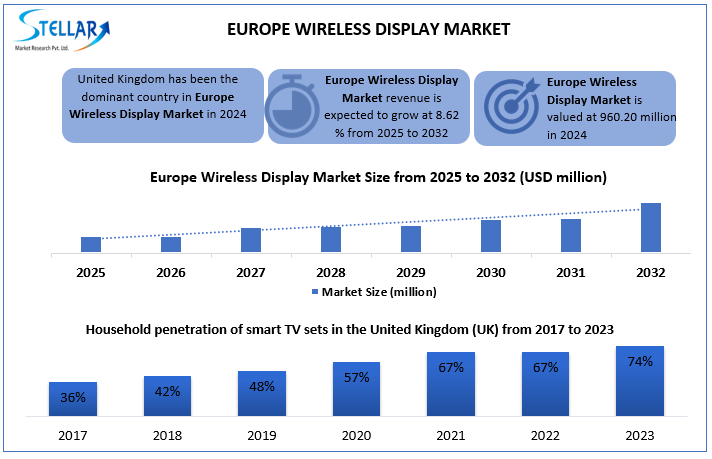
  • Europe Wireless Display Market to be driven by the rising demand for personal mobility devices in the Forecast 2025–2032

    Europe Wireless Display Market Accelerates: Connectivity & Digital Transformation Fuel Adoption
    Market Definition & Overview
    The Europe Wireless Display Market refers to technologies and solutions that enable video, audio and multimedia content to be transmitted from a source device (such as a smartphone, laptop, tablet or media player) to a display screen (TV, monitor, projector or digital signage) without the need for physical cables. Wireless display technologies include Wi-Fi-based standards (e.g., Miracast, AirPlay, Google Cast), Bluetooth, and other proprietary protocols that support screen mirroring, casting, and content sharing across consumer, enterprise and commercial applications.

    As businesses, educational institutions and households increasingly embrace flexible connectivity, wireless display solutions enhance collaboration, entertainment and digital communication — allowing users to stream content effortlessly across devices, present information in meetings or classrooms, and create immersive home-entertainment experiences.

    Request Free Sample Report:https://www.stellarmr.com/report/req_sample/Europe-Wireless-Display-Market/2568

    Market Growth Drivers & Opportunity Landscape
    • Rising Demand for Seamless Connectivity
    European consumers and enterprises alike are moving toward cord-free environments where devices communicate seamlessly. Wireless display technologies meet this demand by removing physical cable constraints, simplifying connectivity between devices and screens, and supporting the growing variety of smart devices in homes and workplaces.

    • Adoption of Smart Devices & Smart TVs
    Smartphones, tablets and smart TVs equipped with wireless display capabilities are increasingly popular across Europe. The proliferation of smart consumer electronics fuels demand for wireless display — enabling users to cast photos, videos, presentations and gaming content effortlessly from handheld devices to larger screens.

    • Growth in Remote Work & Hybrid Learning
    As remote and hybrid work models remain prevalent, collaboration tools that support wireless screen sharing have become essential. Businesses utilize wireless display systems in meeting rooms and huddle spaces to support virtual collaboration, while education institutions adopt wireless classroom displays to facilitate interactive teaching and learning.

    • Digital Signage & Interactive Displays in Commercial Spaces
    Retail stores, airports, hospitality venues and public spaces are increasingly deploying wireless display systems for digital signage, advertising, and real-time information screens. These applications allow centralized management of content without the limitations and maintenance costs associated with wired systems.

    • Expansion of Collaborative Workspaces & Enterprise Investments
    Corporate investment in digital transformation and collaborative infrastructure — such as conference room AV systems with wireless casting — supports productivity and employee engagement. Wireless display solutions reduce setup complexity, support multi-device sharing and enhance user experience in enterprise settings.

    What Lies Ahead: Emerging Trends & Market Dynamics
    • Integration with IoT & Smart Building Ecosystems
    Wireless display systems are increasingly integrated with IoT platforms and smart building technologies, enabling centralized control and enhanced automation. For example, displays can receive content triggered by sensors, schedules, or interactive user commands — opening new use cases in smart offices and public installations.

    • Higher Adoption of Next-Gen Networking Technologies (Wi-Fi 6 & 5G)
    Improved wireless bandwidth, reduced latency and better network reliability — driven by Wi-Fi 6 and expanding 5G coverage — support higher-quality wireless display streaming, including 4K/video conferencing and multi-screen collaboration. These advancements make wireless display more viable for mission-critical and high-performance environments.

    About us

    Phase 3,Navale IT Zone, S.No. 51/2A/2,

    Office No. 202, 2nd floor,

    Near, Navale Brg,Narhe,

    Pune, Maharashtra 411041

    sales@stellarmr.com
    Europe Wireless Display Market to be driven by the rising demand for personal mobility devices in the Forecast 2025–2032 Europe Wireless Display Market Accelerates: Connectivity & Digital Transformation Fuel Adoption Market Definition & Overview The Europe Wireless Display Market refers to technologies and solutions that enable video, audio and multimedia content to be transmitted from a source device (such as a smartphone, laptop, tablet or media player) to a display screen (TV, monitor, projector or digital signage) without the need for physical cables. Wireless display technologies include Wi-Fi-based standards (e.g., Miracast, AirPlay, Google Cast), Bluetooth, and other proprietary protocols that support screen mirroring, casting, and content sharing across consumer, enterprise and commercial applications. As businesses, educational institutions and households increasingly embrace flexible connectivity, wireless display solutions enhance collaboration, entertainment and digital communication — allowing users to stream content effortlessly across devices, present information in meetings or classrooms, and create immersive home-entertainment experiences. Request Free Sample Report:https://www.stellarmr.com/report/req_sample/Europe-Wireless-Display-Market/2568 Market Growth Drivers & Opportunity Landscape • Rising Demand for Seamless Connectivity European consumers and enterprises alike are moving toward cord-free environments where devices communicate seamlessly. Wireless display technologies meet this demand by removing physical cable constraints, simplifying connectivity between devices and screens, and supporting the growing variety of smart devices in homes and workplaces. • Adoption of Smart Devices & Smart TVs Smartphones, tablets and smart TVs equipped with wireless display capabilities are increasingly popular across Europe. The proliferation of smart consumer electronics fuels demand for wireless display — enabling users to cast photos, videos, presentations and gaming content effortlessly from handheld devices to larger screens. • Growth in Remote Work & Hybrid Learning As remote and hybrid work models remain prevalent, collaboration tools that support wireless screen sharing have become essential. Businesses utilize wireless display systems in meeting rooms and huddle spaces to support virtual collaboration, while education institutions adopt wireless classroom displays to facilitate interactive teaching and learning. • Digital Signage & Interactive Displays in Commercial Spaces Retail stores, airports, hospitality venues and public spaces are increasingly deploying wireless display systems for digital signage, advertising, and real-time information screens. These applications allow centralized management of content without the limitations and maintenance costs associated with wired systems. • Expansion of Collaborative Workspaces & Enterprise Investments Corporate investment in digital transformation and collaborative infrastructure — such as conference room AV systems with wireless casting — supports productivity and employee engagement. Wireless display solutions reduce setup complexity, support multi-device sharing and enhance user experience in enterprise settings. What Lies Ahead: Emerging Trends & Market Dynamics • Integration with IoT & Smart Building Ecosystems Wireless display systems are increasingly integrated with IoT platforms and smart building technologies, enabling centralized control and enhanced automation. For example, displays can receive content triggered by sensors, schedules, or interactive user commands — opening new use cases in smart offices and public installations. • Higher Adoption of Next-Gen Networking Technologies (Wi-Fi 6 & 5G) Improved wireless bandwidth, reduced latency and better network reliability — driven by Wi-Fi 6 and expanding 5G coverage — support higher-quality wireless display streaming, including 4K/video conferencing and multi-screen collaboration. These advancements make wireless display more viable for mission-critical and high-performance environments. About us Phase 3,Navale IT Zone, S.No. 51/2A/2, Office No. 202, 2nd floor, Near, Navale Brg,Narhe, Pune, Maharashtra 411041 sales@stellarmr.com
    0 Commenti 0 condivisioni
  • Aircraft Cockpit Display System Market Size To Grow At A CAGR Of 4.8% In The Forecast Period Of 2025-2032

    Aircraft Cockpit Display System Market Soars: Technology & Safety Driving Industry Growth
    Market Definition & Overview
    The Aircraft Cockpit Display System Market encompasses all systems and components used to present critical flight, navigation, engine, and aircraft-status information to pilots in modern aircraft. These systems — commonly referred to as cockpit displays — include Primary Flight Displays (PFDs), Multi-Function Displays (MFDs), Engine Indication and Crew Alerting Systems (EICAS), Navigation Displays, and fully integrated glass cockpits that replace traditional analog instruments with advanced digital interfaces.

    Cockpit display systems are critical to aircraft safety, situational awareness, flight efficiency and pilot decision-making. They are used across a range of aircraft categories, including commercial airliners, regional and business jets, rotorcraft (helicopters), military platforms, and general aviation aircraft.

    With regulatory emphasis on pilot safety, rising air traffic volumes, upgrades to avionics, and growing demand for enhanced cockpit automation, the cockpit display system market is entering a phase of strong, long-term growth.

    Request Free Sample Report:https://www.stellarmr.com/report/req_sample/Aircraft-Cockpit-Display-System-Market/1993

    Market Estimation & Definition
    Cockpit display systems consist of:

    Primary Flight Displays (PFDs): showing attitude, altitude, airspeed and flight path data

    Multi-Function Displays (MFDs): presenting navigation, weather, traffic, systems data

    Engine/System Monitoring Displays: tracking engine performance and aircraft systems

    Glass Cockpit Suites: integrated digital display platforms replacing analog gauges

    After-Market Retrofit & Upgrade Kits: for legacy aircraft modernization

    The market includes OEM-installed systems on new aircraft and aftermarket retrofits for older fleets. It also accounts for services and support — such as installation, certification, maintenance, software upgrades, and training.

    Market Growth Drivers & Opportunities
    • Global Growth in Air Travel & Aircraft Deliveries
    Commercial aviation is experiencing sustained growth across many regions. Airlines continue to expand fleets to meet rising passenger demand, increasing the volume of new aircraft equipped with advanced cockpit displays.

    • Demand for Improved Flight Safety & Situational Awareness
    Cockpit display systems consolidate complex flight data into intuitive, easily interpretable visuals. This enhances pilot awareness, reduces workload, supports decision-making, and improves safety — factors that make these systems indispensable in both commercial and general aviation.

    • Retrofit Demand for Legacy Aircraft
    A significant portion of the global fleet consists of older aircraft with analog or hybrid cockpits. Operators are increasingly choosing to retrofit these platforms with digital cockpits to comply with current standards, improve reliability, and reduce maintenance costs — driving aftermarket growth.

    • Technological Advancements in Avionics Displays
    Cockpit display technology has advanced rapidly with high-resolution screens, wide-format displays, enhanced graphics, synthetic-vision features, touch-screen interfaces, and improved human-machine interaction (HMI). These innovations attract airline operators seeking performance and pilot usability improvements.

    About us

    Phase 3,Navale IT Zone, S.No. 51/2A/2,

    Office No. 202, 2nd floor,

    Near, Navale Brg,Narhe,

    Pune, Maharashtra 411041

    sales@stellarmr.com
    Aircraft Cockpit Display System Market Size To Grow At A CAGR Of 4.8% In The Forecast Period Of 2025-2032 Aircraft Cockpit Display System Market Soars: Technology & Safety Driving Industry Growth Market Definition & Overview The Aircraft Cockpit Display System Market encompasses all systems and components used to present critical flight, navigation, engine, and aircraft-status information to pilots in modern aircraft. These systems — commonly referred to as cockpit displays — include Primary Flight Displays (PFDs), Multi-Function Displays (MFDs), Engine Indication and Crew Alerting Systems (EICAS), Navigation Displays, and fully integrated glass cockpits that replace traditional analog instruments with advanced digital interfaces. Cockpit display systems are critical to aircraft safety, situational awareness, flight efficiency and pilot decision-making. They are used across a range of aircraft categories, including commercial airliners, regional and business jets, rotorcraft (helicopters), military platforms, and general aviation aircraft. With regulatory emphasis on pilot safety, rising air traffic volumes, upgrades to avionics, and growing demand for enhanced cockpit automation, the cockpit display system market is entering a phase of strong, long-term growth. Request Free Sample Report:https://www.stellarmr.com/report/req_sample/Aircraft-Cockpit-Display-System-Market/1993 Market Estimation & Definition Cockpit display systems consist of: Primary Flight Displays (PFDs): showing attitude, altitude, airspeed and flight path data Multi-Function Displays (MFDs): presenting navigation, weather, traffic, systems data Engine/System Monitoring Displays: tracking engine performance and aircraft systems Glass Cockpit Suites: integrated digital display platforms replacing analog gauges After-Market Retrofit & Upgrade Kits: for legacy aircraft modernization The market includes OEM-installed systems on new aircraft and aftermarket retrofits for older fleets. It also accounts for services and support — such as installation, certification, maintenance, software upgrades, and training. Market Growth Drivers & Opportunities • Global Growth in Air Travel & Aircraft Deliveries Commercial aviation is experiencing sustained growth across many regions. Airlines continue to expand fleets to meet rising passenger demand, increasing the volume of new aircraft equipped with advanced cockpit displays. • Demand for Improved Flight Safety & Situational Awareness Cockpit display systems consolidate complex flight data into intuitive, easily interpretable visuals. This enhances pilot awareness, reduces workload, supports decision-making, and improves safety — factors that make these systems indispensable in both commercial and general aviation. • Retrofit Demand for Legacy Aircraft A significant portion of the global fleet consists of older aircraft with analog or hybrid cockpits. Operators are increasingly choosing to retrofit these platforms with digital cockpits to comply with current standards, improve reliability, and reduce maintenance costs — driving aftermarket growth. • Technological Advancements in Avionics Displays Cockpit display technology has advanced rapidly with high-resolution screens, wide-format displays, enhanced graphics, synthetic-vision features, touch-screen interfaces, and improved human-machine interaction (HMI). These innovations attract airline operators seeking performance and pilot usability improvements. About us Phase 3,Navale IT Zone, S.No. 51/2A/2, Office No. 202, 2nd floor, Near, Navale Brg,Narhe, Pune, Maharashtra 411041 sales@stellarmr.com
    0 Commenti 0 condivisioni
  • Home Infusion Therapy Market — Definition & Overview
    “Home infusion therapy” refers to medical care in which patients receive intravenous (IV) or subcutaneous therapies in their own homes rather than in hospitals or clinics. Such therapies can include antibiotics, chemotherapy, nutrition (parenteral nutrition), hydration, pain management, biologics, and other IV- or infusion-based treatments. The “Home Infusion Therapy Market” comprises providers of infusion services, home-health agencies, nursing or specialized caregivers, suppliers of infusion equipment (IV pumps, catheters, disposables), pharmaceuticals used for infusion, and logistical/ support infrastructure to deliver safe, regulated therapy at home.

    This market serves patients with chronic illnesses, post-operative needs, long-term therapies, or those requiring maintenance infusions — offering a cost-effective, convenient and patient-friendly alternative to prolonged hospital stays or frequent outpatient visits. As healthcare systems globally strive to reduce hospitalization costs and improve patient comfort, demand for home infusion therapy has increased significantly.

    Request Free Sample Report:https://www.stellarmr.com/report/req_sample/Home-Infusion-Therapy-Market/2268

    Key Market Growth Drivers & Opportunities
    • Increasing Preference for Home-Based Care & Patient Comfort
    Patients and caregivers increasingly value receiving medical treatment in the comfort and familiarity of home — avoiding hospital stays, reducing exposure to hospital-acquired infections, and improving quality of life. Home infusion therapy meets this demand for convenience and patient-centered care.

    • Rising Chronic Disease Burden & Long-Term Therapy Requirements
    Heightened prevalence of chronic illnesses (cancer, autoimmune disorders, gastrointestinal disorders, nutritional disorders, etc.) often requires prolonged or recurring infusion-based treatment. Home infusion offers a practical alternative for long-term care outside hospital environments, fuelling demand.

    • Cost Containment for Healthcare Systems & Patients
    Delivering infusion therapy at home helps reduce hospital bed occupancy, inpatient costs, and associated overheads. For payers and healthcare systems, home infusion can be more economical than repeated outpatient or inpatient care — promoting its adoption.

    • Advances in Infusion Technology, Safety & Monitoring
    Improvements in portable infusion pumps, disposables, home-care monitoring, telehealth, and remote supervision have made home infusion safer and more feasible. These advances increase confidence among providers, patients and regulators, supporting market growth.


    About us
    Phase 3,Navale IT Zone, S.No. 51/2A/2,

    Office No. 202, 2nd floor,

    Near, Navale Brg,Narhe,

    Pune, Maharashtra 411041

    sales@stellarmr.com
    Home Infusion Therapy Market — Definition & Overview “Home infusion therapy” refers to medical care in which patients receive intravenous (IV) or subcutaneous therapies in their own homes rather than in hospitals or clinics. Such therapies can include antibiotics, chemotherapy, nutrition (parenteral nutrition), hydration, pain management, biologics, and other IV- or infusion-based treatments. The “Home Infusion Therapy Market” comprises providers of infusion services, home-health agencies, nursing or specialized caregivers, suppliers of infusion equipment (IV pumps, catheters, disposables), pharmaceuticals used for infusion, and logistical/ support infrastructure to deliver safe, regulated therapy at home. This market serves patients with chronic illnesses, post-operative needs, long-term therapies, or those requiring maintenance infusions — offering a cost-effective, convenient and patient-friendly alternative to prolonged hospital stays or frequent outpatient visits. As healthcare systems globally strive to reduce hospitalization costs and improve patient comfort, demand for home infusion therapy has increased significantly. Request Free Sample Report:https://www.stellarmr.com/report/req_sample/Home-Infusion-Therapy-Market/2268 Key Market Growth Drivers & Opportunities • Increasing Preference for Home-Based Care & Patient Comfort Patients and caregivers increasingly value receiving medical treatment in the comfort and familiarity of home — avoiding hospital stays, reducing exposure to hospital-acquired infections, and improving quality of life. Home infusion therapy meets this demand for convenience and patient-centered care. • Rising Chronic Disease Burden & Long-Term Therapy Requirements Heightened prevalence of chronic illnesses (cancer, autoimmune disorders, gastrointestinal disorders, nutritional disorders, etc.) often requires prolonged or recurring infusion-based treatment. Home infusion offers a practical alternative for long-term care outside hospital environments, fuelling demand. • Cost Containment for Healthcare Systems & Patients Delivering infusion therapy at home helps reduce hospital bed occupancy, inpatient costs, and associated overheads. For payers and healthcare systems, home infusion can be more economical than repeated outpatient or inpatient care — promoting its adoption. • Advances in Infusion Technology, Safety & Monitoring Improvements in portable infusion pumps, disposables, home-care monitoring, telehealth, and remote supervision have made home infusion safer and more feasible. These advances increase confidence among providers, patients and regulators, supporting market growth. About us Phase 3,Navale IT Zone, S.No. 51/2A/2, Office No. 202, 2nd floor, Near, Navale Brg,Narhe, Pune, Maharashtra 411041 sales@stellarmr.com
    0 Commenti 0 condivisioni
  • Aircraft Cockpit Display System Market Size, Share, Price, Trends, Report, Forecast 2025-2032

    Aircraft Cockpit Display System Market — Overview
    The “Aircraft Cockpit Display System” (CDS) market refers to the design, manufacturing and supply of avionics displays used in aircraft cockpits: flight decks of commercial aircraft, business jets, rotorcraft (helicopters), and specialized/military aircraft. Cockpit displays include primary flight displays (PFDs), multi-function displays (MFDs), navigation displays, engine-instrument displays, and integrated glass-cockpit systems — effectively replacing older analog gauges with digital screens to present flight data, navigation, engine parameters, weather, terrain, and other mission-critical information.

    This market covers the hardware (LCD, LED, OLED or other avionics-grade screens), software/firmware (for flight data, navigation, avionics integration), installation and integration services, certification & compliance, and after-market services (upgrades, retrofits, maintenance). As new aircraft are built and older aircraft are modernized or retrofitted, demand for cockpit display systems increases globally.

    Request Free Sample Report:https://www.stellarmr.com/report/req_sample/Aircraft-Cockpit-Display-System-Market/1993

    Key Market Growth Drivers & Opportunities
    • Modernization of Aircraft Fleets & Shift to Glass Cockpits
    As airlines, private-jet operators, and helicopter operators replace older analog cockpits for enhanced safety, situational awareness, and regulatory compliance — the shift to digital “glass cockpits” drives demand for cockpit display systems. Digital displays — offering better ergonomics, readability, multiple data overlays, and integration — are preferred over legacy analog instruments.

    • Rising Global Commercial Aviation, Business Jet & Rotorcraft Demand
    Growth in commercial air travel, expansion of air routes, rising demand for business jets and increased helicopter use (for offshore, medical, urban air mobility) contribute to increased production of new aircraft — thereby increasing demand for integrated avionics including cockpit displays.

    • Retrofit & Upgrade Market: Extending Service Life of Older Aircraft
    Many operators seek to modernize older aircraft through upgrades rather than buying new ones — installing modern cockpit displays to improve safety, avionics compliance, and operational efficiency. This retrofit segment presents significant demand, especially in markets with older fleets.

    • Advances in Avionics Technology, Integration & Multifunctionality
    Modern cockpit display systems support high-resolution graphics, synthetic-vision, terrain-awareness, weather data, navigation overlays, traffic alerts (TCAS), engine/ system monitoring — increasing pilot situational awareness and flight safety. Demand for integrated multifunction displays (replacing multiple analog instruments) supports the market’s growth.

    • Regulatory & Safety Standards, Need for Reliable Avionics
    Stringent aviation safety regulations, certification requirements, and the need for reliable, durable avionics equipment drive adoption of certified cockpit display systems. Airlines and operators must comply with safety standards — prompting upgrades and investments in approved systems.

    Emerging Trends & What Lies Ahead
    Glass-Cockpit Retrofit Demand in Aging Fleets Worldwide — As operators aim to extend aircraft life and improve safety, retrofit of older aircraft with digital cockpit displays will remain a strong growth segment.

    Increasing Use in Business Jets, Helicopters & Specialized Aircraft — As demand grows for private jets, VIP transport, medical evacuation, offshore-service helicopters and utility aircraft, the requirement for modern, compact, avionics-grade cockpit displays will expand.


    About us

    Phase 3,Navale IT Zone, S.No. 51/2A/2,

    Office No. 202, 2nd floor,

    Near, Navale Brg,Narhe,

    Pune, Maharashtra 411041

    sales@stellarmr.com
    Aircraft Cockpit Display System Market Size, Share, Price, Trends, Report, Forecast 2025-2032 Aircraft Cockpit Display System Market — Overview The “Aircraft Cockpit Display System” (CDS) market refers to the design, manufacturing and supply of avionics displays used in aircraft cockpits: flight decks of commercial aircraft, business jets, rotorcraft (helicopters), and specialized/military aircraft. Cockpit displays include primary flight displays (PFDs), multi-function displays (MFDs), navigation displays, engine-instrument displays, and integrated glass-cockpit systems — effectively replacing older analog gauges with digital screens to present flight data, navigation, engine parameters, weather, terrain, and other mission-critical information. This market covers the hardware (LCD, LED, OLED or other avionics-grade screens), software/firmware (for flight data, navigation, avionics integration), installation and integration services, certification & compliance, and after-market services (upgrades, retrofits, maintenance). As new aircraft are built and older aircraft are modernized or retrofitted, demand for cockpit display systems increases globally. Request Free Sample Report:https://www.stellarmr.com/report/req_sample/Aircraft-Cockpit-Display-System-Market/1993 Key Market Growth Drivers & Opportunities • Modernization of Aircraft Fleets & Shift to Glass Cockpits As airlines, private-jet operators, and helicopter operators replace older analog cockpits for enhanced safety, situational awareness, and regulatory compliance — the shift to digital “glass cockpits” drives demand for cockpit display systems. Digital displays — offering better ergonomics, readability, multiple data overlays, and integration — are preferred over legacy analog instruments. • Rising Global Commercial Aviation, Business Jet & Rotorcraft Demand Growth in commercial air travel, expansion of air routes, rising demand for business jets and increased helicopter use (for offshore, medical, urban air mobility) contribute to increased production of new aircraft — thereby increasing demand for integrated avionics including cockpit displays. • Retrofit & Upgrade Market: Extending Service Life of Older Aircraft Many operators seek to modernize older aircraft through upgrades rather than buying new ones — installing modern cockpit displays to improve safety, avionics compliance, and operational efficiency. This retrofit segment presents significant demand, especially in markets with older fleets. • Advances in Avionics Technology, Integration & Multifunctionality Modern cockpit display systems support high-resolution graphics, synthetic-vision, terrain-awareness, weather data, navigation overlays, traffic alerts (TCAS), engine/ system monitoring — increasing pilot situational awareness and flight safety. Demand for integrated multifunction displays (replacing multiple analog instruments) supports the market’s growth. • Regulatory & Safety Standards, Need for Reliable Avionics Stringent aviation safety regulations, certification requirements, and the need for reliable, durable avionics equipment drive adoption of certified cockpit display systems. Airlines and operators must comply with safety standards — prompting upgrades and investments in approved systems. Emerging Trends & What Lies Ahead Glass-Cockpit Retrofit Demand in Aging Fleets Worldwide — As operators aim to extend aircraft life and improve safety, retrofit of older aircraft with digital cockpit displays will remain a strong growth segment. Increasing Use in Business Jets, Helicopters & Specialized Aircraft — As demand grows for private jets, VIP transport, medical evacuation, offshore-service helicopters and utility aircraft, the requirement for modern, compact, avionics-grade cockpit displays will expand. About us Phase 3,Navale IT Zone, S.No. 51/2A/2, Office No. 202, 2nd floor, Near, Navale Brg,Narhe, Pune, Maharashtra 411041 sales@stellarmr.com
    0 Commenti 0 condivisioni
  • Enrol in Holiday Taekwondo Kids Singapore Camp
    #Taekwondo #classes #for #kids #Singapore #OP #Academy

    Beyond physical fitness, the core aim of such camps is often character building. To join a certified Taekwondo class Singapore for fast skills growth is to invest in this structured, values-led approach.

    A safe structured Taekwondo for kids Singapore anti-bullying programme does not promote aggression; instead, it empowers children through awareness and assertiveness.

    This structured approach to Taekwondo classes allows children to see and feel their own improvement from day to day, which is a powerful motivator and a source of great pride.

    Find out More >> https://bit.ly/4rKi02n
    Enrol in Holiday Taekwondo Kids Singapore Camp #Taekwondo #classes #for #kids #Singapore #OP #Academy Beyond physical fitness, the core aim of such camps is often character building. To join a certified Taekwondo class Singapore for fast skills growth is to invest in this structured, values-led approach. A safe structured Taekwondo for kids Singapore anti-bullying programme does not promote aggression; instead, it empowers children through awareness and assertiveness. This structured approach to Taekwondo classes allows children to see and feel their own improvement from day to day, which is a powerful motivator and a source of great pride. Find out More >> https://bit.ly/4rKi02n
    0 Commenti 0 condivisioni
  • UAE Cable Connector Market Size To Grow At A CAGR Of 6.6% In The Forecast Period Of 2025-2032

    UAE Cable Connector Market Energizes: Infrastructure & Connectivity Surge Fuel Demand
    Market Definition & Overview
    Cable connectors refer to components used to join, link or connect electrical and data cables — including plugs, sockets, couplers, terminal blocks, fiber-optic/data-cable connectors, coaxial connectors, and specialized industrial/utility-grade connectors. The “UAE Cable Connector Market” encompasses the supply, distribution, and installation of such connectors across multiple sectors in the United Arab Emirates — including power distribution, construction (residential & commercial), telecommunications, data-center infrastructure, industrial facilities, and building automation. As UAE continues to expand its infrastructure, urban development, and digital connectivity, demand for reliable cable-connector hardware grows significantly.

    Request Free Sample Report:https://www.stellarmr.com/report/req_sample/UAE-Cable-Connector-Market/115

    Market Growth Drivers & Opportunities
    • Rapid Infrastructure Development & Urban Expansion
    The UAE has witnessed extensive construction — residential towers, commercial buildings, malls, hotels, and large infrastructure projects. Each new building requires extensive electrical wiring, networking, and connectivity — from power supply, lighting, HVAC, to data/internet cabling — driving demand for a diverse array of cable connectors.

    • Growth of Utility & Power Distribution Networks
    As the UAE modernizes power distribution networks, expands electrification (residential, commercial, industrial), and upgrades transmission/distribution systems, there is rising demand for industrial-grade electrical connectors, terminal blocks, junction-boxes, conduit connectors and other hardware necessary for safe, reliable power transmission and building wiring.

    • Expansion of Telecommunications, Data Centers & ICT Infrastructure
    With digital transformation, rise of 5G, major data-centers and high-speed internet services across the UAE, there is growing demand for data-cabling, fiber-optic networks, structured cabling systems — all requiring high-quality connectors (fiber connectors, shielded data connectors, coaxial connectors, modular jacks).

    • Commercial & Residential Real-Estate Growth — New Projects & Renovations
    Hotel chains, office-towers, serviced apartments, and large residential complexes — typical of UAE’s real-estate landscape — often undergo renovation, upgrades or new wiring installations. This consistent building activity creates steady consumption of wiring accessories and connectors for both new builds and refurbishments.

    • Industrial, Hospitality & Infrastructure Sectors Needs
    Industrial facilities, utilities, ports, airports, and large-scale infrastructure projects in UAE require robust, weather- and environment-resistant connectors (for power, instrumentation, control, communications) — supporting demand beyond just residential/commercial buildings.

    What Lies Ahead: Emerging Trends Shaping the Future
    Rising Demand for Fiber-Optic & High-Speed Data Connectors
    As broadband, 5G, smart-city projects and data-center expansion continue, demand for fiber-optic connectors, high-speed data jacks, and shielded cabling solutions will grow sharply.

    Growth in Smart Buildings & Integrated Wiring / IoT Infrastructure
    With rising smart-home and smart-building adoption, more buildings will incorporate home automation, IoT devices, security systems, and advanced HVAC/lighting controls — increasing need for modular, flexible connectors and structured wiring solutions.

    Increase in Industrial-Grade, Weatherproof & Specialized Connectors
    For infrastructure, desert-climate installations, outdoor lighting, utilities and industrial plants — demand will rise for rugged connectors and junction systems resistant to heat, dust, corrosion and harsh environmental conditions.

    Continuous Maintenance & Retrofit Market — Upgrades in Older Buildings and Infrastructure
    Older buildings and legacy infrastructure may need rewiring, upgrades or replacement of outdated connectors to meet modern safety, fire-code and performance standards — supporting a stable recurring market.

    About us

    Phase 3,Navale IT Zone, S.No. 51/2A/2,

    Office No. 202, 2nd floor,

    Near, Navale Brg,Narhe,

    Pune, Maharashtra 411041

    sales@stellarmr.com
    UAE Cable Connector Market Size To Grow At A CAGR Of 6.6% In The Forecast Period Of 2025-2032 UAE Cable Connector Market Energizes: Infrastructure & Connectivity Surge Fuel Demand Market Definition & Overview Cable connectors refer to components used to join, link or connect electrical and data cables — including plugs, sockets, couplers, terminal blocks, fiber-optic/data-cable connectors, coaxial connectors, and specialized industrial/utility-grade connectors. The “UAE Cable Connector Market” encompasses the supply, distribution, and installation of such connectors across multiple sectors in the United Arab Emirates — including power distribution, construction (residential & commercial), telecommunications, data-center infrastructure, industrial facilities, and building automation. As UAE continues to expand its infrastructure, urban development, and digital connectivity, demand for reliable cable-connector hardware grows significantly. Request Free Sample Report:https://www.stellarmr.com/report/req_sample/UAE-Cable-Connector-Market/115 Market Growth Drivers & Opportunities • Rapid Infrastructure Development & Urban Expansion The UAE has witnessed extensive construction — residential towers, commercial buildings, malls, hotels, and large infrastructure projects. Each new building requires extensive electrical wiring, networking, and connectivity — from power supply, lighting, HVAC, to data/internet cabling — driving demand for a diverse array of cable connectors. • Growth of Utility & Power Distribution Networks As the UAE modernizes power distribution networks, expands electrification (residential, commercial, industrial), and upgrades transmission/distribution systems, there is rising demand for industrial-grade electrical connectors, terminal blocks, junction-boxes, conduit connectors and other hardware necessary for safe, reliable power transmission and building wiring. • Expansion of Telecommunications, Data Centers & ICT Infrastructure With digital transformation, rise of 5G, major data-centers and high-speed internet services across the UAE, there is growing demand for data-cabling, fiber-optic networks, structured cabling systems — all requiring high-quality connectors (fiber connectors, shielded data connectors, coaxial connectors, modular jacks). • Commercial & Residential Real-Estate Growth — New Projects & Renovations Hotel chains, office-towers, serviced apartments, and large residential complexes — typical of UAE’s real-estate landscape — often undergo renovation, upgrades or new wiring installations. This consistent building activity creates steady consumption of wiring accessories and connectors for both new builds and refurbishments. • Industrial, Hospitality & Infrastructure Sectors Needs Industrial facilities, utilities, ports, airports, and large-scale infrastructure projects in UAE require robust, weather- and environment-resistant connectors (for power, instrumentation, control, communications) — supporting demand beyond just residential/commercial buildings. What Lies Ahead: Emerging Trends Shaping the Future Rising Demand for Fiber-Optic & High-Speed Data Connectors As broadband, 5G, smart-city projects and data-center expansion continue, demand for fiber-optic connectors, high-speed data jacks, and shielded cabling solutions will grow sharply. Growth in Smart Buildings & Integrated Wiring / IoT Infrastructure With rising smart-home and smart-building adoption, more buildings will incorporate home automation, IoT devices, security systems, and advanced HVAC/lighting controls — increasing need for modular, flexible connectors and structured wiring solutions. Increase in Industrial-Grade, Weatherproof & Specialized Connectors For infrastructure, desert-climate installations, outdoor lighting, utilities and industrial plants — demand will rise for rugged connectors and junction systems resistant to heat, dust, corrosion and harsh environmental conditions. Continuous Maintenance & Retrofit Market — Upgrades in Older Buildings and Infrastructure Older buildings and legacy infrastructure may need rewiring, upgrades or replacement of outdated connectors to meet modern safety, fire-code and performance standards — supporting a stable recurring market. About us Phase 3,Navale IT Zone, S.No. 51/2A/2, Office No. 202, 2nd floor, Near, Navale Brg,Narhe, Pune, Maharashtra 411041 sales@stellarmr.com
    0 Commenti 0 condivisioni
  • The Rise of Keyless Homes: Drivers Behind the Smart Door Lock Market's Rapid Expansion

    Smart Door Lock Market Unlocks Growth: Security, Convenience & Smart-Home Trends Fuel Demand
    Market Definition & Overview
    Smart door locks are electronic locking systems that allow access to buildings or rooms via digital credentials — such as codes (PIN), biometrics (fingerprint or facial recognition), smartphone apps, Bluetooth, RFID, or keypads — rather than traditional mechanical keys. They often integrate with home automation systems, provide remote access control, activity logs, and enhanced security features. The “Smart Door Lock Market” includes manufacturers, distributors, and service providers offering smart lock hardware (electronic deadbolts, biometric locks, keypad locks), associated connectivity & software (mobile apps, cloud access, user management), and after-sales services/support for both residential and commercial use.

    With increasing awareness around security, rapid growth in smart homes and IoT adoption, and rising demand for convenience and remote access monitoring, the smart door lock market has gained substantial traction worldwide.

    Request Free Sample Report:https://www.stellarmr.com/report/req_sample/Smart-Door-Lock-Market/1473

    Market Growth Drivers & Opportunities
    • Rising Consumer Demand for Security and Home Safety
    As urbanization intensifies and home security becomes a priority, many homeowners and renters are turning to smart locks for enhanced protection. Features such as remote locking/unlocking, access logs, temporary access codes, and integration with security cameras offer more control and peace of mind than conventional locks — making smart locks increasingly attractive.

    • Growth of Smart Homes, IoT & Connected Devices
    Smart door locks form a central part of modern smart-home ecosystems — alongside smart lights, thermostats, cameras, alarms. As more households invest in connected devices, smart locks become a natural addition, allowing seamless automation, remote access, and integration with home-automation platforms.

    • Demand for Convenience & Flexibility — Keyless Entry & Remote Access
    Smart locks offer convenience: keyless entry, sharing access via digital credentials (for family, guests, service providers), remote unlocking when away, and no risks of lost keys. For busy urban dwellers, frequent travelers, or shared-housing setups, this convenience supports adoption in residential and rental properties alike.

    • Increasing Adoption in Commercial & Multi-Unit Properties
    Smart locks are not limited to homes: apartment complexes, serviced apartments, offices, coworking spaces, hotels, and rental properties find value in flexible access control, temporary credentials, logging entry, and remote management — expanding the market beyond residential use.

    • Growing Emphasis on Modernization, Renovation & Upgrades in Real Estate
    As new homes get built and older housing stock gets renovated, developers and homeowners increasingly include smart-home features — including smart door locks — to boost property value, safety, and modern appeal. This trend supports sustained market growth for smart locks.

    What Lies Ahead: Emerging Trends Shaping the Future
    Integration with Smart-Home Ecosystems & Voice/IoT Assistants
    Smart door locks will increasingly integrate with home-automation platforms, voice assistants, security systems, and other IoT devices — enabling features like remote locking, geofencing-based auto-lock, integration with cameras/alarms, and voice-based control.

    Biometric & Advanced Multi-Factor Access Systems
    Beyond PINs or smartphone keys, biometric solutions (fingerprint, facial recognition) and multi-factor authentication (combining biometric + app + passcode) will rise, offering enhanced security and convenience for users.

    Adoption in Rental, Hospitality & Shared Living Spaces
    Short-term rentals, serviced apartments, co-living spaces and shared-housing setups will increasingly use smart locks for flexible, guest-friendly access management — allowing owners/managers to issue temporary access credentials and monitor entries.

    About us
    Phase 3,Navale IT Zone, S.No. 51/2A/2,

    Office No. 202, 2nd floor,

    Near, Navale Brg,Narhe,

    Pune, Maharashtra 411041

    sales@stellarmr.com
    The Rise of Keyless Homes: Drivers Behind the Smart Door Lock Market's Rapid Expansion Smart Door Lock Market Unlocks Growth: Security, Convenience & Smart-Home Trends Fuel Demand Market Definition & Overview Smart door locks are electronic locking systems that allow access to buildings or rooms via digital credentials — such as codes (PIN), biometrics (fingerprint or facial recognition), smartphone apps, Bluetooth, RFID, or keypads — rather than traditional mechanical keys. They often integrate with home automation systems, provide remote access control, activity logs, and enhanced security features. The “Smart Door Lock Market” includes manufacturers, distributors, and service providers offering smart lock hardware (electronic deadbolts, biometric locks, keypad locks), associated connectivity & software (mobile apps, cloud access, user management), and after-sales services/support for both residential and commercial use. With increasing awareness around security, rapid growth in smart homes and IoT adoption, and rising demand for convenience and remote access monitoring, the smart door lock market has gained substantial traction worldwide. Request Free Sample Report:https://www.stellarmr.com/report/req_sample/Smart-Door-Lock-Market/1473 Market Growth Drivers & Opportunities • Rising Consumer Demand for Security and Home Safety As urbanization intensifies and home security becomes a priority, many homeowners and renters are turning to smart locks for enhanced protection. Features such as remote locking/unlocking, access logs, temporary access codes, and integration with security cameras offer more control and peace of mind than conventional locks — making smart locks increasingly attractive. • Growth of Smart Homes, IoT & Connected Devices Smart door locks form a central part of modern smart-home ecosystems — alongside smart lights, thermostats, cameras, alarms. As more households invest in connected devices, smart locks become a natural addition, allowing seamless automation, remote access, and integration with home-automation platforms. • Demand for Convenience & Flexibility — Keyless Entry & Remote Access Smart locks offer convenience: keyless entry, sharing access via digital credentials (for family, guests, service providers), remote unlocking when away, and no risks of lost keys. For busy urban dwellers, frequent travelers, or shared-housing setups, this convenience supports adoption in residential and rental properties alike. • Increasing Adoption in Commercial & Multi-Unit Properties Smart locks are not limited to homes: apartment complexes, serviced apartments, offices, coworking spaces, hotels, and rental properties find value in flexible access control, temporary credentials, logging entry, and remote management — expanding the market beyond residential use. • Growing Emphasis on Modernization, Renovation & Upgrades in Real Estate As new homes get built and older housing stock gets renovated, developers and homeowners increasingly include smart-home features — including smart door locks — to boost property value, safety, and modern appeal. This trend supports sustained market growth for smart locks. What Lies Ahead: Emerging Trends Shaping the Future Integration with Smart-Home Ecosystems & Voice/IoT Assistants Smart door locks will increasingly integrate with home-automation platforms, voice assistants, security systems, and other IoT devices — enabling features like remote locking, geofencing-based auto-lock, integration with cameras/alarms, and voice-based control. Biometric & Advanced Multi-Factor Access Systems Beyond PINs or smartphone keys, biometric solutions (fingerprint, facial recognition) and multi-factor authentication (combining biometric + app + passcode) will rise, offering enhanced security and convenience for users. Adoption in Rental, Hospitality & Shared Living Spaces Short-term rentals, serviced apartments, co-living spaces and shared-housing setups will increasingly use smart locks for flexible, guest-friendly access management — allowing owners/managers to issue temporary access credentials and monitor entries. About us Phase 3,Navale IT Zone, S.No. 51/2A/2, Office No. 202, 2nd floor, Near, Navale Brg,Narhe, Pune, Maharashtra 411041 sales@stellarmr.com
    0 Commenti 0 condivisioni
Pagine in Evidenza