• Myanmar’s Managed Elections and Implications for India’s Strategic Calculus:

    Myanmar’s managed elections consolidate military rule, risk escalating armed resistance, and create complex strategic and diplomatic challenges for India As Myanmar’s military regime marks five years since its February 2021 coup that overthrew the democratically elected government, the country remains mired in political instability and conflict.

    See More: - https://www.orfonline.org/expert-speak/myanmar-s-managed-elections-and-implications-for-india-s-strategic-calculus


    Myanmar’s Managed Elections and Implications for India’s Strategic Calculus: Myanmar’s managed elections consolidate military rule, risk escalating armed resistance, and create complex strategic and diplomatic challenges for India As Myanmar’s military regime marks five years since its February 2021 coup that overthrew the democratically elected government, the country remains mired in political instability and conflict. See More: - https://www.orfonline.org/expert-speak/myanmar-s-managed-elections-and-implications-for-india-s-strategic-calculus
    0 Commenti 0 condivisioni
  • Top 7 Innovations Driving the Portable Blood and Infusion Warmer Industry Forward

    According to a newly published market research report by 24LifeSciences, global portable blood and infusion warmer market is valued at USD 680 million in 2026 and is projected to reach USD 1.05 billion by 2034, growing at a compound annual growth rate (CAGR) of 5.8% during the forecast period.

    Portable blood and infusion warmers are critical medical devices designed to safely raise the temperature of intravenous fluids, blood products, and other resuscitation fluids to near-normal body temperature before administration to a patient. These compact, often battery-powered devices are essential for preventing hypothermia, which can lead to severe complications such as coagulopathy, cardiac arrhythmias, increased infection risk, and prolonged hospital stays. Their application spans diverse settings including emergency departments, operating rooms, military field hospitals, ambulances, and disaster response scenarios, underscoring their vital role in modern targeted temperature management and improved patient outcomes.

    Download a Free Sample Report (PDF): https://www.24lifesciences.com/download-sample/10159/portable-blood-and-infusion-warmer-market
    Top 7 Innovations Driving the Portable Blood and Infusion Warmer Industry Forward According to a newly published market research report by 24LifeSciences, global portable blood and infusion warmer market is valued at USD 680 million in 2026 and is projected to reach USD 1.05 billion by 2034, growing at a compound annual growth rate (CAGR) of 5.8% during the forecast period. Portable blood and infusion warmers are critical medical devices designed to safely raise the temperature of intravenous fluids, blood products, and other resuscitation fluids to near-normal body temperature before administration to a patient. These compact, often battery-powered devices are essential for preventing hypothermia, which can lead to severe complications such as coagulopathy, cardiac arrhythmias, increased infection risk, and prolonged hospital stays. Their application spans diverse settings including emergency departments, operating rooms, military field hospitals, ambulances, and disaster response scenarios, underscoring their vital role in modern targeted temperature management and improved patient outcomes. Download a Free Sample Report (PDF): https://www.24lifesciences.com/download-sample/10159/portable-blood-and-infusion-warmer-market
    0 Commenti 0 condivisioni
  • How Drone Communication Technologies Are Reshaping UAV Operations Across Industries

    Drone Communication Market: Growth Drivers, Trends & Future Outlook

    Market Estimation & Definition
    The drone communication market refers to systems and technologies that enable data transmission, control signals, video, and sensor information between unmanned aerial vehicles (UAVs) and ground control stations, other drones, and network infrastructure. This includes radio frequency (RF), satellite communication (SATCOM), cellular (4G/LTE, 5G), and drone‑to‑drone communication solutions designed to ensure reliable and secure connectivity for various drone operations such as surveillance, inspection, agriculture, logistics, and defense. The global drone communication market was valued at approximately USD 3.88 billion in 2024 and is expected to grow at a compound annual growth rate (CAGR) of around 21.5 % from 2025 to 2032, reaching nearly USD 18.46 billion by 2032.

    Purchase This Research Report at up to 30% Off @ https://www.stellarmr.com/report/req_sample/drone-communication-market/2473

    Market Growth Drivers & Opportunity
    Several key drivers are shaping this market. Advancements in communication technologies, including enhanced RF systems, expanded satellite connectivity, and the adoption of 4G/LTE and 5G networks, enable faster, low‑latency data transfer and broader operational range — which is critical for tasks like real‑time high‑definition video streaming and autonomous navigation. These capabilities widen the scope of drone applications across commercial and industrial sectors.

    Another significant driver is increasing demand for drone applications across sectors like agriculture, construction, inspection, and oil & gas, where communication systems are essential for remote monitoring, data collection, and proactive decision‑making. Agriculture, in particular, benefits from precision farming enabled by drones that collect and transmit real‑time data to optimize crop management.

    The military and defense sector is also a major growth catalyst. Drones are increasingly used for surveillance, reconnaissance, and secure battlefield communication, necessitating resilient, encrypted channels that maintain operational reliability and mission effectiveness.

    What Lies Ahead: Emerging Trends Shaping the Future
    Integration with 5G Network Infrastructure: The rollout of 5G networks is transforming drone communication by offering ultra‑fast speeds, very low latency, and high bandwidth for transmitting complex data streams such as real‑time video, LiDAR information, and sensor analytics. This trend supports advanced autonomous operations and BVLOS (beyond visual line of sight) missions that require robust connectivity.

    AI‑Enabled Communication Systems: Artificial intelligence and machine learning are increasingly integrated into drone systems to enhance navigation, obstacle detection, and autonomous data processing, enabling drones to operate with higher levels of independence and connectivity efficiency.

    Expansion of SATCOM: Satellite communication remains critical for long‑range and remote operations, especially for defense, maritime, and emergency response applications where coverage beyond terrestrial networks is required. SATCOM provides constant data relay and operational support even in areas without cellular connectivity.

    Drone Swarms & Mesh Networking: There’s increasing emphasis on drone‑to‑drone communication and mesh networking that allows multiple UAVs to coordinate and share data without relying solely on a ground station, improving redundancy and mission flexibility.

    Purchase This Research Report at up to 30% Off @ https://www.stellarmr.com/report/req_sample/drone-communication-market/2473

    Segmentation Analysis from the URL
    The drone communication market is segmented by communication method and application:

    About us

    Phase 3,Navale IT Zone, S.No. 51/2A/2,

    Office No. 202, 2nd floor,

    Near, Navale Brg,Narhe,

    Pune, Maharashtra 411041

    sales@stellarmr.com

    How Drone Communication Technologies Are Reshaping UAV Operations Across Industries Drone Communication Market: Growth Drivers, Trends & Future Outlook Market Estimation & Definition The drone communication market refers to systems and technologies that enable data transmission, control signals, video, and sensor information between unmanned aerial vehicles (UAVs) and ground control stations, other drones, and network infrastructure. This includes radio frequency (RF), satellite communication (SATCOM), cellular (4G/LTE, 5G), and drone‑to‑drone communication solutions designed to ensure reliable and secure connectivity for various drone operations such as surveillance, inspection, agriculture, logistics, and defense. The global drone communication market was valued at approximately USD 3.88 billion in 2024 and is expected to grow at a compound annual growth rate (CAGR) of around 21.5 % from 2025 to 2032, reaching nearly USD 18.46 billion by 2032. Purchase This Research Report at up to 30% Off @ https://www.stellarmr.com/report/req_sample/drone-communication-market/2473 Market Growth Drivers & Opportunity Several key drivers are shaping this market. Advancements in communication technologies, including enhanced RF systems, expanded satellite connectivity, and the adoption of 4G/LTE and 5G networks, enable faster, low‑latency data transfer and broader operational range — which is critical for tasks like real‑time high‑definition video streaming and autonomous navigation. These capabilities widen the scope of drone applications across commercial and industrial sectors. Another significant driver is increasing demand for drone applications across sectors like agriculture, construction, inspection, and oil & gas, where communication systems are essential for remote monitoring, data collection, and proactive decision‑making. Agriculture, in particular, benefits from precision farming enabled by drones that collect and transmit real‑time data to optimize crop management. The military and defense sector is also a major growth catalyst. Drones are increasingly used for surveillance, reconnaissance, and secure battlefield communication, necessitating resilient, encrypted channels that maintain operational reliability and mission effectiveness. What Lies Ahead: Emerging Trends Shaping the Future Integration with 5G Network Infrastructure: The rollout of 5G networks is transforming drone communication by offering ultra‑fast speeds, very low latency, and high bandwidth for transmitting complex data streams such as real‑time video, LiDAR information, and sensor analytics. This trend supports advanced autonomous operations and BVLOS (beyond visual line of sight) missions that require robust connectivity. AI‑Enabled Communication Systems: Artificial intelligence and machine learning are increasingly integrated into drone systems to enhance navigation, obstacle detection, and autonomous data processing, enabling drones to operate with higher levels of independence and connectivity efficiency. Expansion of SATCOM: Satellite communication remains critical for long‑range and remote operations, especially for defense, maritime, and emergency response applications where coverage beyond terrestrial networks is required. SATCOM provides constant data relay and operational support even in areas without cellular connectivity. Drone Swarms & Mesh Networking: There’s increasing emphasis on drone‑to‑drone communication and mesh networking that allows multiple UAVs to coordinate and share data without relying solely on a ground station, improving redundancy and mission flexibility. Purchase This Research Report at up to 30% Off @ https://www.stellarmr.com/report/req_sample/drone-communication-market/2473 Segmentation Analysis from the URL The drone communication market is segmented by communication method and application: About us Phase 3,Navale IT Zone, S.No. 51/2A/2, Office No. 202, 2nd floor, Near, Navale Brg,Narhe, Pune, Maharashtra 411041 sales@stellarmr.com

    0 Commenti 0 condivisioni
  • Aircraft Cockpit Display System Market Size To Grow At A CAGR Of 4.8% In The Forecast Period Of 2025-2032

    Aircraft Cockpit Display System Market Soars Towards USD 4.4 Billion by 2032, Fueled by Digital Innovation and Safety Mandates

    Global Market Forecast Reveals Steady Growth as Advanced Avionics Become Critical for Modern Aviation

    A comprehensive new industry analysis projects a robust growth trajectory for the global Aircraft Cockpit Display System (ACDS) market, driven by relentless technological advancement and increasing regulatory focus on flight safety. As the primary interface between pilot and aircraft, these sophisticated systems are undergoing a rapid transformation from analog gauges to integrated digital glass cockpits.

    Purchase This Research Report at up to 30% Off @ https://www.stellarmr.com/report/req_sample/Aircraft-Cockpit-Display-System-Market/1993

    1. Market Estimation & Definition
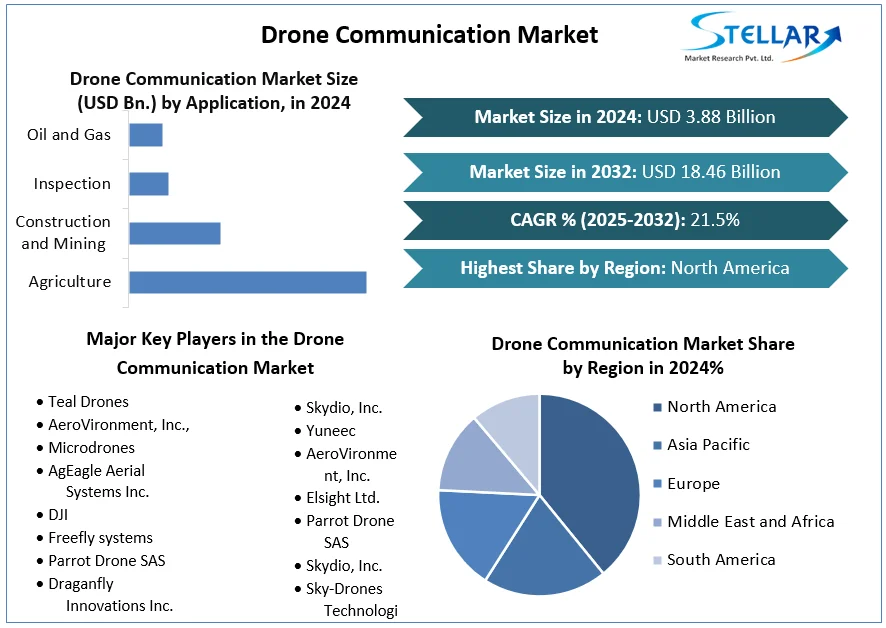
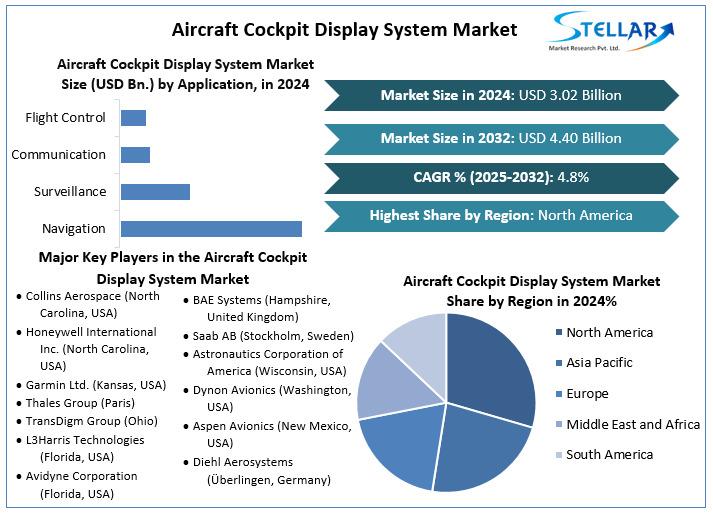
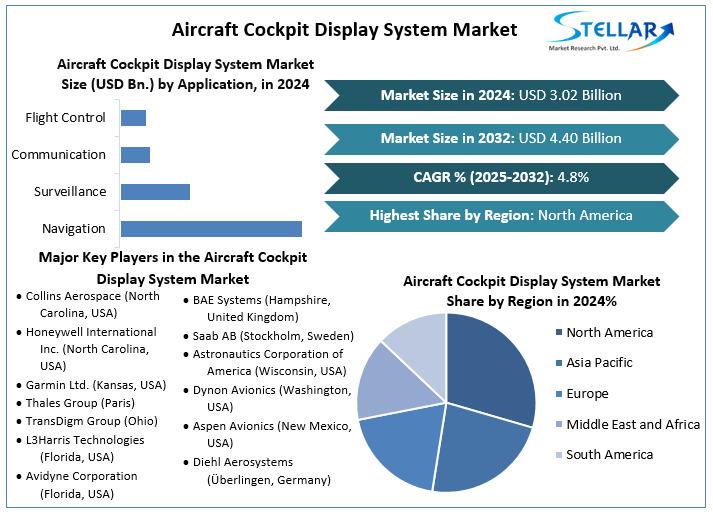
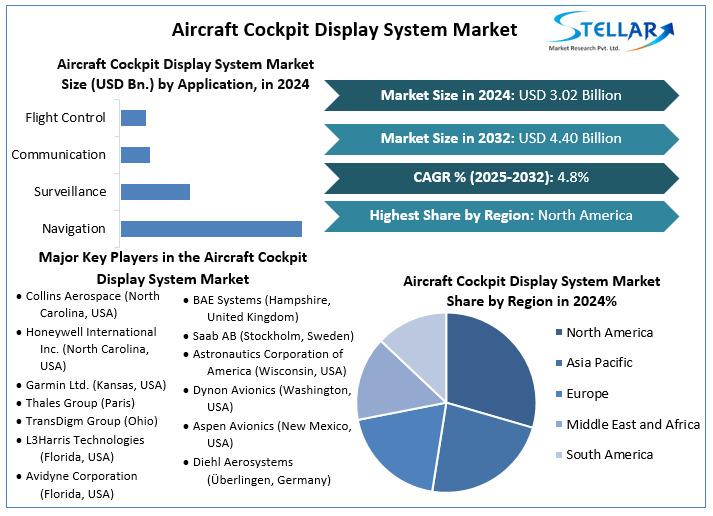
    The Aircraft Cockpit Display System (ACDS) market encompasses the development, production, and implementation of advanced electronic displays within aircraft cockpits. These vital systems present pilots with critical flight data for navigation, communication, and control, forming the nerve center for safe and efficient aircraft operation. According to the latest report, the market was valued at USD 3.02 Billion in 2024. With a steady Compound Annual Growth Rate (CAGR) of 4.8% forecast from 2025 to 2032, the total market revenue is expected to reach nearly USD 4.40 Billion by 2032. This growth underscores the aviation industry's ongoing shift towards digitalization and enhanced situational awareness.

    2. Market Growth Drivers & Opportunity
    The market's expansion is primarily fueled by two converging forces: technological innovation and stringent safety regulations. Advancements in high-resolution screens, graphics processing, and intuitive touch-screen interfaces—inspired by consumer electronics—are making cockpits more user-friendly and information-rich. These systems integrate augmented reality modules and sophisticated information management to enhance pilot performance in challenging conditions, such as degraded visual environments.

    Simultaneously, regulatory mandates from aviation authorities worldwide are accelerating the adoption of modern avionics. In regions like North America, agencies such as the Federal Aviation Administration (FAA) enforce standards that incentivize or require advanced displays to mitigate accident risks and enhance operational safety. A significant secondary driver is the retrofit market, particularly in the Asia-Pacific region, where aging commercial and military aircraft fleets are being upgraded with modern digital cockpits to extend service life and improve capabilities.

    About us

    Phase 3,Navale IT Zone, S.No. 51/2A/2,

    Office No. 202, 2nd floor,

    Near, Navale Brg,Narhe,

    Pune, Maharashtra 411041

    sales@stellarmr.com
    Aircraft Cockpit Display System Market Size To Grow At A CAGR Of 4.8% In The Forecast Period Of 2025-2032 Aircraft Cockpit Display System Market Soars Towards USD 4.4 Billion by 2032, Fueled by Digital Innovation and Safety Mandates Global Market Forecast Reveals Steady Growth as Advanced Avionics Become Critical for Modern Aviation A comprehensive new industry analysis projects a robust growth trajectory for the global Aircraft Cockpit Display System (ACDS) market, driven by relentless technological advancement and increasing regulatory focus on flight safety. As the primary interface between pilot and aircraft, these sophisticated systems are undergoing a rapid transformation from analog gauges to integrated digital glass cockpits. Purchase This Research Report at up to 30% Off @ https://www.stellarmr.com/report/req_sample/Aircraft-Cockpit-Display-System-Market/1993 1. Market Estimation & Definition The Aircraft Cockpit Display System (ACDS) market encompasses the development, production, and implementation of advanced electronic displays within aircraft cockpits. These vital systems present pilots with critical flight data for navigation, communication, and control, forming the nerve center for safe and efficient aircraft operation. According to the latest report, the market was valued at USD 3.02 Billion in 2024. With a steady Compound Annual Growth Rate (CAGR) of 4.8% forecast from 2025 to 2032, the total market revenue is expected to reach nearly USD 4.40 Billion by 2032. This growth underscores the aviation industry's ongoing shift towards digitalization and enhanced situational awareness. 2. Market Growth Drivers & Opportunity The market's expansion is primarily fueled by two converging forces: technological innovation and stringent safety regulations. Advancements in high-resolution screens, graphics processing, and intuitive touch-screen interfaces—inspired by consumer electronics—are making cockpits more user-friendly and information-rich. These systems integrate augmented reality modules and sophisticated information management to enhance pilot performance in challenging conditions, such as degraded visual environments. Simultaneously, regulatory mandates from aviation authorities worldwide are accelerating the adoption of modern avionics. In regions like North America, agencies such as the Federal Aviation Administration (FAA) enforce standards that incentivize or require advanced displays to mitigate accident risks and enhance operational safety. A significant secondary driver is the retrofit market, particularly in the Asia-Pacific region, where aging commercial and military aircraft fleets are being upgraded with modern digital cockpits to extend service life and improve capabilities. About us Phase 3,Navale IT Zone, S.No. 51/2A/2, Office No. 202, 2nd floor, Near, Navale Brg,Narhe, Pune, Maharashtra 411041 sales@stellarmr.com

    0 Commenti 0 condivisioni
  • Aircraft Cockpit Display System Market Size To Grow At A CAGR Of 4.8% In The Forecast Period Of 2025-2032

    Aircraft Cockpit Display System Market Soars: Technology & Safety Driving Industry Growth
    Market Definition & Overview
    The Aircraft Cockpit Display System Market encompasses all systems and components used to present critical flight, navigation, engine, and aircraft-status information to pilots in modern aircraft. These systems — commonly referred to as cockpit displays — include Primary Flight Displays (PFDs), Multi-Function Displays (MFDs), Engine Indication and Crew Alerting Systems (EICAS), Navigation Displays, and fully integrated glass cockpits that replace traditional analog instruments with advanced digital interfaces.

    Cockpit display systems are critical to aircraft safety, situational awareness, flight efficiency and pilot decision-making. They are used across a range of aircraft categories, including commercial airliners, regional and business jets, rotorcraft (helicopters), military platforms, and general aviation aircraft.

    With regulatory emphasis on pilot safety, rising air traffic volumes, upgrades to avionics, and growing demand for enhanced cockpit automation, the cockpit display system market is entering a phase of strong, long-term growth.

    Request Free Sample Report:https://www.stellarmr.com/report/req_sample/Aircraft-Cockpit-Display-System-Market/1993

    Market Estimation & Definition
    Cockpit display systems consist of:

    Primary Flight Displays (PFDs): showing attitude, altitude, airspeed and flight path data

    Multi-Function Displays (MFDs): presenting navigation, weather, traffic, systems data

    Engine/System Monitoring Displays: tracking engine performance and aircraft systems

    Glass Cockpit Suites: integrated digital display platforms replacing analog gauges

    After-Market Retrofit & Upgrade Kits: for legacy aircraft modernization

    The market includes OEM-installed systems on new aircraft and aftermarket retrofits for older fleets. It also accounts for services and support — such as installation, certification, maintenance, software upgrades, and training.

    Market Growth Drivers & Opportunities
    • Global Growth in Air Travel & Aircraft Deliveries
    Commercial aviation is experiencing sustained growth across many regions. Airlines continue to expand fleets to meet rising passenger demand, increasing the volume of new aircraft equipped with advanced cockpit displays.

    • Demand for Improved Flight Safety & Situational Awareness
    Cockpit display systems consolidate complex flight data into intuitive, easily interpretable visuals. This enhances pilot awareness, reduces workload, supports decision-making, and improves safety — factors that make these systems indispensable in both commercial and general aviation.

    • Retrofit Demand for Legacy Aircraft
    A significant portion of the global fleet consists of older aircraft with analog or hybrid cockpits. Operators are increasingly choosing to retrofit these platforms with digital cockpits to comply with current standards, improve reliability, and reduce maintenance costs — driving aftermarket growth.

    • Technological Advancements in Avionics Displays
    Cockpit display technology has advanced rapidly with high-resolution screens, wide-format displays, enhanced graphics, synthetic-vision features, touch-screen interfaces, and improved human-machine interaction (HMI). These innovations attract airline operators seeking performance and pilot usability improvements.

    About us

    Phase 3,Navale IT Zone, S.No. 51/2A/2,

    Office No. 202, 2nd floor,

    Near, Navale Brg,Narhe,

    Pune, Maharashtra 411041

    sales@stellarmr.com
    Aircraft Cockpit Display System Market Size To Grow At A CAGR Of 4.8% In The Forecast Period Of 2025-2032 Aircraft Cockpit Display System Market Soars: Technology & Safety Driving Industry Growth Market Definition & Overview The Aircraft Cockpit Display System Market encompasses all systems and components used to present critical flight, navigation, engine, and aircraft-status information to pilots in modern aircraft. These systems — commonly referred to as cockpit displays — include Primary Flight Displays (PFDs), Multi-Function Displays (MFDs), Engine Indication and Crew Alerting Systems (EICAS), Navigation Displays, and fully integrated glass cockpits that replace traditional analog instruments with advanced digital interfaces. Cockpit display systems are critical to aircraft safety, situational awareness, flight efficiency and pilot decision-making. They are used across a range of aircraft categories, including commercial airliners, regional and business jets, rotorcraft (helicopters), military platforms, and general aviation aircraft. With regulatory emphasis on pilot safety, rising air traffic volumes, upgrades to avionics, and growing demand for enhanced cockpit automation, the cockpit display system market is entering a phase of strong, long-term growth. Request Free Sample Report:https://www.stellarmr.com/report/req_sample/Aircraft-Cockpit-Display-System-Market/1993 Market Estimation & Definition Cockpit display systems consist of: Primary Flight Displays (PFDs): showing attitude, altitude, airspeed and flight path data Multi-Function Displays (MFDs): presenting navigation, weather, traffic, systems data Engine/System Monitoring Displays: tracking engine performance and aircraft systems Glass Cockpit Suites: integrated digital display platforms replacing analog gauges After-Market Retrofit & Upgrade Kits: for legacy aircraft modernization The market includes OEM-installed systems on new aircraft and aftermarket retrofits for older fleets. It also accounts for services and support — such as installation, certification, maintenance, software upgrades, and training. Market Growth Drivers & Opportunities • Global Growth in Air Travel & Aircraft Deliveries Commercial aviation is experiencing sustained growth across many regions. Airlines continue to expand fleets to meet rising passenger demand, increasing the volume of new aircraft equipped with advanced cockpit displays. • Demand for Improved Flight Safety & Situational Awareness Cockpit display systems consolidate complex flight data into intuitive, easily interpretable visuals. This enhances pilot awareness, reduces workload, supports decision-making, and improves safety — factors that make these systems indispensable in both commercial and general aviation. • Retrofit Demand for Legacy Aircraft A significant portion of the global fleet consists of older aircraft with analog or hybrid cockpits. Operators are increasingly choosing to retrofit these platforms with digital cockpits to comply with current standards, improve reliability, and reduce maintenance costs — driving aftermarket growth. • Technological Advancements in Avionics Displays Cockpit display technology has advanced rapidly with high-resolution screens, wide-format displays, enhanced graphics, synthetic-vision features, touch-screen interfaces, and improved human-machine interaction (HMI). These innovations attract airline operators seeking performance and pilot usability improvements. About us Phase 3,Navale IT Zone, S.No. 51/2A/2, Office No. 202, 2nd floor, Near, Navale Brg,Narhe, Pune, Maharashtra 411041 sales@stellarmr.com
    0 Commenti 0 condivisioni
  • Aircraft Cockpit Display System Market Size, Share, Price, Trends, Report, Forecast 2025-2032

    Aircraft Cockpit Display System Market — Overview
    The “Aircraft Cockpit Display System” (CDS) market refers to the design, manufacturing and supply of avionics displays used in aircraft cockpits: flight decks of commercial aircraft, business jets, rotorcraft (helicopters), and specialized/military aircraft. Cockpit displays include primary flight displays (PFDs), multi-function displays (MFDs), navigation displays, engine-instrument displays, and integrated glass-cockpit systems — effectively replacing older analog gauges with digital screens to present flight data, navigation, engine parameters, weather, terrain, and other mission-critical information.

    This market covers the hardware (LCD, LED, OLED or other avionics-grade screens), software/firmware (for flight data, navigation, avionics integration), installation and integration services, certification & compliance, and after-market services (upgrades, retrofits, maintenance). As new aircraft are built and older aircraft are modernized or retrofitted, demand for cockpit display systems increases globally.

    Request Free Sample Report:https://www.stellarmr.com/report/req_sample/Aircraft-Cockpit-Display-System-Market/1993

    Key Market Growth Drivers & Opportunities
    • Modernization of Aircraft Fleets & Shift to Glass Cockpits
    As airlines, private-jet operators, and helicopter operators replace older analog cockpits for enhanced safety, situational awareness, and regulatory compliance — the shift to digital “glass cockpits” drives demand for cockpit display systems. Digital displays — offering better ergonomics, readability, multiple data overlays, and integration — are preferred over legacy analog instruments.

    • Rising Global Commercial Aviation, Business Jet & Rotorcraft Demand
    Growth in commercial air travel, expansion of air routes, rising demand for business jets and increased helicopter use (for offshore, medical, urban air mobility) contribute to increased production of new aircraft — thereby increasing demand for integrated avionics including cockpit displays.

    • Retrofit & Upgrade Market: Extending Service Life of Older Aircraft
    Many operators seek to modernize older aircraft through upgrades rather than buying new ones — installing modern cockpit displays to improve safety, avionics compliance, and operational efficiency. This retrofit segment presents significant demand, especially in markets with older fleets.

    • Advances in Avionics Technology, Integration & Multifunctionality
    Modern cockpit display systems support high-resolution graphics, synthetic-vision, terrain-awareness, weather data, navigation overlays, traffic alerts (TCAS), engine/ system monitoring — increasing pilot situational awareness and flight safety. Demand for integrated multifunction displays (replacing multiple analog instruments) supports the market’s growth.

    • Regulatory & Safety Standards, Need for Reliable Avionics
    Stringent aviation safety regulations, certification requirements, and the need for reliable, durable avionics equipment drive adoption of certified cockpit display systems. Airlines and operators must comply with safety standards — prompting upgrades and investments in approved systems.

    Emerging Trends & What Lies Ahead
    Glass-Cockpit Retrofit Demand in Aging Fleets Worldwide — As operators aim to extend aircraft life and improve safety, retrofit of older aircraft with digital cockpit displays will remain a strong growth segment.

    Increasing Use in Business Jets, Helicopters & Specialized Aircraft — As demand grows for private jets, VIP transport, medical evacuation, offshore-service helicopters and utility aircraft, the requirement for modern, compact, avionics-grade cockpit displays will expand.


    About us

    Phase 3,Navale IT Zone, S.No. 51/2A/2,

    Office No. 202, 2nd floor,

    Near, Navale Brg,Narhe,

    Pune, Maharashtra 411041

    sales@stellarmr.com
    Aircraft Cockpit Display System Market Size, Share, Price, Trends, Report, Forecast 2025-2032 Aircraft Cockpit Display System Market — Overview The “Aircraft Cockpit Display System” (CDS) market refers to the design, manufacturing and supply of avionics displays used in aircraft cockpits: flight decks of commercial aircraft, business jets, rotorcraft (helicopters), and specialized/military aircraft. Cockpit displays include primary flight displays (PFDs), multi-function displays (MFDs), navigation displays, engine-instrument displays, and integrated glass-cockpit systems — effectively replacing older analog gauges with digital screens to present flight data, navigation, engine parameters, weather, terrain, and other mission-critical information. This market covers the hardware (LCD, LED, OLED or other avionics-grade screens), software/firmware (for flight data, navigation, avionics integration), installation and integration services, certification & compliance, and after-market services (upgrades, retrofits, maintenance). As new aircraft are built and older aircraft are modernized or retrofitted, demand for cockpit display systems increases globally. Request Free Sample Report:https://www.stellarmr.com/report/req_sample/Aircraft-Cockpit-Display-System-Market/1993 Key Market Growth Drivers & Opportunities • Modernization of Aircraft Fleets & Shift to Glass Cockpits As airlines, private-jet operators, and helicopter operators replace older analog cockpits for enhanced safety, situational awareness, and regulatory compliance — the shift to digital “glass cockpits” drives demand for cockpit display systems. Digital displays — offering better ergonomics, readability, multiple data overlays, and integration — are preferred over legacy analog instruments. • Rising Global Commercial Aviation, Business Jet & Rotorcraft Demand Growth in commercial air travel, expansion of air routes, rising demand for business jets and increased helicopter use (for offshore, medical, urban air mobility) contribute to increased production of new aircraft — thereby increasing demand for integrated avionics including cockpit displays. • Retrofit & Upgrade Market: Extending Service Life of Older Aircraft Many operators seek to modernize older aircraft through upgrades rather than buying new ones — installing modern cockpit displays to improve safety, avionics compliance, and operational efficiency. This retrofit segment presents significant demand, especially in markets with older fleets. • Advances in Avionics Technology, Integration & Multifunctionality Modern cockpit display systems support high-resolution graphics, synthetic-vision, terrain-awareness, weather data, navigation overlays, traffic alerts (TCAS), engine/ system monitoring — increasing pilot situational awareness and flight safety. Demand for integrated multifunction displays (replacing multiple analog instruments) supports the market’s growth. • Regulatory & Safety Standards, Need for Reliable Avionics Stringent aviation safety regulations, certification requirements, and the need for reliable, durable avionics equipment drive adoption of certified cockpit display systems. Airlines and operators must comply with safety standards — prompting upgrades and investments in approved systems. Emerging Trends & What Lies Ahead Glass-Cockpit Retrofit Demand in Aging Fleets Worldwide — As operators aim to extend aircraft life and improve safety, retrofit of older aircraft with digital cockpit displays will remain a strong growth segment. Increasing Use in Business Jets, Helicopters & Specialized Aircraft — As demand grows for private jets, VIP transport, medical evacuation, offshore-service helicopters and utility aircraft, the requirement for modern, compact, avionics-grade cockpit displays will expand. About us Phase 3,Navale IT Zone, S.No. 51/2A/2, Office No. 202, 2nd floor, Near, Navale Brg,Narhe, Pune, Maharashtra 411041 sales@stellarmr.com
    0 Commenti 0 condivisioni
  • Aircraft Cockpit Display System Market Size To Grow At A CAGR Of 4.8% In The Forecast Period Of 2025-2032

    Aircraft Cockpit Display System Market Soars: Innovation & Safety Driving Growth
    Market Estimation & Definition
    Aircraft cockpit display systems (CDS) are advanced avionics solutions that provide pilots with real-time flight data, navigation information, weather updates, and critical system alerts through integrated digital displays. Replacing traditional analog gauges, modern cockpit display systems enhance situational awareness, flight safety, and operational efficiency in commercial, military, and general aviation aircraft.

    The global aircraft cockpit display system market encompasses primary flight displays (PFDs), multi-function displays (MFDs), electronic flight instrument systems (EFIS), head-up displays (HUDs), and touch-based interface modules. Increasing adoption of digital avionics, rising commercial and defense aircraft production, and stringent safety regulations are driving strong market growth.

    Request Free sample Report:https://www.stellarmr.com/report/req_sample/Aircraft-Cockpit-Display-System-Market/1993

    Market Growth Drivers & Opportunities
    1. Growth in Commercial Aircraft Fleet
    The rising number of commercial flights and expansion of global airline fleets have boosted demand for cockpit display systems. Airlines are investing in next-generation avionics to enhance operational efficiency, reduce pilot workload, and ensure adherence to global aviation safety standards.

    2. Advancements in Digital Avionics
    Transition from analog to digital display systems has led to demand for EFIS, HUDs, and multifunction displays, offering better integration, high-resolution imaging, and enhanced navigation capabilities. Advanced avionics systems improve situational awareness and safety in all flight phases.

    3. Defense and Military Aircraft Modernization
    Modern military aircraft increasingly rely on cockpit display systems for mission-critical operations, tactical awareness, and real-time data integration. Upgrades in fighter jets, transport aircraft, and UAVs are major growth contributors.

    4. Enhanced Pilot Efficiency & Reduced Workload
    Cockpit display systems streamline information, automate alerts, and integrate multiple data sources into centralized screens, reducing pilot fatigue and improving decision-making under complex flight conditions.

    5. Replacement & Retrofit Opportunities
    Aging aircraft in both commercial and defense fleets present a lucrative retrofit market, with operators upgrading older analog or outdated digital systems to modern cockpit display solutions.

    What Lies Ahead: Emerging Trends Shaping the Future
    Touchscreen & Gesture-Based Displays
    Next-generation cockpit displays are incorporating touchscreens, gesture controls, and voice commands, enhancing pilot interaction and reducing dependence on traditional physical controls.

    Augmented Reality & Enhanced HUDs
    Augmented reality overlays on head-up displays provide real-time flight guidance, terrain awareness, and obstacle detection, improving situational awareness and safety.

    Integration with Aircraft Data Networks
    Advanced cockpit display systems integrate seamlessly with avionics networks, flight management systems (FMS), and electronic flight bags (EFBs), offering centralized access to critical operational data.

    Lightweight, Energy-Efficient Displays
    Development of lightweight, low-power, and high-resolution displays is crucial for aircraft efficiency, reducing energy consumption and overall aircraft weight.

    Cybersecurity & Data Integrity Enhancements
    As cockpit systems become more networked, ensuring data integrity and protecting avionics from cyber threats is a key focus for manufacturers and operators.

    Expansion in UAVs & Civil Aviation Automation
    With the growth of unmanned aerial vehicles (UAVs) and autonomous aircraft, cockpit display systems adapted for remote monitoring and automated flight control are emerging as a significant growth segment.

    Segmentation Analysis
    Based on typical segmentation in cockpit display system reports:

    By Display Type

    Primary Flight Displays (PFD)

    Multi-Function Displays (MFD)

    Head-Up Displays (HUD)

    Enhanced Vision Systems (EVS)

    Touchscreen / Interactive Displays

    By Aircraft Type

    Commercial Aircraft (passenger jets, regional jets)

    Military Aircraft (fighter jets, transport, trainer aircraft)

    General Aviation Aircraft (private jets, helicopters, UAVs)

    By Component

    Display Screens (LCD, LED, OLED, TFT)

    Processors & Graphics Modules

    Sensors & Integrated Avionics Units


    About us
    Phase 3,Navale IT Zone, S.No. 51/2A/2,

    Office No. 202, 2nd floor,

    Near, Navale Brg,Narhe,

    Pune, Maharashtra 411041

    sales@stellarmr.com
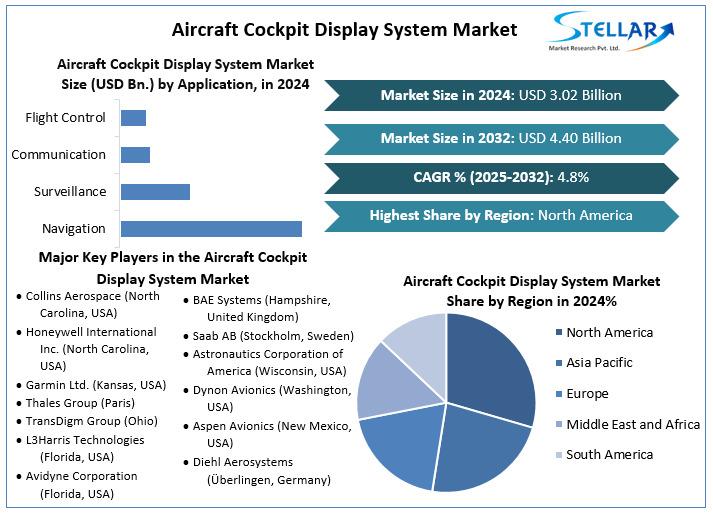
    Aircraft Cockpit Display System Market Size To Grow At A CAGR Of 4.8% In The Forecast Period Of 2025-2032 Aircraft Cockpit Display System Market Soars: Innovation & Safety Driving Growth Market Estimation & Definition Aircraft cockpit display systems (CDS) are advanced avionics solutions that provide pilots with real-time flight data, navigation information, weather updates, and critical system alerts through integrated digital displays. Replacing traditional analog gauges, modern cockpit display systems enhance situational awareness, flight safety, and operational efficiency in commercial, military, and general aviation aircraft. The global aircraft cockpit display system market encompasses primary flight displays (PFDs), multi-function displays (MFDs), electronic flight instrument systems (EFIS), head-up displays (HUDs), and touch-based interface modules. Increasing adoption of digital avionics, rising commercial and defense aircraft production, and stringent safety regulations are driving strong market growth. Request Free sample Report:https://www.stellarmr.com/report/req_sample/Aircraft-Cockpit-Display-System-Market/1993 Market Growth Drivers & Opportunities 1. Growth in Commercial Aircraft Fleet The rising number of commercial flights and expansion of global airline fleets have boosted demand for cockpit display systems. Airlines are investing in next-generation avionics to enhance operational efficiency, reduce pilot workload, and ensure adherence to global aviation safety standards. 2. Advancements in Digital Avionics Transition from analog to digital display systems has led to demand for EFIS, HUDs, and multifunction displays, offering better integration, high-resolution imaging, and enhanced navigation capabilities. Advanced avionics systems improve situational awareness and safety in all flight phases. 3. Defense and Military Aircraft Modernization Modern military aircraft increasingly rely on cockpit display systems for mission-critical operations, tactical awareness, and real-time data integration. Upgrades in fighter jets, transport aircraft, and UAVs are major growth contributors. 4. Enhanced Pilot Efficiency & Reduced Workload Cockpit display systems streamline information, automate alerts, and integrate multiple data sources into centralized screens, reducing pilot fatigue and improving decision-making under complex flight conditions. 5. Replacement & Retrofit Opportunities Aging aircraft in both commercial and defense fleets present a lucrative retrofit market, with operators upgrading older analog or outdated digital systems to modern cockpit display solutions. What Lies Ahead: Emerging Trends Shaping the Future Touchscreen & Gesture-Based Displays Next-generation cockpit displays are incorporating touchscreens, gesture controls, and voice commands, enhancing pilot interaction and reducing dependence on traditional physical controls. Augmented Reality & Enhanced HUDs Augmented reality overlays on head-up displays provide real-time flight guidance, terrain awareness, and obstacle detection, improving situational awareness and safety. Integration with Aircraft Data Networks Advanced cockpit display systems integrate seamlessly with avionics networks, flight management systems (FMS), and electronic flight bags (EFBs), offering centralized access to critical operational data. Lightweight, Energy-Efficient Displays Development of lightweight, low-power, and high-resolution displays is crucial for aircraft efficiency, reducing energy consumption and overall aircraft weight. Cybersecurity & Data Integrity Enhancements As cockpit systems become more networked, ensuring data integrity and protecting avionics from cyber threats is a key focus for manufacturers and operators. Expansion in UAVs & Civil Aviation Automation With the growth of unmanned aerial vehicles (UAVs) and autonomous aircraft, cockpit display systems adapted for remote monitoring and automated flight control are emerging as a significant growth segment. Segmentation Analysis Based on typical segmentation in cockpit display system reports: By Display Type Primary Flight Displays (PFD) Multi-Function Displays (MFD) Head-Up Displays (HUD) Enhanced Vision Systems (EVS) Touchscreen / Interactive Displays By Aircraft Type Commercial Aircraft (passenger jets, regional jets) Military Aircraft (fighter jets, transport, trainer aircraft) General Aviation Aircraft (private jets, helicopters, UAVs) By Component Display Screens (LCD, LED, OLED, TFT) Processors & Graphics Modules Sensors & Integrated Avionics Units About us Phase 3,Navale IT Zone, S.No. 51/2A/2, Office No. 202, 2nd floor, Near, Navale Brg,Narhe, Pune, Maharashtra 411041 sales@stellarmr.com

    0 Commenti 0 condivisioni
  • Competitive Positioning of Key North America Tactical Communication Providers 2028

    Get a sample PDF of the report – https://www.businessmarketinsights.com/sample/BMIRE00025647?utm_source=Blog&utm_medium=10640

    The tactical communication market in North America is expected to grow from US$ 6,715.26 million in 2021 to US$ 11,172.21 million by 2028. It is estimated to grow at a CAGR of 7.6% from 2021 to 2028.

    Get Full Report: https://www.businessmarketinsights.com/reports/north-america-tactical-communication-market

    The aerospace industry and defense forces use advanced communication systems to facilitate effective and continuous contact between personnel at different sites and the base station or ground station. The defense industry's top priority is the privacy and security of tactical communications. Defense forces require long distance communications to transfer real-time information to the troops. They rely on a complex and large network of physical components and software for their communication capabilities.
    Tactical communication is one of the military communication systems in which information of any kind, especially orders and military intelligence, is conveyed from one command, person, or place to another on a battlefield, particularly during the conduct of combat.
    Competitive Positioning of Key North America Tactical Communication Providers 2028 Get a sample PDF of the report – https://www.businessmarketinsights.com/sample/BMIRE00025647?utm_source=Blog&utm_medium=10640 The tactical communication market in North America is expected to grow from US$ 6,715.26 million in 2021 to US$ 11,172.21 million by 2028. It is estimated to grow at a CAGR of 7.6% from 2021 to 2028. Get Full Report: https://www.businessmarketinsights.com/reports/north-america-tactical-communication-market The aerospace industry and defense forces use advanced communication systems to facilitate effective and continuous contact between personnel at different sites and the base station or ground station. The defense industry's top priority is the privacy and security of tactical communications. Defense forces require long distance communications to transfer real-time information to the troops. They rely on a complex and large network of physical components and software for their communication capabilities. Tactical communication is one of the military communication systems in which information of any kind, especially orders and military intelligence, is conveyed from one command, person, or place to another on a battlefield, particularly during the conduct of combat.
    0 Commenti 0 condivisioni
  • EARN MONEY WITH NEW MESSENGER APP PUNK PANDA.
    www.punkpanda.io
    Download the app from playstore and use my invite code 13954200
    You can earn in 12 levels.
    PandaApp is a military grade encrypted communication app created with personal privacy and data security.
    App starts and soon PPM tokens will go on exchange.
    1 PPM - 1.20 USD
    https://login.punkpandafarm.com/punk_register/register.php?sxGi3Lyp=PP66912
    EARN MONEY WITH NEW MESSENGER APP PUNK PANDA. www.punkpanda.io Download the app from playstore and use my invite code 13954200 You can earn in 12 levels. PandaApp is a military grade encrypted communication app created with personal privacy and data security. App starts and soon PPM tokens will go on exchange. 1 PPM - 1.20 USD https://login.punkpandafarm.com/punk_register/register.php?sxGi3Lyp=PP66912
    home - Punkpanda
    [vc_row gap=”35″ row_content_width=”grid” disable_background_image=”” content_text_aligment=”left” simple_background_color=”#ecedf2″ css=”.vc_custom_1637243244366{padding-top: 120px !important;padding-bottom: 120px !important;background-position: center !important;background-repeat: no-repeat !important;background-size: cover !important;}” simple_background_image=”6008″ el_class=”bg-cover”][vc_column offset=”vc_col-lg-8 vc_col-md-8 vc_col-xs-12″ el_class=”padding-top-0″][vc_single_image image=”6010″ img_size=”full” css=”.vc_custom_1637242632541{margin-left: -15px !important;}”][/vc_column][vc_column offset=”vc_col-lg-4 vc_col-md-4 vc_col-xs-12″ css=”.vc_custom_1637247386989{padding-top: 0px !important;padding-right: 0px !important;padding-bottom: 0px !important;padding-left: 0px !important;}” […]
    Like
    4
    0 Commenti 13 condivisioni