

• Global Crop Protection Chemicals Market to Reach USD 109.16 Billion by 2032: Trends & Forecast

    Global Crop Protection Chemicals Market: Catalyzing Agricultural Productivity and Food Security

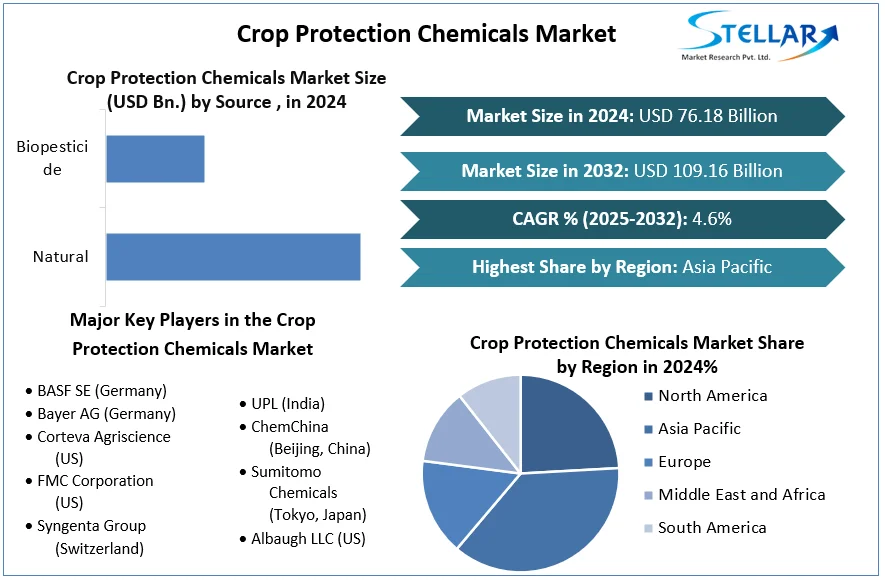
    The Crop Protection Chemicals Market is witnessing sustained growth as agricultural producers seek effective solutions to protect crops from pests, weeds, and diseases — key threats to food security and yield stability. According to industry estimates, the market was valued at around USD 76.18 billion in 2024 and is expected to reach approximately USD 109.16 billion by 2032, growing at a compound annual growth rate (CAGR) of roughly 4.6 % during the forecast period of 2025–2032. This projected expansion reflects rising demand for advanced crop protection solutions and an increasing global need for higher agricultural productivity.

    Request Free Sample Report : https://www.stellarmr.com/report/req_sample/crop-protection-chemicals-market/2445

    Market Estimation & Definition

    Crop protection chemicals are agrochemicals used to guard agricultural yields against crop‑destroying agents such as weeds, insects, fungi, and other pests. These chemicals include herbicides, insecticides, fungicides, biopesticides, and other specialty formulations that help stabilize yields and improve crop quality. By preventing losses caused by biological and environmental stresses, crop protection chemicals play a central role in modern agriculture — enhancing food production capacity while contributing to the economic viability of farming operations.

    The importance of these chemicals increases as farmers aim to meet the rising global demand for food, driven by population growth and changing dietary patterns. In addition to traditional chemicals, biopesticides and natural crop protection solutions are gaining attention for their reduced environmental impact and alignment with sustainable agriculture practices.

    Market Growth Drivers & Opportunity

    One of the primary drivers for the crop protection chemicals market is the growing global population and the corresponding need to increase crop yields and food supply. As the world’s population continues to rise, agricultural systems must produce more food from limited arable land, intensifying the need for effective pest and weed control solutions that optimize crop performance.

    Climate change — with its impacts on pest prevalence, weed resilience, and crop disease spread — exacerbates agricultural vulnerabilities, pushing farmers to adopt advanced protection chemicals to sustain yields under increasingly unpredictable conditions. Extreme weather events and shifting pest patterns challenge crop resilience, reinforcing the role of crop protection inputs in maintaining production stability.

    Opportunities in the market also arise from technological integration and precision agriculture tools that improve the targeting and efficiency of chemical applications. Drones, automated sprayers, and IoT‑linked monitoring systems help reduce chemical usage while maximizing protective effects. In addition, continued research into biopesticides and environmentally safer formulations presents growth prospects as regulatory frameworks and consumer preferences evolve toward sustainability.

    Request Free Sample Report : https://www.stellarmr.com/report/req_sample/crop-protection-chemicals-market/2445

    What Lies Ahead: Emerging Trends Shaping the Future

    The crop protection market is evolving with several emerging trends that will shape its future:

    Biopesticide Adoption: With increased awareness of environmental and health impacts, biopesticides and natural crop protection solutions are poised for higher adoption. These products offer reduced ecological footprints and align with sustainability goals embraced by many agribusinesses and policy frameworks.

    Precision Agriculture Integration: Advanced farming technologies — including GPS‑guided application, drones, and smart sensors — are enabling more precise chemical deployment, reducing waste and environmental exposure while improving efficacy.

    Formulation Innovation: Enhanced product formulations, such as controlled‑release and microencapsulated chemicals, are improving target specificity, reducing application frequency, and supporting integrated pest management strategies.

    Regulatory and Sustainability Shifts: Regulatory shifts toward tighter safety standards and sustainable practices are encouraging investment in safer, more effective crop protection solutions that meet both environmental and yield goals.
    About us

    Phase 3,Navale IT Zone, S.No. 51/2A/2,

    Office No. 202, 2nd floor,

    Near, Navale Brg,Narhe,

    Pune, Maharashtra 411041

    sales@stellarmr.com
    Global Crop Protection Chemicals Market to Reach USD 109.16 Billion by 2032: Trends & Forecast Global Crop Protection Chemicals Market: Catalyzing Agricultural Productivity and Food Security The Crop Protection Chemicals Market is witnessing sustained growth as agricultural producers seek effective solutions to protect crops from pests, weeds, and diseases — key threats to food security and yield stability. According to industry estimates, the market was valued at around USD 76.18 billion in 2024 and is expected to reach approximately USD 109.16 billion by 2032, growing at a compound annual growth rate (CAGR) of roughly 4.6 % during the forecast period of 2025–2032. This projected expansion reflects rising demand for advanced crop protection solutions and an increasing global need for higher agricultural productivity. Request Free Sample Report : https://www.stellarmr.com/report/req_sample/crop-protection-chemicals-market/2445 Market Estimation & Definition Crop protection chemicals are agrochemicals used to guard agricultural yields against crop‑destroying agents such as weeds, insects, fungi, and other pests. These chemicals include herbicides, insecticides, fungicides, biopesticides, and other specialty formulations that help stabilize yields and improve crop quality. By preventing losses caused by biological and environmental stresses, crop protection chemicals play a central role in modern agriculture — enhancing food production capacity while contributing to the economic viability of farming operations. The importance of these chemicals increases as farmers aim to meet the rising global demand for food, driven by population growth and changing dietary patterns. In addition to traditional chemicals, biopesticides and natural crop protection solutions are gaining attention for their reduced environmental impact and alignment with sustainable agriculture practices. Market Growth Drivers & Opportunity One of the primary drivers for the crop protection chemicals market is the growing global population and the corresponding need to increase crop yields and food supply. As the world’s population continues to rise, agricultural systems must produce more food from limited arable land, intensifying the need for effective pest and weed control solutions that optimize crop performance. Climate change — with its impacts on pest prevalence, weed resilience, and crop disease spread — exacerbates agricultural vulnerabilities, pushing farmers to adopt advanced protection chemicals to sustain yields under increasingly unpredictable conditions. Extreme weather events and shifting pest patterns challenge crop resilience, reinforcing the role of crop protection inputs in maintaining production stability. Opportunities in the market also arise from technological integration and precision agriculture tools that improve the targeting and efficiency of chemical applications. Drones, automated sprayers, and IoT‑linked monitoring systems help reduce chemical usage while maximizing protective effects. In addition, continued research into biopesticides and environmentally safer formulations presents growth prospects as regulatory frameworks and consumer preferences evolve toward sustainability. Request Free Sample Report : https://www.stellarmr.com/report/req_sample/crop-protection-chemicals-market/2445 What Lies Ahead: Emerging Trends Shaping the Future The crop protection market is evolving with several emerging trends that will shape its future: Biopesticide Adoption: With increased awareness of environmental and health impacts, biopesticides and natural crop protection solutions are poised for higher adoption. These products offer reduced ecological footprints and align with sustainability goals embraced by many agribusinesses and policy frameworks. Precision Agriculture Integration: Advanced farming technologies — including GPS‑guided application, drones, and smart sensors — are enabling more precise chemical deployment, reducing waste and environmental exposure while improving efficacy. Formulation Innovation: Enhanced product formulations, such as controlled‑release and microencapsulated chemicals, are improving target specificity, reducing application frequency, and supporting integrated pest management strategies. Regulatory and Sustainability Shifts: Regulatory shifts toward tighter safety standards and sustainable practices are encouraging investment in safer, more effective crop protection solutions that meet both environmental and yield goals. About us Phase 3,Navale IT Zone, S.No. 51/2A/2, Office No. 202, 2nd floor, Near, Navale Brg,Narhe, Pune, Maharashtra 411041 sales@stellarmr.com
    0 Comentários 0 Compartilhamentos
  • Pharmaceuticals, Agrochemicals & Electronics: Top End-Users Driving Specialty Chemicals Demand

    Global Specialty and Fine Chemicals Market Poised to Surpass USD 1 Trillion by 2032, Driven by Diverse Industrial Demand and Innovation

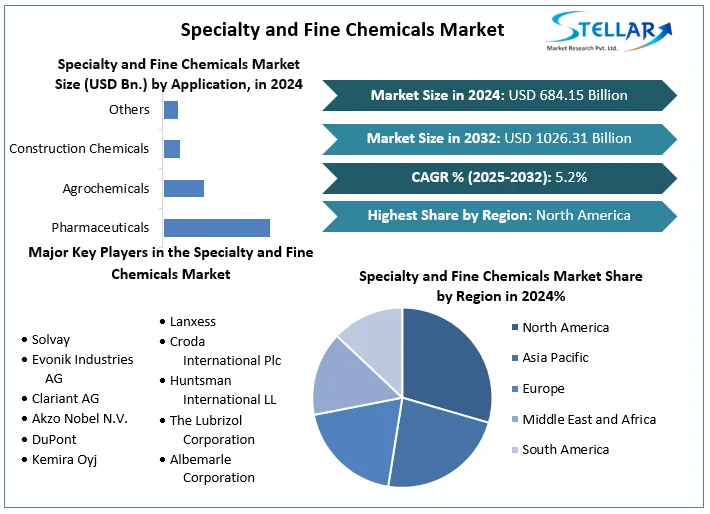
    A comprehensive global market analysis forecasts a steady expansion in the specialty and fine chemicals sector, projected to grow from USD 684.15 billion in 2024 to USD 1,026.31 billion by 2032, advancing at a compound annual growth rate (CAGR) of 5.2%. This sustained growth is anchored in the essential, high-value role these chemicals play across a vast spectrum of modern industries, from life-saving pharmaceuticals to advanced agriculture and sustainable materials. The market's evolution is primarily driven by shifting consumer preferences for high-quality, innovative end-products and the relentless demand for technological advancement across manufacturing sectors.

    Purchase This Research Report at up to 30% Off @ https://www.stellarmr.com/report/req_sample/Specialty-and-Fine-Chemicals-Market/1525

    Market Estimation & Definition

    The specialty and fine chemicals market encompasses high-value, low-volume chemical substances manufactured with precise specifications for their performance or function. Unlike commodity chemicals, these are complex molecules produced in specialized facilities for specific applications, acting as critical enablers of innovation and quality in downstream products. With a valuation of USD 684.15 billion in 2024, the market's core function is to provide tailored solutions that enhance product properties, efficiency, and sustainability. The projected growth to over USD 1 trillion by 2032 underscores its indispensable role as a cornerstone of modern industrial and consumer goods manufacturing.

    Market Growth Drivers & Opportunities

    The primary growth driver is the pervasive demand for enhanced performance and innovation across all end-user industries. Consumer preferences for distinctive, high-quality goods—from premium pharmaceuticals and agrochemicals to specialized polymers for electronics—directly translate into demand for advanced chemical ingredients. A significant opportunity lies in aligning with global mega-trends, particularly sustainability and health consciousness. This creates burgeoning markets for bio-based chemicals, eco-friendly dyes and pigments, and high-purity ingredients for organic agrochemicals and clean-label personal care products. Furthermore, the expansion of e-commerce and improved global distribution networks have increased accessibility to these specialized chemicals, enabling smaller producers to reach a global market and fostering greater diversification.

    What Lies Ahead: Emerging Trends Shaping the Future

    The future of the specialty and fine chemicals market will be defined by its response to sustainability mandates and digital transformation. Expect accelerated development of green chemistry solutions, including bio-derived alternatives to petrochemical-based products and processes that minimize environmental impact. Precision and customization will become paramount, with chemicals increasingly tailored for hyper-specific applications in areas like targeted drug delivery or high-efficiency crop protection. The industry will also leverage digitalization and Industry 4.0 for smarter production, supply chain resilience, and the development of data-driven chemical solutions. However, navigating complex global regulatory landscapes and managing volatile raw material costs amid geopolitical uncertainties will remain persistent challenges.

    Purchase This Research Report at up to 30% Off @ https://www.stellarmr.com/report/req_sample/Specialty-and-Fine-Chemicals-Market/1525

    Segmentation Analysis

    The market is segmented by Product Type and Application, highlighting its vast industrial footprint.

    About us

    Phase 3,Navale IT Zone, S.No. 51/2A/2,

    Office No. 202, 2nd floor,

    Near, Navale Brg,Narhe,

    Pune, Maharashtra 411041

    sales@stellarmr.com
    Pharmaceuticals, Agrochemicals & Electronics: Top End-Users Driving Specialty Chemicals Demand Global Specialty and Fine Chemicals Market Poised to Surpass USD 1 Trillion by 2032, Driven by Diverse Industrial Demand and Innovation A comprehensive global market analysis forecasts a steady expansion in the specialty and fine chemicals sector, projected to grow from USD 684.15 billion in 2024 to USD 1,026.31 billion by 2032, advancing at a compound annual growth rate (CAGR) of 5.2%. This sustained growth is anchored in the essential, high-value role these chemicals play across a vast spectrum of modern industries, from life-saving pharmaceuticals to advanced agriculture and sustainable materials. The market's evolution is primarily driven by shifting consumer preferences for high-quality, innovative end-products and the relentless demand for technological advancement across manufacturing sectors. Purchase This Research Report at up to 30% Off @ https://www.stellarmr.com/report/req_sample/Specialty-and-Fine-Chemicals-Market/1525 Market Estimation & Definition The specialty and fine chemicals market encompasses high-value, low-volume chemical substances manufactured with precise specifications for their performance or function. Unlike commodity chemicals, these are complex molecules produced in specialized facilities for specific applications, acting as critical enablers of innovation and quality in downstream products. With a valuation of USD 684.15 billion in 2024, the market's core function is to provide tailored solutions that enhance product properties, efficiency, and sustainability. The projected growth to over USD 1 trillion by 2032 underscores its indispensable role as a cornerstone of modern industrial and consumer goods manufacturing. Market Growth Drivers & Opportunities The primary growth driver is the pervasive demand for enhanced performance and innovation across all end-user industries. Consumer preferences for distinctive, high-quality goods—from premium pharmaceuticals and agrochemicals to specialized polymers for electronics—directly translate into demand for advanced chemical ingredients. A significant opportunity lies in aligning with global mega-trends, particularly sustainability and health consciousness. This creates burgeoning markets for bio-based chemicals, eco-friendly dyes and pigments, and high-purity ingredients for organic agrochemicals and clean-label personal care products. Furthermore, the expansion of e-commerce and improved global distribution networks have increased accessibility to these specialized chemicals, enabling smaller producers to reach a global market and fostering greater diversification. What Lies Ahead: Emerging Trends Shaping the Future The future of the specialty and fine chemicals market will be defined by its response to sustainability mandates and digital transformation. Expect accelerated development of green chemistry solutions, including bio-derived alternatives to petrochemical-based products and processes that minimize environmental impact. Precision and customization will become paramount, with chemicals increasingly tailored for hyper-specific applications in areas like targeted drug delivery or high-efficiency crop protection. The industry will also leverage digitalization and Industry 4.0 for smarter production, supply chain resilience, and the development of data-driven chemical solutions. However, navigating complex global regulatory landscapes and managing volatile raw material costs amid geopolitical uncertainties will remain persistent challenges. Purchase This Research Report at up to 30% Off @ https://www.stellarmr.com/report/req_sample/Specialty-and-Fine-Chemicals-Market/1525 Segmentation Analysis The market is segmented by Product Type and Application, highlighting its vast industrial footprint. About us Phase 3,Navale IT Zone, S.No. 51/2A/2, Office No. 202, 2nd floor, Near, Navale Brg,Narhe, Pune, Maharashtra 411041 sales@stellarmr.com
    0 Comentários 0 Compartilhamentos
  • Market Dynamics & Future Forecast: Malaysia’s Ethanolamine Industry Outlook 2025–2032

    Malaysia Ethanolamine Market to Surpass USD 884 Million by 2032, Driven by Industrial Demand and MEA Dominance
    For Immediate Release

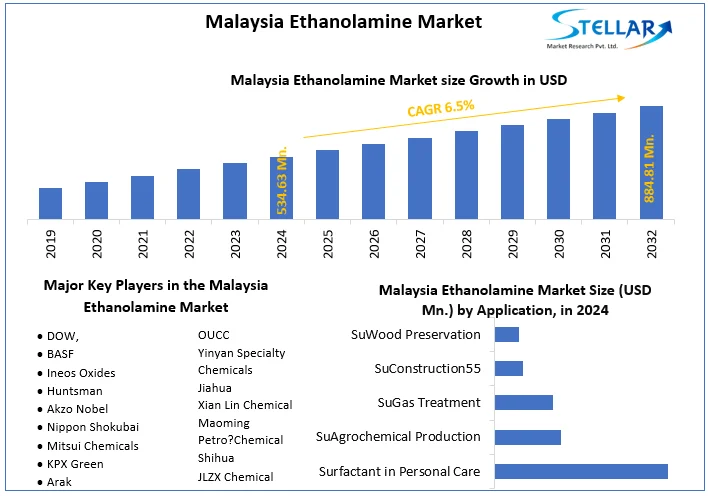
    KUALA LUMPUR, Malaysia — The Malaysia ethanolamine market, a cornerstone of the country's industrial chemical sector, is poised for robust growth over the coming decade. According to a comprehensive industry analysis, the market, valued at USD 534.63 million in 2024, is projected to expand at a compound annual growth rate (CAGR) of 6.5%, reaching an estimated USD 884.81 million by 2032. This sustained growth is primarily fueled by the compound's versatile applications across expanding end-use industries, including personal care, construction, and agriculture, within Malaysia's dynamic economy.

    Purchase This Research Report at up to 30% Off @ https://www.stellarmr.com/report/req_sample/Malaysia-Ethanolamine-Market/1705

    Market Definition and Core Growth Drivers

    Ethanolamines are a group of chemicals (Monoethanolamine, Diethanolamine, Triethanolamine) synthesized from ammonia and ethylene oxide, serving as critical intermediates in numerous industrial processes. The market's expansion is underpinned by several interconnected factors. Foremost is the rising demand from key end-use sectors such as construction, textiles, and oil & gas. As these foundational industries grow in Malaysia, their reliance on ethanolamines for applications like gas treatment, surfactants, and agrochemicals escalates correspondingly.


    About Us

    Phase 3,Navale IT Zone, S.No. 51/2A/2,

    Office No. 202, 2nd floor,

    Near, Navale Brg,Narhe,

    Pune, Maharashtra 411041

    sales@stellarmr.com
    Market Dynamics & Future Forecast: Malaysia’s Ethanolamine Industry Outlook 2025–2032 Malaysia Ethanolamine Market to Surpass USD 884 Million by 2032, Driven by Industrial Demand and MEA Dominance For Immediate Release KUALA LUMPUR, Malaysia — The Malaysia ethanolamine market, a cornerstone of the country's industrial chemical sector, is poised for robust growth over the coming decade. According to a comprehensive industry analysis, the market, valued at USD 534.63 million in 2024, is projected to expand at a compound annual growth rate (CAGR) of 6.5%, reaching an estimated USD 884.81 million by 2032. This sustained growth is primarily fueled by the compound's versatile applications across expanding end-use industries, including personal care, construction, and agriculture, within Malaysia's dynamic economy. Purchase This Research Report at up to 30% Off @ https://www.stellarmr.com/report/req_sample/Malaysia-Ethanolamine-Market/1705 Market Definition and Core Growth Drivers Ethanolamines are a group of chemicals (Monoethanolamine, Diethanolamine, Triethanolamine) synthesized from ammonia and ethylene oxide, serving as critical intermediates in numerous industrial processes. The market's expansion is underpinned by several interconnected factors. Foremost is the rising demand from key end-use sectors such as construction, textiles, and oil & gas. As these foundational industries grow in Malaysia, their reliance on ethanolamines for applications like gas treatment, surfactants, and agrochemicals escalates correspondingly. About Us Phase 3,Navale IT Zone, S.No. 51/2A/2, Office No. 202, 2nd floor, Near, Navale Brg,Narhe, Pune, Maharashtra 411041 sales@stellarmr.com
    0 Comentários 0 Compartilhamentos
  • Specialty Chemicals : Fused Magnesium Oxide Market what makes them so demanding?

    The European Fused Magnesium Oxide (Fused MgO) market demonstrates robust expansion, with its valuation reaching US$ 225.84 million in 2024. According to the latest industry analysis, the market is anticipated to grow at a CAGR of 6.45%, surpassing US$ 328.46 million by 2030.

    Download FREE Sample Report: https://www.24chemicalresearch.com/download-sample/285585/europe-fused-magnesium-oxide-forecast-market-2025-2030-65
    Specialty Chemicals : Fused Magnesium Oxide Market what makes them so demanding? The European Fused Magnesium Oxide (Fused MgO) market demonstrates robust expansion, with its valuation reaching US$ 225.84 million in 2024. According to the latest industry analysis, the market is anticipated to grow at a CAGR of 6.45%, surpassing US$ 328.46 million by 2030. Download FREE Sample Report: https://www.24chemicalresearch.com/download-sample/285585/europe-fused-magnesium-oxide-forecast-market-2025-2030-65
    Sample Report: Europe Fused Magnesium Oxide Market, Outlook and Forecast 2025-2032
    Download Sample Report PDF : Europe Fused Magnesium Oxide market was valued at USD 225.84 million in 2024 and is projected to reach USD 328.46 million by 2030, at a CAGR of 6.45%.
    0 Comentários 0 Compartilhamentos
  • In the healthcare industry, the need for reliable, high-performance materials is critical. Spunlace Fabric for Medical Use, developed by Zhejiang Aojia Nonwoven Technology Co., Ltd., has become a pivotal material in medical applications, particularly in wound dressing and face mask cloth. Known for its unique combination of softness, absorbency, and durability, Spunlace fabric is setting new standards in medical textiles, providing superior solutions for healthcare professionals and patients alike.
    Spunlace Fabric For Medical Use
    https://www.spunlacenon-wovenfabric.com/medical-series/
    What is Spunlace Fabric for Medical Use?

    Spunlace Fabric for Medical Use is a nonwoven fabric produced using the innovative water-jet bonding technique. This method uses high-pressure water jets to entangle fibers together, creating a fabric that is both strong and soft, without the need for traditional weaving or knitting. The result is a fabric that is highly absorbent, hypoallergenic, and gentle on the skin, making it ideal for medical applications like wound dressing and face mask cloth.

    Produced by Zhejiang Aojia Nonwoven Technology Co., Ltd., a leader in nonwoven fabric manufacturing, Spunlace fabric is known for its high performance and safety standards. It meets stringent quality requirements, ensuring that it is free from harmful chemicals and suitable for use in sensitive healthcare settings.

    Why Spunlace Fabric is Ideal for Wound Dressing and Face Mask Cloth

    Superior Absorbency for Wound Care

    In wound care, absorbency is key to managing exudate and promoting faster healing. Spunlace Fabric for Medical Use offers excellent absorbency due to its high surface area and water-jet bonding process. The fabric quickly soaks up fluids, helping to keep the wound site dry and clean, preventing infection and aiding the healing process. Whether used in wound dressings or as part of a bandage, Spunlace fabric helps maintain an optimal environment for wound recovery.

    Soft and Gentle for Sensitive Skin

    For both wound dressing and face mask cloth, comfort is essential. The skin is a delicate organ, and using rough or abrasive materials can lead to irritation. Spunlace fabric is incredibly soft, providing a gentle touch while maintaining strength and durability. This makes it suitable for extended wear, especially for patients who need wound dressing over long periods or individuals who wear face masks for long hours, such as healthcare workers. Its softness helps reduce friction and discomfort, enhancing the patient’s experience.

    Hypoallergenic and Safe

    Spunlace Fabric for Medical Use is hypoallergenic, making it a safe option for individuals with sensitive skin or allergies. It is free from harmful chemicals, adhesives, and dyes, which ensures that it doesn’t cause irritation or allergic reactions. This safety feature is particularly important in wound dressing, where skin integrity is paramount. Similarly, face masks made from Spunlace fabric are gentle on the skin, even with prolonged use, making them ideal for patients and healthcare workers alike.

    Durability and Strength

    While softness and comfort are essential, durability is also a must in medical textiles. Spunlace fabric is known for its strength, even when wet. It can withstand exposure to fluids and pressure without breaking down or losing its integrity. Whether used in wound dressing or face mask cloth, Spunlace fabric holds up over time, ensuring long-lasting performance and reliability.

    Breathability for Face Mask Cloth

    In the case of face mask cloth, breathability is one of the most important properties. Spunlace fabric allows for excellent airflow while maintaining a high level of protection against pathogens and airborne particles. Its breathability ensures that face masks made from Spunlace fabric remain comfortable even for extended wear, preventing the buildup of moisture and ensuring that the wearer can breathe easily while staying protected.
    In the healthcare industry, the need for reliable, high-performance materials is critical. Spunlace Fabric for Medical Use, developed by Zhejiang Aojia Nonwoven Technology Co., Ltd., has become a pivotal material in medical applications, particularly in wound dressing and face mask cloth. Known for its unique combination of softness, absorbency, and durability, Spunlace fabric is setting new standards in medical textiles, providing superior solutions for healthcare professionals and patients alike. Spunlace Fabric For Medical Use https://www.spunlacenon-wovenfabric.com/medical-series/ What is Spunlace Fabric for Medical Use? Spunlace Fabric for Medical Use is a nonwoven fabric produced using the innovative water-jet bonding technique. This method uses high-pressure water jets to entangle fibers together, creating a fabric that is both strong and soft, without the need for traditional weaving or knitting. The result is a fabric that is highly absorbent, hypoallergenic, and gentle on the skin, making it ideal for medical applications like wound dressing and face mask cloth. Produced by Zhejiang Aojia Nonwoven Technology Co., Ltd., a leader in nonwoven fabric manufacturing, Spunlace fabric is known for its high performance and safety standards. It meets stringent quality requirements, ensuring that it is free from harmful chemicals and suitable for use in sensitive healthcare settings. Why Spunlace Fabric is Ideal for Wound Dressing and Face Mask Cloth Superior Absorbency for Wound Care In wound care, absorbency is key to managing exudate and promoting faster healing. Spunlace Fabric for Medical Use offers excellent absorbency due to its high surface area and water-jet bonding process. The fabric quickly soaks up fluids, helping to keep the wound site dry and clean, preventing infection and aiding the healing process. Whether used in wound dressings or as part of a bandage, Spunlace fabric helps maintain an optimal environment for wound recovery. Soft and Gentle for Sensitive Skin For both wound dressing and face mask cloth, comfort is essential. The skin is a delicate organ, and using rough or abrasive materials can lead to irritation. Spunlace fabric is incredibly soft, providing a gentle touch while maintaining strength and durability. This makes it suitable for extended wear, especially for patients who need wound dressing over long periods or individuals who wear face masks for long hours, such as healthcare workers. Its softness helps reduce friction and discomfort, enhancing the patient’s experience. Hypoallergenic and Safe Spunlace Fabric for Medical Use is hypoallergenic, making it a safe option for individuals with sensitive skin or allergies. It is free from harmful chemicals, adhesives, and dyes, which ensures that it doesn’t cause irritation or allergic reactions. This safety feature is particularly important in wound dressing, where skin integrity is paramount. Similarly, face masks made from Spunlace fabric are gentle on the skin, even with prolonged use, making them ideal for patients and healthcare workers alike. Durability and Strength While softness and comfort are essential, durability is also a must in medical textiles. Spunlace fabric is known for its strength, even when wet. It can withstand exposure to fluids and pressure without breaking down or losing its integrity. Whether used in wound dressing or face mask cloth, Spunlace fabric holds up over time, ensuring long-lasting performance and reliability. Breathability for Face Mask Cloth In the case of face mask cloth, breathability is one of the most important properties. Spunlace fabric allows for excellent airflow while maintaining a high level of protection against pathogens and airborne particles. Its breathability ensures that face masks made from Spunlace fabric remain comfortable even for extended wear, preventing the buildup of moisture and ensuring that the wearer can breathe easily while staying protected.
    Wholesale Spunlace Fabric For Medical Use Exporter Factory - Zhejiang Aojia Nonwoven Technology Co., Ltd
    Spunlace fabric for medical use featuring high absorbency, low lint, and excellent strength, ideal for surgical gowns, medical wipes, and clinical-grade healthcare products.
    0 Comentários 0 Compartilhamentos
  • In the world of beauty and skincare, product innovation is crucial in delivering effective and consumer-friendly solutions. One of the most exciting advancements is the use of spunlace nonwoven fabric. Known for its durability, softness, and versatility, spunlace is rapidly gaining traction in the beauty industry, especially in products like facial masks and depilatory cloths. At the forefront of this revolution is Spunklace, a premium version of spunlace fabric manufactured by Zhejiang Aojia Nonwoven Technology Co., Ltd, which is setting new standards for beauty products.
    Spunlace For Beauty Products
    https://www.spunlacenon-wovenfabric.com/cosmetology/
    What is Spunlace Nonwoven Fabric?

    Spunlace is a type of nonwoven fabric created by intertwining fibers with high-pressure water jets, without the need for adhesives or chemicals. This unique process results in a fabric that is strong, soft, and breathable—perfect for applications in the beauty industry. It offers a more comfortable experience than traditional woven fabrics, providing an ideal base for beauty products that need to be both gentle and effective.

    In particular, spunlace fabric excels in personal care applications like facial masks and depilatory cloths. Its ability to hold liquids, like serums and moisturizers, makes it highly effective for skincare treatments, while its gentle texture ensures that it won't irritate sensitive skin.

    Spunklace: The Ultimate Material for Beauty Products

    Among the various types of spunlace fabrics available, Spunklace stands out due to its superior qualities. This enhanced version of spunlace is specifically designed for high-end beauty products. Whether used in facial masks or depilatory cloths, Spunklace offers exceptional performance in delivering active ingredients effectively while ensuring a luxurious and comfortable user experience.

    For instance, Spunklace facial masks have become a staple in many beauty routines. These masks offer a soft, breathable experience that makes skincare treatments feel like a spa experience at home. Spunklace fabric’s ability to retain moisture and active ingredients for longer durations ensures that users get the maximum benefit from their skincare regimen. Whether it’s for hydration, anti-aging, or brightening, Spunklace masks help enhance the overall efficacy of the product.

    Similarly, depilatory cloths made from Spunklace have revolutionized the hair removal process. Known for its strength and flexibility, Spunklace allows for easy and smooth hair removal while minimizing irritation. The fabric’s smooth surface ensures that the waxing or hair removal process is both effective and comfortable, making it a top choice for consumers seeking a superior hair removal experience.

    Eco-Friendly and Sustainable Beauty

    As the demand for eco-friendly beauty products rises, Spunklace is also a leader in sustainability. The spunlace production process is far more environmentally friendly compared to traditional fabrics, as it uses less water and produces minimal waste. Additionally, Spunklace is biodegradable, making it an environmentally conscious choice for beauty brands committed to reducing their ecological footprint.

    By choosing Spunklace, beauty companies can align their products with the growing demand for green beauty solutions. Consumers today are more environmentally aware and seek products that not only benefit their skin but also the planet. This makes Spunklace a win-win: it enhances the beauty experience while being gentle on both the skin and the environment.

    The Future of Beauty with Spunklace

    Looking ahead, Spunklace for beauty products is set to continue its rise in popularity. As the beauty industry seeks out new materials that offer both high performance and eco-friendliness, Spunklace’s versatility and innovation ensure that it will remain a key player. Whether in face masks, depilatory cloths, or other beauty essentials, the future of beauty products looks bright with Spunklace at the forefront.
    In the world of beauty and skincare, product innovation is crucial in delivering effective and consumer-friendly solutions. One of the most exciting advancements is the use of spunlace nonwoven fabric. Known for its durability, softness, and versatility, spunlace is rapidly gaining traction in the beauty industry, especially in products like facial masks and depilatory cloths. At the forefront of this revolution is Spunklace, a premium version of spunlace fabric manufactured by Zhejiang Aojia Nonwoven Technology Co., Ltd, which is setting new standards for beauty products. Spunlace For Beauty Products https://www.spunlacenon-wovenfabric.com/cosmetology/ What is Spunlace Nonwoven Fabric? Spunlace is a type of nonwoven fabric created by intertwining fibers with high-pressure water jets, without the need for adhesives or chemicals. This unique process results in a fabric that is strong, soft, and breathable—perfect for applications in the beauty industry. It offers a more comfortable experience than traditional woven fabrics, providing an ideal base for beauty products that need to be both gentle and effective. In particular, spunlace fabric excels in personal care applications like facial masks and depilatory cloths. Its ability to hold liquids, like serums and moisturizers, makes it highly effective for skincare treatments, while its gentle texture ensures that it won't irritate sensitive skin. Spunklace: The Ultimate Material for Beauty Products Among the various types of spunlace fabrics available, Spunklace stands out due to its superior qualities. This enhanced version of spunlace is specifically designed for high-end beauty products. Whether used in facial masks or depilatory cloths, Spunklace offers exceptional performance in delivering active ingredients effectively while ensuring a luxurious and comfortable user experience. For instance, Spunklace facial masks have become a staple in many beauty routines. These masks offer a soft, breathable experience that makes skincare treatments feel like a spa experience at home. Spunklace fabric’s ability to retain moisture and active ingredients for longer durations ensures that users get the maximum benefit from their skincare regimen. Whether it’s for hydration, anti-aging, or brightening, Spunklace masks help enhance the overall efficacy of the product. Similarly, depilatory cloths made from Spunklace have revolutionized the hair removal process. Known for its strength and flexibility, Spunklace allows for easy and smooth hair removal while minimizing irritation. The fabric’s smooth surface ensures that the waxing or hair removal process is both effective and comfortable, making it a top choice for consumers seeking a superior hair removal experience. Eco-Friendly and Sustainable Beauty As the demand for eco-friendly beauty products rises, Spunklace is also a leader in sustainability. The spunlace production process is far more environmentally friendly compared to traditional fabrics, as it uses less water and produces minimal waste. Additionally, Spunklace is biodegradable, making it an environmentally conscious choice for beauty brands committed to reducing their ecological footprint. By choosing Spunklace, beauty companies can align their products with the growing demand for green beauty solutions. Consumers today are more environmentally aware and seek products that not only benefit their skin but also the planet. This makes Spunklace a win-win: it enhances the beauty experience while being gentle on both the skin and the environment. The Future of Beauty with Spunklace Looking ahead, Spunklace for beauty products is set to continue its rise in popularity. As the beauty industry seeks out new materials that offer both high performance and eco-friendliness, Spunklace’s versatility and innovation ensure that it will remain a key player. Whether in face masks, depilatory cloths, or other beauty essentials, the future of beauty products looks bright with Spunklace at the forefront.
    China Spunlace For Beauty Products Supplier Factory - Zhejiang Aojia Nonwoven Technology Co., Ltd
    Spunlace for beauty products, engineered through a high-pressure hydroentangling process, has emerged as the leading choice thanks to its softness, absorbency, and exceptional structural integrity.
    0 Comentários 0 Compartilhamentos
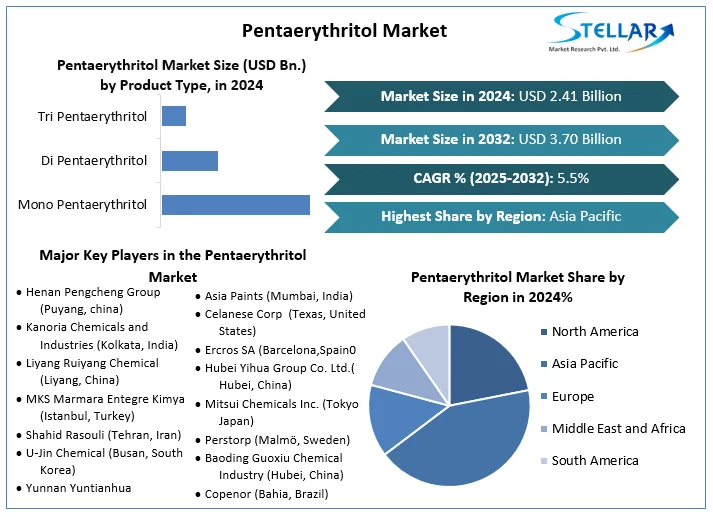
  • Pentaerythritol Market Size To Grow At A CAGR Of 5.5 % In The Forecast Period Of 2025-2032

    Pentaerythritol Market Set to Grow: Versatile Chemical Demand Fuels Expansion
    Market Definition & Overview
    Pentaerythritol (often abbreviated as Penta) is a versatile chemical compound used as a building-block intermediate in manufacturing a wide range of end-products. Pentaerythritol is used to produce alkyd resins, synthetic resins, varnishes, coatings, flame-retardants, lubricants, plasticizers, explosives (ester-based), and other specialty chemicals and materials. Its chemical properties — including its multiple hydroxyl groups — make it ideal for producing durable resins, high-performance coatings, and industrial chemicals.

    The global pentaerythritol market encompasses the manufacturing, distribution, and sale of pentaerythritol raw material, as well as demand from downstream industries that produce resins, coatings, lubricants, and specialty chemicals. As end-use industries — such as paints & coatings, automotive, construction, printing inks, and adhesives — expand, demand for pentaerythritol continues to grow accordingly.

    Request Free Sample Report:https://www.stellarmr.com/report/req_sample/Pentaerythritol-Market/885

    Market Growth Drivers & Opportunities
    • Growing Demand from Coatings & Paints Industry
    Alkyd resins — one of the largest applications of pentaerythritol — are widely used in paints, varnishes, and coatings for construction, automotive refinishing, and industrial maintenance. As construction activity, urbanization, automotive production, and infrastructure development rise globally, demand for paints & coatings increases, driving consumption of pentaerythritol as a core resin precursor.

    • Expansion of Industrial and Specialty Chemical Applications
    Beyond coatings, pentaerythritol serves as a feedstock for manufacturing plasticizers, synthetic lubricants, stabilizers, and other specialty chemicals. Growth in automotive manufacturing, industrial machinery, and heavy-duty equipment — which require high-performance lubricants and plastic components — supports demand for penta-derived chemicals.

    • Demand in Flame-Retardant, Explosives & Niche Applications
    Pentaerythritol esters are used in flame-retardant formulations and in certain chemical-blasting or industrial explosive applications. Industries requiring flame-resistant materials, safety coatings, or specialty energy materials create a steady demand base for pentaerythritol.

    • Rising Construction & Infrastructure Development Globally
    As global construction — both residential and infrastructure — increases, demand for building materials, protective coatings, paints, sealants, and adhesives grows. These downstream products often rely on pentaerythritol-based resins, supporting steady market growth.

    • Replacement of Older Materials & Demand for High-Performance Products
    Manufacturers are increasingly seeking high-durability, weather-resistant, corrosion-resistant, and long-lasting materials. Pentaerythritol-derived resins and coatings meet these demands better than many traditional materials, encouraging industry adoption.

    What Lies Ahead: Emerging Trends Shaping the Future
    Shift Toward Eco-Friendly & Durable Coatings
    As environmental regulations tighten and consumers demand longer-lasting coatings and materials, pentaerythritol-based alkyd and synthetic resins — known for durability and stability — are likely to gain preference over cheap, short-life alternatives.

    Growth in Specialty Lubricants & Industrial Fluids
    As heavy-industry, automotive, and machinery sectors expand globally — especially in emerging economies — demand for high-performance lubricants, hydraulic fluids, and synthetic oils made using pentaerythritol will increase.

    Increased Use in Flame-Retardant & Safety Materials
    Heightened safety standards in construction, transportation, and manufacturing may raise demand for flame-retardant chemicals and coatings. Pentaerythritol derivatives suitable for such applications could see growing uptake.

    Expanding Applications in Plastics, Adhesives & Composites
    With continued innovation in plastics and composite materials, pentaerythritol may find increased use as a backbone for high-performance plastics, adhesives, sealants, and composite resins — especially where durability and chemical resistance are required.

    About us

    Phase 3,Navale IT Zone, S.No. 51/2A/2,

    Office No. 202, 2nd floor,

    Near, Navale Brg,Narhe,

    Pune, Maharashtra 411041

    sales@stellarmr.com
    Pentaerythritol Market Size To Grow At A CAGR Of 5.5 % In The Forecast Period Of 2025-2032 Pentaerythritol Market Set to Grow: Versatile Chemical Demand Fuels Expansion Market Definition & Overview Pentaerythritol (often abbreviated as Penta) is a versatile chemical compound used as a building-block intermediate in manufacturing a wide range of end-products. Pentaerythritol is used to produce alkyd resins, synthetic resins, varnishes, coatings, flame-retardants, lubricants, plasticizers, explosives (ester-based), and other specialty chemicals and materials. Its chemical properties — including its multiple hydroxyl groups — make it ideal for producing durable resins, high-performance coatings, and industrial chemicals. The global pentaerythritol market encompasses the manufacturing, distribution, and sale of pentaerythritol raw material, as well as demand from downstream industries that produce resins, coatings, lubricants, and specialty chemicals. As end-use industries — such as paints & coatings, automotive, construction, printing inks, and adhesives — expand, demand for pentaerythritol continues to grow accordingly. Request Free Sample Report:https://www.stellarmr.com/report/req_sample/Pentaerythritol-Market/885 Market Growth Drivers & Opportunities • Growing Demand from Coatings & Paints Industry Alkyd resins — one of the largest applications of pentaerythritol — are widely used in paints, varnishes, and coatings for construction, automotive refinishing, and industrial maintenance. As construction activity, urbanization, automotive production, and infrastructure development rise globally, demand for paints & coatings increases, driving consumption of pentaerythritol as a core resin precursor. • Expansion of Industrial and Specialty Chemical Applications Beyond coatings, pentaerythritol serves as a feedstock for manufacturing plasticizers, synthetic lubricants, stabilizers, and other specialty chemicals. Growth in automotive manufacturing, industrial machinery, and heavy-duty equipment — which require high-performance lubricants and plastic components — supports demand for penta-derived chemicals. • Demand in Flame-Retardant, Explosives & Niche Applications Pentaerythritol esters are used in flame-retardant formulations and in certain chemical-blasting or industrial explosive applications. Industries requiring flame-resistant materials, safety coatings, or specialty energy materials create a steady demand base for pentaerythritol. • Rising Construction & Infrastructure Development Globally As global construction — both residential and infrastructure — increases, demand for building materials, protective coatings, paints, sealants, and adhesives grows. These downstream products often rely on pentaerythritol-based resins, supporting steady market growth. • Replacement of Older Materials & Demand for High-Performance Products Manufacturers are increasingly seeking high-durability, weather-resistant, corrosion-resistant, and long-lasting materials. Pentaerythritol-derived resins and coatings meet these demands better than many traditional materials, encouraging industry adoption. What Lies Ahead: Emerging Trends Shaping the Future Shift Toward Eco-Friendly & Durable Coatings As environmental regulations tighten and consumers demand longer-lasting coatings and materials, pentaerythritol-based alkyd and synthetic resins — known for durability and stability — are likely to gain preference over cheap, short-life alternatives. Growth in Specialty Lubricants & Industrial Fluids As heavy-industry, automotive, and machinery sectors expand globally — especially in emerging economies — demand for high-performance lubricants, hydraulic fluids, and synthetic oils made using pentaerythritol will increase. Increased Use in Flame-Retardant & Safety Materials Heightened safety standards in construction, transportation, and manufacturing may raise demand for flame-retardant chemicals and coatings. Pentaerythritol derivatives suitable for such applications could see growing uptake. Expanding Applications in Plastics, Adhesives & Composites With continued innovation in plastics and composite materials, pentaerythritol may find increased use as a backbone for high-performance plastics, adhesives, sealants, and composite resins — especially where durability and chemical resistance are required. About us Phase 3,Navale IT Zone, S.No. 51/2A/2, Office No. 202, 2nd floor, Near, Navale Brg,Narhe, Pune, Maharashtra 411041 sales@stellarmr.com
    0 Comentários 0 Compartilhamentos
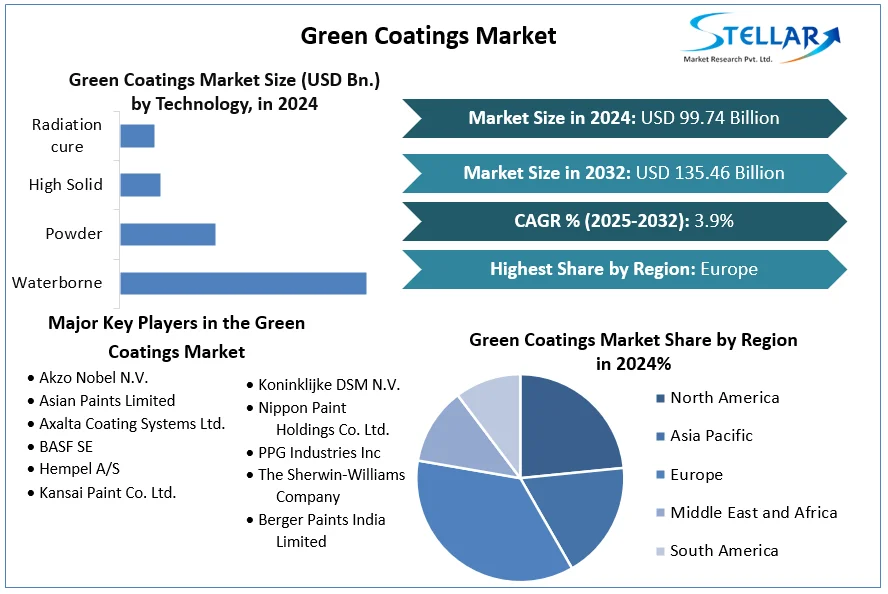
  • Green Coatings Market Size To Grow At A CAGR Of 3.9% In The Forecast Period Of 2025-2032

    Green Coatings Market Rises: Sustainability & Regulation Fuel Demand for Eco‑Friendly Finishes
    Market Estimation & Definition
    Green coatings refer to protective or decorative surface coatings (paints, varnishes, lacquers, specialized finishes) formulated to be environmentally friendly — with low or zero volatile organic compounds (VOCs), minimal hazardous chemicals, and compliance with stricter environmental and health regulations. These coatings are widely used in construction, automotive, furniture, industrial equipment, infrastructure, and consumer goods.

    With global emphasis on reducing environmental impact, improving indoor air quality, and meeting regulatory requirements on emissions and hazardous substances, demand for green coatings is growing. Manufacturers and end users increasingly prefer sustainable coating solutions over traditional solvent‑based paints.

    Request Free Sample Report:https://www.stellarmr.com/report/req_sample/green-coatings-market/2330

    Market Growth Drivers & Opportunities
    Stricter Environmental Regulations & Health Awareness
    Governments and regulatory bodies worldwide are enforcing laws limiting VOC emissions and hazardous chemical use. This drives industries toward compliant green coatings. Growing awareness of indoor air quality and environmental health among consumers also fuels demand.

    Sustainability Goals & Corporate ESG Policies
    Companies across construction, automotive, furniture, and manufacturing sectors are incorporating ESG (Environmental, Social, Governance) targets. Adopting green coatings helps meet sustainability commitments, reduce environmental footprint, and improve brand reputation.

    Growing Construction & Infrastructure Development
    Rapid urbanization and infrastructure expansion in many countries — including residential, commercial, public works and transportation projects — increases demand for coatings. Green coatings are preferred to meet environmental and regulatory standards for buildings and public structures.

    Automotive Industry Shift & Lightweight Materials
    As automobile manufacturers move toward lightweight materials and eco‑conscious production, green coatings compatible with modern substrates (plastics, composites, lighter metals) are increasingly used for vehicle exteriors and interiors.

    Consumer Demand for Eco-Friendly Products
    Consumers are more conscious about sustainability, low chemical exposure, and product life‑cycle impact. For furniture, home décor, appliances and consumer goods — green coatings offer a selling point, driving manufacturers to adopt them.

    What Lies Ahead: Emerging Trends Shaping the Future
    Water‑Based & High‑Solid Coatings
    Water‑borne coatings and high‑solid formulations (less solvent, more solids) will gain traction as they reduce VOC emissions while maintaining performance standards for durability and finish.

    Powder Coatings & UV‑Cured Coatings
    Alternative technologies like powder coatings and UV-cured coatings — which eliminate solvents and lower emissions — are expected to expand in industrial and furniture applications.

    Bio‑Based & Sustainable Raw Materials
    Use of bio‑derived resins, natural pigments, and sustainable additives will rise to reduce reliance on petrochemical feedstock and improve biodegradability/eco‑friendliness.

    Performance‑Optimized Green Coatings
    Improved formulations combining eco‑friendliness with high durability, corrosion resistance, UV‑protection, scratch resistance — suitable for harsh industrial or outdoor conditions — will push adoption beyond consumer use to heavy‑duty industrial and infrastructure applications.

    Regulation‑Driven Retrofits and Renovations
    New regulatory mandates for public buildings, schools, hospitals and offices on indoor air quality and emissions compliance may lead to widespread repainting or retrofitting using green coatings.

    Segmentation Analysis
    Based on typical segmentation frameworks, the green coatings market can be divided as:

    By Coating Type / Technology

    Water‑based Coatings

    Powder Coatings

    High‑Solid / Low‑VOC Solvent‑Reduced Coatings

    UV‑Cured Coatings

    Bio‑Based / Eco-Friendly Resin Coatings

    By Application / End‑Use Sector

    Residential & Commercial Construction (walls, ceilings, infrastructure)

    Industrial & Infrastructure (metal structures, pipelines, bridges, rail, power assets)

    Automotive & Transportation (vehicles, components)

    Furniture & Wood Products

    Consumer Goods & Appliances

    By Functionality

    Protective Coatings (anti‑corrosion, weather-resistant, abrasion‑resistant)

    About us

    Phase 3,Navale IT Zone, S.No. 51/2A/2,

    Office No. 202, 2nd floor,

    Near, Navale Brg,Narhe,

    Pune, Maharashtra 411041

    sales@stellarmr.com
    Green Coatings Market Size To Grow At A CAGR Of 3.9% In The Forecast Period Of 2025-2032 Green Coatings Market Rises: Sustainability & Regulation Fuel Demand for Eco‑Friendly Finishes Market Estimation & Definition Green coatings refer to protective or decorative surface coatings (paints, varnishes, lacquers, specialized finishes) formulated to be environmentally friendly — with low or zero volatile organic compounds (VOCs), minimal hazardous chemicals, and compliance with stricter environmental and health regulations. These coatings are widely used in construction, automotive, furniture, industrial equipment, infrastructure, and consumer goods. With global emphasis on reducing environmental impact, improving indoor air quality, and meeting regulatory requirements on emissions and hazardous substances, demand for green coatings is growing. Manufacturers and end users increasingly prefer sustainable coating solutions over traditional solvent‑based paints. Request Free Sample Report:https://www.stellarmr.com/report/req_sample/green-coatings-market/2330 Market Growth Drivers & Opportunities Stricter Environmental Regulations & Health Awareness Governments and regulatory bodies worldwide are enforcing laws limiting VOC emissions and hazardous chemical use. This drives industries toward compliant green coatings. Growing awareness of indoor air quality and environmental health among consumers also fuels demand. Sustainability Goals & Corporate ESG Policies Companies across construction, automotive, furniture, and manufacturing sectors are incorporating ESG (Environmental, Social, Governance) targets. Adopting green coatings helps meet sustainability commitments, reduce environmental footprint, and improve brand reputation. Growing Construction & Infrastructure Development Rapid urbanization and infrastructure expansion in many countries — including residential, commercial, public works and transportation projects — increases demand for coatings. Green coatings are preferred to meet environmental and regulatory standards for buildings and public structures. Automotive Industry Shift & Lightweight Materials As automobile manufacturers move toward lightweight materials and eco‑conscious production, green coatings compatible with modern substrates (plastics, composites, lighter metals) are increasingly used for vehicle exteriors and interiors. Consumer Demand for Eco-Friendly Products Consumers are more conscious about sustainability, low chemical exposure, and product life‑cycle impact. For furniture, home décor, appliances and consumer goods — green coatings offer a selling point, driving manufacturers to adopt them. What Lies Ahead: Emerging Trends Shaping the Future Water‑Based & High‑Solid Coatings Water‑borne coatings and high‑solid formulations (less solvent, more solids) will gain traction as they reduce VOC emissions while maintaining performance standards for durability and finish. Powder Coatings & UV‑Cured Coatings Alternative technologies like powder coatings and UV-cured coatings — which eliminate solvents and lower emissions — are expected to expand in industrial and furniture applications. Bio‑Based & Sustainable Raw Materials Use of bio‑derived resins, natural pigments, and sustainable additives will rise to reduce reliance on petrochemical feedstock and improve biodegradability/eco‑friendliness. Performance‑Optimized Green Coatings Improved formulations combining eco‑friendliness with high durability, corrosion resistance, UV‑protection, scratch resistance — suitable for harsh industrial or outdoor conditions — will push adoption beyond consumer use to heavy‑duty industrial and infrastructure applications. Regulation‑Driven Retrofits and Renovations New regulatory mandates for public buildings, schools, hospitals and offices on indoor air quality and emissions compliance may lead to widespread repainting or retrofitting using green coatings. Segmentation Analysis Based on typical segmentation frameworks, the green coatings market can be divided as: By Coating Type / Technology Water‑based Coatings Powder Coatings High‑Solid / Low‑VOC Solvent‑Reduced Coatings UV‑Cured Coatings Bio‑Based / Eco-Friendly Resin Coatings By Application / End‑Use Sector Residential & Commercial Construction (walls, ceilings, infrastructure) Industrial & Infrastructure (metal structures, pipelines, bridges, rail, power assets) Automotive & Transportation (vehicles, components) Furniture & Wood Products Consumer Goods & Appliances By Functionality Protective Coatings (anti‑corrosion, weather-resistant, abrasion‑resistant) About us Phase 3,Navale IT Zone, S.No. 51/2A/2, Office No. 202, 2nd floor, Near, Navale Brg,Narhe, Pune, Maharashtra 411041 sales@stellarmr.com
    0 Comentários 0 Compartilhamentos
  • Maximizing Branding Potential: The Power of BOPP Film Adhesive Roll Labels"

    When it comes to packaging and labeling, businesses today are looking for durable, cost-effective, and visually appealing solutions. BOPP (Biaxially Oriented Polypropylene) film adhesive roll labels have emerged as one of the most popular choices for companies across industries, from food and beverage to cosmetics and pharmaceuticals. These labels offer a unique blend of performance, versatility, and visual appeal, making them a go-to option for companies looking to maximize their branding potential.

    What is BOPP Film?

    BOPP film is a type of polypropylene plastic that has been stretched in both directions (biaxially oriented) to enhance its physical properties, including tensile strength, clarity, and resistance to chemicals and moisture. When used as a base for adhesive labels, BOPP film offers several advantages over traditional label materials, such as paper or vinyl.

    Why Choose BOPP Film Adhesive Roll Labels?

    Durability and Resistance
    One of the standout features of BOPP film is its incredible durability. It is resistant to water, oils, chemicals, and UV rays, making it an ideal choice for products that are exposed to harsh conditions. For instance, BOPP labels on bottles of shampoo, beverages, or condiments won’t tear or degrade easily, even if they come in contact with moisture or oils. This makes BOPP a more reliable option than paper labels, which can smudge or fade over time.

    Customizable Design
    BOPP film labels can be printed with high-quality designs, ensuring your brand’s message stands out. These labels offer crisp, vibrant colors and detailed graphics, making them perfect for showcasing your brand’s logo, product information, and promotional details. Whether you need full-color imagery or simple text, BOPP film provides excellent print quality.

    Cost-Effectiveness
    While BOPP labels are durable and visually appealing, they are also cost-effective. As an adhesive material, they can be produced in bulk at competitive prices, allowing businesses to save on production costs. The ability to print custom designs in large quantities means businesses can order labels in a range of sizes without the need for expensive setup changes.

    Eco-Friendly Option
    BOPP film is a recyclable material, which adds an environmental benefit to its already impressive list of advantages. With the growing focus on sustainability, businesses can choose BOPP labels to demonstrate their commitment to eco-friendly practices. This is particularly appealing to consumers who are increasingly conscious of the environmental impact of their purchasing decisions.

    Versatility Across Applications
    From personal care products to food packaging, BOPP labels are incredibly versatile. Their resistance to moisture and chemicals makes them perfect for use in bottles, jars, and other containers, while their ability to conform to various shapes ensures that they work well on products with unconventional packaging designs. Whether you need a clear, opaque, or metallic finish, BOPP film labels can be adapted to meet your branding needs.

    Enhanced Adhesion
    BOPP film labels feature strong adhesive properties that ensure they stay securely in place on a variety of surfaces. Whether you’re labeling glass, plastic, metal, or other materials, BOPP labels are designed to bond well without peeling off easily, ensuring long-lasting performance.

    Applications of BOPP Film Adhesive Roll Labels

    Food & Beverage: BOPP labels are widely used for labeling food and beverage products like bottles, cans, and jars. Their resistance to water and oils makes them perfect for products like sauces, drinks, and frozen foods.

    Personal Care & Cosmetics: The cosmetic industry also benefits from BOPP labels, particularly for skincare, haircare, and fragrance products. These labels provide a sleek, modern appearance that enhances the product’s appeal.

    Pharmaceuticals: BOPP film labels are often used for over-the-counter medications, vitamins, and health products due to their ability to withstand exposure to moisture and chemicals.

    Retail & Logistics: BOPP labels are commonly used in the retail and logistics sectors for barcoding and inventory tracking, as they are easy to print and can be used on a variety of materials.
    https://www.guanhaolabel.com/bopp-film-adhesive.html
    Maximizing Branding Potential: The Power of BOPP Film Adhesive Roll Labels" When it comes to packaging and labeling, businesses today are looking for durable, cost-effective, and visually appealing solutions. BOPP (Biaxially Oriented Polypropylene) film adhesive roll labels have emerged as one of the most popular choices for companies across industries, from food and beverage to cosmetics and pharmaceuticals. These labels offer a unique blend of performance, versatility, and visual appeal, making them a go-to option for companies looking to maximize their branding potential. What is BOPP Film? BOPP film is a type of polypropylene plastic that has been stretched in both directions (biaxially oriented) to enhance its physical properties, including tensile strength, clarity, and resistance to chemicals and moisture. When used as a base for adhesive labels, BOPP film offers several advantages over traditional label materials, such as paper or vinyl. Why Choose BOPP Film Adhesive Roll Labels? Durability and Resistance One of the standout features of BOPP film is its incredible durability. It is resistant to water, oils, chemicals, and UV rays, making it an ideal choice for products that are exposed to harsh conditions. For instance, BOPP labels on bottles of shampoo, beverages, or condiments won’t tear or degrade easily, even if they come in contact with moisture or oils. This makes BOPP a more reliable option than paper labels, which can smudge or fade over time. Customizable Design BOPP film labels can be printed with high-quality designs, ensuring your brand’s message stands out. These labels offer crisp, vibrant colors and detailed graphics, making them perfect for showcasing your brand’s logo, product information, and promotional details. Whether you need full-color imagery or simple text, BOPP film provides excellent print quality. Cost-Effectiveness While BOPP labels are durable and visually appealing, they are also cost-effective. As an adhesive material, they can be produced in bulk at competitive prices, allowing businesses to save on production costs. The ability to print custom designs in large quantities means businesses can order labels in a range of sizes without the need for expensive setup changes. Eco-Friendly Option BOPP film is a recyclable material, which adds an environmental benefit to its already impressive list of advantages. With the growing focus on sustainability, businesses can choose BOPP labels to demonstrate their commitment to eco-friendly practices. This is particularly appealing to consumers who are increasingly conscious of the environmental impact of their purchasing decisions. Versatility Across Applications From personal care products to food packaging, BOPP labels are incredibly versatile. Their resistance to moisture and chemicals makes them perfect for use in bottles, jars, and other containers, while their ability to conform to various shapes ensures that they work well on products with unconventional packaging designs. Whether you need a clear, opaque, or metallic finish, BOPP film labels can be adapted to meet your branding needs. Enhanced Adhesion BOPP film labels feature strong adhesive properties that ensure they stay securely in place on a variety of surfaces. Whether you’re labeling glass, plastic, metal, or other materials, BOPP labels are designed to bond well without peeling off easily, ensuring long-lasting performance. Applications of BOPP Film Adhesive Roll Labels Food & Beverage: BOPP labels are widely used for labeling food and beverage products like bottles, cans, and jars. Their resistance to water and oils makes them perfect for products like sauces, drinks, and frozen foods. Personal Care & Cosmetics: The cosmetic industry also benefits from BOPP labels, particularly for skincare, haircare, and fragrance products. These labels provide a sleek, modern appearance that enhances the product’s appeal. Pharmaceuticals: BOPP film labels are often used for over-the-counter medications, vitamins, and health products due to their ability to withstand exposure to moisture and chemicals. Retail & Logistics: BOPP labels are commonly used in the retail and logistics sectors for barcoding and inventory tracking, as they are easy to print and can be used on a variety of materials. https://www.guanhaolabel.com/bopp-film-adhesive.html
    China BOPP Film Adhesive Roll Labels Factory - Zhejiang Guanhao Functional Material Co., Ltd.
    Available in multiple sizes and roll lengths, our BOPP Film Adhesive Roll Labels provide a reliable, high-quality solution for businesses seeking lasting and visually appealing labeling.
    0 Comentários 0 Compartilhamentos
  • Yes, bleach can kill fleas, but it is not the most effective or safest method for flea control. Bleach contains strong chemicals that can eliminate adult fleas, their eggs, and larvae on hard surfaces. However, fleas often hide in carpets, upholstery, and pet fur, where bleach cannot be applied safely.


    https://safepestsol.com/does-bleach-actually-kill-fleas/
    Yes, bleach can kill fleas, but it is not the most effective or safest method for flea control. Bleach contains strong chemicals that can eliminate adult fleas, their eggs, and larvae on hard surfaces. However, fleas often hide in carpets, upholstery, and pet fur, where bleach cannot be applied safely. https://safepestsol.com/does-bleach-actually-kill-fleas/
    0 Comentários 0 Compartilhamentos
Páginas Impulsionadas