• Why Choose Online Personal Licence Training?
    Online learning has become one of the most convenient ways to complete licensing qualifications. A Personal Licence Online Training & Exam allows learners to prepare for their exam at their own pace without the need to travel to a classroom. Visit here - https://www.innconfidence.co.uk/pages/personal-licence-course-exam-info
    Why Choose Online Personal Licence Training? Online learning has become one of the most convenient ways to complete licensing qualifications. A Personal Licence Online Training & Exam allows learners to prepare for their exam at their own pace without the need to travel to a classroom. Visit here - https://www.innconfidence.co.uk/pages/personal-licence-course-exam-info
    WWW.INNCONFIDENCE.CO.UK
    Personal Alcohol Licence Course Online, Premises Licence Application
    Looking for personal alcohol licence course online? Get your premsis license application approved with our personal alcohol licence course & APLH mock exam.
    0 Commenti 0 condivisioni
  • From Classrooms to Careers: Your Journey at Invertis:

    From classrooms to placements, from events to experiences, Invertis University supports every step.

    See Now: - https://www.instagram.com/reel/DSj_aeZD27y/?igsh=MTRwcHhzYmxuN2lndg%3D%3D
    From Classrooms to Careers: Your Journey at Invertis: From classrooms to placements, from events to experiences, Invertis University supports every step. See Now: - https://www.instagram.com/reel/DSj_aeZD27y/?igsh=MTRwcHhzYmxuN2lndg%3D%3D
    0 Commenti 0 condivisioni
  • Clay Planter – Traditional Terracotta Pot

    Clay Planter crafted from natural clay for healthy plant growth. Suitable for gardens, balconies, patios, and indoor décor with a classic and eco-friendly appeal.

    Visit Us: https://dnfceramics.com/product-category/clay-pots-and-terracotta-planters/
    Clay Planter – Traditional Terracotta Pot Clay Planter crafted from natural clay for healthy plant growth. Suitable for gardens, balconies, patios, and indoor décor with a classic and eco-friendly appeal. Visit Us: https://dnfceramics.com/product-category/clay-pots-and-terracotta-planters/
    DNFCERAMICS.COM
    Terracotta Pots, Terracotta Planters and Clay Pots Wholesale
    Premium terracotta planters and clay pots available wholesale. Durable, eco-friendly and stylish designs for bulk orders across India. Contact Now!
    0 Commenti 0 condivisioni
  • Joining a Taekwondo School? 5 Questions to Ask First
    #Taekwondo #class #classes #for #kids #Singapore

    Choosing a reputable Taekwondo class Singapore is about more than just finding a convenient location; it is about ensuring the right fit for your long-term growth.

    Transparency regarding the cost of Taekwondo classes helps you prepare a realistic budget and avoid unexpected expenses.

    Families considering Taekwondo for kids Singapore should observe the teaching style and general atmosphere of the school.

    Trusted Source >> https://bit.ly/4aiwUGB
    Joining a Taekwondo School? 5 Questions to Ask First #Taekwondo #class #classes #for #kids #Singapore Choosing a reputable Taekwondo class Singapore is about more than just finding a convenient location; it is about ensuring the right fit for your long-term growth. Transparency regarding the cost of Taekwondo classes helps you prepare a realistic budget and avoid unexpected expenses. Families considering Taekwondo for kids Singapore should observe the teaching style and general atmosphere of the school. Trusted Source >> https://bit.ly/4aiwUGB
    0 Commenti 0 condivisioni
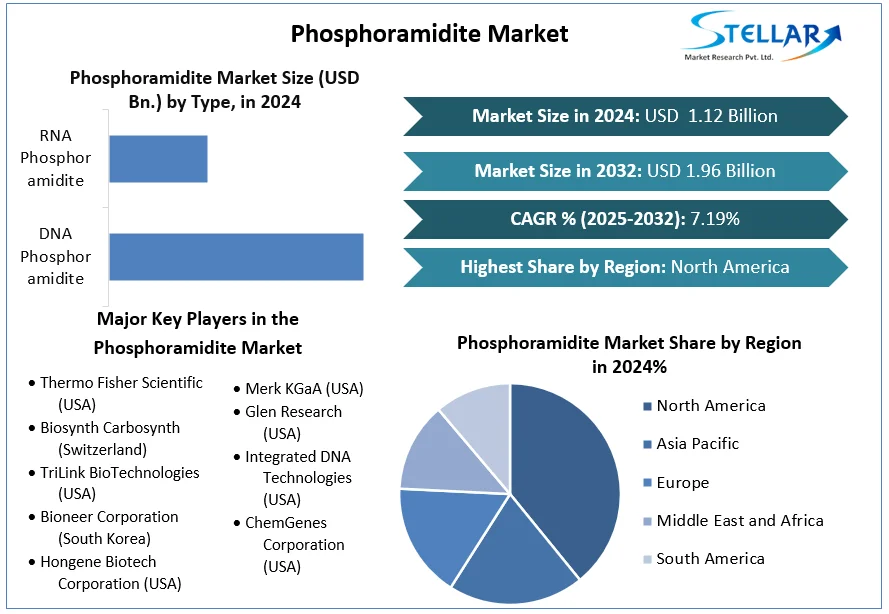
  • Global Phosphoramidite Market Growth Outlook 2025–2032: Trends, Size & Projections (from USD 1.12 Billion to ~USD 1.96 Billion)

    Phosphoramidite Market: Fueling the Future of Genetic Medicine and Oligonucleotide Innovation

    The Phosphoramidite Market is poised for substantial expansion as demand for synthetic DNA and RNA technologies grows across therapeutic development, diagnostics, and genomic research. According to industry analysis, the global market has witnessed steady growth driven by key life sciences trends, with projections indicating robust expansion through 2032 and beyond. Phosphoramidites — the fundamental chemical building blocks used in oligonucleotide synthesis — are essential for precise DNA and RNA sequence assembly, making them critical to modern biotechnology and pharmaceutical innovation.

    Request Free Sample Report : https://www.stellarmr.com/report/req_sample/Phosphoramidite-Market/2144

    Market Estimation & Definition

    Phosphoramidites refer to a class of highly reactive chemical intermediates used primarily in solid-phase oligonucleotide synthesis. They enable the stepwise assembly of nucleotide sequences required for applications such as gene synthesis, PCR primers, sequencing adapters, and therapeutic oligonucleotides. Their role is central to producing high-purity artificial DNA and RNA strands that serve as building blocks for drug discovery, diagnostic assays, next-generation sequencing, and synthetic biology initiatives.

    Globally, the phosphoramidite market has grown in prominence as genetic medicine advances, supporting demand for gene therapies, RNA-based vaccines, and precision medicine platforms. Industry estimates indicate that markets based on related chemistry are expected to more than double over the next decade, reflecting broad adoption across research and commercial pipelines.

    Market Growth Drivers & Opportunity

    The phosphoramidite market is being propelled by several interlinked trends:

    Oligonucleotide Therapeutics Expansion: The development of antisense oligonucleotides, small interfering RNA (siRNA), and mRNA vaccines has surged as pharmaceutical companies leverage nucleic acid modalities to address genetic disorders, infectious diseases, and cancer. These therapies rely on precise, high-fidelity oligonucleotide synthesis, directly driving demand for phosphoramidite reagents.

    Genomic Research and Diagnostic Growth: Next-generation sequencing (NGS), molecular diagnostics, and point-of-care genetic testing require large volumes of synthetic oligos — all made using phosphoramidite chemistry. As personalized medicine and screening grow, so does the need for the reagents that make these technologies possible.

    Synthetic Biology Innovation: Beyond human health, phosphoramidites are also being used in synthetic biology applications — from engineering crop genetics to designing environmentally responsive biological circuits. These expanding domains generate new use cases and consumer segments for phosphoramidite supplies.

    Technological Advancements in Automated Synthesis: High-throughput DNA and RNA synthesizers have improved efficiency and throughput, encouraging broader adoption in biotechnology and commercial manufacturing. This trend boosts reagent consumption as laboratories and contract manufacturers scale up nucleotide production.

    These drivers not only reinforce the core market for therapeutic and research use but also reveal opportunities in emerging applications where custom sequence synthesis is becoming critical.

    Request Free Sample Report : https://www.stellarmr.com/report/req_sample/Phosphoramidite-Market/2144

    About us

    Phase 3,Navale IT Zone, S.No. 51/2A/2,

    Office No. 202, 2nd floor,

    Near, Navale Brg,Narhe,

    Pune, Maharashtra 411041

    sales@stellarmr.com

    Global Phosphoramidite Market Growth Outlook 2025–2032: Trends, Size & Projections (from USD 1.12 Billion to ~USD 1.96 Billion) Phosphoramidite Market: Fueling the Future of Genetic Medicine and Oligonucleotide Innovation The Phosphoramidite Market is poised for substantial expansion as demand for synthetic DNA and RNA technologies grows across therapeutic development, diagnostics, and genomic research. According to industry analysis, the global market has witnessed steady growth driven by key life sciences trends, with projections indicating robust expansion through 2032 and beyond. Phosphoramidites — the fundamental chemical building blocks used in oligonucleotide synthesis — are essential for precise DNA and RNA sequence assembly, making them critical to modern biotechnology and pharmaceutical innovation. Request Free Sample Report : https://www.stellarmr.com/report/req_sample/Phosphoramidite-Market/2144 Market Estimation & Definition Phosphoramidites refer to a class of highly reactive chemical intermediates used primarily in solid-phase oligonucleotide synthesis. They enable the stepwise assembly of nucleotide sequences required for applications such as gene synthesis, PCR primers, sequencing adapters, and therapeutic oligonucleotides. Their role is central to producing high-purity artificial DNA and RNA strands that serve as building blocks for drug discovery, diagnostic assays, next-generation sequencing, and synthetic biology initiatives. Globally, the phosphoramidite market has grown in prominence as genetic medicine advances, supporting demand for gene therapies, RNA-based vaccines, and precision medicine platforms. Industry estimates indicate that markets based on related chemistry are expected to more than double over the next decade, reflecting broad adoption across research and commercial pipelines. Market Growth Drivers & Opportunity The phosphoramidite market is being propelled by several interlinked trends: Oligonucleotide Therapeutics Expansion: The development of antisense oligonucleotides, small interfering RNA (siRNA), and mRNA vaccines has surged as pharmaceutical companies leverage nucleic acid modalities to address genetic disorders, infectious diseases, and cancer. These therapies rely on precise, high-fidelity oligonucleotide synthesis, directly driving demand for phosphoramidite reagents. Genomic Research and Diagnostic Growth: Next-generation sequencing (NGS), molecular diagnostics, and point-of-care genetic testing require large volumes of synthetic oligos — all made using phosphoramidite chemistry. As personalized medicine and screening grow, so does the need for the reagents that make these technologies possible. Synthetic Biology Innovation: Beyond human health, phosphoramidites are also being used in synthetic biology applications — from engineering crop genetics to designing environmentally responsive biological circuits. These expanding domains generate new use cases and consumer segments for phosphoramidite supplies. Technological Advancements in Automated Synthesis: High-throughput DNA and RNA synthesizers have improved efficiency and throughput, encouraging broader adoption in biotechnology and commercial manufacturing. This trend boosts reagent consumption as laboratories and contract manufacturers scale up nucleotide production. These drivers not only reinforce the core market for therapeutic and research use but also reveal opportunities in emerging applications where custom sequence synthesis is becoming critical. Request Free Sample Report : https://www.stellarmr.com/report/req_sample/Phosphoramidite-Market/2144 About us Phase 3,Navale IT Zone, S.No. 51/2A/2, Office No. 202, 2nd floor, Near, Navale Brg,Narhe, Pune, Maharashtra 411041 sales@stellarmr.com

    0 Commenti 0 condivisioni
  • Global Neuromorphic Computing Market Set to Grow from USD 7.82 Billion in 2024 to USD 45.72 Billion by 2032

    Neuromorphic Computing Market: Brain-Inspired Architectures Powering the Next Era of Intelligent Systems

    The Neuromorphic Computing Market represents one of the most promising frontiers in computing technology as industries seek faster, more energy-efficient, and human-like data processing solutions. In 2024, the market was valued at around USD 7.82 billion, and it is expected to expand rapidly at a compound annual growth rate (CAGR) of approximately 24.7 % through 2032, reaching nearly USD 45.72 billion by the end of the forecast period. This surge reflects growing demand for brain-inspired computing architectures that outperform traditional systems in tasks such as artificial intelligence (AI), autonomous systems, and real-time edge processing.

    Request Free Sample Report : https://www.stellarmr.com/report/req_sample/neuromorphic-computing-market/2595

    Market Estimation & Definition

    Neuromorphic computing refers to a class of computing architectures inspired by the structure and functions of the human brain and nervous system. Unlike conventional von Neumann designs — which separate data storage from processing — neuromorphic systems mimic neural networks by co-locating memory and computation, employing spiking neural networks and specialized hardware that simulates neurons and synapses. This design enables highly parallel, low-power processing that can learn and adapt in real time, making it ideal for applications requiring rapid, energy-efficient decision-making.

    Neuromorphic systems are poised to fuel advances in next-generation AI, robotics, autonomous vehicles, smart sensors, and edge computing platforms that must process large amounts of data with minimal energy consumption.

    Market Growth Drivers & Opportunity

    Several key forces are driving the market’s accelerated growth:

    Energy-Efficient AI Requirements: As demand for AI accelerates globally — from data centers to mobile devices and autonomous machines — traditional processors struggle with high power consumption and latency. Neuromorphic architectures significantly reduce energy usage while maintaining performance, making them attractive for sustainable AI solutions.

    Autonomous Systems and Robotics: Real-world applications such as self-driving cars, drones, industrial automation, and humanoid robots require real-time perception, adaptation, and decision-making. Neuromorphic systems are uniquely suited to these workloads, particularly those involving sensor fusion, object detection, and environment interaction.

    Edge Computing Demand: Neuromorphic chips’ ability to process data locally — close to the source — with low latency and minimal power makes them ideal for edge deployments in IoT devices, wearables, smart cameras, and healthcare monitoring tools.

    Academic and Government Research: Widespread interest from universities and government programs in brain-inspired computing accelerates innovation and fosters collaborations between research labs and industry, fueling technology breakthroughs.

    These drivers create significant opportunities for vendors, system integrators, and technology innovators to develop scalable solutions that can replace or augment traditional computing in AI-intensive applications.

    Request Free Sample Report : https://www.stellarmr.com/report/req_sample/neuromorphic-computing-market/2595

    What Lies Ahead: Emerging Trends Shaping the Future

    The future of neuromorphic computing is shaped by several notable trends:


    About us

    Phase 3,Navale IT Zone, S.No. 51/2A/2,

    Office No. 202, 2nd floor,

    Near, Navale Brg,Narhe,

    Pune, Maharashtra 411041

    sales@stellarmr.com

    Global Neuromorphic Computing Market Set to Grow from USD 7.82 Billion in 2024 to USD 45.72 Billion by 2032 Neuromorphic Computing Market: Brain-Inspired Architectures Powering the Next Era of Intelligent Systems The Neuromorphic Computing Market represents one of the most promising frontiers in computing technology as industries seek faster, more energy-efficient, and human-like data processing solutions. In 2024, the market was valued at around USD 7.82 billion, and it is expected to expand rapidly at a compound annual growth rate (CAGR) of approximately 24.7 % through 2032, reaching nearly USD 45.72 billion by the end of the forecast period. This surge reflects growing demand for brain-inspired computing architectures that outperform traditional systems in tasks such as artificial intelligence (AI), autonomous systems, and real-time edge processing. Request Free Sample Report : https://www.stellarmr.com/report/req_sample/neuromorphic-computing-market/2595 Market Estimation & Definition Neuromorphic computing refers to a class of computing architectures inspired by the structure and functions of the human brain and nervous system. Unlike conventional von Neumann designs — which separate data storage from processing — neuromorphic systems mimic neural networks by co-locating memory and computation, employing spiking neural networks and specialized hardware that simulates neurons and synapses. This design enables highly parallel, low-power processing that can learn and adapt in real time, making it ideal for applications requiring rapid, energy-efficient decision-making. Neuromorphic systems are poised to fuel advances in next-generation AI, robotics, autonomous vehicles, smart sensors, and edge computing platforms that must process large amounts of data with minimal energy consumption. Market Growth Drivers & Opportunity Several key forces are driving the market’s accelerated growth: Energy-Efficient AI Requirements: As demand for AI accelerates globally — from data centers to mobile devices and autonomous machines — traditional processors struggle with high power consumption and latency. Neuromorphic architectures significantly reduce energy usage while maintaining performance, making them attractive for sustainable AI solutions. Autonomous Systems and Robotics: Real-world applications such as self-driving cars, drones, industrial automation, and humanoid robots require real-time perception, adaptation, and decision-making. Neuromorphic systems are uniquely suited to these workloads, particularly those involving sensor fusion, object detection, and environment interaction. Edge Computing Demand: Neuromorphic chips’ ability to process data locally — close to the source — with low latency and minimal power makes them ideal for edge deployments in IoT devices, wearables, smart cameras, and healthcare monitoring tools. Academic and Government Research: Widespread interest from universities and government programs in brain-inspired computing accelerates innovation and fosters collaborations between research labs and industry, fueling technology breakthroughs. These drivers create significant opportunities for vendors, system integrators, and technology innovators to develop scalable solutions that can replace or augment traditional computing in AI-intensive applications. Request Free Sample Report : https://www.stellarmr.com/report/req_sample/neuromorphic-computing-market/2595 What Lies Ahead: Emerging Trends Shaping the Future The future of neuromorphic computing is shaped by several notable trends: About us Phase 3,Navale IT Zone, S.No. 51/2A/2, Office No. 202, 2nd floor, Near, Navale Brg,Narhe, Pune, Maharashtra 411041 sales@stellarmr.com
    0 Commenti 0 condivisioni
  • Wireless Display Market Set to Grow from USD 5.87 Billion in 2024 to USD 15.49 Billion by 2032 at 12.9% CAGR

    Wireless Display Market Analysis: Growth Drivers, Trends, Segmentation, Country Insights, and Future Outlook
    The Wireless Display Market is rapidly transforming how people consume, share, and interact with visual content across consumer, business, education, and entertainment arenas. Defined broadly, a wireless display allows video, images, and data to be transmitted from a source device such as a smartphone, laptop, or tablet to a display screen — such as a flat-panel TV, monitor, projector, or video wall — without cables or physical connections. This market is expanding as connectivity technologies such as Wi-Fi, Bluetooth, and other wireless protocols evolve and become more reliable and capable.

    According to recent industry estimates, the global Wireless Display Market was valued at around USD 5.87 billion in 2024 and is expected to grow to nearly USD 15.49 billion by 2032, exhibiting a strong compound annual growth rate (CAGR) of approximately 12.9 percent from 2025 to 2032.

    Request Free Sample Report : https://www.stellarmr.com/report/req_sample/Wireless-Display-Market/2189
    Market Estimation & Definition
    At its core, wireless display technology eliminates the need for HDMI cables and similar wired connections by using wireless networking standards — predominantly Wi-Fi — to mirror or stream content between devices. Modern solutions range from dedicated hardware devices and adapters to integrated software protocols that support high-resolution streaming, screen sharing, and seamless connectivity across ecosystems. These technologies are now embedded in many consumer electronics and professional collaboration tools, reflecting their broad utility across residential and enterprise environments.

    Wireless display solutions are increasingly relied upon for entertainment streaming, remote collaboration, classroom teaching, digital signage, corporate presentations, and more. They are also instrumental in supporting BYOD (Bring Your Own Device) trends in enterprise and educational settings, enabling users to project content directly from their personal devices.

    Market Growth Drivers & Opportunity
    A convergence of technological trends and user-centric requirements is driving market growth. One of the most significant drivers is the surge in adoption of smart and connected devices. Smartphones, tablets, smart TVs, and laptops now commonly enable wireless casting and screen-mirroring technologies, prompting households and organizations to seek convenient ways to share high-quality content without cables.

    The demand for seamless collaboration in hybrid and remote work environments further propels the market. As businesses adopt flexible workplace models, wireless display tools are becoming essential for presentations, team meetings, and interactive workflows that support diverse device ecosystems.

    Another growth catalyst is advancement in connectivity technologies such as Wi-Fi 6 and 5G. These standards enable faster data transmission, reduced latency, and more reliable streaming — all critical for wireless displays to support high-resolution content and multi-screen synchronization.

    Consumer preferences for entertainment on large screens are also contributing to market expansion. As on-demand streaming services, gaming, and multimedia consumption rise, users increasingly rely on wireless display systems to watch content on TVs or projectors without the inconvenience of physical wires.

    Request Free Sample Report : https://www.stellarmr.com/report/req_sample/Wireless-Display-Market/2189
    What Lies Ahead: Emerging Trends Shaping the Future
    Several forward-looking trends are expected to define the trajectory of the Wireless Display Market. Integration with Internet of Things (IoT) ecosystems will allow wireless displays to become part of broader connected environments where content, controls, and user profiles are synchronized across devices.

    The expansion of augmented reality (AR) and virtual reality (VR) applications also offers opportunities for immersive visual experiences that leverage wireless display technologies, especially in gaming, training simulations, and interactive education.

    Additionally, ongoing improvements in video quality, such as 4K and ultra-high-definition streaming with reduced latency, are enhancing user experiences across consumer and professional use cases. Manufacturers are focusing on lowering latency, boosting frame rates, and ensuring smooth multi-device synchronization to support these advanced capabilities.

    About us

    Phase 3,Navale IT Zone, S.No. 51/2A/2,

    Office No. 202, 2nd floor,

    Near, Navale Brg,Narhe,

    Pune, Maharashtra 411041

    sales@stellarmr.com
    Wireless Display Market Set to Grow from USD 5.87 Billion in 2024 to USD 15.49 Billion by 2032 at 12.9% CAGR Wireless Display Market Analysis: Growth Drivers, Trends, Segmentation, Country Insights, and Future Outlook The Wireless Display Market is rapidly transforming how people consume, share, and interact with visual content across consumer, business, education, and entertainment arenas. Defined broadly, a wireless display allows video, images, and data to be transmitted from a source device such as a smartphone, laptop, or tablet to a display screen — such as a flat-panel TV, monitor, projector, or video wall — without cables or physical connections. This market is expanding as connectivity technologies such as Wi-Fi, Bluetooth, and other wireless protocols evolve and become more reliable and capable. According to recent industry estimates, the global Wireless Display Market was valued at around USD 5.87 billion in 2024 and is expected to grow to nearly USD 15.49 billion by 2032, exhibiting a strong compound annual growth rate (CAGR) of approximately 12.9 percent from 2025 to 2032. Request Free Sample Report : https://www.stellarmr.com/report/req_sample/Wireless-Display-Market/2189 Market Estimation & Definition At its core, wireless display technology eliminates the need for HDMI cables and similar wired connections by using wireless networking standards — predominantly Wi-Fi — to mirror or stream content between devices. Modern solutions range from dedicated hardware devices and adapters to integrated software protocols that support high-resolution streaming, screen sharing, and seamless connectivity across ecosystems. These technologies are now embedded in many consumer electronics and professional collaboration tools, reflecting their broad utility across residential and enterprise environments. Wireless display solutions are increasingly relied upon for entertainment streaming, remote collaboration, classroom teaching, digital signage, corporate presentations, and more. They are also instrumental in supporting BYOD (Bring Your Own Device) trends in enterprise and educational settings, enabling users to project content directly from their personal devices. Market Growth Drivers & Opportunity A convergence of technological trends and user-centric requirements is driving market growth. One of the most significant drivers is the surge in adoption of smart and connected devices. Smartphones, tablets, smart TVs, and laptops now commonly enable wireless casting and screen-mirroring technologies, prompting households and organizations to seek convenient ways to share high-quality content without cables. The demand for seamless collaboration in hybrid and remote work environments further propels the market. As businesses adopt flexible workplace models, wireless display tools are becoming essential for presentations, team meetings, and interactive workflows that support diverse device ecosystems. Another growth catalyst is advancement in connectivity technologies such as Wi-Fi 6 and 5G. These standards enable faster data transmission, reduced latency, and more reliable streaming — all critical for wireless displays to support high-resolution content and multi-screen synchronization. Consumer preferences for entertainment on large screens are also contributing to market expansion. As on-demand streaming services, gaming, and multimedia consumption rise, users increasingly rely on wireless display systems to watch content on TVs or projectors without the inconvenience of physical wires. Request Free Sample Report : https://www.stellarmr.com/report/req_sample/Wireless-Display-Market/2189 What Lies Ahead: Emerging Trends Shaping the Future Several forward-looking trends are expected to define the trajectory of the Wireless Display Market. Integration with Internet of Things (IoT) ecosystems will allow wireless displays to become part of broader connected environments where content, controls, and user profiles are synchronized across devices. The expansion of augmented reality (AR) and virtual reality (VR) applications also offers opportunities for immersive visual experiences that leverage wireless display technologies, especially in gaming, training simulations, and interactive education. Additionally, ongoing improvements in video quality, such as 4K and ultra-high-definition streaming with reduced latency, are enhancing user experiences across consumer and professional use cases. Manufacturers are focusing on lowering latency, boosting frame rates, and ensuring smooth multi-device synchronization to support these advanced capabilities. About us Phase 3,Navale IT Zone, S.No. 51/2A/2, Office No. 202, 2nd floor, Near, Navale Brg,Narhe, Pune, Maharashtra 411041 sales@stellarmr.com
    0 Commenti 0 condivisioni
  • Global Range Cooker Market Forecast (2025–2032): Size, Trends & Key Drivers

    Range Cooker Market: Combining Tradition and Innovation in Modern Kitchens

    The Range Cooker Market — encompassing freestanding kitchen appliances that integrate ovens and hobs into a single unit — is on a strong global growth trajectory as consumers and commercial kitchens increasingly prefer high-performance, multifunctional cooking solutions. According to Stellar Market Research, the global range cooker market was valued at approximately USD 1.73 billion in 2024 and is projected to reach around USD 3.16 billion by 2032, growing at a compound annual growth rate (CAGR) of about 7.8 % over the forecast period.

    Request Free Sample Report : https://www.stellarmr.com/report/req_sample/Range-Cooker-Market/1465
    Market Estimation & Definition
    A range cooker is a freestanding kitchen appliance that combines multiple cooking functions — including baking, roasting, grilling and simmering — in one unit, typically offering larger capacities and additional burners when compared to standard ovens or cooktops. These appliances are available in various styles and fuel types — such as electric, gas and induction — catering to diverse consumer requirements. Range cookers also often feature integrated storage spaces for cookware and offer aesthetic versatility with design options suited to both contemporary and traditional kitchens.

    Range cookers are widely used in residential kitchens for everyday cooking and in commercial settings such as restaurants and catering services where flexibility and capacity are essential. They appeal to consumers seeking performance, convenience and kitchen aesthetics, with modern models increasingly incorporating energy-efficient operation and smart features.

    Market Growth Drivers & Opportunity
    Rising Consumer Demand for Multifunctionality: Modern consumers prefer appliances that deliver multiple cooking modes in one unit, reducing the need for separate ovens or cooktops. Range cookers meet this demand by offering versatility and convenience — from baking and roasting to simmering and grilling — in a single appliance.

    Urbanization and Growing Middle-Class Population: Rapid urbanization and the expanding middle-class segment in emerging economies are increasing disposable incomes and driving investment in home improvement and kitchen upgrades. As households seek premium, efficient kitchen appliances, range cooker sales continue to rise.

    Home Cooking Trends: There has been a global shift toward home cooking, led by lifestyle changes and increased health consciousness. Range cookers — with their larger capacities and multifunctional design — are now seen as practical investments for enthusiasts and everyday chefs alike.

    Technological Innovation: Manufacturers are integrating advanced features such as smart controls, induction heating, Wi-Fi connectivity and energy-efficient systems, appealing to tech-savvy consumers who want convenience and control.

    Kitchen Remodeling and Aesthetics: Range cookers are increasingly featured as centerpiece appliances in open plan and luxury kitchen designs, supported by strong interior design trends and renovation activity that emphasize both functionality and visual appeal.

    Request Free Sample Report : https://www.stellarmr.com/report/req_sample/Range-Cooker-Market/1465
    What Lies Ahead: Emerging Trends Shaping the Future
    Smart and Connected Appliances: Range cookers with smart connectivity — enabling remote control, app-based settings and voice assistant integration — are gaining traction, enhancing user convenience and aligning with broader smart home ecosystems.

    Energy Efficiency Focus: Energy-efficient range cookers — especially induction models and those complying with evolving global efficiency standards — are becoming more desirable as consumers and regulators prioritize sustainability.

    Customized and Premium Offerings: Premium models with dual-fuel capabilities, large oven capacities, designer finishes and customizable features are attracting affluent buyers and cooking enthusiasts seeking stylistic and performance enhancements.

    About us

    Phase 3,Navale IT Zone, S.No. 51/2A/2,

    Office No. 202, 2nd floor,

    Near, Navale Brg,Narhe,

    Pune, Maharashtra 411041

    sales@stellarmr.com
    Global Range Cooker Market Forecast (2025–2032): Size, Trends & Key Drivers Range Cooker Market: Combining Tradition and Innovation in Modern Kitchens The Range Cooker Market — encompassing freestanding kitchen appliances that integrate ovens and hobs into a single unit — is on a strong global growth trajectory as consumers and commercial kitchens increasingly prefer high-performance, multifunctional cooking solutions. According to Stellar Market Research, the global range cooker market was valued at approximately USD 1.73 billion in 2024 and is projected to reach around USD 3.16 billion by 2032, growing at a compound annual growth rate (CAGR) of about 7.8 % over the forecast period. Request Free Sample Report : https://www.stellarmr.com/report/req_sample/Range-Cooker-Market/1465 Market Estimation & Definition A range cooker is a freestanding kitchen appliance that combines multiple cooking functions — including baking, roasting, grilling and simmering — in one unit, typically offering larger capacities and additional burners when compared to standard ovens or cooktops. These appliances are available in various styles and fuel types — such as electric, gas and induction — catering to diverse consumer requirements. Range cookers also often feature integrated storage spaces for cookware and offer aesthetic versatility with design options suited to both contemporary and traditional kitchens. Range cookers are widely used in residential kitchens for everyday cooking and in commercial settings such as restaurants and catering services where flexibility and capacity are essential. They appeal to consumers seeking performance, convenience and kitchen aesthetics, with modern models increasingly incorporating energy-efficient operation and smart features. Market Growth Drivers & Opportunity Rising Consumer Demand for Multifunctionality: Modern consumers prefer appliances that deliver multiple cooking modes in one unit, reducing the need for separate ovens or cooktops. Range cookers meet this demand by offering versatility and convenience — from baking and roasting to simmering and grilling — in a single appliance. Urbanization and Growing Middle-Class Population: Rapid urbanization and the expanding middle-class segment in emerging economies are increasing disposable incomes and driving investment in home improvement and kitchen upgrades. As households seek premium, efficient kitchen appliances, range cooker sales continue to rise. Home Cooking Trends: There has been a global shift toward home cooking, led by lifestyle changes and increased health consciousness. Range cookers — with their larger capacities and multifunctional design — are now seen as practical investments for enthusiasts and everyday chefs alike. Technological Innovation: Manufacturers are integrating advanced features such as smart controls, induction heating, Wi-Fi connectivity and energy-efficient systems, appealing to tech-savvy consumers who want convenience and control. Kitchen Remodeling and Aesthetics: Range cookers are increasingly featured as centerpiece appliances in open plan and luxury kitchen designs, supported by strong interior design trends and renovation activity that emphasize both functionality and visual appeal. Request Free Sample Report : https://www.stellarmr.com/report/req_sample/Range-Cooker-Market/1465 What Lies Ahead: Emerging Trends Shaping the Future Smart and Connected Appliances: Range cookers with smart connectivity — enabling remote control, app-based settings and voice assistant integration — are gaining traction, enhancing user convenience and aligning with broader smart home ecosystems. Energy Efficiency Focus: Energy-efficient range cookers — especially induction models and those complying with evolving global efficiency standards — are becoming more desirable as consumers and regulators prioritize sustainability. Customized and Premium Offerings: Premium models with dual-fuel capabilities, large oven capacities, designer finishes and customizable features are attracting affluent buyers and cooking enthusiasts seeking stylistic and performance enhancements. About us Phase 3,Navale IT Zone, S.No. 51/2A/2, Office No. 202, 2nd floor, Near, Navale Brg,Narhe, Pune, Maharashtra 411041 sales@stellarmr.com
    0 Commenti 0 condivisioni
  • Global Waldenström’s Macroglobulinemia Treatment Market to Grow at a CAGR of 7.2%

    According to a newly published market research report by 24LifeSciences, global Waldenstrom's Macroglobulinemia treatment market is valued at USD 1.5 billion in 2026 and is projected to reach USD 2.8 billion by 2034, growing at a compound annual growth rate (CAGR) of 7.2% during the forecast period.

    Waldenstroms Macroglobulinemia (WM), a rare and indolent type of non-Hodgkin lymphoma, is characterized by the overproduction of immunoglobulin M (IgM) monoclonal protein. It represents a significant clinical challenge due to its chronic nature and the complexity of symptom management. While not curable, the disease is highly treatable, with therapeutic strategies evolving rapidly. The current treatment landscape encompasses chemotherapy regimens (such as bendamustine combined with rituximab), monoclonal antibodies, and most notably, Brutons Tyrosine Kinase (BTK) inhibitors. These treatment classes aim to control disease progression, manage symptoms like hyperviscosity syndrome and cytopenias, and significantly improve both progression-free survival and overall quality of life for patients.

    Download a Free Sample Report (PDF): https://www.24lifesciences.com/download-sample/10333/waldenstroms-macroglobulinemia-treatment-market
    Global Waldenström’s Macroglobulinemia Treatment Market to Grow at a CAGR of 7.2% According to a newly published market research report by 24LifeSciences, global Waldenstrom's Macroglobulinemia treatment market is valued at USD 1.5 billion in 2026 and is projected to reach USD 2.8 billion by 2034, growing at a compound annual growth rate (CAGR) of 7.2% during the forecast period. Waldenstroms Macroglobulinemia (WM), a rare and indolent type of non-Hodgkin lymphoma, is characterized by the overproduction of immunoglobulin M (IgM) monoclonal protein. It represents a significant clinical challenge due to its chronic nature and the complexity of symptom management. While not curable, the disease is highly treatable, with therapeutic strategies evolving rapidly. The current treatment landscape encompasses chemotherapy regimens (such as bendamustine combined with rituximab), monoclonal antibodies, and most notably, Brutons Tyrosine Kinase (BTK) inhibitors. These treatment classes aim to control disease progression, manage symptoms like hyperviscosity syndrome and cytopenias, and significantly improve both progression-free survival and overall quality of life for patients. Download a Free Sample Report (PDF): https://www.24lifesciences.com/download-sample/10333/waldenstroms-macroglobulinemia-treatment-market
    0 Commenti 0 condivisioni
  • Global Artificial Intelligence Pathology Diagnosis Market: Key Trends & Opportunities

    According to a newly published market research report by 24LifeSciences, global inflammatory bowel disease treatment market is valued at USD 13.03 billion in 2026 and is projected to reach USD 15.41 billion by 2034, growing at a compound annual growth rate (CAGR) of 2.5% during the forecast period.
    Inflammatory Bowel Disease (IBD) treatments encompass a comprehensive range of therapeutics designed to manage chronic inflammatory conditions primarily affecting the gastrointestinal tract, including Crohn's disease and ulcerative colitis. These treatments are meticulously developed to induce and maintain remission, alleviate debilitating symptoms, and improve patients' quality of life. The market features several key drug classes: aminosalicylates, which serve as effective first-line therapy for mild-to-moderate cases; TNF inhibitors, a class of advanced biologics that precisely target the tumor necrosis factor-alpha pathway; corticosteroids for their potent anti-inflammatory effects during acute flare-ups; and immunomodulators, which work by modifying the abnormal immune response characteristic of these conditions.

    Download a Free Sample Report (PDF): https://www.24lifesciences.com/download-sample/9181/inflammatory-bowel-disease-treatment-market
    Global Artificial Intelligence Pathology Diagnosis Market: Key Trends & Opportunities According to a newly published market research report by 24LifeSciences, global inflammatory bowel disease treatment market is valued at USD 13.03 billion in 2026 and is projected to reach USD 15.41 billion by 2034, growing at a compound annual growth rate (CAGR) of 2.5% during the forecast period. Inflammatory Bowel Disease (IBD) treatments encompass a comprehensive range of therapeutics designed to manage chronic inflammatory conditions primarily affecting the gastrointestinal tract, including Crohn's disease and ulcerative colitis. These treatments are meticulously developed to induce and maintain remission, alleviate debilitating symptoms, and improve patients' quality of life. The market features several key drug classes: aminosalicylates, which serve as effective first-line therapy for mild-to-moderate cases; TNF inhibitors, a class of advanced biologics that precisely target the tumor necrosis factor-alpha pathway; corticosteroids for their potent anti-inflammatory effects during acute flare-ups; and immunomodulators, which work by modifying the abnormal immune response characteristic of these conditions. Download a Free Sample Report (PDF): https://www.24lifesciences.com/download-sample/9181/inflammatory-bowel-disease-treatment-market
    0 Commenti 0 condivisioni
Pagine in Evidenza