

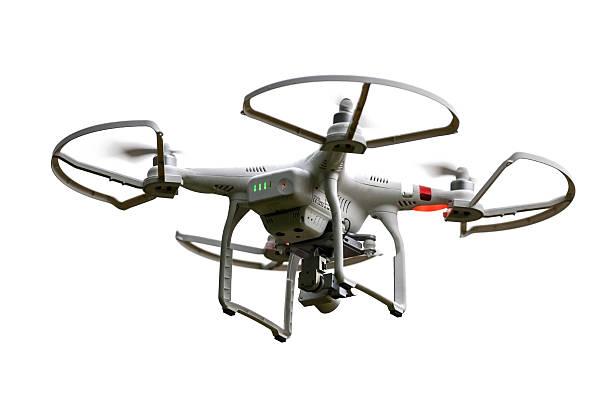
The way we think about manufacturing is usually stuck in the industrial age. We picture massive factories, sprawling assembly lines, and global supply chains that span thousands of miles. While that model works for cars or kitchen appliances, it is starting to fail in sectors that require speed, adaptability, and immediate action. This is where the concept of the xCell comes in, and it is quietly changing the landscape of aerospace and defense.
At its core, the xCell is a solution to a problem most people don't realize exists: the bottleneck of hardware. In a world where software updates happen in seconds, physical hardware usually takes months or years to catch up. If a team in the field needs a specific tool or an aircraft with a unique sensor today, they usually have to wait for a shipment from a central hub halfway across the world. The xCell changes that narrative by bringing the factory to the front lines.
What Exactly is an xCell?
To understand the xCell, you have to look at it as a self-contained ecosystem. It isn't just a piece of machinery; it is a semi-automated, mobile production unit housed within standardized shipping containers. Inside this unit is everything necessary to take a digital design and turn it into a flight-ready aircraft.
The brilliance of this setup is its independence. It doesn't require a specialized building or a team of hundreds of engineers. It is designed to be dropped into an environment, hooked up to power, and put to work immediately. This represents a massive shift from centralized manufacturing to distributed production. Instead of building a thousand units in one place and worrying about how to ship them through dangerous or congested zones, you simply send the digital file to an xCell located right where the equipment is needed.
The Power of Additive Manufacturing
The secret sauce behind the xCell is advanced 3D printing. Traditional manufacturing is subtractive—you take a block of material and carve away what you don't need. This is wasteful and slow. Additive manufacturing builds parts layer by layer, which allows for incredibly complex internal structures that would be impossible to make any other way.
By using high-strength polymers and specialized printing techniques, the xCell can produce airframes that are light, durable, and optimized for performance. Because the process is digital, the design can be tweaked on the fly. If a mission requires a drone with a slightly longer wing for better glide or a different mounting bracket for a new camera, the operator just updates the file and hits print. There is no need to retool an entire factory line.
Redefining the Supply Chain
One of the biggest headaches in any operation—whether it is military, search and rescue, or disaster relief—is logistics. Getting supplies from point A to point B is often the most expensive and dangerous part of the job. The xCell effectively shortens the supply chain to a matter of feet.
When you have a portable drone factory sitting in your base of operations, you are no longer at the mercy of shipping delays or intercepted cargo. This level of autonomy is a game changer. It allows for a "just in time" philosophy where you only build what you need, when you need it. This reduces waste and ensures that the technology being used is the most up-to-date version possible.
Human Centric Automation
While the xCell is highly automated, it is designed with the human operator in mind. The goal isn't to replace people, but to give them better tools. The interface is built to be intuitive, allowing users who aren't necessarily master engineers to oversee the production process.
The automation handles the precision tasks—the printing, the alignment, and the complex assembly steps—while the human provides the direction and the mission-specific requirements. This synergy means that a small team can manage a fleet of aircraft that would have previously required a massive logistical tail.
Sustainability and Efficiency
There is also a significant environmental and economic benefit to this approach. Traditional shipping involves massive carbon footprints, from cargo planes to semi-trucks. By producing locally, you eliminate a huge portion of those emissions. Furthermore, because additive manufacturing only uses the material required for the part, there is very little scrap waste.
From a cost perspective, the xCell brings the price of high-end aerospace down to earth. By removing the overhead of a massive factory and the costs of international shipping, these drones become affordable and replaceable. This is a big deal because it means that if one is lost during a mission, it isn't a financial or operational disaster. You simply print another one.
The Future of Field Operations
Looking ahead, the implications of xCell technology go far beyond drones. The same logic can be applied to medical supplies, spare parts for vehicles, or specialized tools. We are moving toward a future where "delivery" means sending data, not boxes.
The xCell is the first major step in that direction for the aerospace world. It proves that you can have high-quality, mission-critical hardware without the baggage of traditional industrial processes. It provides a level of agility that was previously unthinkable, making it possible to respond to changing situations in real time.
Conclusion
The xCell represents more than just a clever bit of engineering; it is a philosophy shift. It moves us away from the rigid, slow-moving structures of the past and toward a future that is fluid, localized, and incredibly fast. By combining the precision of automated manufacturing with the flexibility of a mobile shipping container, it has bridged the gap between a digital idea and a physical reality. Whether it is supporting a humanitarian mission in a remote area or providing a tactical edge in a conflict, the xCell ensures that the right tools are always within reach.
Frequently Asked Questions
-
How long does it take to produce a drone inside an xCell?
While it varies depending on the size and complexity of the aircraft, the goal of the xCell system is to move from a digital file to a flight-ready airframe in a matter of hours. This is a staggering improvement over traditional methods that take weeks or months. -
Is the quality of a 3D-printed drone as good as a traditional one?
In many cases, it can actually be better. Modern additive manufacturing allows for internal geometries and weight-saving structures that traditional molding or machining can't replicate. The materials used are high-grade polymers designed to withstand the rigors of flight. -
Does the xCell need a lot of maintenance?
The system is designed to be rugged and reliable for use in harsh environments. Because it is modular, maintaining the xCell itself is straightforward, with many of the components being easy to service or swap out if needed. -
Can anyone operate an xCell?
The system is built to be user-friendly. While some training is required to understand the software and the printing process, you don't need a PhD in aerospace engineering to run the day-to-day production. -
What happens if the power goes out?
The xCell can be integrated with various power sources, including generators or local grids. Its self-contained nature means it is designed to be resilient, even in areas where infrastructure is unreliable.

 English
 Arabic
 Spanish
 Portuguese
 Deutsch
 Turkish
 Dutch
 Italiano
 Russian
 Romaian
 Portuguese (Brazil)
 Greek